Tuesday Treat

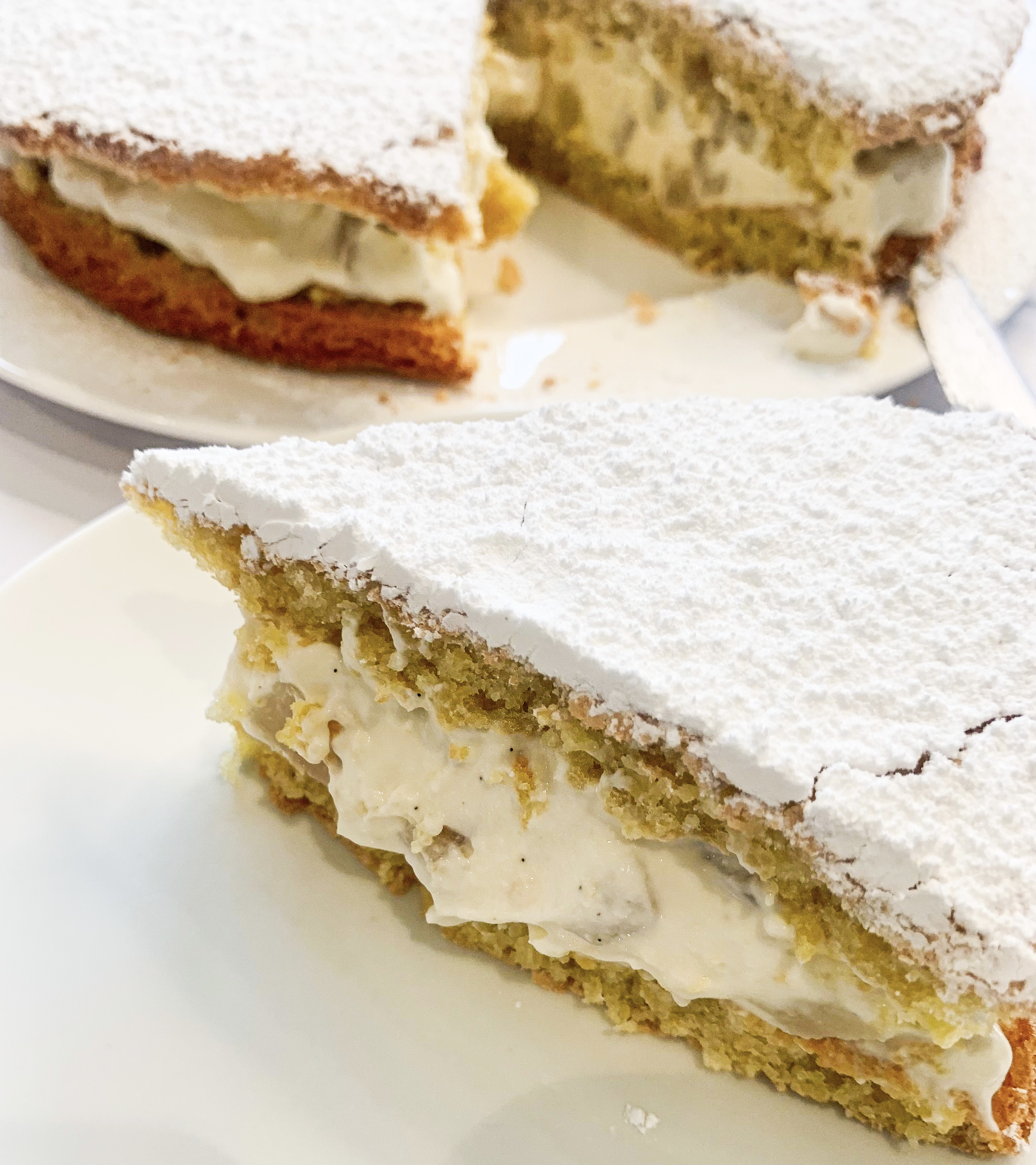
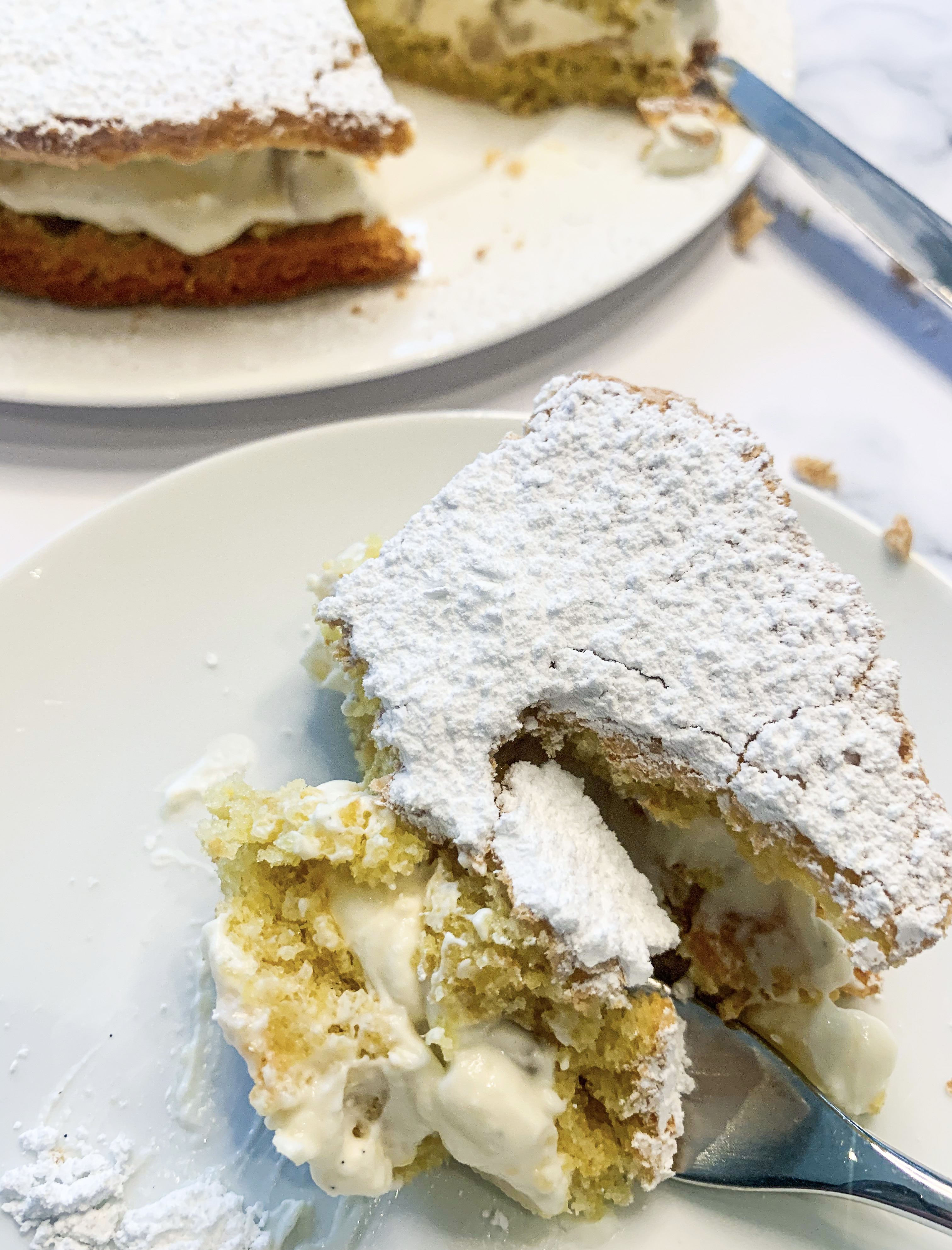
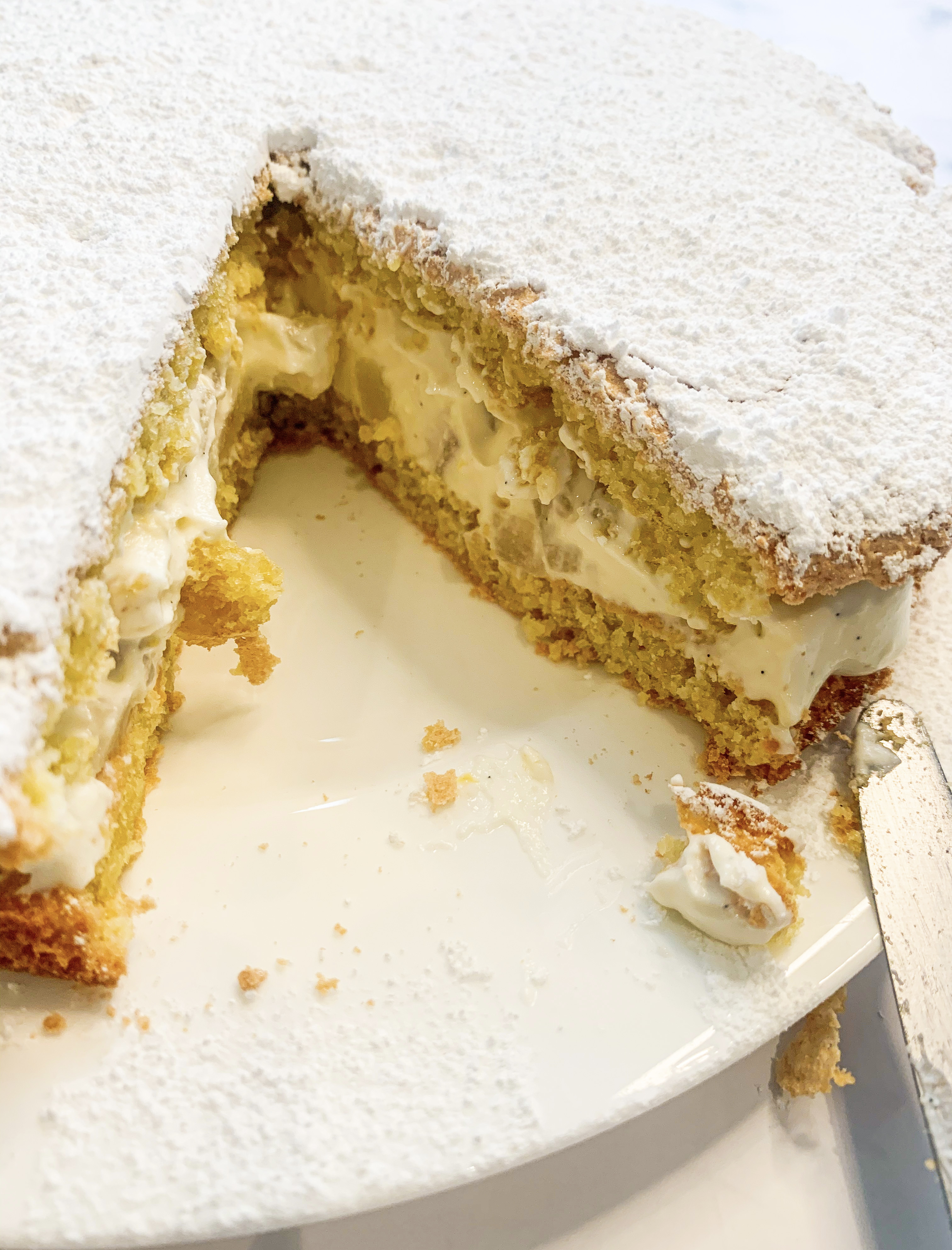
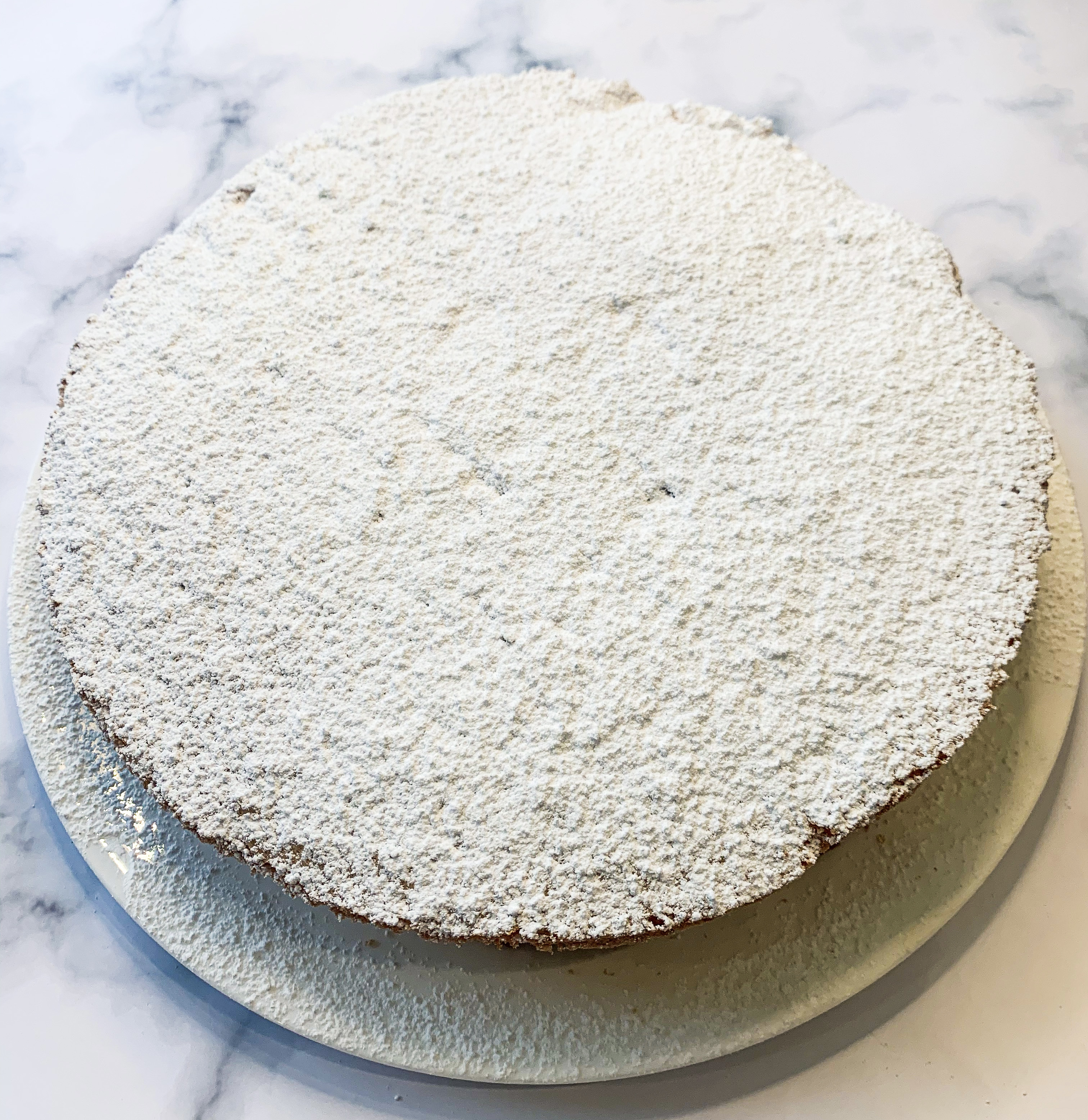
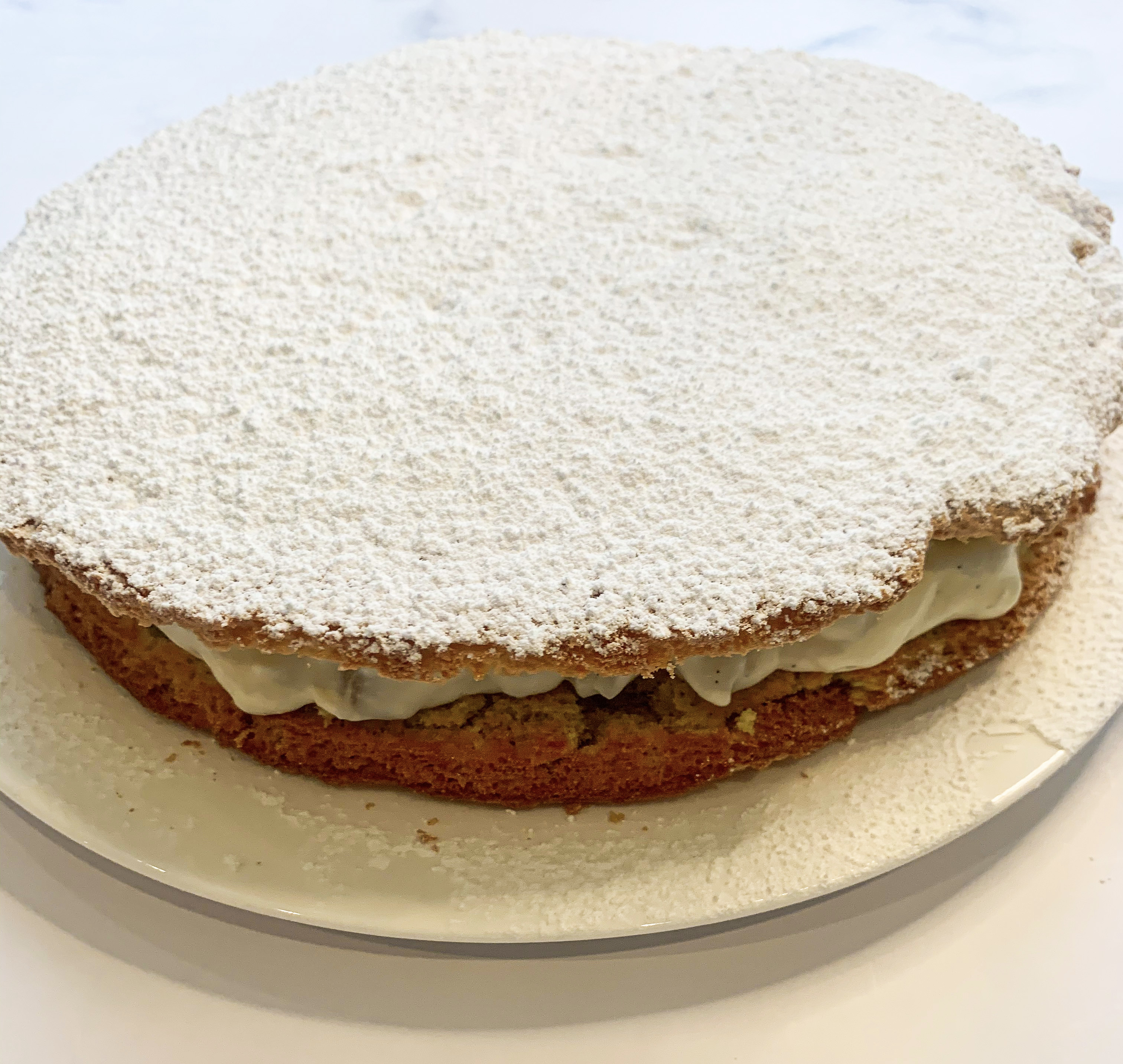
Almond, Pear and Ricotta Cake

This is the most delicious, delicate tasting cake. It’s not overly sweet and is quite light, but be warned it is very moreish! I have taken this recipe from Nina Parker; she mentioned that she first tasted it in Capri, where she had it for breakfast….So, how could I resist, I had to try it myself for breakfast, and yes, it’s indulgent, but, oh my, it really is a great start to the day – try it! In her recipe, Nina poaches fresh pears for the filling, however I have tried it with both fresh poached and tinned pears, and there really is little difference, so now I always make it with tinned pears, which of course makes life a lot easier. The cake itself is rather flat looking, don’t expect a risen ‘victoria sponge’ like cake, but as you know looks can be deceiving and in this case they really are – it is a dream cake and it’s gluten free!

190g caster sugar

5 eggs, 4 separated, 1 left whole

170g ground almonds

1 tablespoon rice flour

½ teaspoon almond extract

For the filling:

250g ricotta cheese, drained of any water

100ml whipping cream

A few gratings of nutmeg

Seeds from ½ vanilla pod

Zest of a lemon

70g caster sugar

400g tin pear halves, drained and cut into small cubes

Icing sugar to dust

*2 x 10 inch cake tins

  1. First of all grease two 10 inch cake tins and line the bases with baking parchment.
  2. Using an electric whisk, whip the 4 egg whites until just light and fluffy and then slowly begin whisking in the sugar until it is all mixed in.
  3. In a separate bowl lightly beat together the 4 egg yolks, 1 whole egg and the almond extract, then add the ground almonds and rice flour – the mixture will be dry.
  4. Use a spatula to mix in ¼ of the egg whites, to loosen the mixture and to help get rid of lumps. Carefully add another ¼ of the egg whites and finally, fold in the remaining whites until the mixture is well combined – it may still appear a little ‘lumpy’, but don’t worry too much.
  5. Divide the mixture between the two tins and bake in a preheated oven, 170’c fan, for about 25 minutes until they are light and springy to touch and golden on top. Allow to cool completely on cooling racks.
  6. Meanwhile make the ricotta filling. Whisk the ricotta, whipping cream, nutmeg, vanilla pod seeds, zest of lemon and the caster sugar until it forms soft peaks, the consistency of whipped cream, then gently fold in the cubes of pear.
  7. Spread the ricotta cream over one of the cake bases and place the remaining cake on top. Dust generously with icing sugar and serve. (This cake keeps well in the fridge)

Week Forty Five

Our recent holiday in Suffolk was wonderful, we were particularly lucky as we had spectacular weather. However, I would be lying if I didn’t admit to missing the opportunity to holiday abroad. Normally we spend our summer holidays in Italy, where we own a small ‘bolt hole’. Our little corner of Italy is a home from home, yet at the same time, with the glorious Italian weather and culture, it offers a breath of fresh air from our ‘norm’. Right now I’m feeling rather nostalgic for an Italian break, but despite travel restrictions being lifted we haven’t yet planned a visit – as I write this, Italy is still requiring British tourists to quarantine for five days. So, in the meantime, this week I thought I’d share some recipes which are inspired by the wonderful Italian cuisine…

One of my favourite places to eat when we visit ‘our corner’ of Italy is a fish restaurant which overlooks an estuary, it’s a little old fashioned – it still has a dessert trolley(!) – but it serves delicious classic Italian fish dishes. My favourite is their salt baked sea bass. For many years I could never find a restaurant that was able to match the deliciousness of this dish (obviously the setting helped!). However, some time ago whilst visiting of all places Las Vegas, I ate at a wonderful Italian restaurant at the Wynn Hotel and ordered their version of salt-baked sea bass. They flavoured the salt around the sea bass with star anise and orange, and served it with a delicious citrus dressing (Agrumi Sauce), it really was incredible. Immediately afterwards I ‘googled’ the recipe (thank God for Google!), and since then I have always used this recipe at home! So, this week’s Menu One is my favourite version of the Italian inspired recipe for Salt-Baked Sea Bass (with Agrumi Sauce). Baking fish in salt is extremely easy, and it is strangely satisfying when you remove the baked salt crust! To make this dish even more special, you should serve it with Samphire New Potatoes – the subtly salty flavours of these potatoes with just a touch of lemon complement the fish beautifully. Menu Two is ‘Crab and Asparagus Linguine with Chilli’, there are many variations of pasta dishes with crab, this is one of our family favourites. I must admit, with the addition of asparagus I’m not sure how authentic this recipe is, but it reminds me of the Italian sun, so it ticks my nostalgia box! Menu Three is a ‘spin’ on the Italian dish of Carbonara. Traditionally this Roman classic is simply made with spaghetti, eggs, pancetta and pecorino, but in this recipe by Diana Henry, she has replaced the pancetta with courgette, thus making it a great vegetarian option without forfeiting the flavour!  Finally, no summer in Italy would be complete without a cocktail, and very often I like a Mojito after a long day on the beach. So, to complete Menu Mistress’s Italian menu I’m sharing my favourite Mojito recipe!

Hopefully, these recipes will bring a little bit of Italy to your kitchen this week…enjoy!…

P.S. This week I’m sharing some new tunes…Music to Cook to…MenuMusic Fourteen is a classic mix of soul tracks, it’s perfect for lifting your spirits and on the rainiest summer day it will bring a bit of sunshine to your kitchen!!…

Menu One

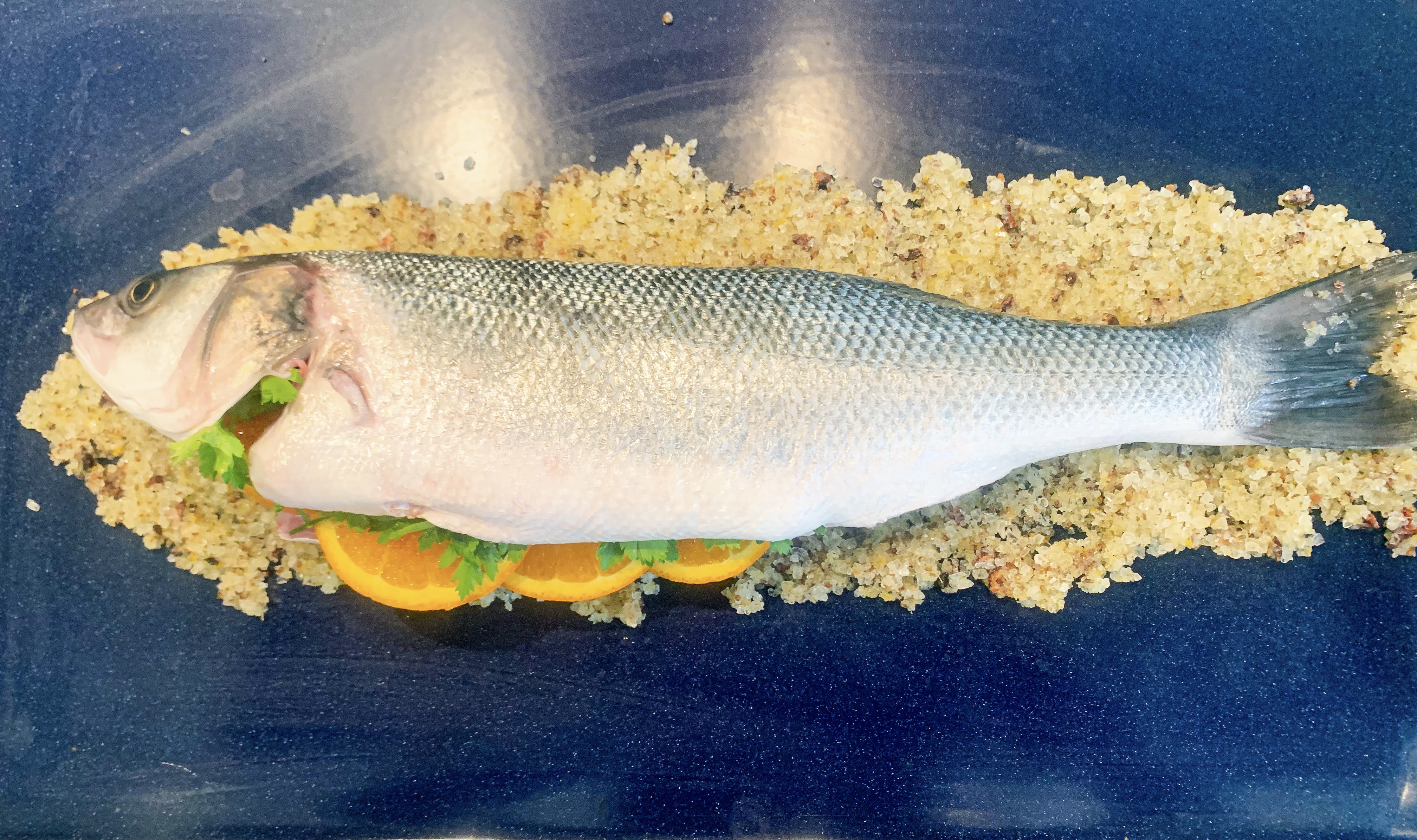
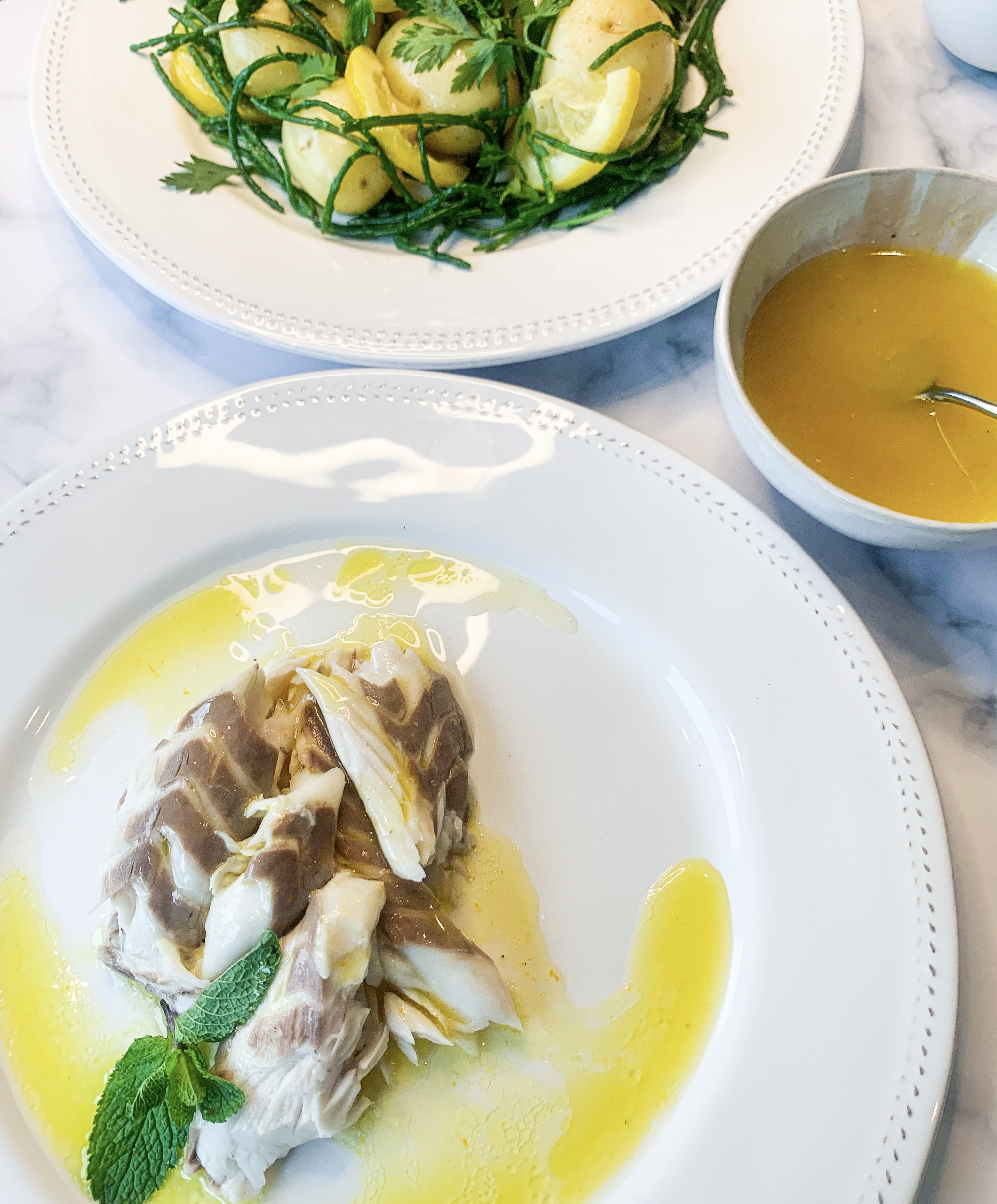
Sea Bass Baked in Salt with Agrumi Sauce served with New Potatoes, Lemon & Samphire (Serves 4)

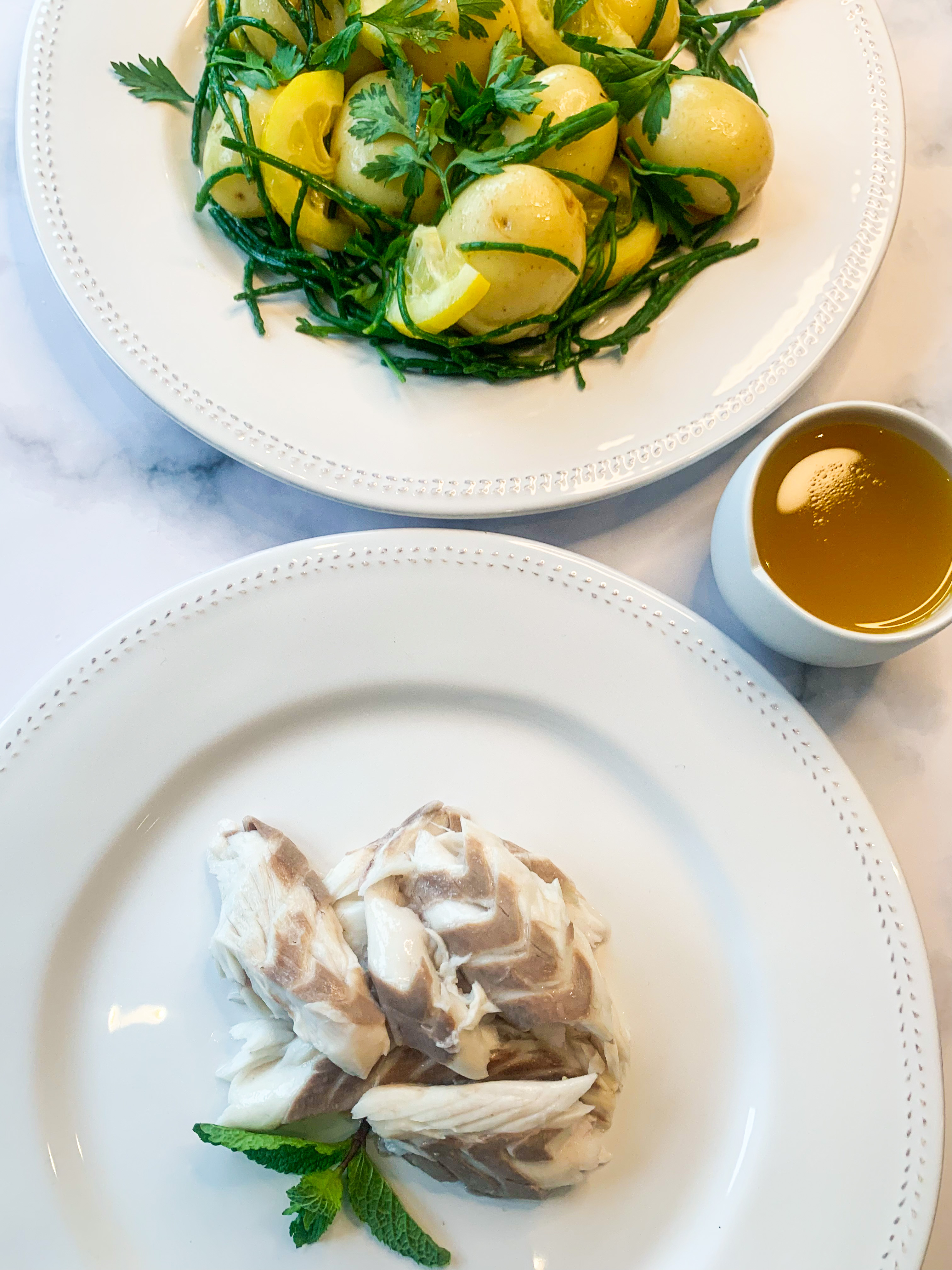
By cooking fish in a salt crust you trap all of its natural flavours and moisture, it doesn’t make the fish any saltier than if you seasoned it regularly, but it does ensure that your fish is beautifully moist and flavoursome! In this recipe the salt paste is flavoured with star anise and orange, which very delicately adds to the flavour of the fish. The oven-baked crusted salt is then removed to reveal a perfectly cooked fish which falls easily from the bone, it is served simply with a delicious citrus dressing, Agrumi Sauce. It is an easy yet impressive recipe, I like to serve it with ‘New Potatoes with Lemon & Samphire’ (recipe below) and a good green salad.

*if you can’t find anise seeds in your local supermarket they are available on Amazon.

1 whole sea bass to serve 4 people (or 2 smaller fish)

1.2kg course sea salt

25g anise seed

25g star anise, crushed in a mortar

Zest of 1 orange

Zest of 1 lemon

5 egg whites, lightly beaten

½ to 1 orange, sliced into half moons

Several sprigs flat leaf parsley

For the Agrumi Sauce:

120ml freshly squeezed orange juice

1 tablespoon lemon juice

Zest of ½ orange

Zest ½ lemon

175ml extra-virgin olive oil

5 mint leaves (plus more to garnish)

5 basil leaves (plus more to garnish)

Salt

  1. To make the agrumi sauce, stir all the ingredients together in a bowl, bruising the herbs with the back of the spoon. Season to taste with salt and let it sit for at least 30 minutes at room temperature to allow the flavours to develop, then strain through a sieve to serve.
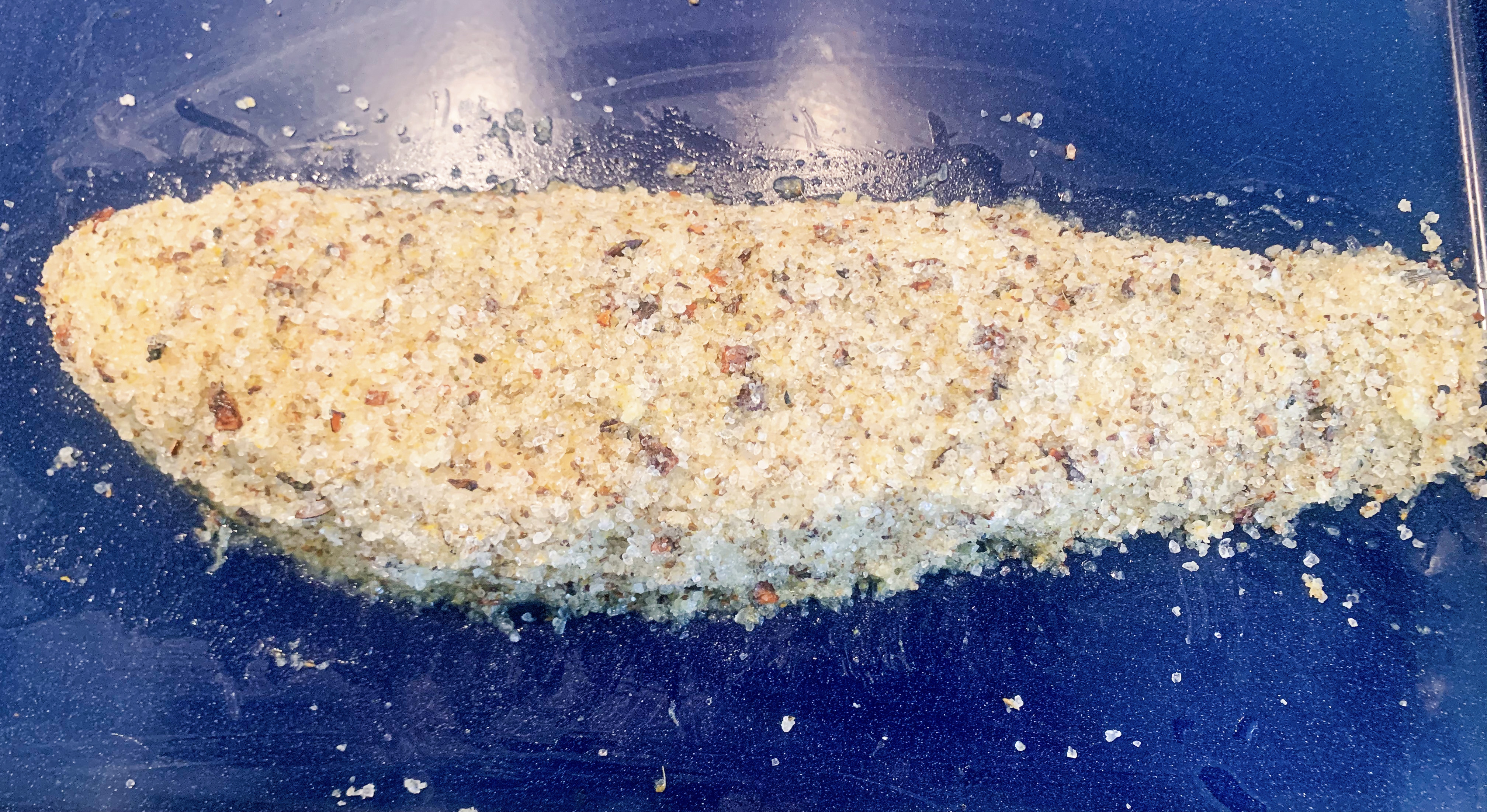
  2. Meanwhile, in a large bowl combine the course sea salt, anise seeds, crushed star anise, orange and lemon zests and the egg whites; it will have the consistency of wet sand.
  3. Stuff the fish’s cavity with the orange slices and parsley sprigs. Spoon 1/3 of the salt mixture onto a baking dish large enough to hold the fish. Set the fish on the salt mixture (if using 2 smaller fish set them side by side over the salt mixture). Cover the entire fish with the remaining salt mixture and pat it down into place.
  4. Bake in a preheated oven, 200’c fan, for about 25 minutes until cooked (a thermometer inserted into the thickest part of the fish measures 130’c).
  5. To serve, using a knife or spoon, crack the salt crust off the top of the fish and discard. Lift the fish from the salt and carefully fillet the fish by removing the skin and large bones. Transfer the filleted fish to plates and serve with the agrumi sauce. Garnish with additional mint and basil leaves.

New Potatoes with Lemon & Samphire (Serves 4-6)

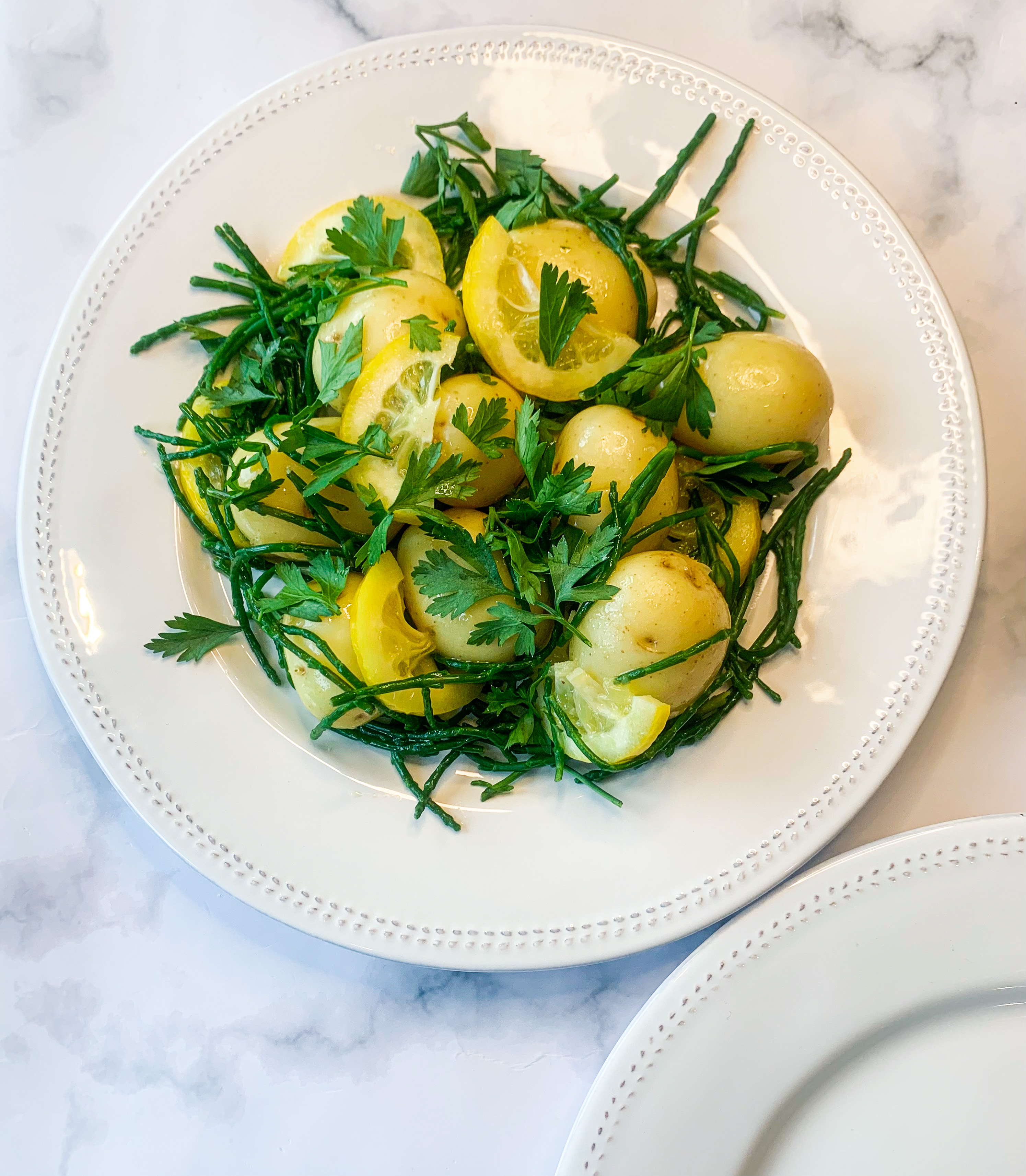
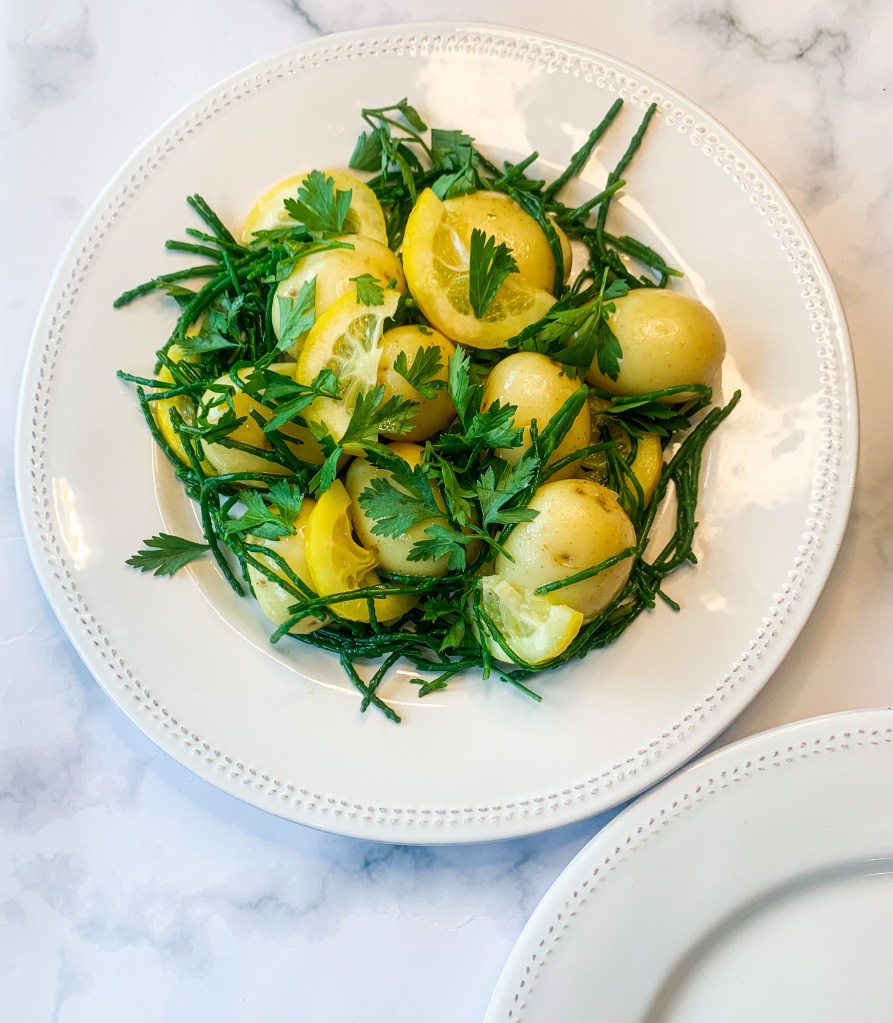
It’s always good to have different recipe ideas for potatoes and this one is a new favourite of mine. These potatoes are fabulous with fish, the subtle saltiness of the samphire complements its delicate flavour. I discovered the recipe in Skye McAlpine’s cookbook ‘A Table for Friends’, it’s such a simple idea to combine samphire and lemon with new potatoes but so effective and wonderfully simple. The potatoes can be served warm or at room temperature, but make sure you dress them with the olive oil and lemon whilst they are still piping hot, so that the citrusy flavours are infused with the heat.

1 kg baby new potatoes

5-6 tablespoons extra virgin olive oil

1 lemon sliced into very thin rounds

90g samphire

Large bunch of parsley leaves, roughly chopped

Sea salt flakes

  1. Steam the potatoes until cooked through.
  2. Drizzle the hot, cooked potatoes generously with the olive oil and sprinkle with a little salt (not too much as the samphire will be salty). Toss well then add the lemon slices and toss again.
  3. Meanwhile steam the samphire for 4-6 minutes until al dente, then add to the potatoes and stir gently to combine.
  4. When the potatoes have cooled a little add the chopped parsley. Serve warm or at room temperature.

Menu Two

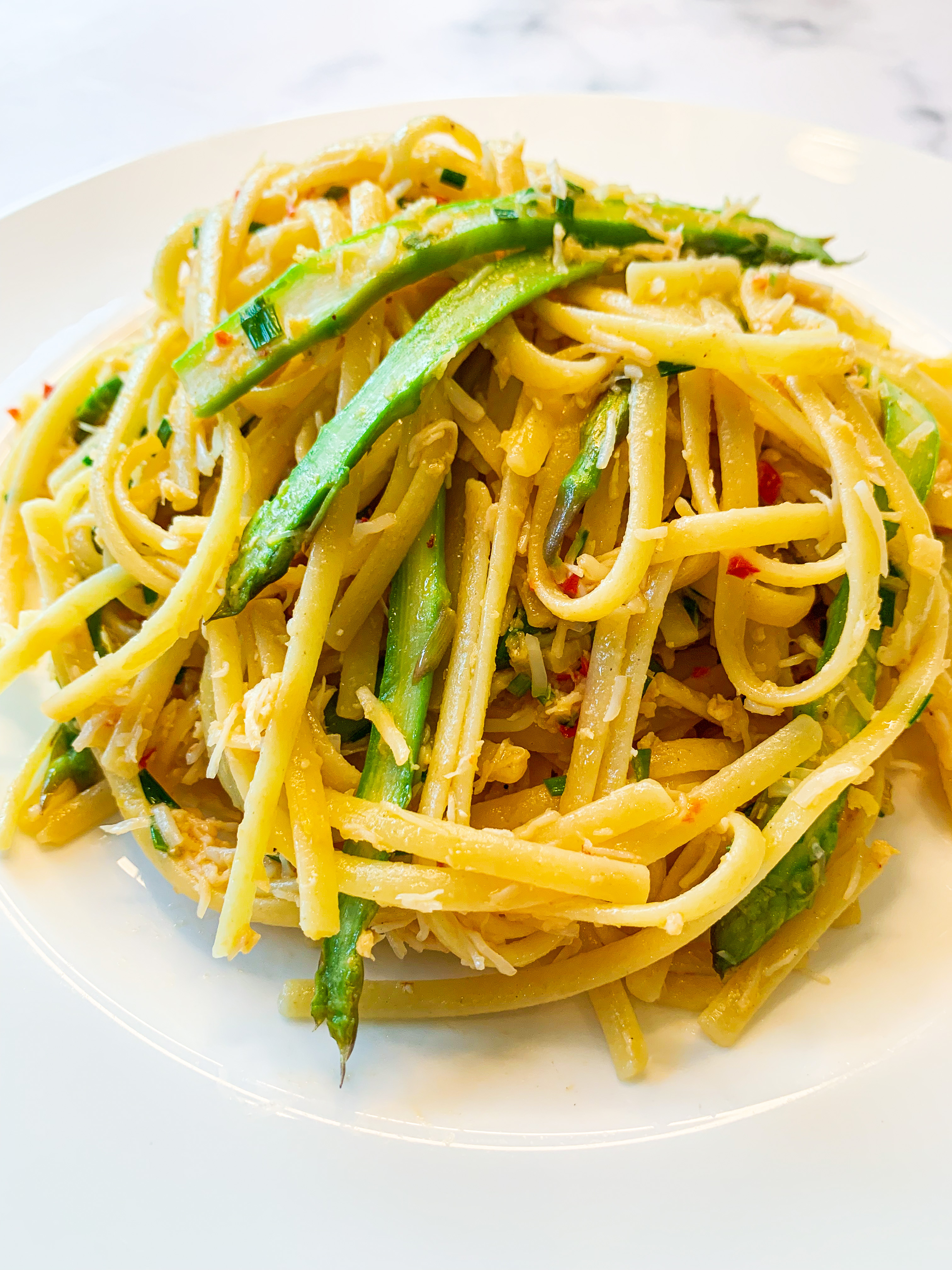
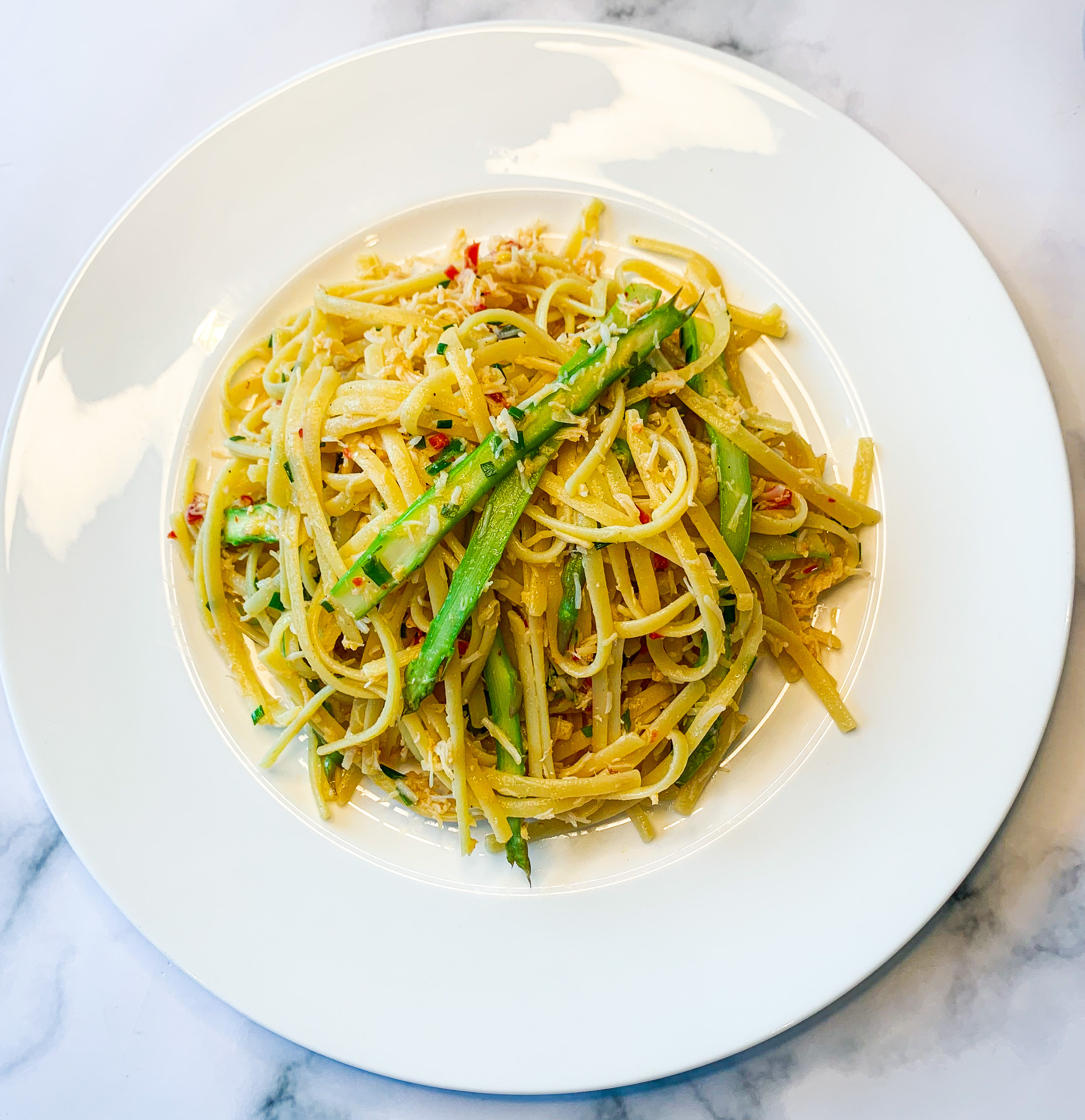
Asparagus & Crab Linguine with Chilli (Serves 4)

There are many variations of pasta dishes with crab, but this recipe with the addition of asparagus is a firm family favourite, the asparagus complements the crab beautifully without overpowering it. It is a lovely fresh tasting dish which is super quick to make!

400g linguine (or spaghetti)

Large knob of butter

4 tablespoons extra virgin oil

2 small red chillies, deseeded and finely sliced

2 garlic cloves, finely chopped

250g asparagus

300g crab meat

4 tablespoons chives, finely chopped

1 lemon, zested and juiced

  1. First of all prepare the asparagus by snapping off and discarding the woody ends, then slice the stalks lengthways.
  2. Cook the pasta according to the instructions on the packet until al dente.
  3. Meanwhile heat the butter and oil in a large frying pan. Add the garlic and chilli, then the asparagus. Cook for about 3 minutes until the asparagus starts to soften.
  4. Add the crabmeat to heat through, then remove from the hob.
  5. When the pasta is ready, drain (reserving a little cooking water) and add to the asparagus pan. Place is back on the heat, add the chives, lemon zest and juice and toss well, adding a spoonful of the reserved cooking water to loosen if needed. Season and serve with an extra glug of olive oil.

Menu Three

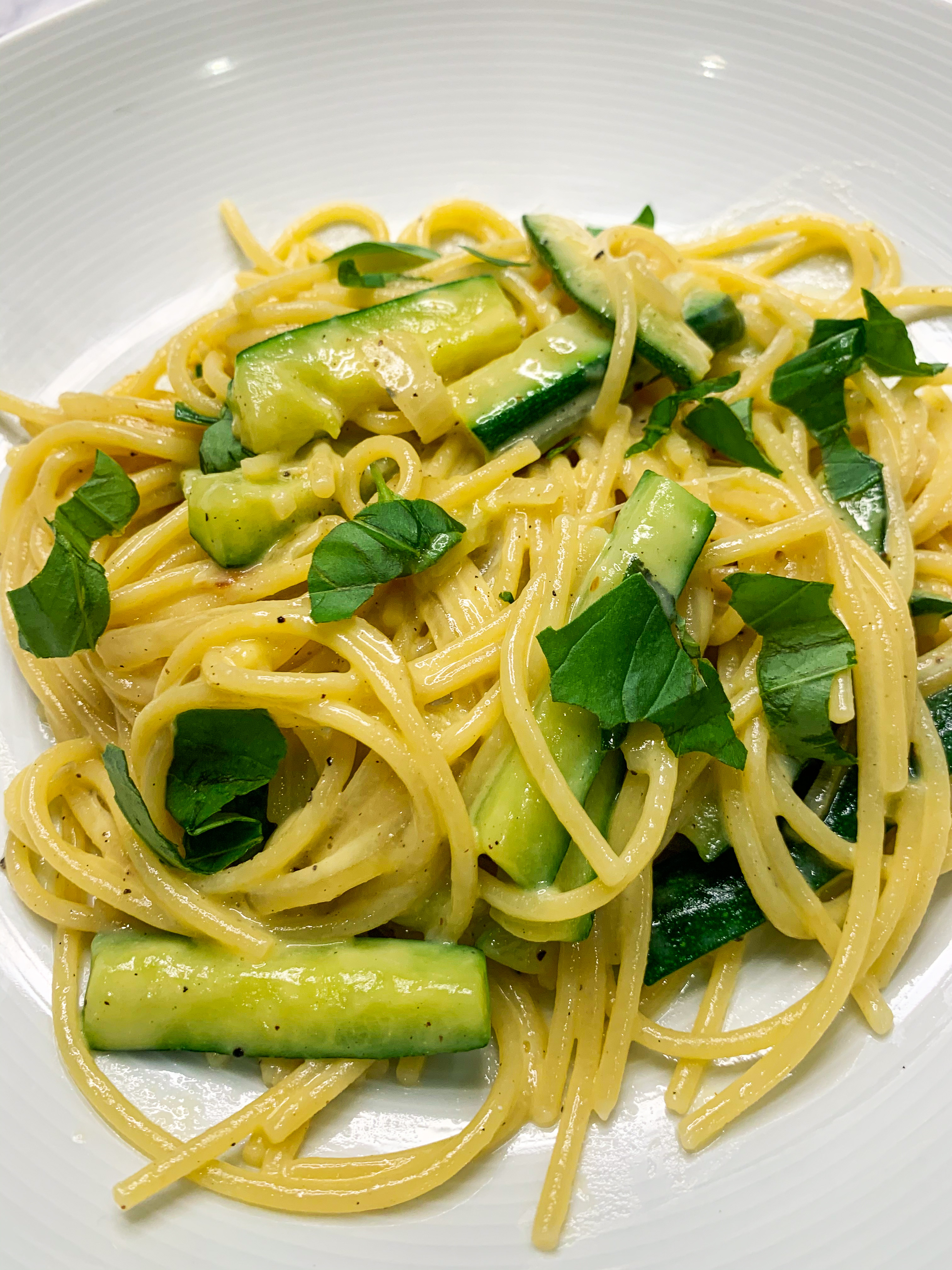
Courgette ‘Carbonara’ – Pasta all’Ortolanana (Serves 4)

This is a wonderful recipe from Diana Henry’s cookbook, ‘Simple’, it is basically carbonara but the bacon is substituted with courgettes, thus making it a great vegetarian option…and a delicious one at that!…

300-400g spaghetti

400g courgettes

4 tablespoons extra virgin olive oil

1 small onion, very finely sliced

1 garlic clove, very finely sliced

2 eggs, plus 4 egg yolks

100g finely grated Parmesan cheese

50g finely grated Pecorino cheese

Leaves from a small bunch basil, torn

Salt and black pepper

  1. Cook the spaghetti according to the packet instructions until al dente.
  2. Meanwhile, top and tail the courgettes and cut the flesh into thin batons. Heat the olive oil in a frying pan and sauté the courgettes and onions over a medium-high heat until golden and cooked through. Add the garlic and cook for another minute.
  3. In a bowl, beat the eggs, the yolks and both cheeses, seasoning with lots of black pepper.
  4. When the pasta is cooked, drain, reserving half a cup of cooking water. Pour the reserved pasta water into the courgettes and then add the spaghetti, stir the mixture over the heat for a few moments to allow the water to evaporate and the spaghetti to absorb some of the flavours.
  5. Remove from the heat and quickly stir in the egg and cheese mixture, mixing well so that every strand of pasta is covered and the sauce has thickened. Taste for seasoning, adding more salt if required. Sprinkle over the torn basil leaves and serve immediately.

And A Little Treat…

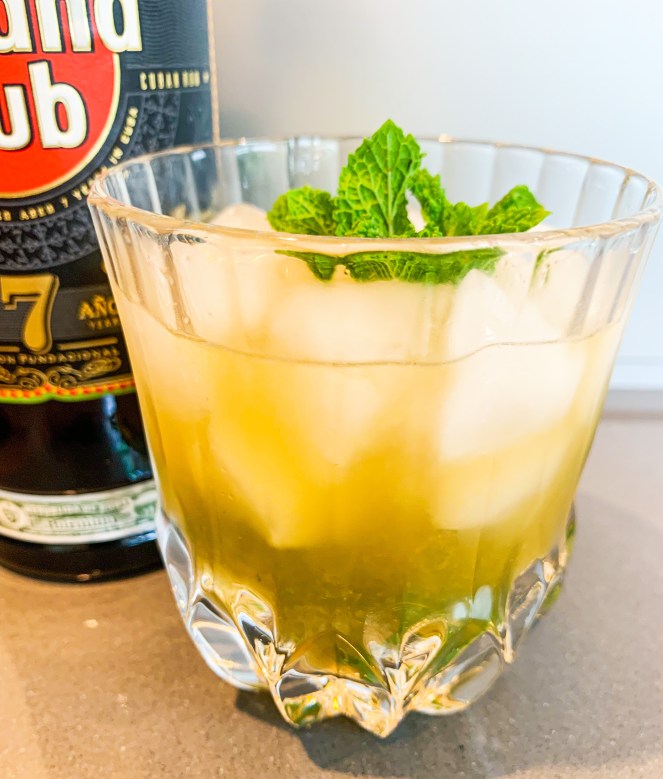
A Classic Mojito (Serves 1)

There are many recipes around for Mojitos, I prefer mine with dark Havana rum, and just a splash of soda – too much and you spoil it! Unfortunately, I haven’t had the pleasure of enjoying an authentic Mojito in Cuba (although Havana is on my bucket list!), the nearest I’ve been is a Cuban bar in Florida, where they assured me that dark rum was the way to go – who am I to argue!…

*To crush/crack the ice cubes: put the ice in a bag, cover this with a tea towel, then use a rolling pin to bash/ crush them.

50ml Havana Club Dark Rum

3 teaspoons sugar syrup

8 mint leaves

Juice of a lime

A splash of soda – about 30ml

Ice cubes, gently crushed/cracked (see note above)

  1. Place the mint leaves in a glass, add the sugar syrup and use the back of a spoon to gently crush the leaves to release the mint oil.
  2. Add the rum, the lime juice and the crushed/cracked ice cubes. Give it a good stir then top with a splash of soda, stir again and serve.

Tuesday Treat

Roast Apricot & Orange Blossom Fool (Serves 8)

This is a fantastic recipe for making the most of apricots which are plentiful at this time of the year. The flavours are perfectly balanced; the sweetness of roasted apricots is delicately cut by whipped cream which is combined with a little Greek yogurt, orange flower water and honey. I have taken the recipe from Diana Henry’s cookbook ‘Simple’, and yes it is simple but very impressive! (Any leftovers make a great, indulgent breakfast!!)

900g apricots, halved and pitted

75ml white wine or water

1 teaspoon vanilla extract

115g granulated sugar

300ml double cream

4 tablespoons Greek yogurt

5 tablespoons orange blossom honey, or to taste, plus more to serve

3 teaspoons orange flower water, or to taste

Toasted almond flakes, to serve

  1. Put the apricots in a gratin dish, cut sides up, so that they lay in a single layer. Mix the wine or water with the vanilla, then pour it over the apricots. Sprinkle evenly with the sugar and roast in a preheated oven, 190’c fan, for 30-45 minutes until completely soft. Leave until cold.
  2. Remove eight of the best looking apricot halves to put on top of each serving. Puree the rest of the fruit and any of its juice in a food processor.
  3. Whip the cream until it forms soft peaks, then stir in the yogurt, honey and orange flower water.
  4. Fold the purée through the cream, don’t over mix – you want it to be marbled with the bright orange colour. (You can add more flower water to taste).
  5. Spoon into bowls, top each with an apricot half, if you want a little more sweetness drizzle with extra honey, then sprinkle with the toasted almonds.

Week Forty Four

If you read my last blog, you will know that I was planning a week’s holiday in Suffolk and that I was thinking of easy menus which I could cook whilst away. I had a wonderful break, and if I’m totally honest, I was far lazier than I had imagined I would be, and so I did very little cooking! I have returned still very much in ‘holiday mode’ – and why ever not?…it is the summer after all! Anyway, I’m sure I’m not alone with this relaxed approach, so this week I thought I would once again share some ridiculously easy recipes!

Menu One is ‘Salmon with Lime Mayonnaise served with Crushed Potatoes, Coriander & Lime’, I literally call this a ‘cheats’ recipe as it uses shop-bought mayonnaise which you flavour with lime and coriander – it’s not only easy but very tasty! To enhance the flavours you should serve it with crushed new potatoes flavoured with coriander and lime – they are wonderful together. Menu Two is ‘Spatchcock Chicken with Garlic Cream Sauce’. Spatchcocking a chicken enables it to roast quicker and it’s a lot easier to carve, making it an easy weekday roast. In this recipe by Nigella Lawson, it is served with a garlic cream sauce which is incredibly good. It is delicious served with rice to mop up the sauce or likewise steamed potatoes are great crushed into it, either way, serve a good crisp salad on the side. Finally, Menu Three is ‘Chicken, Leek and Tarragon Gratin’, this is a great midweek dish. You can either use leftover cooked chicken or quickly poach a couple of chicken breasts to add to the sauce. All it needs is peas or green beans on the side.

There you go, three very easy meals to make your week…Enjoy!

(To read my Suffolk restaurant reviews go to my ‘Eating Out’ page – you will see that they offered a wonderful excuse for my laziness in the kitchen!…)

A Vegetarian Note(!)…

Oh dear!…not only am I being very lazy right now, but I have also broken my New Year’s resolution!… At the beginning of 2021, I had promised to share a vegetarian recipe every time I posted a new blog, but unfortunately with this blog, I have failed!… Actually, I have done so on purpose, as I thought that Menu Mistress’s vegetarian recipe ‘tab’ was becoming rather full, so instead of bombarding you with too many vegetarian recipes, I have now decided to give you the occasional reprieve, thus giving you the chance to savour them!…

Menu One

Salmon with Lime & Coriander Mayonnaise served with Crushed Potatoes, Coriander & Lime (Serves 4)

This is what I call a ‘cheats’ recipe as it is so simple ! It uses shop bought mayonnaise which you flavour with lime and coriander – it’s not only easy but very tasty! Serve it with Crushed Potatoes with Coriander and Lime (recipe below) – they are wonderful together!

4 salmon fillets, skinless, approx. 150g each

2 tablespoons olive oil

15g butter

100g mayonnaise (I used Hellmanns)

1 small handful of fresh coriander leaves, chopped

Zest of 1 lime, plus extra for sprinkling

Juice of ½ lime

Sea salt and black pepper

  1. First make the lime and coriander mayonnaise, put the mayonnaise in a bowl with the coriander and lime zest, gradually stir in the lime juice to taste – you might not need all of it. Season with salt and pepper and mix to combine.
  2. Season the salmon with salt and pepper. Heat the oil and butter together in a frying pan over a medium heat. When the butter starts to froth, add the salmon, cook for 4-5 minutes on each side until they are lightly golden and just cooked.
  3. Put the salmon on four plates and top with a spoonful of mayonnaise and sprinkle over the extra grated lime zest.
  4. Serve immediately with Crushed Potatoes with Coriander & Lime (recipe below)

Crushed Potatoes with Coriander & Lime (Serves 4)

These are particularly good with fish dishes or roast chicken.

400g new potatoes

Zest and juice of 1 lime

1 small handful of fresh coriander leaves, chopped

Olive oil

Sea salt and black pepper

  1. Boil the potatoes for 8-10 minutes until just done. Drain and crush lightly with a fork.
  2. Season with salt and pepper, then add the lime juice, the zest and the coriander, gently mix. Drizzle with a little olive oil and serve.

Menu Two

Spatchcock Chicken with Garlic Cream Sauce (Serves 4 – 6)

This is the perfect quick midweek roast!…Spatchcock chicken simply means that the chicken is laid out flat by removing its backbone, it enables the chicken to roast quicker and it’s a lot easier to carve. In this recipe by Nigella Lawson, it is served with a garlic cream sauce which is incredibly good. It is delicious served with rice to mop up the sauce or likewise steamed potatoes are great crushed into it! (Check out my other recipe for Spatchcock Chicken with Rosemary, Garlic and Chilli here)

If you get your chicken from your butcher, ask him to spatchcock it for you, alternatively it is very easy to do yourself…

How to Spatchcock a Chicken:

On the backside of the chicken, using a pair of strong kitchen scissors, cut along either side of the back bone to remove it, then flip the chicken over and press down very firmly on its breast bones, it will give a satisfying crack as it flattens! Some people like to insert skewers to help keep the chicken flat during cooking but in my experience they make no difference, so I prefer not to use them as they make it more difficult to carve the bird.

Click here to watch the video on me spatchcocking a chicken on my Instagram Page!

For the chicken:

1 Chicken (approx. 1.5kg), spatchcocked

1 teaspoon sea salt flakes, plus more for sprinkling

2 fat cloves garlic, crushed

30g butter, softened

75ml dry white vermouth or white wine

75ml of water

For the sauce:

300ml double cream

4 fat cloves garlic, crushed

3 tablespoons fresh parsley, finely chopped

3 tablespoons fresh chives, finely chopped

Sea salt and black pepper

  1. Sprinkle ½ teaspoon of sea salt flakes over the inside of the chicken and rub over the 2 cloves of crushed garlic. Leave for 30 minutes or so at room temperature.
  2. For the sauce, pour the cream into a small saucepan, add the 4 cloves of crushed garlic and a good grinding of black pepper. Stir well and bring just to the boil, then lower the temperature and allow it to simmer for about 3 minutes, stirring regularly. Remove from the heat, cover with a lid or foil, leave to one side whilst you cook the chicken.
  3. Turn the chicken the right side up and place in a roasting tin, smear the soft butter all over the skin and sprinkle with the remaining ½ teaspoon of sea salt flakes.
  4. Combine the vermouth (or wine) with the water and pour into the tin around the chicken, place in the oven, 200’c fan, for about 45 minutes until the skin is golden and crisp and the meat is cooked through.
  5. Transfer the chicken to a carving board to rest for 10 minutes. Pour the pan juices into the saucepan with the cream. Bring the cream sauce to just under the boil and let it simmer for 5 minutes, stirring regularly. Taste for seasoning and add most of the parsley and chives.
  6. Cut up the chicken and arrange on a platter. Pour over a little sauce and sprinkle with the remaining herbs. Serve at the table with the remaining sauce in a jug.

Menu Three

Chicken, Leek and Tarragon Gratin (Serves 3-4)

Such a good way to use up leftover cooked chicken but so delicious that it’s worth cooking a couple of chicken breasts to simply make it! Serve with peas or green beans.

*if you haven’t any leftover chicken simply add 2 chicken breasts to a pan of boiling water, remove from the heat and leave to poach for about 15-20 minutes until cooked through.

800g potatoes (such as maris piper)

400g leeks

4 spring onions

30g butter

2 tablespoons olive oil

1 tablespoon plain flour (gluten free if required)

200ml white wine

400ml milk

400g cooked chicken (see note above)

A large bunch of fresh tarragon, leaves chopped

  1. Peel and boil the potatoes, drain and allow to cool before thinly slicing.
  2. Quarter the leeks lengthways, then hold them together and slice them across into small pieces. Chop the spring onions.
  3. Melt the butter with a tablespoon of oil in a deep frying pan, stir in the leeks and spring onions, cook over a medium heat until soft and patched with gold. Sprinkle over the flour, stirring until it has been absorbed, increase the heat a little and add the wine, stirring until thick, then stir in the milk. Simmer for a few minutes, stirring until the sauce has thickened. Season with salt and pepper.
  4. Tear the chicken into bite-size pieces and stir through the leek sauce along with the chopped tarragon. Pour into a baking dish and arrange the sliced potatoes , overlapping, over the top. Brush with olive oil.
  5. Bake in the oven, 200’c fan, for 30-40 minutes until the potatoes a golden and crisp.

Tuesday Treat

Basque Burnt Cheesecake (with or without Liquorice Sauce!)

When I was working in St Johns Wood, London, over 20 years ago, I used to visit, almost daily, the local patisserie (now sadly gone), and order a slice of their baked cheesecake. It was the here that I discovered the incredible creamy nature of a proper, baked, cheesecake. Since then I have always had a soft spot for baked cheesecake, but since becoming gluten free I have found it difficult to find those without a crumbed, wheat base. So, when a girlfriend raved about Nigella Lawson’s Basque Burnt Cheesecake, I was very pleased to discover that it was baked without a crumb base so is totally gluten free. I have now baked it on a number of occasions – it is my new addiction! It is not only delicious but incredibly easy to make, admittedly it doesn’t look as good as a traditional baked cheesecake, but as we all know, looks can be deceiving! Nigella recommends a liquorice sauce to complement it, I have included the recipe here, but unless you’re an avid liquorice lover, I actually don’t think you need it – it really is perfect on its own. However, if you do make the liquorice sauce, do also try it over vanilla ice-cream!

Nigella likes this cheesecake served at room temperature, but I must admit that I rather like it straight from the fridge, but either way it is wonderfully smooth and creamy.

A couple of notes before cooking it – make sure that the ingredients are at room temperature as this will give a smoother texture. Also, the tin should have sides which are no deeper that 6cm, as you want the cheesecake to rise up (and burn!). Finally, don’t be too fussed if the lining of the tin looks a little messy, it’s supposed to be a rough and ready ‘look’!

600g full fat cream cheese, at room temperature

175g caster sugar

3 large eggs, at room temperature

300ml sour cream, at room temperature

¼ teaspoon fine sea salt

25g cornflour

*20cm springform cake tin with sides no deeper than 6cm

  1. First of all you need to line your cake tin. This is simply a matter of taking two long pieces of baking parchment with enough length to fit into the tin with an overhang of 5-7cm. Press the first length down into the tin and then take the second piece and lay it across, perpendicularly, the first piece, so that the tin is completely lined. It will look messy and creased! I find that it helps to place something heavy in the tin to keep the paper in place until you need it.
  2. Using a mixer/processor, beat the cream cheese with the sugar until it is light and smooth – this should be done for quite some time – at least 3 minutes (if by chance you do mix it by hand it will need elbow grease and more time!).
  3. Beat in the eggs, one at a time, incorporating each one fully before adding the next. Then add the sour cream, continuing to beat the mixture to fully combine.
  4. Slow down the mixer to beat in the corn flour and finally beat in the salt.
  5. Before pouring the mixture into the cake tin, use a spatula to scrape the sides of the bowl and give the mixture a final stir. Pour into the tin (having removed whatever you have used to weigh down the lining!!) and rap the tin a few times on the work surface to get rid of any air bubbles.
  6. Place in an oven, 200’c fan, for 50 minutes, by which time it will have risen and be chestnut brown in places. It will, however, still seem undercooked and very ‘jiggly’ but do not be tempted to cook it for longer as it will set as it cools.
  7. Remove the tin to a rack and leave to cool. It will sink – it isn’t supposed to look pretty! After about 3 hours it will be cool enough to eat.
  8. Serve at room temperature or chilled from the fridge, as you prefer. To serve, unclip the sides and lift it up with the edges of the parchment. Place it on a plate with the parchment still around, peeling it back to cut into slices. If using, serve the liquorice sauce on the side (recipe below).

Liquorice Sauce

If you are a liquorice lover, this sauce from Nigella Lawson’s cookbook ‘Cook, Eat, Repeat’, is definitely a ‘must try’. It’s a good accompaniment to the Basque Burnt Cheesecake (above), but is also wonderful simply spooned over vanilla ice-cream! It will keep well in the fridge.

*You can get the liquorice pellets from good Italian delis or online at Amazon – I used Amarelli Spezzata.

15g hard pure Italian liquorice pellets

90g caster sugar

300ml water

Pinch of fine sea salt (optional)

  1. Put the pellets in a small saucepan with 300ml water. Stir in the sugar. Place over a low heat until the liquorice has melted – giving it a stir now and again.
  2. Now turn up the heat and let it bubble away until it has reduced to about 150ml and is syrupy –  this can take up to 20 minutes.
  3. Taste, adding a pinch of salt if you desire before serving.