Recipes: all tried & tested and simple to prepare!
Author: Menu Mistress
Cooking has always been something I've enjoyed, I have an extensive collection of cookbooks, some are well thumbed whilst others collect dust on the shelves; I can’t bear to get rid of any cook book, just in case one day I might use it for that one obscure recipe - light on a rainy day!
I enjoy eating out and discovering new flavours, whether it’s just a local haunt or a ‘dress up’ to dinner restaurant - food is my hobby! In my opinion food is the one of the most important pieces of knowledge you need to know about any culture in order to really understand it, so when we go away, it’s not the local sights that I’m googling but the best place to eat!
I'm not one of those fortunate cooks who can throw something together by looking at the contents of their fridge, I need a plan to work with, then I organise my fridge around the recipe. I am however a very organised person, you might even call me a control freak! I love the orderly fashion of a recipe, I find it soothing to have a plan in front of me, so the thought of trawling through my recipe books and trying new recipes is my idea of a perfect afternoon. But I realise that this is not everyones idea of fun, hence the birth of this blog. This blog is essentially for people who adore food but don’t have the time, patience or energy to search through cook books to find that winning recipe – that’s the job of Menu Mistress!
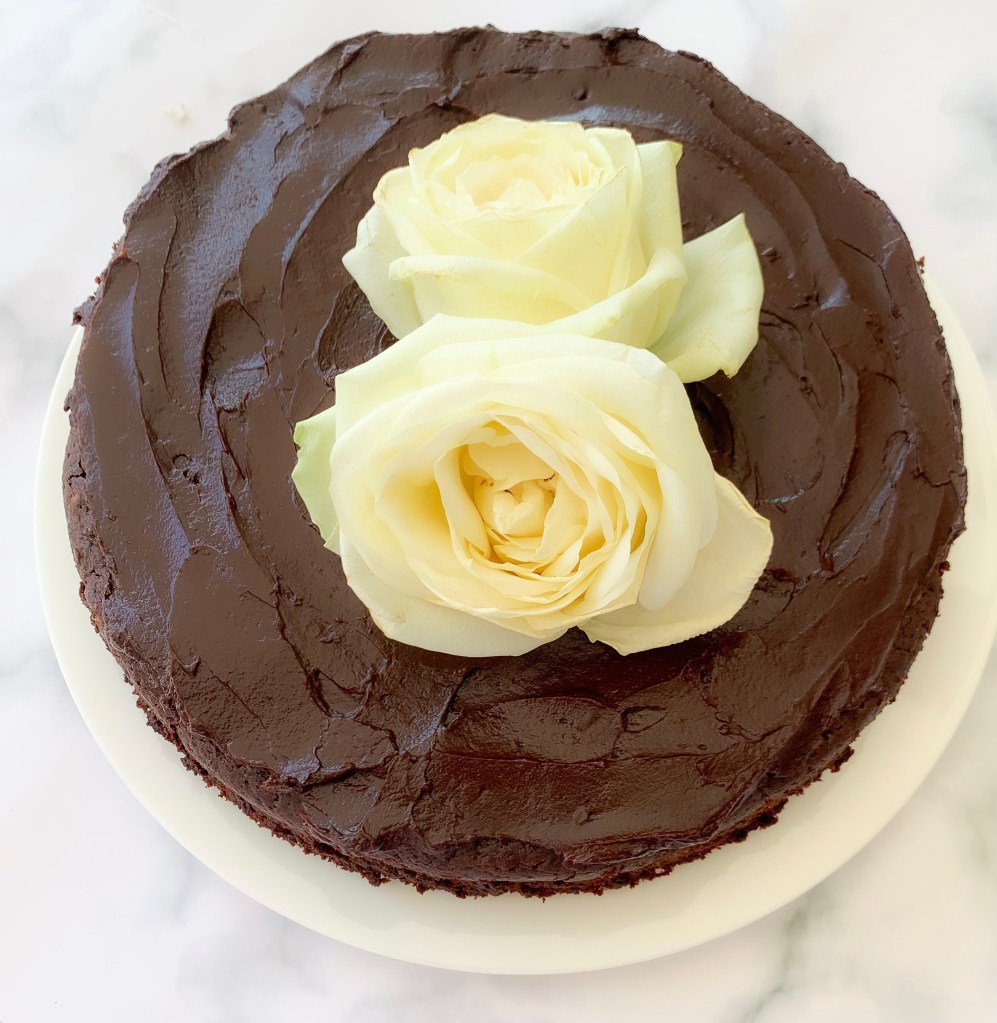
This recipe is from Ottolenghi’s cookbook ‘Sweet’. Originally when I bought this book I somehow overlooked it (he calls it his ‘Take-Home Chocolate Cake’); it only came to my attention when a friend told me that it’s also known as ‘The Worlds Best Chocolate Cake’. Well how could I not try it?… And yes, it is very, very good; depending on my mood it’s my ‘new’ favourite chocolate cake – there are so many! It’s great as a celebratory cake (topped with a rose as in the photo!); in fact I made it just recently for my Dad’s 90th birthday. It’s extremely easy to make, it’s a melt and mix recipe, you don’t even need a food processor and, if required, it works beautifully with gluten-free flour (I use Doves).
For the cake: 250g unsalted butter, at room temperature and cut into 2cm cubes, plus extra for greasing 200g dark chocolate, chopped into 2cm pieces ((I use Lindt Excellence 70% Cocoa Dark Chocolate) 1½ tsp instant coffee granules, dissolved in 350ml boiling water 250g caster sugar 2 large eggs, lightly beaten 2 tsp vanilla extract 240g self-rising flour (gluten-free if required) 30g Dutch-processed cocoa powder, plus 1½ teaspoons, for dusting 1/4 tsp salt
For the chocolate ganache: 200g dark chocolate, broken or chopped roughly into 2cm pieces (I use Lindt Excellence 70% Cocoa Dark Chocolate) 200ml double cream 1 tbsp golden syrup 1 tbsp unsalted butter, softened
(*23cm round cake tin, greased and base lined with greaseproof paper)
Place the butter, chocolate and hot coffee in a large heatproof bowl and mix well until everything is melted, combined and smooth. Whisk in the sugar by hand until dissolved. Add the eggs and vanilla extract, and whisk again until thoroughly combined and smooth. Sift the flour, cocoa powder and salt together into a bowl and then whisk this into the melted chocolate mixture. The batter here is liquid, don’t worry this is how it should be!
Pour the batter into the prepared tin and bake in a preheated oven, 150’c fan, for 1 hour, or until the cake is cooked and a skewer inserted into the centre comes out clean or with just a few dry crumbs attached. The top will form a crust and crack a little, but don’t worry, this is expected and it will be covered by the ganache! Leave the cake to cool for 20 minutes before removing from the pan, then set aside until completely cool.
To make the chocolate ganache, place the chocolate pieces in a food processor, process until fine and set aside. Combine the cream and golden syrup in a small pan and place over medium-high heat. As soon as bubbles begin to appear (just before it comes to a boil), remove from the heat. Get the food processor running again, with the chocolate still inside, and pour in the hot cream in a steady stream. Process for 10 seconds, then add the butter. Continue to process until mixture is shiny and smooth. (You can also make the ganache by hand; just make sure the chocolate is chopped fairly finely before adding the cream mixture. Stir with a wooden spoon until almost melted, then add the butter. Stir again until the ganache is smooth.)
Use a rubber spatula to scrape the ganache into a bowl and cover with plastic wrap, with the plastic actually touching the top of the ganache. Set aside until it has set to the consistency you want. If you want a thin layer to spread over the cake, it can be poured over while liquid so that you get an even, light and shiny coating. For a thicker ganache with a spreading consistency, leave it for about 2 hours at room temperature.
Finally, peel the parchment from the cake and discard. Transfer to a serving platter and spread the ganache over the top of the cake. (This cake will keep well for 4 to 5 days in an airtight container, if refrigerated bring the slices to room temperature before tucking in!)
Looking back over the last few months I feel I’ve been rather spoilt, after the inactivity brought on by the pandemic, like a lot of you, I’ve been taking every opportunity to get away and have enjoyed some fantastic travels. Now, having used up all of Nick’s holiday allowance (and those extra pennies we had saved over lockdown!), it’s time to face reality and October. In my mind, October has always been one of those ‘non-event’ months, and this year is no exception with the added doom and gloom that one reads in the newspapers – rising inflation, interest rates, not to mention the price of our heating bills! We definitely need to cheer ourselves up… No, unfortunately, that doesn’t mean I’ll be taking another break, not even a short one, but I will be stepping into my kitchen to do some comfort cooking and you’re very welcome to join me! This month’s recipes are pure comfort…
Menu One is ‘Smoked and Spicy Fish Pie’, this is an unusual fish pie as it has a new potato topping rather than mash – and it’s more delicious for it. Fish pies aren’t necessarily the quickest of recipes, but now the weather is turning colder I take comfort in being in the warmth of my kitchen, pottering about, and this is one of those recipes which you can ‘potter’ to. Plus, of course, when you put it on the table it’s comforting for everyone to eat! Menu Two is another pie, but this time it’s pastry topped; Pork & Apple Pie, is the perfect pie to move into autumn with. The apples give it a subtle sweetness, making it one of our family favourites!… Menu Three is ‘Madame Renoirs Chicken’ it’s a recipe from Rick Stein’s cookbook ‘Secret France’, and is apparently the same sauté chicken recipe that Madame Renoir, the wife of painter Auguste Renoir used to cook, it’s delicious!Finally, Menu Four is a vegetarian recipe from Delia Smith. ‘Penne with Wild Mushrooms & Crème Fraiche’, is a wonderfully rich and unctuous dish – pure comfort on a chilly night!
Also, there’s new music for your kitchen ‘Music to Cook to…MenuMusic Twenty One’, is a classic mix with the likes of Marvin Gaye and Aretha Franklin! Click here to listen to it.
Menu One
Smoked and Spicy Fish Pie (Serves 6-8)
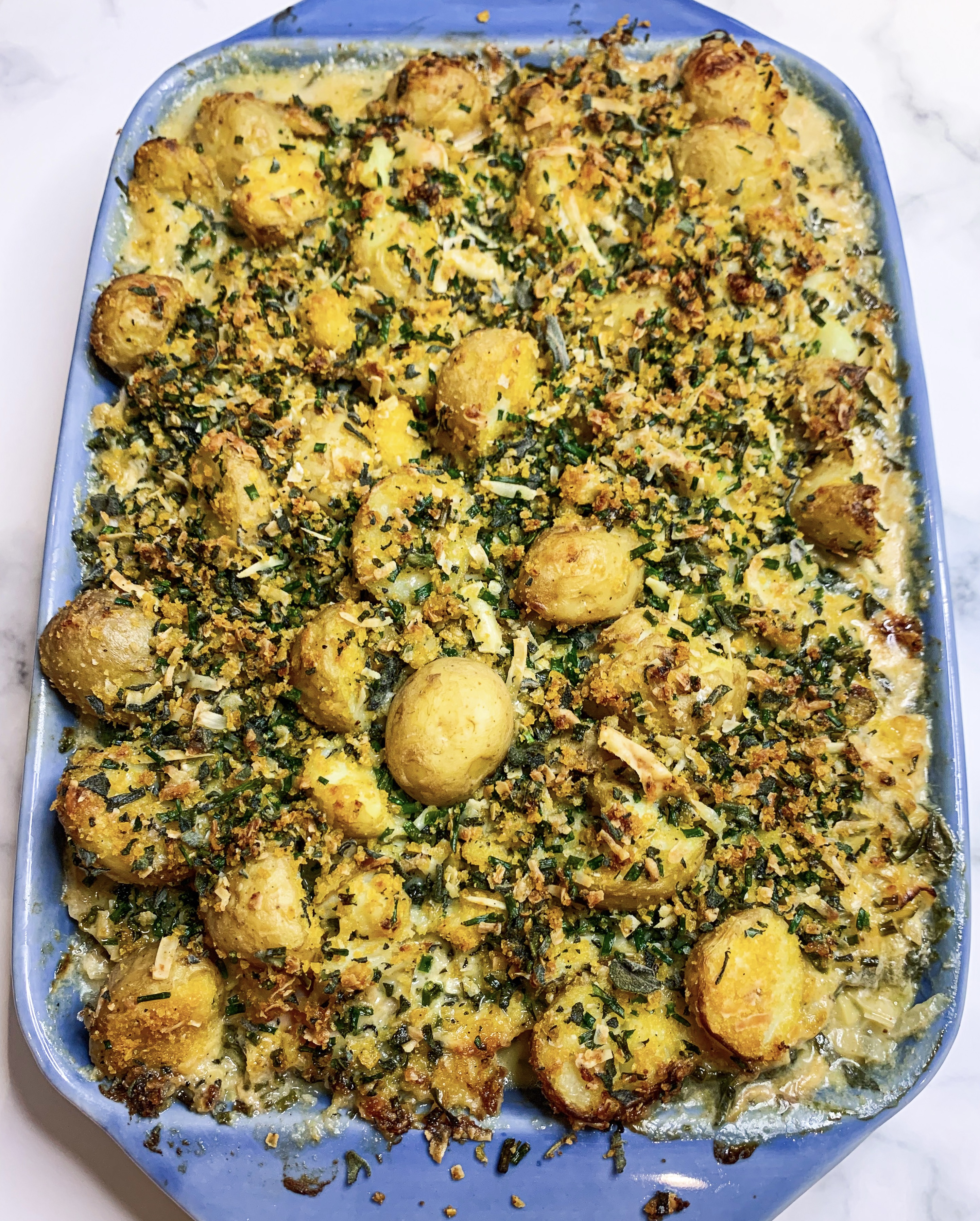
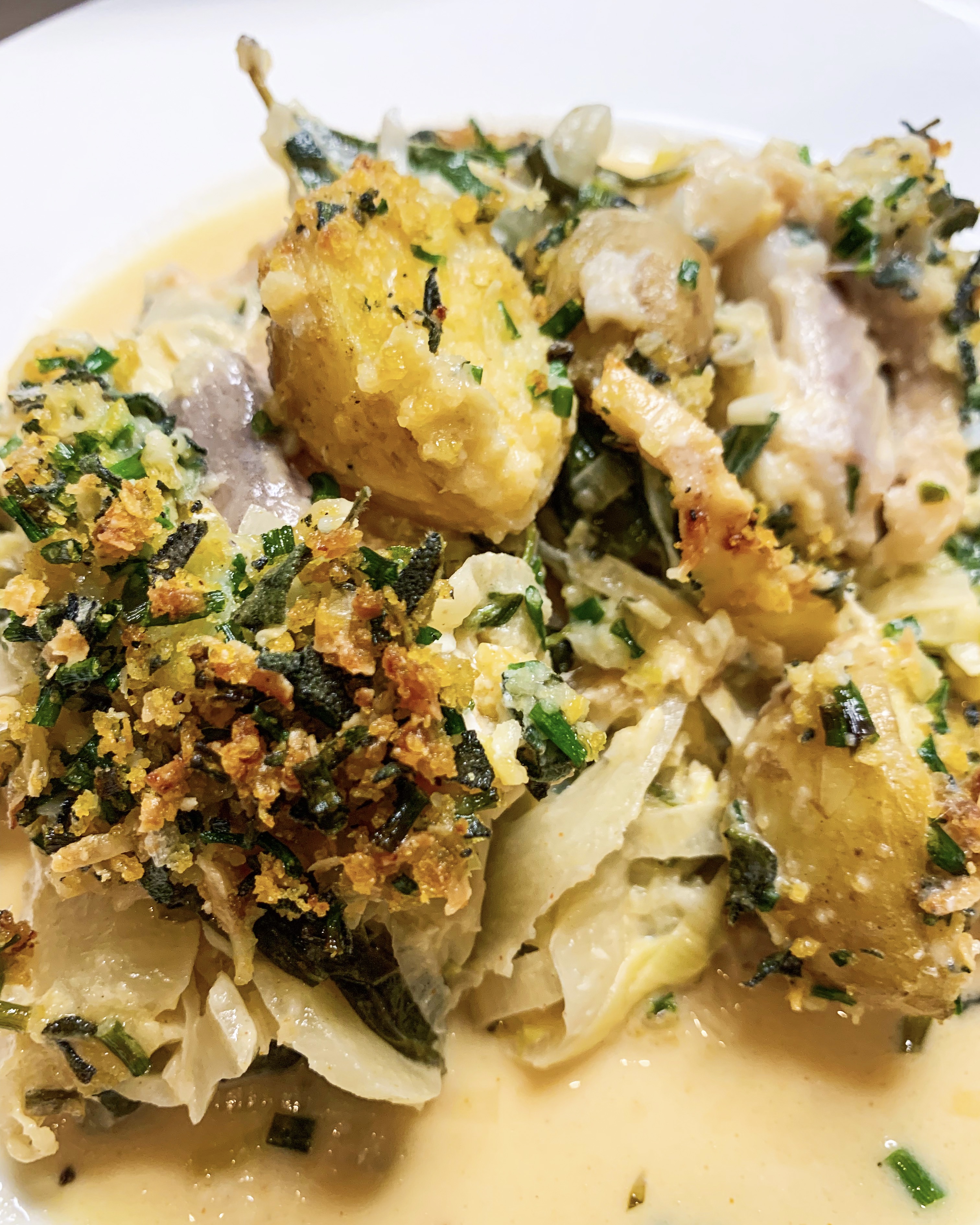
This is an unusual fish pie, not only has it got wonderful smoky, spiced flavours, but it has a new potato topping rather than mash – and it’s more delicious for it. The recipe is from the duo behind restaurant ‘Wild by Tart’ in London (review here!). They originally catered for TV/ film crews and this fish pie was apparently a big hit!… Simply serve with a fresh, crunchy salad.
1.5kg smoked haddock, kippers and ‘hot smoked’ salmon. Skin and bones removed, slightly broken up into chunks.
Large knob of butter
4 bay leaves
3 leeks, sliced
4 garlic, finely chopped
2 fennel, sliced
2 teaspoons cayenne pepper
250ml white wine
2 tablespoons Dijon mustard
1 lemon, zest and juice
100g baby spinach
50g tarragon, remove the woody stalks, roughly chop the leaves
25g parsley, chopped
250ml crème fraiche
500g baby new potatoes
50g bread crumbs (gluten-free if required – I use ‘Esgir Gluten Free Crunchy Crumbs’)
100g gruyere, grated
25g sage, finely chopped
25g chives, finely chopped
Glug of olive oil
Sea salt and black pepper
(*a large oven proof dish)
Cut the potatoes in half. Bring a pot of water to the boil, add the potatoes and lightly boil for about 15 minutes until they are cooked through. Strain, return to the pan and leave to one side.
Melt the butter in a pan over a medium heat, add the leeks, garlic, bay leaves and fennel and sauté until they start to wilt and caramelise. Add the white wine and reduce for a minute or so.
Add the cayenne pepper, mustard, lemon zest and juice, spinach, tarragon and parsley, stir to combine and allow the spinach to wilt. Then add the crème fraiche and remove from the heat.
Toast the breadcrumbs by ‘frying’ them in a dry frying pan, leave to one side.
Shake the pan with the potatoes in it roughly, so the potatoes break up slightly. Add the toasted breadcrumbs, cheese, sage, chives, olive oil, salt and pepper.
Mix the fish into the crème fraiche mixture, carefully so not to break up too much, then place in the oven proof dish.
Spoon over the potato mixture on top and place in a preheated oven, 180’c fan, for 20 minutes until it is cooked through in the centre.
Menu Two
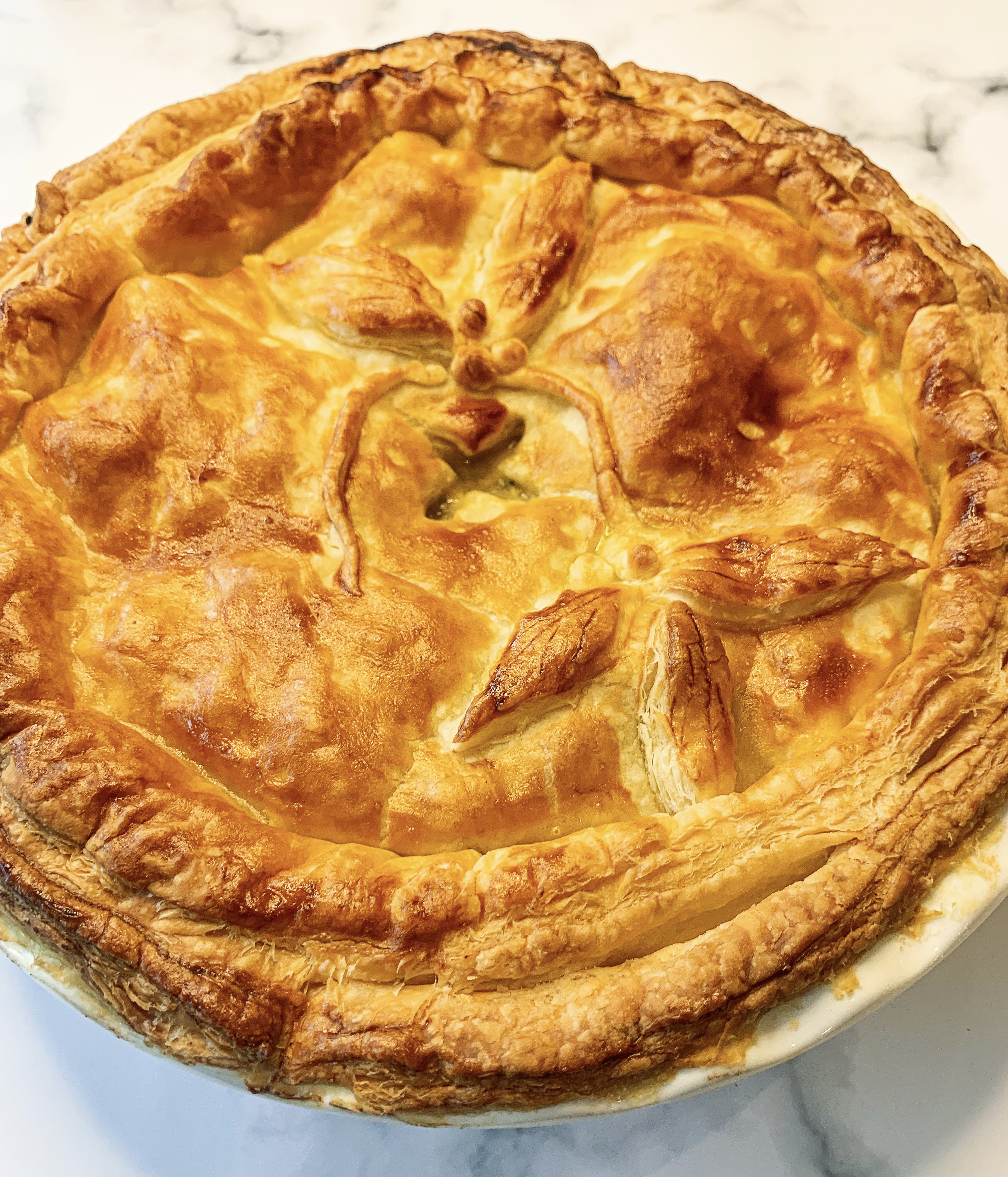
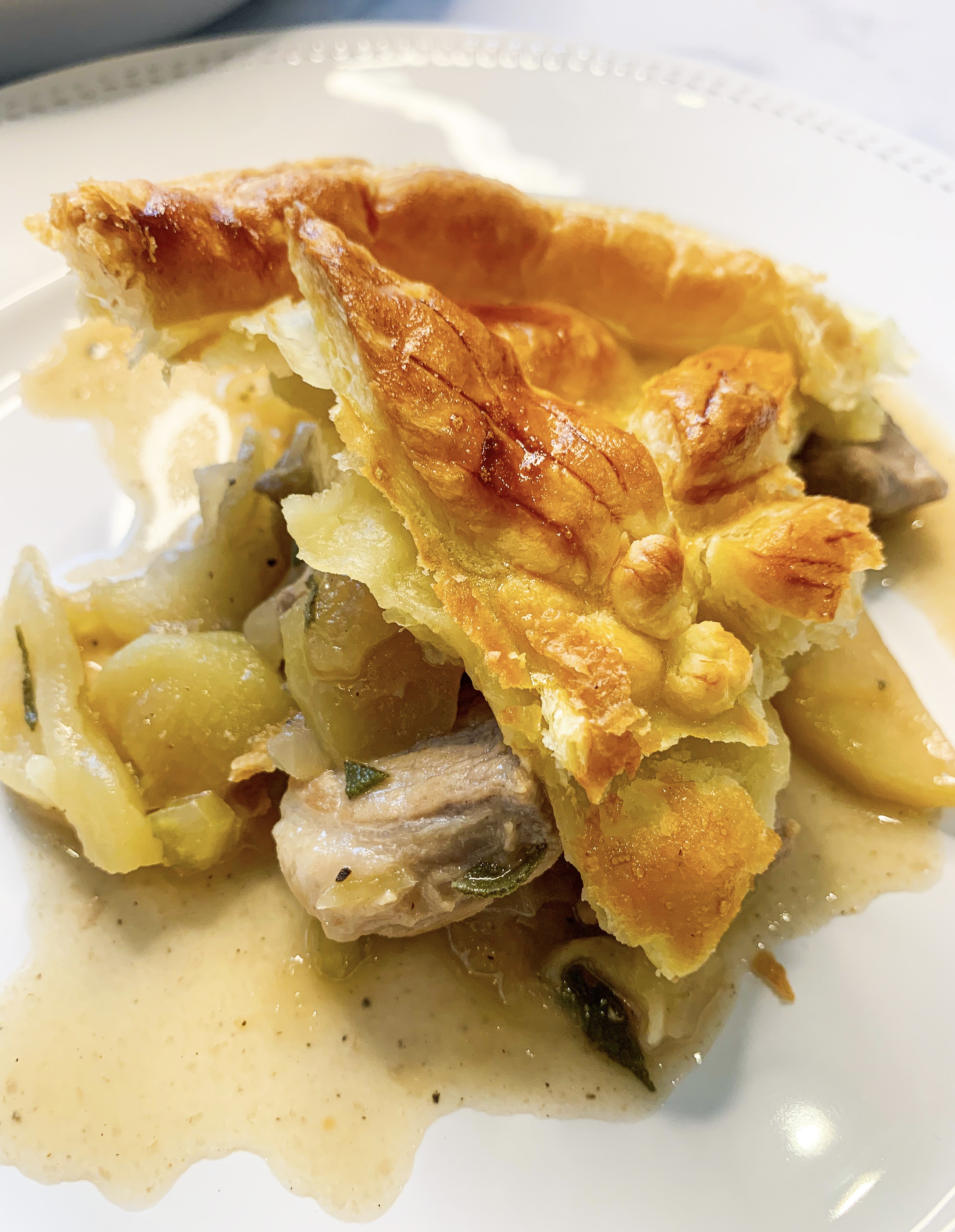
Pork, Apple and Cider Pie (Serves 4)
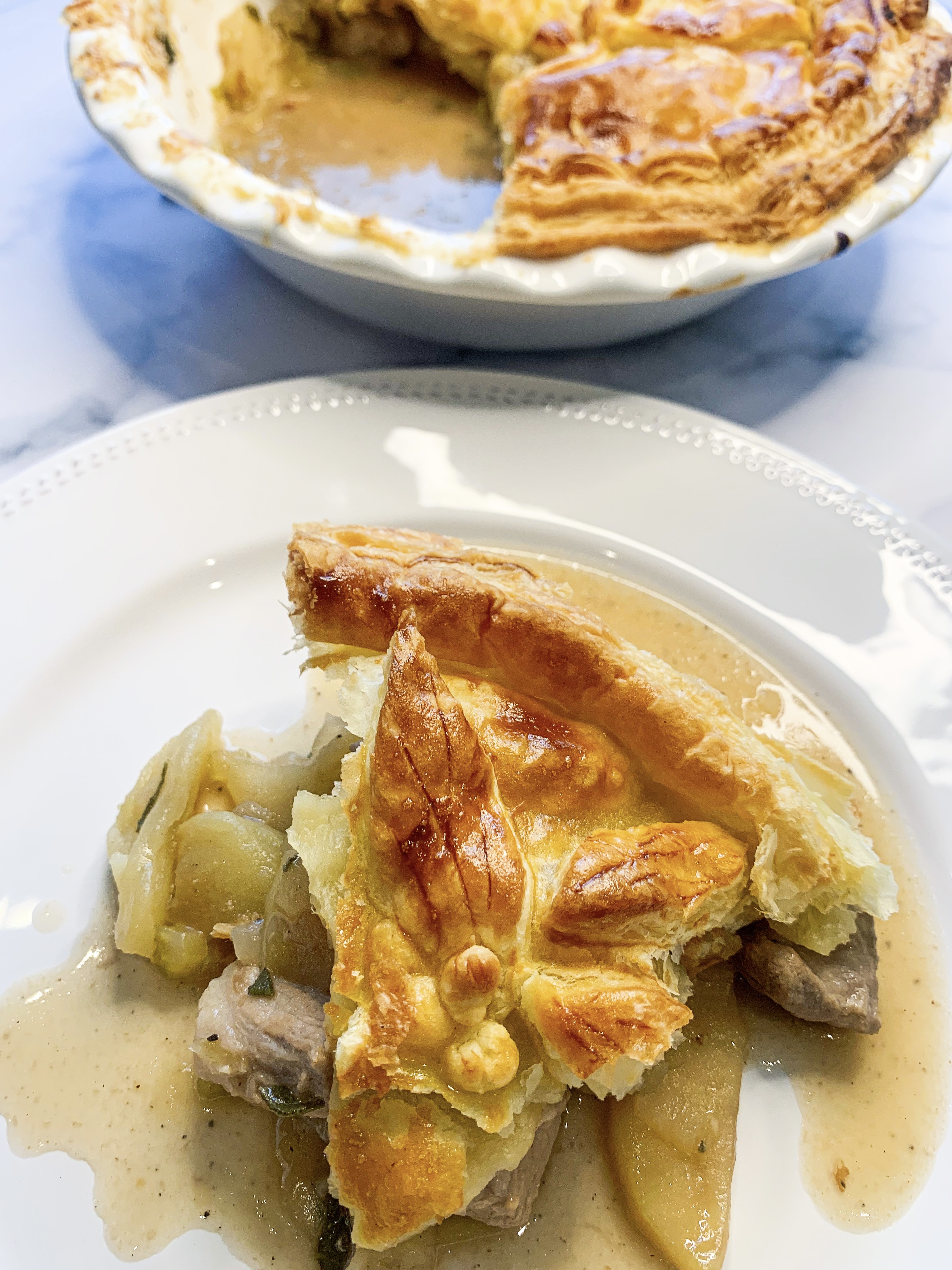
This pie takes full advantage of the wonderful affinity between pork and apple. The apples give the pie a subtle sweetness – unsurprisingly it’s become a firm favourite in our household! The recipe is from Paul Hollywood’s cookbook ‘Pies & Puds’. The original recipe calls for a ‘cider pastry’, I have tried it with this, but I didn’t think it was that special and it definitely didn’t warrant the extra time needed to make it. So I use ready rolled puff pastry and I suggest you do the same!…(I’m gluten free so I can’t eat the pastry, occasionally I use ‘Jus Roll’s Gluten Free Puff Pastry’, but if I’m to be honest it’s not as delicious as the regular version, so I tend to eat the filling with some buttered new potatoes – thus leaving Nick and Felix to fight over my left over pastry!!)
1-2 tablespoons vegetable oil
1 medium-large onion chopped
2 celery sticks, destringed and chopped
500g pork shoulder, cut into 3-4cm pieces
2 tablespoons plain flour (gluten-free if required)
175ml dry cider
175ml chicken stock
1 cooking apple, 150g, peeled, cored and sliced
2 eating apples, 225-250g, peeled, cored and sliced
6 large sage leaves, chopped
Sea salt and black pepper
320g Ready Rolled Puff Pastry (Gluten Free if required – see note above)
1 egg yolk mixed with 1 tablespoon of milk (for a glaze)
(*1.2 litre pie dish)
Heat 1 tablespoon of oil in a large, wide pan over a medium-low heat. Add the onion and celery and cook gently for 8-10 minutes until soft but not coloured. Remove the vegetables from the pan and set aside.
Add a little more oil if necessary to the pan and increase the heat to medium-high, add the half the pork. Brown it well on all sides, remove from the pan and repeat with the remaining pork.
Turn the heat down a little. Return all the pork to the pan along with the onion and celery. Sprinkle in the flour, stir and cook for 1 minute. Gradually add the cider and stock, stirring so that the flour is absorbed. Add the apples, sage, salt and pepper. Bring to the boil then reduce the heat and simmer for about 45 minutes.
Spoon the pork and apple filling into a pie dish.
For the pastry top, gently lay out the pastry. Cut it into a circular shape to top the pie dish. I find that by cutting strips of the remaining pastry, pressing them around the rim of the pie dish and then topping with the pastry top, helps the pastry rise. I also cut out a few leaves for decoration, but obviously, this doesn’t affect the flavour so if you’re in a hurry I’d leave this out! Lightly score the pastry with a criss-cross pattern to help it rise and make sure you cut out a deep cross in the centre to allow the steam to escape during cooking. Brush over with the egg and milk glaze.
Bake in a preheated oven, 200’c fan, for about 35 minutes until golden and piping hot.
Menu Three
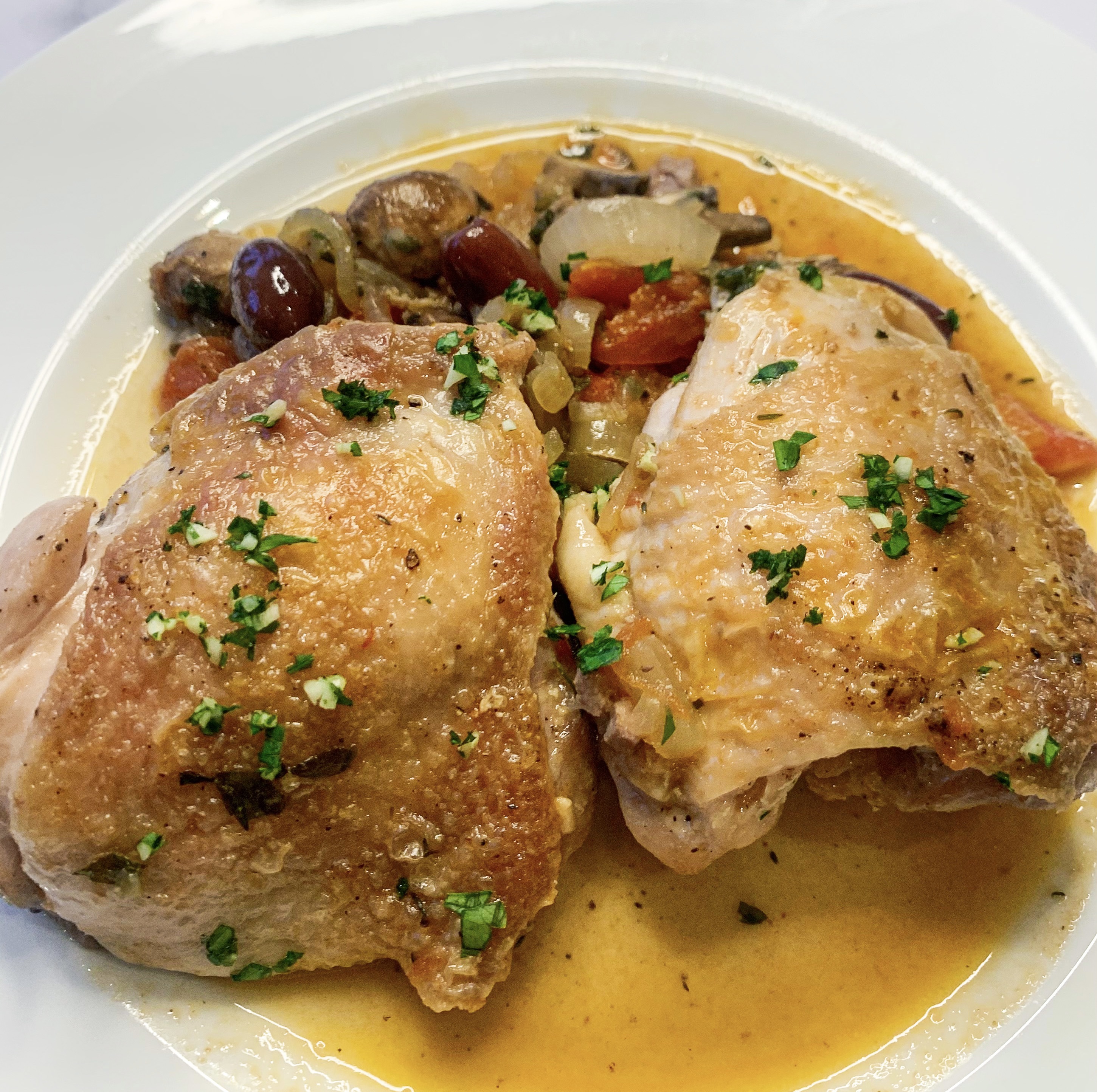
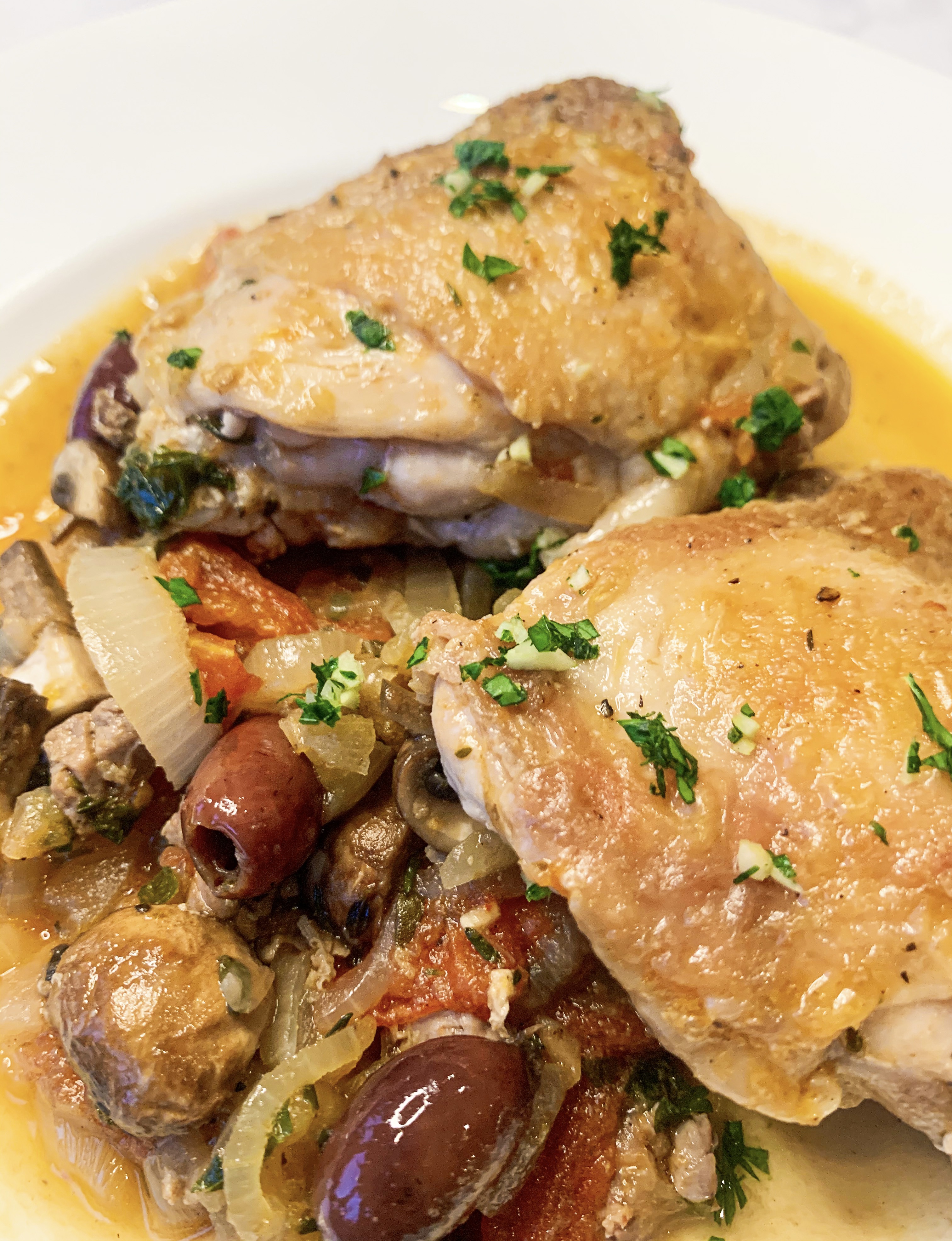
Madame Renoir’s Chicken Sauté (Serves 6)
This recipe is apparently the chicken sauté dish which Madame Renoir would make for her husband, painter Auguste Renoir. I found it in Rick Stein’s cookbook ‘Secret France’. I would agree with Mr Stein, that what makes this dish really special is the addition of chicken livers which are chopped so finely that they become more of a seasoning than an flavour, plus their texture enriches the dish beautifully. Serve with my ‘Favourite Mashed Potato’ (recipe below) and a good green salad.
2 tablespoons olive oil
1 chicken (1.8kg) jointed into 8 pieces, or 8 large chicken thighs
30g unsalted butter
2 medium onions, sliced
1 large garlic clove, chopped
Handful of parsley, chopped
A few thyme sprigs
1 bay leaf
2 large tomatoes, skinned and quartered
75g button mushrooms, quartered
16 black olives, pitted
50g chicken livers, trimmed and finely chopped
2 tablespoons Cognac
Sea salt and black pepper
Persillade, to serve:
Handful of parsley
1 large garlic clove
Heat the oil in a shallow casserole dish or frying pan and gently brown the chicken pieces in batches. Set aside.
Add the butter to the pan and soften the onions, garlic and herbs. Season with plenty of salt and black pepper and add the tomatoes and 100ml of water. Put the chicken back in the pan and cook for 20-25 minutes. Check halfway through cooking and add a little more water if the dish looks dry.
Add the mushrooms, olives, chopped livers and the Cognac, then continue to cook for another 3-4 minutes.
Taste and season with more salt and pepper if needed. Remove the thyme sprigs and bay leaf. Finely chop the parsley and garlic together and then sprinkle over the dish. Serve at once with mashed potatoes and a good green salad.
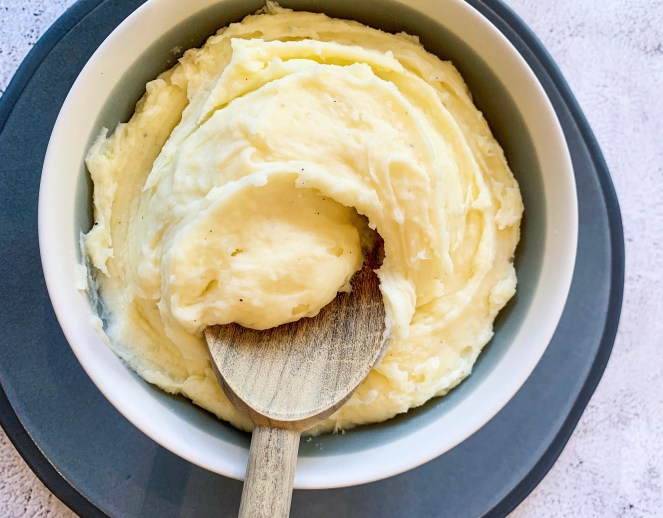
‘Staple Side Dish’ – ‘Favourite’ Mashed Potato (Serves 4)
There are numerous recipes for mashed potato, and yes, I have tried many, but this one is probably my favourite. It actually doesn’t contain any butter, which makes me feel that it could be healthy, although admittedly it does contain double cream! Don’t be put off by the garlic, you really can’t taste it, it just enhances the flavour of the potato. I must admit I ‘cheat’ when it comes to mashing, I am fortunate to have an amazing kitchen appliance, a Thermomix, this is a serious piece of kitchen kit; I can actually steam my potatoes in it and then mash them in seconds. If you don’t have a Thermomix you can either mash by hand, however, for an easier option I would recommend doing as Delia Smith suggests in her ‘Winter Cookbook’ – whisk them with an electric hand whisk. When whisking them you do have to be careful – make sure that the potatoes are absolutely cooked, otherwise they will go gluey. Start off with the speed slow to break up the potatoes and then increase to a high speed to quickly whip them until smooth – don’t do it for too long, as again, they will go gluey, which is not good!
1kg potatoes (floury, such as Maris Piper)
100ml full-fat milk
100ml double cream
2 cloves garlic, sliced
Sea salt and black pepper
Peel the potatoes and cut into even sized chunks. Steam until completely cooked through.
Put the milk, cream and garlic in a small saucepan and bring to the boil. Remove from the heat.
Mash the potatoes (see note above) adding the milk mixture a little at a time. Season well with salt and pepper.
Menu Four
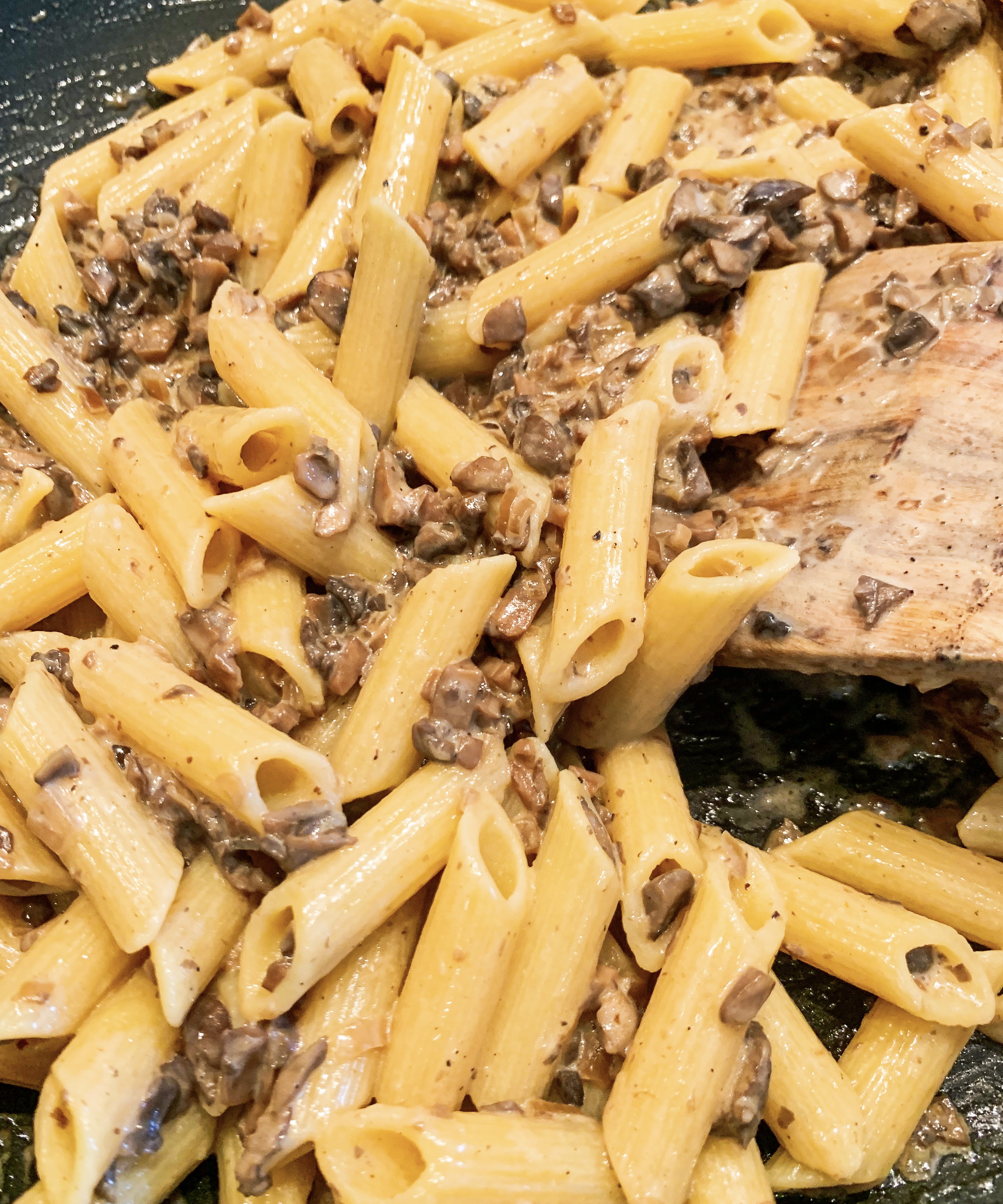
Penne with Wild Mushrooms & Crème Fraiche (Serves 4-6)
This is a lovely rich, unctuous sauce, pure comfort on a chilly night! The cooked penne is added to the sauce and then cooked for a further minute, to absorb the flavours – bearing this in mind it should be undercooked by a minute when initially cooked. The recipe calls for mixed mushrooms, but I must admit that I often make it with only chestnut mushrooms and it is still delicious!This recipe is from Delia Smith’s classic cookbook ‘How to Cook’.
500g penne pasta (gluten free if required)
450g mixed fresh mushrooms (flat, chestnut, shitake or wild mushrooms – see note above)
10g dried porcini mushrooms
250ml crème fraiche
3 tablespoons milk
50g butter
4 large shallots, peeled and finely chopped
2 tablespoons balsamic vinegar
¼ whole nutmeg, grated
Lots of parmesan cheese, to serve
Sea salt and black pepper
First of all put the porcini in a small bowl, then heat the milk and pour it over the mushrooms, leave them to soak for 30 minutes.
Heat the butter in a medium frying pan over a gentle heat, stir in the shallots and let them cook gently for 5 minutes.
Strain the porcini in a sieve lined with kitchen roll, reserving the soaking liquid, and squeeze the porcini dry. Then chop them finely and add to the pan, along with the fresh mushrooms and balsamic vinegar. Next, season with salt and pepper and nutmeg. Give it all a good stir, then cook gently, uncovered for 30-40 minutes until all the liquid has evaporated.
About 10 minutes before the mushrooms are ready, cook the penne according to the cooking instructions but reduce the cooking time by 1 minute (see note above)
Meanwhile mix the crème fraiche with the reserved mushroom soaking liquid and add to the mushroom mixture, warm through.
Drain the pasta and add to the pan with the mushroom sauce, stir well and cook over a gentle heat for 1 minute, so that it absorbs the flavours. Serve with lots of grated Parmesan cheese.
I recently discovered this cocktail whilst eating at my local Italian, Maremma (review here!). I’m not normally keen on the bitterness of a Negroni but this White Negroni Twist has sweeter, subtler flavours. Apart from gin, it is made from Quaglia Liquore Chinotto which has a spicy sweet, sour flavour and Cocchi Americano which is an Italian aromatised wine (both can be bought at amazon.co.uk). It’s worth splashing out on these ingredients for a truly sophisticated cocktail!…
2 tablespoons gin
2 tablespoons Quaglia Liquore Chinotto
1½ tablespoons Cocchi Americano
A twist of orange (optional)
Fill a glass with ice and pour over the ingredients, stir well, and top with a twist of orange peel to serve – how simple is that?!
This is the perfect autumnal roast, so I thought I should remind you of it – I first shared it in September 2020, so it may have slipped your mind!…
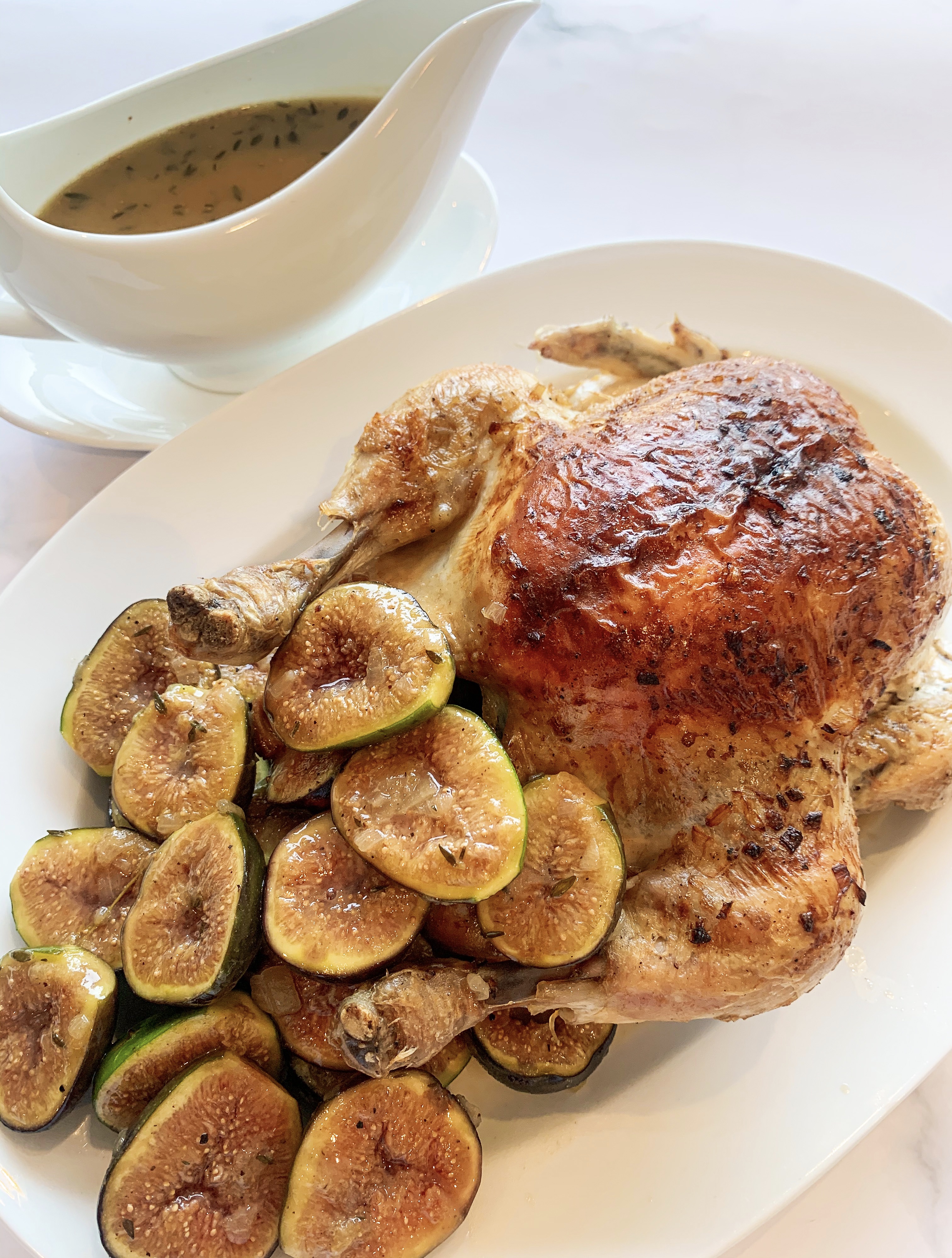
I love pot roasting chicken as once in the oven it just looks after itself. It is less fatty and messy to cook than a traditional roast, plus the juices caught in the bottom of the pot create a lovely sauce and the chicken comes out perfectly moist! This recipe with the figs is rather luxurious, and naturally very tasty. Any leftover figs are great the next day cold (and sticky!) with prosciutto or other cold meats – what a beautiful lunch!! I found this recipe in Diana Henry’s wonderful cookbook ‘A Bird in the Hand’, which concentrates purely on chicken recipes – it is a very comforting cookbook.I like to serve this dish with either Perfect Roast Potatoes or Concetta’s Potatoes (recipes here)
1½ tablespoons olive oil
1.8kg chicken
1 large onion, chopped
2 tablespoons Armagnac
125ml dry white wine
125ml chicken stock
4 sprigs of thyme
1 bay leaf
12 -18 figs, stalks snipped, halved
1 tablespoon cider vinegar
2 tablespoons honey
20g cold unsalted butter, cut into cubes
Sea salt and black pepper
Season the chicken with salt and pepper, heat the oil in a large casserole dish (with a lid) and brown the chicken all over.
Pour off most of the fat and fry the onion until soft and golden.
Deglaze the pan with the Armagnac, scraping the base of the pan with a wooden spoon to remove all the sticky bits, then add the wine, stock, thyme and bay leaf. Season with black pepper.
Return the chicken and any juices that have run out of it. Cover, put in a preheated oven, 180’c fan, for 70 minutes, then remove the lid and cook for another 20 minutes. Baste every so often
Remove the Chicken from the pan and keep warm. Skim off the fat from the cooking juices and strain into a frying pan. Boil to reduce them, until they become slightly syrupy.
Reduce the heat and add the figs, vinegar and honey. Cook for about 4 minutes.
Remove the figs with a slotted spoon and whisk in the cubed butter to make a rich and shiny sauce.
Serve the Chicken, either whole or jointed, on a warm platter with the figs surrounding it and the sauce in a jug on the side
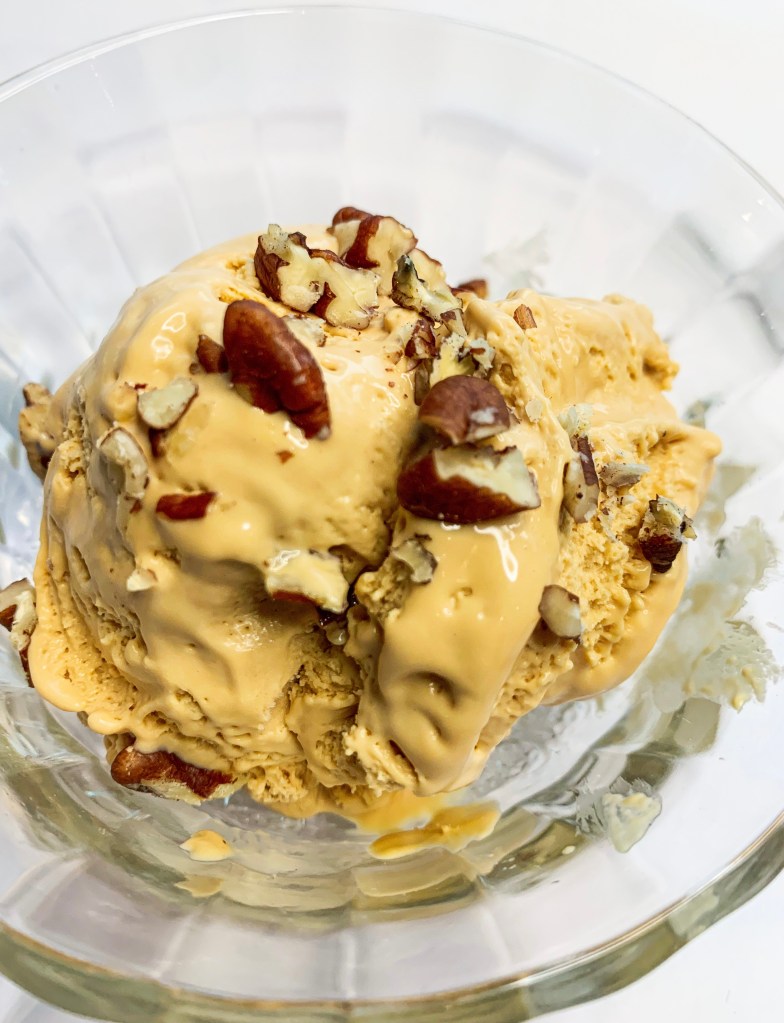
I’ve been rather spoilt lately as whilst holidaying in Italy I’ve been enjoying the ‘gelato’ – probably a little too much! Back in the UK I find that the next best thing is homemade no-churn ice cream. This Salted Caramel Bourbon flavour is my new favourite – Nigella Lawson deserves a round of applause for this recipe! It really is one of the best flavours I’ve come across. The Bourbon not only gives it a wonderful taste but makes it incredibly soft. Meanwhile, by using ‘Carnation Caramel’ rather than natural condensed milk you get the additional flavour of caramel, plus there is that extra pinch of salt – all in all, it’s heavenly! And it’s so easy to make…what are you waiting for?!…
(Go to my Desserts Page for Salted Honey Ice Cream, Coffee & Cardamom Ice Cream and Strawberry Ice Cream – these are also easy, no-churn recipes!)
397g can of Carnation Caramel (or dulce de leche)
300ml double cream
1-2 teaspoon sea salt flakes
2-3 tablespoons Bourbon
Pecan nuts, chopped to serve
Scrape the caramel condensed milk into a large bowl, add the cream and 1 teaspoon salt. Using an electric hand whisk, whisk until it becomes thick.
Taste to see if it needs more salt, I usually find 1 teaspoon is about right. Then gradually whisk in the Bourbon, taste again to check how much you want – I find 3 tablespoons is good. It will now be thick but floppy, rather like thick melted ice cream.
Pour the mixture into a freezer-safe container and to stop ice crystals forming, cover the mixture with a sheet of greaseproof paper before putting the lid on.
Freeze for 6-8 hours or overnight. The ice cream will keep in the freezer for up to 3 months.
Scoop to serve and sprinkle with some chopped pecan nuts.




 Menu Mistress