May 2026

I’m just back from my travels around Japan. And wow, what an incredible experience it was. I’m not going to deny that it was exhausting, but it was worth it! The memories that I have taken from the three hectic weeks are priceless (Tokyo, Hiroshima, Osaka, Kyoto, Kanazawa, Takayama… and the rest!). And of course, there was the food; what a feast it was for my taste buds! Before going, I spent a lot of time researching restaurants, booking those that I particularly wanted to visit, however, during the day, we went with the flow, and I soon realised that it’s very difficult to eat badly in Japan! (There were of course a few stand-out dishes – I will be updating my restaurant reviews soon with a list of my favourite spots!…)

Of course, too much of a good thing can spoil you. And on my return, I was yearning for the flavours of some European dishes (plus, I’ll be honest, I find it hard to recreate the wonderful flavours of Japanese dishes at home!). So, with that in mind, this month I’m sharing a wonderful, French-inspired roast chicken and a very sophisticated fish pie. Menu One is Dijon Roast Chicken. This classic recipe from Matthew Ryle’s cookbook ‘French Classics’ has a distinctly contemporary flavour. Rather than a thick gravy, it has a light sauce made from the resting juices, Dijon mustard and stock, which beautifully complements the delicate flavour of the chicken. Menu Two is my very favourite fish pie. Whilst recently scrolling through the pages of this website, I realised that I hadn’t shared this recipe for my ‘Ultimate Fish Pie’. It seems ridiculous now that I hadn’t, but I’d just presumed that I had! I’ve shared a couple of fish pies over the years, and they’re all delicious in their own way. However, if I were pushed to choose just one, this recipe would win for its elegant, creamy flavours; unlike a traditional fish pie, it’s not made with smoked fish, so it has a cleaner, fresher finish.  The recipe is from Gordon Ramsay’s cookbook ‘Kitchen Heaven’ and is worthy of one of his Michelin stars.

Menu One

Dijon Roast Chicken (Serves 4)

This classic recipe from Matthew Ryle’s cookbook ‘French Classics’ has a distinctly contemporary flavour. Rather than a thick gravy it has a light sauce made from the resting juices, Dijon mustard and stock, which beautifully complements the delicate flavour of the chicken. I like to serve it with ‘Concetta’s potatoes’ and a crisp salad dressed with a ‘Classic Vinaigrette’ (recipes below).

1 small chicken

60g Dijon mustard

80ml olive oil

Juice of 1 lemon (& reserved shells)

A few thyme sprigs

A few rosemary sprigs

1 garlic bulb, halved

For the garlic & herb butter:

75g butter, softened

1 garlic clove, finely grated

Finely grated zest of ½ a lemon

Leaves from 3 thyme sprigs

Sea salt flakes and black pepper

For the Jus:

300ml chicken stock

20ml olive oil

25g Dijon mustard

2 tablespoons finely chopped parsley leaves

  1. First of all, make the butter. Mix the butter with the garlic, lemon zest, thyme leaves and seasoning. Then use your fingers or the back of a spatula to gently lift the chicken skin from the breast, starting from the neck cavity, to make a pocket for the herby butter. Take the butter and spread it evenly under the skin – work gently to avoid tearing the skin.
  2. Whisk together the mustard, olive oil and lemon juice for the chicken. Rub this all over the chicken, then season with salt and pepper. Place the thyme, rosemary and half of one of the squeezed-out lemon shells in the cavity of the chicken. Place the halved garlic bulb and the remaining lemon half shell in a roasting tin, and sit the chicken on top of them.
  3. Place in a preheated oven, 220’c fan, for 20 minutes, then reduce the temperature to 160’c fan and cook for a further 40 minutes.
  4. Leave the chicken to rest in the tray for about 30 minutes, covered loosely with foil. Drain the excess fat from the juices, crush the garlic bulb and roasted lemon shell in the tray and add the stock. Bring to the boil, strain off the lemon shell and garlic bulb, then add the olive oil, Dijon mustard and chopped parsley, stir and simmer gently for a few minutes to make a light jus.
  5. Carve and serve your roast chicken with the Dijon jus.

Concetta’s Potatoes (Serves 4)

I have named these after our Italian friend (and chef), Concetta, who gave me the recipe many years ago; they are simply sliced baked potatoes with garlic, rosemary and sage.

4 large potatoes – such as Maris Piper (roasting potatoes)

1 teaspoon dried rosemary

1 teaspoon dried sage

Sea salt and black pepper

2 cloves garlic, crushed

Olive oil

  1. Peel and slice the potatoes, and parboil in boiling water for 4 minutes.
  2. Place in a roasting tin, sprinkle over the rosemary, sage and garlic, season with salt and black pepper and drizzle over some olive oil – mix well.
  3. Place in a preheated oven, 200’c fan, for 35-40mins until crispy and well browned.

Classic Vinaigrette

1 teaspoon Dijon mustard

1 tablespoon white wine vinegar

3 tablespoons olive oil

Sea salt and pepper

A salad of your choice

  1. Simply put all the ingredients in a bowl and whisk together (or place in a jar with a lid and shake vigorously).

Menu Two

The Ultimate Fish Pie (Serves 4)

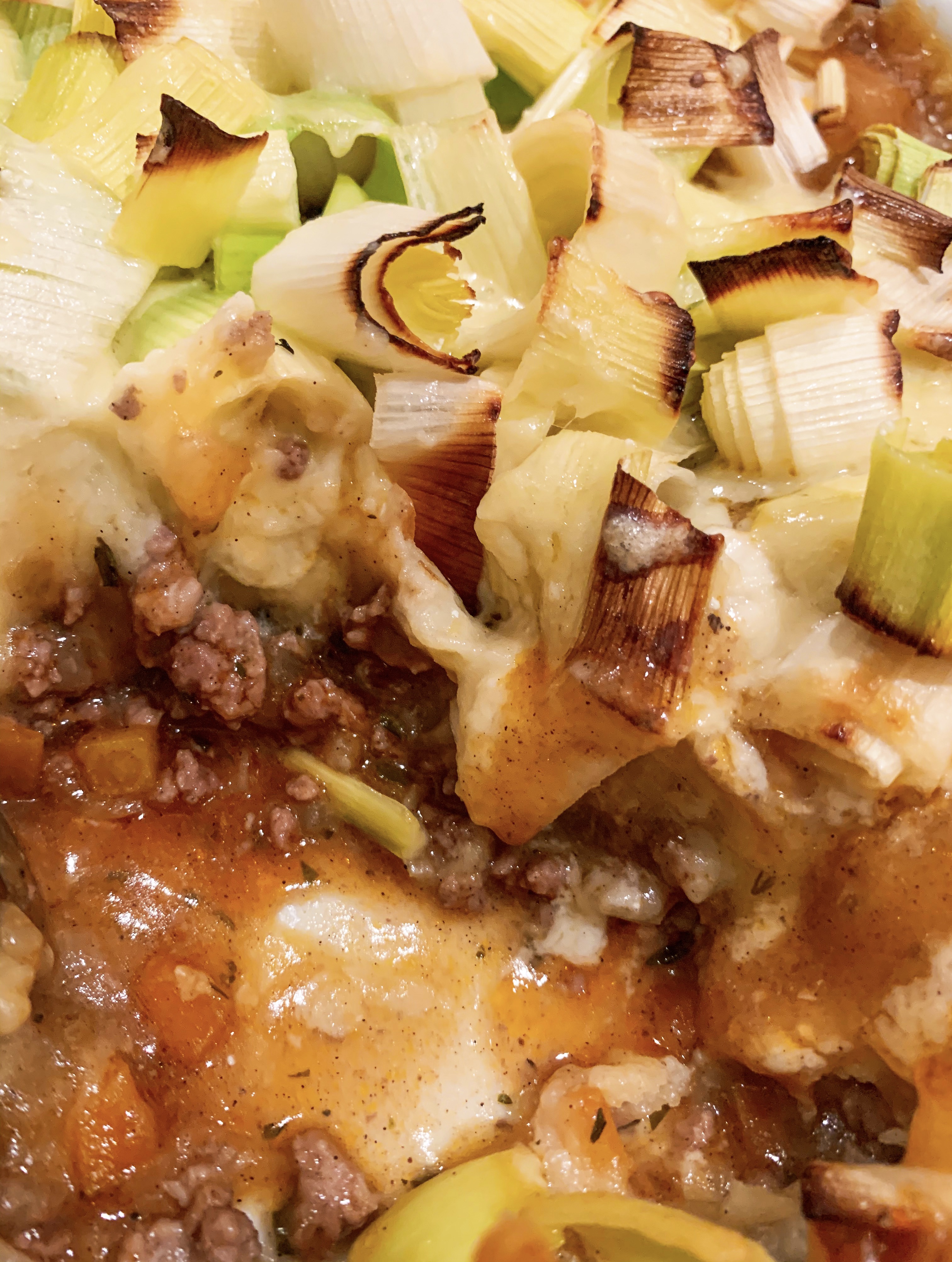
This is my very favourite fish pie! It has elegant, creamy flavours; it’s the type of fish pie you could easily serve at a dinner party, and indeed I have. I like to make it with a mix of cod, salmon and prawns, but you can use whatever mix that takes your fancy. The recipe is from Gordon Ramsay’s cookbook ‘Kitchen Heaven’ and is worthy of one of his Michelin stars. Rather than serving with just your bog standard peas I think this fish pie deserves a slightly more sophisticated pea dish – ‘Pea & Lettuce Fricassée’ (see recipe below).

800g fish, cut into bite-sized pieces (I like 300g cod/ 250g salmon/ 250g peeled, uncooked prawns)

½ a lemon

1 tablespoon fresh tarragon leaves, chopped

1 tablespoon fresh flat-parsley leaves, chopped

1 kg floury potatoes, such as Désirée or Maris Piper

2 tablespoons milk

15g butter

2 large egg yolks

Sea salt and black pepper

For the Fish Cream:

15g butter

2 shallots, peeled and finally chopped

125ml dry white wine

125ml Noilly Pratt vermouth

250g fish stock

250g double cream

Sea salt and black pepper

  1. First of all, make the fish cream. Heat the butter in a wide saucepan and gently sweat the shallots until soft. Add the wine and vermouth and simmer until the liquid has reduced by half. Pour in the stock and reduce by half again. Finally, stir in the cream and continue to reduce until the sauce has the consistency of pouring cream. Season and strain through a fine sieve.
  2. Season the fish and mix with the fish cream. Add a squeeze of lemon juice, the chopped tarragon and parsley, and gently mix. Pour into an earthenware dish.
  3. Meanwhile, cook the potatoes in salted boiling water until tender, and mash with the milk and butter until smooth. Stir in the raw egg yolks. Then spoon the mash over the fish, or if you’re feeling fancy, you could pipe it!
  4. Cook in a preheated oven, 180’c fan, for about 25 minutes until golden and bubbling; if you like, you could put it under the grill for 3-5 minutes at the end of cooking if you want a more golden brown, crisp finish.

Pea & Lettuce Fricassée (Serves 4)

Small knob of butter

500g podded peas, thawed if frozen

Few sprigs of thyme

Splash of water or chicken stock

3-4 iceberg lettuce leaves, shredded

Sea salt and black pepper

  1. Melt the butter in a pan and tip in the peas with some seasoning. Add the thyme sprigs and a splash of water or chicken stock and braise the peas for 3-4 minutes until tender and the pan is almost dry.
  2. Toss in the shredded lettuce and cook for another minute until the leaves have just wilted. Taste and adjust the seasoning.

March 2026

I’m looking forward to a ‘foodie’ adventure at the end of this month. I’m going to Japan. This is a destination which has been on my bucket list for years, so I’m extremely excited to be going there. For me, travelling goes hand in hand with food. Whether I’m going away in the UK or further afield, one of the first things I do after booking a trip is to research the restaurant scene. When time is of the essence, there is nothing worse than wasting a precious hour or two eating in a miserable restaurant that lacks both flavour and atmosphere. Therefore, I’ve been spending a lot of time researching restaurants in Japan. The choice is phenomenal; sushi, ramen, yakitori, katsu, shabu-shabu, gyu-don, onigiri, okonomiyaki… and the list goes on… and on. I’m not going to lie, whilst feeling very excited, I’m a little apprehensive; just recently, I visited Morocco, where I picked up ‘travellers tummy’, so that rather dampened my appetite for adventure! I’m hoping, though, that I’ll return from my trip both healthy and inspired to cook more Japanese dishes at home. To date, I haven’t had much success with the recipes from the few Japanese cookbooks I own. However, I have found that one can’t go wrong with Teriyaki dishes, so this month, in celebration of my Japanese adventure, I’m sharing a classic recipe for ‘Teriyaki Chicken’. It’s a fool-proof recipe that I often cook at home and one that is instantly gratifying with its sweet, salty flavour. I like to serve it with ‘Cucumber Pickle’ and ‘Rocket & Radish Salad with Japanese Dressing’. These two side dishes are recipes that I posted a few years back when I shared a different Terikayi recipe, which was for salmon (recipe here).

Whilst Menu One, ‘Teriyaki Chicken’, is a classic Japanese recipe, this month’s Menu Two has roots closer to home. ‘Lamb Chops with Balsamic Puy Lentils, Herbs & Crème Fraiche’ is a great recipe to have at hand when the new spring lamb enters our butchers in April, but to be honest, it’s a recipe that’s tasty whatever the month. I found it in one of Jamie Oliver’s older cookbooks, ‘Jamie’s Kitchen’; the balsamic lentils are a game-changer!


Hopefully you’ll be inspired to try these recipes. See you next week for my Tuesday Treat!..

Menu One

Chicken Teriyaki (Serves 4)

This is a wonderfully quick and easy supper dish. And extremely tasty! Serve with ‘Cucumber Pickle’ and ‘Rocket & Radish Salad’ (recipes below) plus some sticky rice. I particularly like it with skin-on chicken thighs; the skin keeps the meat juicy and helps the delicious sauce adhere to the chicken. However, if you prefer, you can use skinless thighs.

4 large boneless, skin-on chicken thighs

Sea salt and black pepper

Groundnut oil

For the Teriyaki sauce:

8 tablespoons soy sauce (gluten-free if required0

8 tablespoons mirin

8 tablespoons sake

4 tablespoons caster sugar

  1. First of all, make the sauce. Put all the ingredients in a small saucepan and gently heat until the sauce is hot and the sugar is dissolved. Set aside.
  2. Place the chicken thighs on a chopping board, skin side down. Now, gently cut slits into the meat, without slicing all the way through, by doing this you can flatten the meat with your hands so that the thighs are an even thickness. Lightly season the meat with salt and pepper.
  3. Heat a large frying pan over a medium-high heat and add a little groundnut oil. When the oil is hot add the chicken thighs, skin side down. Cook for 5 minutes, then press down the chicken with a spatula for 5-10 seconds to give the skin a nice sear. Then flip the chicken over and immediately, again, press down with the spatula for 5-10 seconds.
  4. Turn the heat to low, then cover the pan with a lid and steam the chicken for 3 minutes.
  5. Remove the lid and use a paper towel to wipe up the excess grease from the pan (this helps create a cleaner, transparent sauce).
  6. Now, increase the heat to medium and add the sauce. Tilt the pan and spoon the sauce over the chicken, continuing until the chicken is well coated and cooked through.
  7. Remove the chicken from the pan and continue to cook the sauce until it’s thick enough to your liking.
  8. Slice the chicken into slices (if you like, you can use a blow-torch to give a crispier sear to the skin).
  9. Serve on a plate, drizzled with the Teriyaki sauce.

Rocket & Radish Salad with Japanese Dressing

100g rocket

150g radishes, halved

1 tablespoon rice vinegar

1 tablespoon soy sauce (gluten free if required)

1 tablespoon toasted sesame oil

  1. Place the rocket and radishes in a serving bowl.
  2. Whisk the rice vinegar, soy sauce and toasted sesame oil together and, just before serving, pour over the salad and toss to combine.

Cucumber Pickle

1 cucumber, peeled, halved and seeds scraped out

2 tablespoons soy sauce (gluten free if required)

2 tablespoons rice vinegar

1-2 teaspoons sugar

3cm knob ginger, peeled and cut into thin matchsticks

Sea salt

  1. Slice the cucumber into half-moon slices, toss together with a large pinch of salt.
  2. Mix the other ingredients together and add the cucumber. Leave to marinate for half an hour before serving.

Menu Two

Pan-Fried Lamb Chops with Balsamic Puy Lentils, Herbs and Crème Fraiche (Serves 4)

This is a Jamie Oliver recipe from one of his older cookbooks, ‘Jamie’s Kitchen’. It’s’ loaded’ (as Jamie would say!) with flavour; the balsamic vinegar offers a subtle sweetness rather than overpowering the dish.

150g Puy lentils

1 small handful of fresh thyme leaves, picked

1 clove of garlic, peeled and finely sliced

Extra virgin olive oil

12 lamb chops

Sea salt and black pepper

4 tablespoons balsamic vinegar

1 handful of fresh parsley, leaves picked

1 handful of fresh basil, leaves picked

4 tablespoons crème fraiche

  1. First of all, put the lentils in a saucepan, then cover with water. Bring to the boil and cook gently for around 25-30 minutes (or according to the packet instructions), until the lentils are tender but still holding their shape. Drain and set aside.
  2. Bash up the thyme and garlic in a pestle and mortar. Add a good glug of olive oil and then rub this over both sides of the lamb chops. Season with salt and pepper, then place them between two pieces of cling film and use the bottom of a small saucepan to flatten them out to about 1 cm thick.
  3. Heat a frying pan, add a couple of tablespoons of olive oil and fry the chops for about 2 minutes on each side (depending on thickness), until golden. When the chops are cooked to your liking, remove them to a plate and rest whilst finishing the lentils
  4. Wipe the pan to remove any fat. Add the balsamic vinegar, bring to the boil, scraping up all the goodness from the bottom of the pan. Add the lentils, parsley and basil. Heat through until the herbs have wilted. Season to taste with salt and pepper and a drizzle of extra virgin olive oil.
  5. Divide the lentils between 4 plates and place the lamb on top, with any resting juices poured on top. Serve with a dollop of crème fraiche.

February 2026

I’m sure that we’ve all had the experience of taking a bite of a dish and being catapulted back in time. Our food memories are incredibly strong; not only is our brain triggered by a dish’s flavours, but also its smell, texture and even the sight of it. Many of the recipes on Menu Mistress are closely linked to my memory bank – just a glimpse of a recipe can transport me to past experiences, people and places. For example, last summer, whilst in Italy, I cooked ‘Pasta Diavola with Burrata & Basil’ quite a few times (it’s so easy!), since returning, just the idea of it propels me to our sunny Italian terrace with its relaxed summer mood. Another recipe, ‘Daddy’s Curry’ (the name is a give-away here!), is one of those childhood recipes which never fails to evoke many memories. Meanwhile, ‘Peppered Fillet of Beef with Port Sauce’ takes me to a New Year’s Eve dinner with old friends. I could go on and on…

Just recently, this link between food and memories really captured my imagination when I rediscovered a recipe in one of my files. It’s a simple recipe, in fact, I can’t quite believe that I haven’t shared it with you before (so many recipes, so little time!!). Seeing this recipe again for a ‘Pea & Pancetta Sauce’ took me straight back to my first trip with my Italian class; on that occasion, we went to Bologna. Bologna is a foodie’s dream; in fact, it’s nicknamed ‘La Grassa’ or rather ‘The Fat One’, referring to its abundant and high-quality cuisine! During our trip, apart from eating at every opportunity, we had a cookery class at the home of Rita Mattioli, who introduced us to this simple sauce. Just a few months later, I discovered that chef Rick Stein had also visited Rita in Bologna and was raving about his lunch with her – the aforementioned pasta dish! This month, finally, I’m sharing it with you so that you too can make your own happy memories…

Menu One, ‘Farfalle with Peas & Pancetta’, is incredibly easy to make. There’s no need to serve it with fresh pasta made from scratch (as Rita did), I simply use dried pasta – Farfalle goes particularly well with this sauce. This month’s Menu Two, ‘Coconut, Lime and Chilli Spatchcock Chicken’, has completely different flavours. It’s the perfect recipe to give your taste buds a little ‘zing’ on a cold February day. I’ve made this on numerous occasions for friends and family. However, the particular memory that this recipe brings to mind is the time that I made it for my friends, Maria and Alan; I was so busy chatting and enjoying myself (and a few glasses), that I took my eye off the ball  – this can be a common occurrence when I’m entertaining! Anyway, I forgot to add a key ingredient, the coconut milk, to the roasting tray. I discovered this error when removing the roasted chicken from the oven, so I had to improvise and add the coconut milk to the sauce at the end of cooking! Fortunately, it turned out alright (with a little reduction and extra seasoning!), not quite as tasty as it should have been, but we had wine and good company, so all was forgiven! What would cooking memories be if we didn’t make a few of these mistakes?!..

I hope you enjoy these recipes and that they inspire you to make some foodie memories in your kitchen!

See you next week for my Tuesday Treat…

In the meantime, do you need some new tunes for your kitchen?… check out what I’m cooking to: Music to Cook to…MenuMusic Twenty Nine (here!).

Menu One

Farfalle with Peas and Pancetta (Serves 4)

This recipe takes me straight back to my first trip with my Italian class; on that occasion, we went to Bologna. During our trip, apart from eating at every opportunity, we had a cookery class at the home of Rita Mattioli, who introduced us to this simple sauce. Just a few months later, I discovered that chef Rick Stein had also visited Rita in Bologna and was raving about his lunch with her – this pasta dish! It’s not a particularly sophisticated recipe, but its simplicity is very comforting, particularly when you need a quick midweek supper dish. It’s incredibly easy to make; there’s no need to serve it with fresh pasta made from scratch (as Rita did), I simply use dried pasta – Farfalle goes particularly well with this sauce.

100g shallots, finely chopped

30g butter

200g pancetta, diced

500g frozen petit pois

1 bay leaf

Sprig of thyme

400ml chicken stock

70g parmesean cheese, grated (plus more to serve)

400g farfalle (gluten free is required)

Sea salt and black pepper

  1. Melt the butter in a pan over a medium heat and sweat the shallots for 4 minutes or so until soft. Add the pancetta and cook for a further 4 minutes.
  2. Now add the peas, bay leaf, thyme and stock, bring to the boil, then reduce the heat and simmer for 10-15 minutes.
  3. Finally, stir in the grated parmesan, mix well and season with salt and pepper
  4. Meanwhile, cook the farfalle, according to the packet instructions, until al dente.
  5. Drain the pasta and add to the sauce. Stir to combine and serve with more freshly grated parmesan.

Menu Two

Coconut, Lime & Chilli Spatchcock Chicken (Serves 4)

This is the perfect recipe to give your taste buds a little ‘zing’. It’s a super easy, beautifully fragrant roast with a delicious broth. I like to serve it with rice. Thank you to cookbook writer Seema Pankhania for this wonderful recipe!

How to Spatchcock a Chicken:

On the backside of the chicken, using a pair of strong kitchen scissors, cut along either side of the back bone to remove it, then flip the chicken over and press down very firmly on its breast bones, it will give a satisfying crack as it flattens! Some people like to insert skewers to help keep the chicken flat during cooking but in my experience they make no difference, so I prefer not to use them as they make it more difficult to carve the bird.

Click here to watch the video on me spatchcocking a chicken on my Instagram Page!

1 chicken (about 1.5kg), spatchcocked (see above or as your butcher to do it!)

400g shallots, peeled and halved if large

1 x 400ml tin coconut milk (separated into 200ml portions)

Juice of 3-4 limes, plus extra wedges to serve

Handful of coriander and Thai basil to garnish

For the marinade:

1 tablespoon coriander seeds

1 tablespoon black peppercorns

1 teaspoon cumin seeds

1 teaspoon fennel seeds

1 teaspoon chilli powder

1 teaspoon salt

4 tablespoons fish sauce

2 tablespoons dark soy sauce (gluten-free if required)

5 birdseye chillies, plus one extra sliced to garnish

6 garlic cloves

4cm piece of ginger, peeled

3 tablespoons light brown sugar

  1. Combine all the marinade ingredients in a blender and blitz to a paste. Rub it generously over the chicke, front and back. Place in a large container, cover and marinate for at least 1 hour, ideally overnight.
  2. Arrange the shallots in a roasting tin and top with the chicken, skin side up. Pour 200ml of the coconut milk into the tin. Roast in a preheated oven, 200’c fan, for 50 minutes or until the skin is blistered and the bird is cooked through.
  3. Remove the chicken and shallots to a serving platter. Transfer the roasting tin with all its cooking juices to the hob, add the remaining 200ml of coconut milk and bring to a simmer. Stir in the lime juice, season.
  4. Serve the chicken with the shallots and coconut-lime sauce with a scattering of the herbs, extra sliced chilli and wedges of lime.

‘Blast From the Past’ Recipe

Spatchcock Chicken with Rosemary, Garlic and Chilli (Serves 4-6)


January is the month for getting our diets back on track after December’s festive feasts. So, with this in mind, I thought I’d re-share this recipe, which was one of the first recipes I shared back in 2020! It’s a recipe which I go back to time and time again. It’s my healthy day recipe. When I feel that I’ve overindulged, I love the subtle seasoning of this chicken and enjoy it simply served with a good green salad. I try to resist baby roast potatoes on the side, but they sometimes win the battle (recipe here)!..

If  you get your chicken from your butcher, ask him to spatchcock it for you, alternatively it is very easy to do yourself…

How to Spatchcock a Chicken:

On the backside of the chicken, using a pair of strong kitchen scissors, cut along either side of the back bone to remove it, then flip the chicken over and press down very firmly on its breast bones, it will give a satisfying crack as it flattens! Some people like to insert skewers to help keep the chicken flat during cooking but in my experience they make no difference, so I prefer not to use them as they make it more difficult to carve the bird.

Click here to watch the video on me spatchcocking a chicken on my Instagram Page!

1 x 1.8 – 2.25kg chicken

1 teaspoon of sea salt flakes

For the marinade:

1 tablespoon freshly chopped rosemary (about 3 sprigs)

4 cloves of garlic, crushed

1 teaspoon freshly ground black pepper (about 20 grinds of a pepper grinder)

½ teaspoon chilli flakes

Juice of half a lemon

4 tablespoons olive oil

  1. Firstly make the marinade by combining all the ingredients together.
  2. Cover the chicken all over with the marinade – I use a brush to do this.
  3. Place it breast side up, flattened out, in a roasting tin. Sprinkle over with the sea salt flakes.
  4. Place in a preheated oven, 180’c fan, for 45-50 minutes, depending on the size of your chicken.

Tuesday Treat

Carrot Cake with Tahini Orange Frosting

Can a cake be healthy? Well, this one’s certainly healthier than most!.. It’s from ‘The Food For Life Cookbook’ by Tim Spector (of ‘Zoe’ fame). He claims that the added benefit of the Greek yoghurt frosting is that the protein and fat will help slow the absorption of sugar into your bloodstream from the cake… so it’s definitely worth a try!.. And it’s delicious; the aforementioned frosting gives a wonderful tartness that cuts the sweetness of the carrot cake. A friend introduced me to this recipe when she served the cake at a luncheon; we were all very impressed and felt rather smug at being so healthy – thanks, Sarah!

85ml extra virgin olive oil, plus extra for greasing

100ml kefir

3 eggs

4 tablespoons honey

85g soft light brown sugar

285g ground almonds

2 tablespoons ground cinnamon

4 tablespoons pumpkin seeds

50g walnuts, roughly chopped

2 teaspoons baking powder (gluten-free if required)

1 teaspoon bicarbonate of soda

Pinch of salt

200g carrots, grated

For the topping:

185g Greek yoghurt

2 tablespoons tahini

1 teaspoon vanilla extract

1 teaspoon honey

Zest of ½ orange

2 tablespoons pumpkin seeds

Fresh berries

*You will need a 20cm round springform cake tin, greased and lined.

  1. Put the olive oil, kefir, eggs, honey and sugar in a bowl and mix to combine. Add the ground almonds, cinnamon, pumpkin seeds, walnuts, baking powder, bicarbonate of soda and salt and mix everything until thoroughly combined.
  2. Fold in the carrots and then transfer the mixture to the lined tin. Flatten with a spatula and bake in a preheated oven, 160’c fan, for 45-50 minutes until a metal skewer inserted in the middle comes out clean. Allow to cool completely before removing from the tin.
  3. Meanwhile, make the topping. Mix the Greek yoghurt, tahini, vanilla extract, honey and orange zest in a bowl – it will thicken slightly. Spread all over the cooled cake and decorate with fresh berries and a sprinkling of pumpkin seeds. (Store in the fridge covered for up to 5 days).