January 2022

Happy New Year and a very warm welcome to 2022!…

For Menu Mistress a new year means a new style. I have been mulling over a change for some time now and I feel that the start of 2022 is the ideal time to introduce a few changes to the way I will be sharing recipes in the future.

It seems incredible that since starting this blog in June 2020 I have shared over two hundred recipes! I fear that in my enthusiasm to share, I have bombarded you with so many recipes that it’s difficult to keep up…. plus, I would be lying if I didn’t admit that I’m struggling to keep up myself! As you may know, Menu Mistress was born out of boredom during the first 2020 lockdown; when my normal routine was interrupted, I decided to create this website to share recipes from my favourite cookbooks. I must admit Menu Mistress has become a bit of a ‘monster’ in my life, but one which I love despite the time it demands. Now that the world is learning to live with Covid and my life has reverted to its normal routine, I’ve been ‘chasing my tail’ a little, so to continue enjoying Menu Mistress, I need to find a balance…

With the advent of 2022, my New Year’s resolution is all about balance! Therefore, I will be continuing to share recipes each month but the main blog will only be on the first Wednesday of the month. On the following alternate Tuesdays, I will post a ‘Tuesday Treat’ which will be in either the form of a sweet treat or a cocktail. Then on the third Wednesday of the month, I will be posting a ‘Blast from the Past’ recipe to remind you of a recipe that I have previously shared, which if you haven’t done so already, you must cook! In the meantime, I will continue to post restaurant reviews depending on when and where I have eaten!… So, please keep popping by to check out what I’m sharing and if you haven’t already done so, you really should sign up for my weekly emails which will remind you of my new posts (sign up via the link towards the bottom of this page).

Now, with my New Year’s resolution sorted, let’s start talking about this week’s recipes…

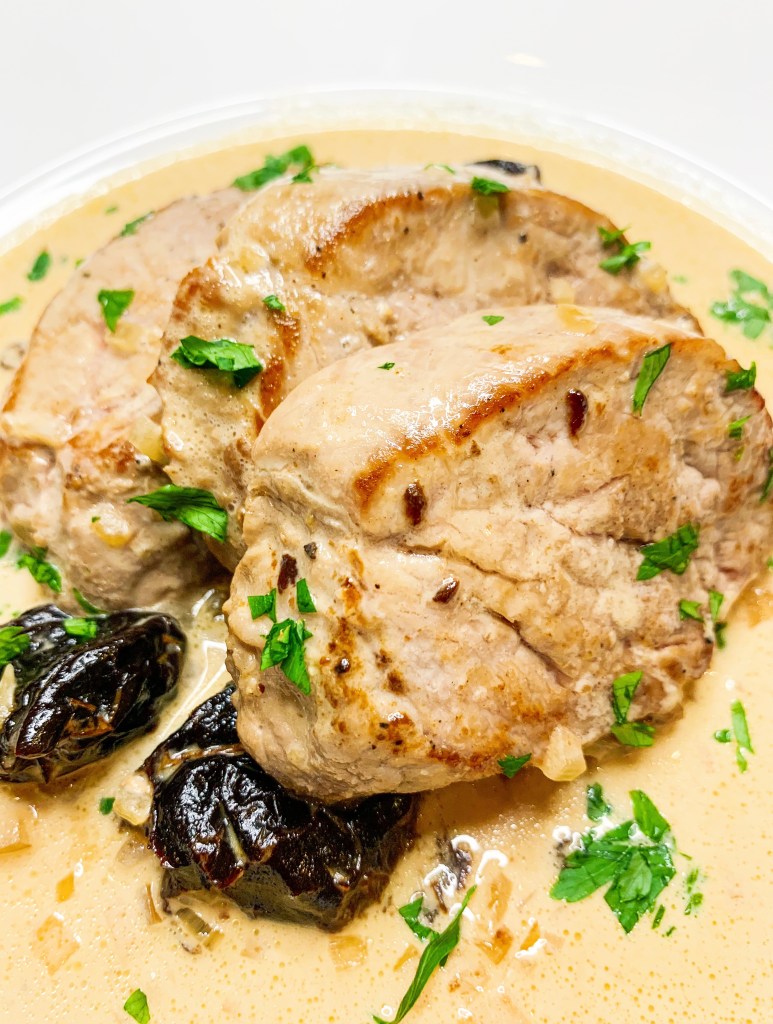
January can often feel like the longest month after the merriment of Christmas, however I think that you’ll cheer up with these new recipes on your agenda. I am constantly trying new recipes, many don’t make the grade for Menu Mistress, but when they do they always make me smile! The recipes that I’m sharing this week made a particular impression, I can honestly say that I glowed when I tasted them as there was little doubt that they were winning dishes. Menu One is ‘Spiced Venison Stew’, which uses the idea of mulled spices to create a wonderfully spiced, warming stew which has a subtle ‘kick’. It’s the sort of dish which will cheer you up on a cold, dreary January day! Menu Two is ‘Chicken Pot Parmentier’, I must admit it’s not the quickest of recipes, but the result will again cheer you up! It would make a perfect weekend meal, it’s an elegant yet comforting dish. The tasty chicken filling is topped with buttery mash – a French take on a ‘Shepherds Pie’, but dare I say it, better?!… Menu Three is an Ottolenghi recipe, ‘Gigli with chickpeas and Za’atar’, which is not only delicious but incredibly easy to cook – a boost to any midweek evening! Despite having a vegetarian base it is made with anchovies and chicken stock so has a very meaty, fulfilling flavour yet still manages to have a clean edge. If you can get hold ‘gigli’ pasta, do use these pasta shapes as they make the dish look particularly cheerful, but of course, any other pasta shape such as conchiglie can be substituted and will taste just as good. Although I’m cutting back on my blogs, I thought I’d give you four new savoury recipes each month, so this week I’m sharing four recipes instead of three! Menu Four is a vegetarian recipe which I think we all need after all the heavy and no doubt meaty food we’ve enjoyed over the festive period!… ‘Pomegranate-Cooked Lentils and Aubergines’ is a fantastic recipe that I recently discovered in the cookbook ‘Falastin’. As you may know from my previous blogs, my husband, Nick, is not a big fan of vegetarian food, but he was full of praise for this dish – so what better endorsement could there be?!…

A very Happy New Year to you all!… Here’s to cooking our way through 2022 with the recipes I’ll be sharing on Menu MistressI’ll be back next week with a Tuesday Treat!…

Menu One

Spiced Venison Stew (Serve 6)

This stew uses the idea of mulled wine and its spices to create a wonderfully warming stew which has a subtle spicy ‘kick’. It’s the sort of dish which will cheer you up on a cold, dreary winters day. The recipe is from Rosie Birkett’s cookbook, ‘The Joyful Cook’, which I thoroughly recommend! You could substitute the venison for beef shin, however venison’s rich flavour works particularly well with the robust spices in this stew. The amount of chilli paste depends on the make of paste you use and your taste buds, it is a matter of trial and error. I use ‘Gran Luchito’ chipotle chilli paste which can be found in supermarkets or online, I start with about ½ tablespoon and add more towards the end of cooking depending on my mood.

1kg venison shoulder cut into 2-3cm chunks (or you could use beef shin)

4 tablespoons plain flour (gluten-free if required)

1½ tablespoons olive oil

100g smoked pancetta lardons

1 onion, finely chopped

2 celery sticks, strings removed and sticks finely chopped

1 large carrot, finely chopped

1 bay leaf

2 sprigs of thyme

2 tablespoons flat-leaf parsley, chopped, plus extra to garnish

1 cinnamon stick

Pinch cumin seeds

1 star anise

½ -1 tablespoon chipotle chilli paste (see note above)

1 tablespoon tomato purée

400ml spicy red wine (Malbec or similar)

½ orange, juiced and zest grated

250ml beef stock

Sea salt and black pepper

For the pink pickled onions:

1 small red onion, thinly sliced

3 black peppercorns

1 clove

1 teaspoon caster sugar

½ teaspoon salt

4 tablespoons cider vinegar

  1. Dry the chunks of venison well with kitchen roll, then season the flour with salt and pepper and roll the meat in it.
  2. Heat the oil in a large casserole dish over a medium-high heat, add the pancetta and fry for 4-5minutes, until they are lightly coloured and starting to caramelise. Transfer to a plate with a slotted spoon and set aside. Now, working in batches brown the venison in the fat for a few minutes on each side. Add the brown meat to the pancetta.
  3. Add the vegetables, bay leaf, herbs, spices and chilli paste to the casserole dish. Stir well and cook over a low-medium heat for 10-15 minutes, adding a little extra oil if needed. Now stir in the tomato purée and cook for a minute then pour over the red wine and orange juice and add the zest, turn up the heat, stirring well to release any bits stuck to the bottom.
  4. Return the venison and pancetta to the casserole. Add the beef stock and bring to the boil. Cover with a lid and place in a preheated oven, 180’c fan, for 1½-2 hours, until the venison is meltingly tender and the sauce thick and rich. Taste for seasoning and adjust accordingly, adding more chilli paste if you fancy.
  5. Meanwhile make the pink pickled onions. Place the onion slices in a heatproof bowl, cover with boiling water and leave for 1 minute. Drain off the water, then add the spices, sugar, salt and cider vinegar to the bowl and stir to combine. When you are ready to serve, drain on some kitchen paper to get rid of the brine.
  6. Serve the venison topped with the pink pickled onions and some chopped parsley. This is great with my ‘Favourite Mashed Potato’ (recipe below).

Staple Side Dish’ – ‘Favourite’ Mashed Potato (Serves 4)

There are numerous recipes for mashed potato, and yes, I have tried many, but this one is probably my favourite. It actually doesn’t contain any butter, which makes me feel that it could be healthy, although admittedly it does contain double cream! Don’t be put off by the garlic, you really can’t taste it, it just enhances the flavour of the potato. I must admit I ‘cheat’ when it comes to mashing, I am fortunate to have an amazing kitchen appliance, a Thermomix, this is a serious piece of kitchen kit; I can actually steam my potatoes in it and then mash them in seconds. If you don’t have a Thermomix you can either mash by hand, however,  for an easier option I would recommend doing as Delia Smith suggests in her ‘Winter Cookbook’ – whisk them with an electric hand whisk. When whisking them you do have to be careful – make sure that the potatoes are absolutely cooked, otherwise they will go gluey. Start off with the speed slow to break up the potatoes and then increase to a high speed to quickly whip them until smooth – don’t do it for too long, as again, they will go gluey, which is not good!

1kg potatoes (floury, such as Maris Piper)

100ml full-fat milk

100ml double cream

2 cloves garlic, sliced

Sea salt and black pepper

  1. Peel the potatoes and cut into even sized chunks. Steam until completely cooked through.
  2. Put the milk, cream and garlic in a small saucepan and bring to the boil. Remove from the heat.
  3. Mash the potatoes (see note above) adding the milk mixture a little at a time. Season well with salt and pepper.

Menu Two

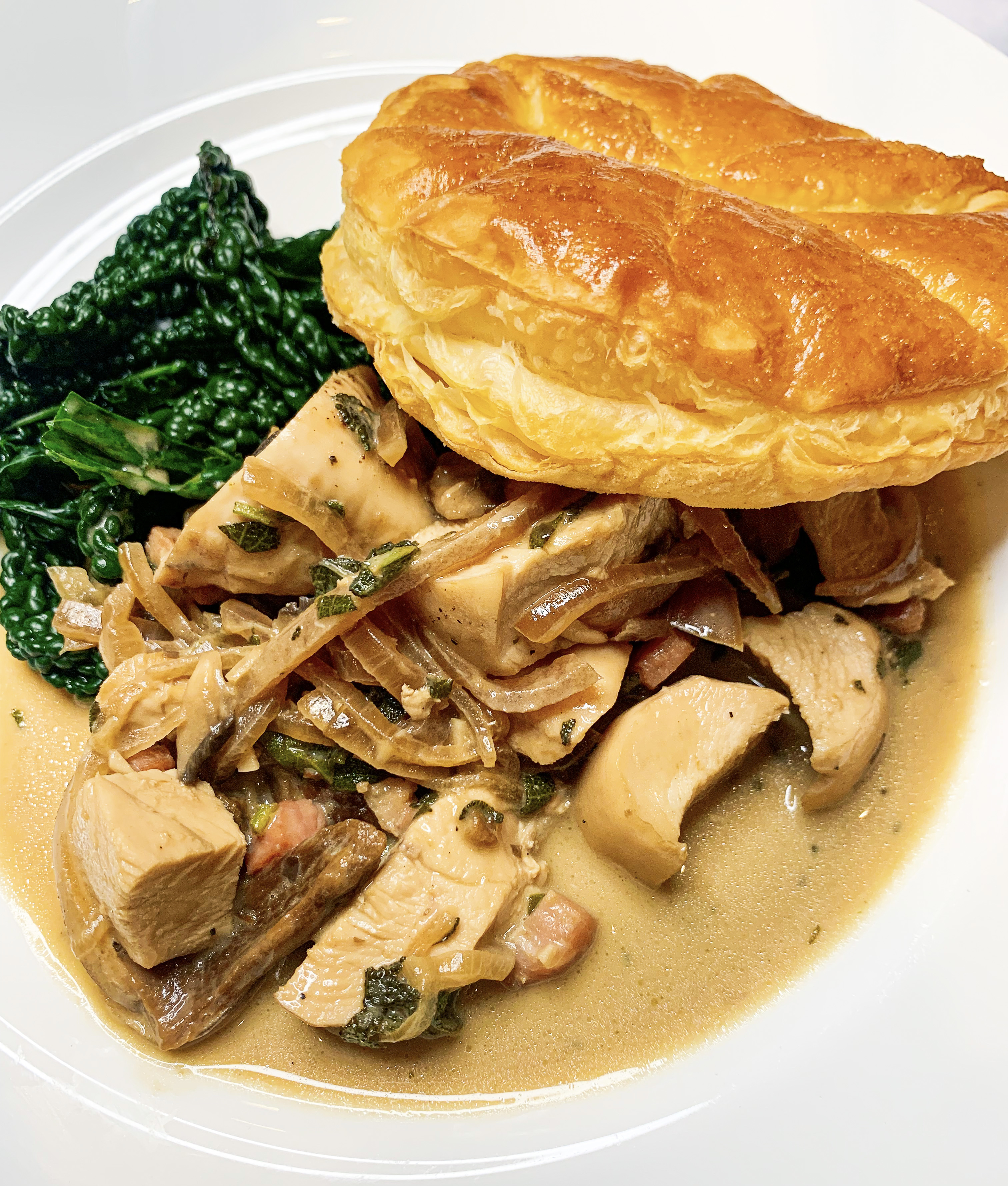
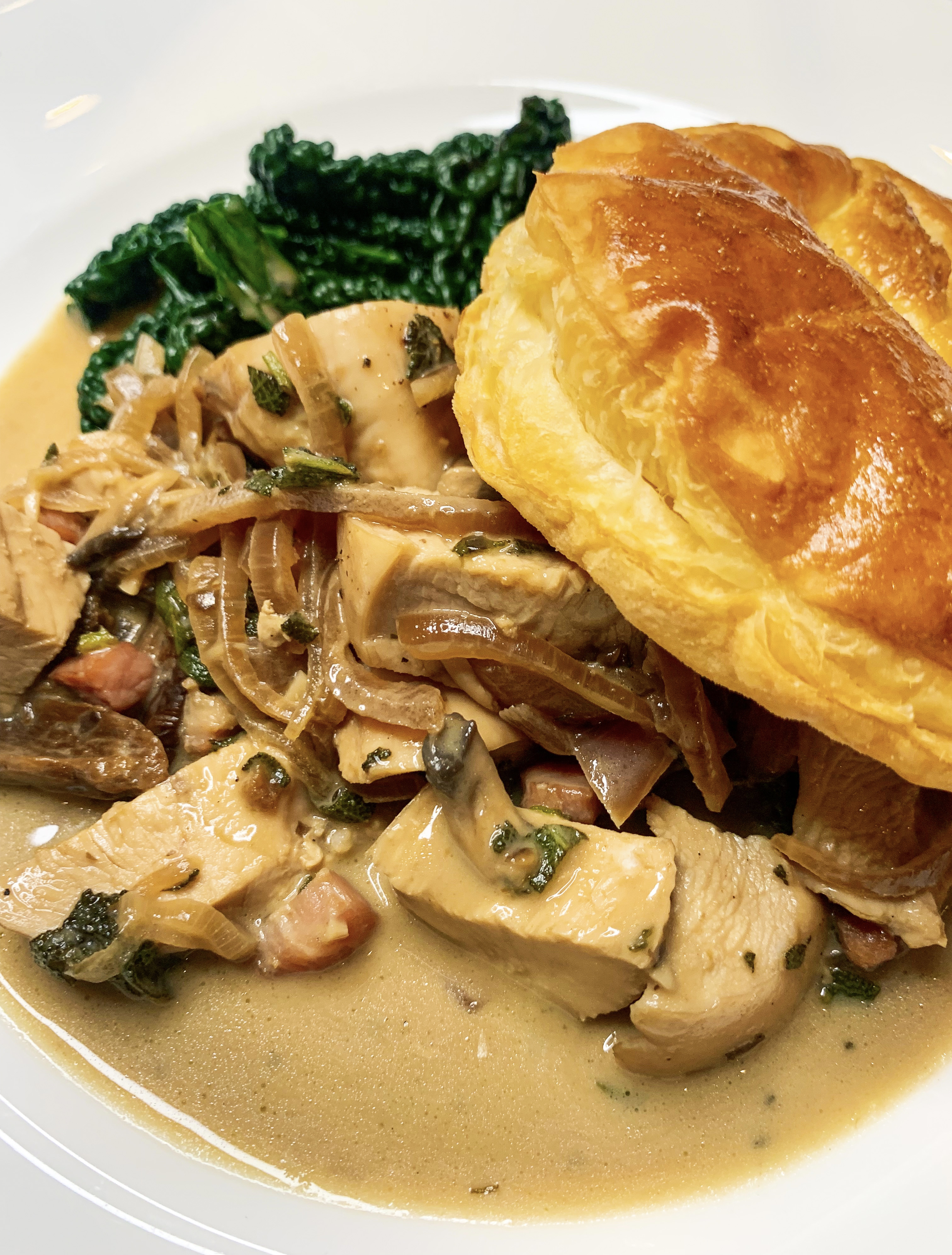
Chicken Pot Parmentier (Serves 6)

This is an elegant yet comforting dish, I must admit that it’s not the quickest of recipes, but the result is definitely worth it! The tasty chicken filling is topped with buttery mash – a french take on a shepherds pie, but dare I say it, better?!…I have taken the recipe from David Leibovitz’s wonderful cookbook, ‘My Paris Kitchen’.

500g chicken breasts

1 litre chicken stock

3 carrots, peeled and diced

2 celery sticks, diced

8 shallots, peeled and halved

85g butter

60g plain flour (gluten-free if required)

1 clove garlic, crushed

2 tablespoons dry white wine

130g peas

2 tablespoons tarragon, finely chopped

2 tablespoons flat leaf parsley, finely chopped

1 teaspoon sea salt

½ teaspoon freshy ground black pepper

For the potato topping:

1.2kg potatoes (such as Maris Piper), peeled and cut into large chunks

85g butter, cubed at room temperature plus 2 tablespoons melted

1 teaspoon sea salt

3 large egg yolks

80ml double cream

Freshly ground black pepper

Pinch of freshly grated nutmeg

  1. First of all cook the chicken breasts by dropping them into a pan of boiling water, turn off the heat and cover. Leave for about 15 minutes by which time they should be cooked through (if they are very large cut them in half). Allow to cool before cutting into bitesize chunks and set aside.
  2. To make the filling, heat the stock in a saucepan over a medium heat with the carrots, celery and shallots. Let it simmer for about 15 minutes until the vegetables are almost tender. Turn off the heat and set aside.
  3. Melt the butter in a large saucepan. Stir in the flour and cook, stirring constantly for 2 minutes. Whisk in a few ladlefuls of the warm stock into the flour mixture. Gradually add all the stock, including the vegetables, stirring as you go. Cook for about 10 minutes until the sauce has thickened. During the last minutes of cooking add the garlic and white wine.
  4. Remove the pan from the heat and stir in the chunks of chicken, peas, tarragon, parsley, salt and pepper. Taste, adding more seasoning if necessary. Pour the mixture into a shallow baking dish (2.5/3litre) and set on a baking sheet.
  5. To make the potato topping, cook the potatoes until tender (either steam them or cook in a pan of boiling water). Drain, then mash with the cubed butter and salt. Let the mashed potatoes cool for about 5 minutes before stirring in the egg yolks. Finally stir in the cream, a generous amount of pepper and the nutmeg.
  6. Spread the mash over the chicken filling and dribble over the melted butter with a pastry brush. Bake in a preheated oven, 200’c fan, for 30 minutes until the potatoes are golden brown.

Menu Three

Gigli with Chickpeas and Za’atar (Serves 4)

This is a recipe from Ottolenghi’s cookbook, ‘Simple’, it is not only a delicious recipe but incredibly easy to cook – a boost to any midweek evening! Despite having a vegetarian base it is made with anchovies and chicken stock so has a very meaty, fulfilling flavour yet still manages to have a clean edge. If you can get hold ‘gigli’ pasta do use these pasta shapes as they do make the dish look particularly cheerful, but of course any other pasta shape such as conchiglie can be substituted and will taste just as good.

45ml olive oil, plus extra to serve

½ onion, finally chopped

2 garlic cloves, crushed

2 teaspoons ground cumin

10g thyme leaves, finely chopped

25g anchovy fillets in oil, drained and finely chopped (about 7)

Zest of half a lemon, plus 2 tablespoons of juice

2 x 400g tins of chickpeas, drained

1 teaspoon soft brown sugar

400ml chicken stock

200g gigli pasta or conchiglie or orecchiette (gluten-free if required)

50g baby spinach leaves

15g parsley, roughly chopped

1½ teaspoons za’atar

Sea salt and black pepper

  1. Put the olive oil into a large sauté pan and place on a high heat. Add the onion, garlic, cumin, thyme, anchovies, lemon zest, ½ teaspoon of salt and a good grind of black pepper. Fry for 3-4 minutes, stirring often, until soft and golden.
  2. Reduce the heat to medium, then add the chickpeas and sugar and fry for 8 minutes, stirring occasionally until the chickpeas begin to brown and crisp up. Add the chicken stock and lemon juice and simmer for 6 minutes, until the sauce has reduced slightly. Remove from the heat and set aside.
  3. Meanwhile cook the pasta according to the packet instructions until al dente.
  4. Stir the spinach and parsley into the chickpeas – the residual heat should cook the spinach but if it doesn’t wilt put the pan back over a gentle heat. Stir the pasta into the chickpea mixture. Divide between four plates and sprinkle the za’atar on top and drizzle with a little olive oil.

Menu Four

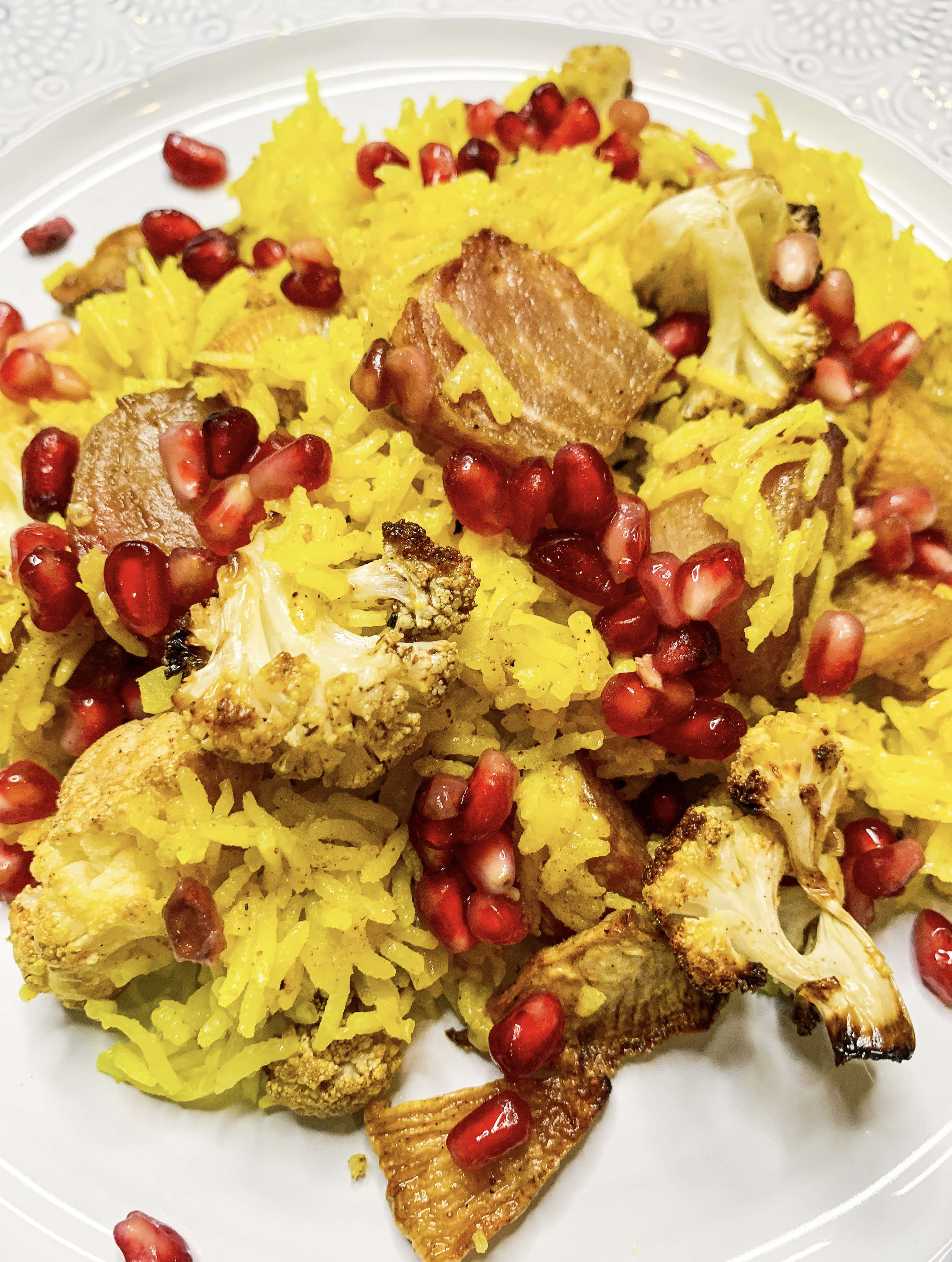
Pomegranate-Cooked Lentils and Aubergines (Serves 4)

This is my new favourite vegetarian meal! I found it in the cookbook ‘Falastin’ by Sami Tamimi and Tara Wigley, which celebrates the food of Palastine. I adore Pomegranate Molasses as it adds such a wonderfully intense sweet and sour flavour to dishes but without being overpowering, in this recipe it really adds a little bit of magic! This dish is great served simply with rice or bread. The leftovers make a delicious lunch (I speak from experience!) – or as suggested in the cookbook you could have them for breakfast with a fried egg, I’m yet to try this but it sounds delicious!…

2 aubergines (500g), cut into 3cm dice

60ml olive oil, plus 1½ tablespoons extra to serve

150g green or brown lentils

4 cloves garlic, crushed

1 green chilli, deseeded and chopped

1 tablespoon ground cumin

1½ teapoons fennel seeds, roughly crushed in a pestle and mortar

1 teaspoon ground coriander

1 tablespoon cornflour

4 tablespoons (80g) pomegranate molasses

2 tablespoons lemon juice

1 tablespoon tahini

Salt and black pepper

Fried Onions:

About 400ml vegetable oil

2 large onions, thinly sliced

2 tablespoons cornflour

To Serve:

A handful of parsley, roughly chopped

40g pomegranate seeds

2 red chillies, thinly sliced

  1. In a large bowl mix the aubergines with 2 tablespoons olive oil, ½ teaspoon salt and a good grind of black pepper. Tip them on to a large parchment-lined baking tray (about 35x40cm), so that they are in a single layer. Roast in a preheated oven, 220’c fan, for 25 minutes, stirring once or twice throughout. Remove from the oven and set aside.
  2. Rinse the lentils and put them in a saucepan with 1 litre of water. Bring to the boil, then reduce the heat to medium and simmer for about 20-25 minutes until they are almost cooked. Drain the lentils, reserving 350ml of the cooking liquid.
  3. To fry the onions, pour enough vegetable oil into a large saute pan so that it rises 3cm up the sides of the pan. Mix the onions with the cornflour and then when the oil is hot, carefully fry the onions in batches – fry for about 6-7 minutes until they are golden brown, stirring to stop them sticking together. Remove each batch with a slotted spoon and drain on kitchen paper and sprinkle with salt.
  4. Wipe clean the sauté pan and add the remaining 2 tablespoons of olive oil. Place over a medium heat and add the garlic and chilli. Fry for 2 minutes stirring, until the garlic is light golden brown. Add the cumin, fennel and coriander and stir continuously for 30 seconds. Stir in the cornflour for 1 minute, then add the lentils, the 350ml of reserved cooking liquid, ¾ teaspoon of salt and plenty of pepper. Bring to the boil and cook for 5-6 minutes stirring frequently until the liquid has thickened to the consistency of thick porridge. Finally, add the pomegranate molasses, lemon juice, tahini, all the aubergines and half of the fried onions. Stir through, then remove from the heat.
  5. Serve sprinkled with the remaining fried onions, the chopped parsley, pomegranate seeds and sliced chillies, finishing with a drizzle of olive oil and rice on the side.

Christmas 2021

Merry Christmas!… Yes, we are just a few days away from the big day, so I thought that this week I would re-post my Christmas day menu – the one which I will be enjoying at home with my family…

Over the years I have tried various ‘menus’ for Christmas Day, but for some time now I have been serving up Roast Goose and its trimmings. These days, I use a combination of recipes from Delia Smith and Gordon Ramsay – yes quite a combination, but definitely a winning one! ‘Roast Goose with Five Spice & Honey’, is a simple recipe from Gordon Ramsay, I like to serve it with his recipe for ‘Redcurrant & Red Wine Sauce’. At this point, for the trimmings, I move over to recipes from Delia Smith; ‘Prunes in Armagnac’ are a must (the sweetness complements the goose meat perfectly), ‘Braised Red Cabbage’ (my all-time favourite recipe for red cabbage!), ‘Parmesan Baked Parsnips’ and, of course, ‘Roast Potatoes’ (Delia’s recipe is always the winner!). I go slightly off-piste for the recipe for ‘Brussel Sprouts with Chestnuts, Bacon & Marsala’; they are a recipe that I have nabbed from Nigella Lawson. Finally dessert, now I must admit that I am not mad about Christmas pudding, so it appears on our Christmas menu just for the sake of tradition. For this reason, I have never felt the need to make my own, and over the years, after trying many ‘gourmet’ ones, I have always returned to M&S for ours – yes, not exactly the refined choice you might expect from a ‘foodie’ like myself, but it is very good! In addition to Christmas Pudding, I do serve up a very special dessert and one which I do make myself, ‘Passionfruit Parfait’ (a Gordon Ramsay recipe). In my opinion, its fresh, tangy flavour is perfect after the rich goose main course, much better than the traditional Christmas pudding!

This Christmas Dinner menu is very simple to make. I like to prepare most of the elements in advance so that on Christmas day I have little to do, other than putting things in the oven and getting my timings right. I make the Armagnac prunes several days in advance, then 2 days before Christmas I prepare the red cabbage – it will then sit quite happily in the fridge, prepared for the oven and ready to be cooked on Christmas Day (I sometimes cook it on Christmas Eve and reheat it on Christmas Day, as I find that this enriches the flavour). On Christmas Eve, I make the sauce and prepare the goose, parsnips, and sprouts so that they are ready to be cooked. Finally, I make the ‘Passion Fruit Parfait’. So, in fact, Christmas Eve is the day when I am most manic, and this is the way it should be, as, after all, Christmas Day is the day when you want to enjoy the company of your loved ones!

Merry Christmas!…

(Next week MenuMistress will be taking a break, but will be back Wednesday 5th January with some new recipes to brighten up your new year!…)

Roast Goose with Five Spice and Honey (Serves 6-8)

5.5 -6.5kg goose

2 oranges, finely grated zest and fruit cut into wedges

2 lemons, finely grated zest and fruit cut into wedges

2 tablespoons Chinese five spice powder

1 tablespoon sea salt

Freshly ground pepper

4-5 tablespoons runny honey, to drizzle

  1. First of all preheat your oven, 220’c fan, and place a deep roasting tin, with a rack inside, in the oven to heat up.
  2. If the goose is ready-trussed, remove the string and gently tug and loosen the legs and wings a little – this helps the bird cook more evenly.  Remove the giblets from the body cavity and trim off any excess fat around the neck and cavity.
  3. Mix together the orange and lemon zest with the five spice powder, salt and pepper.
  4. Lightly score the skin of the goose in a criss-cross pattern – taking care not to cut through to the flesh. Rub the orange and lemon zest seasoning all over the skin and inside the cavity of the goose. Put the orange and lemon wedges inside the cavity.
  5. Place the goose on the rack in the preheated roasting pan, breast side up and roast for 15 minutes.
  6. Then turn down the oven to 170’c and roast for another 30 minutes.
  7. Take the goose from the oven, pouring off any fat from the tin (keep this as its great for roasting potatoes). At this point use a knife to cut the legs slightly away from the main bird, in this way they will cook evenly, at the same time as the breast.  Drizzle the honey over the goose and return it to the oven for 30 minutes to 1 hour, basting once or twice – a meat thermometer inserted into the thickest part of the thigh should read 70’c . It is important to check the bird half an hour before the end of the estimated cooking time, as size, density and fat ratio can all make a difference , thereafter check every 15 minutes or so (generally I find that a 5.5kg bird needs 1hr 20 minutes in total)
  8. Cover loosely with foil and leave it to rest for 30 minutes before carving.

Redcurrant and Red Wine Sauce (Serves 6-8)

This is a lovely tangy sauce which complements the richness of the goose meat perfectly. Redcurrants can be difficult to source during the winter months so I always make sure I have some frozen, just in case I can’t get some fresh in the week leading up to Christmas.

800ml good quality chicken stock

300ml red wine

75ml ruby port

2½ tablespoons balsamic vinegar

125g redcurrants (fresh or frozen – see note above)

2½ tablespoons redcurrant jelly

Sea salt and black pepper

  1. Pour the stock, wine, port and balsamic vinegar into a saucepan and boil vigorously for about 20 minutes until it is reduced by two-thirds or thickened to a light syrupy consistency (this can be done up to three days ahead).
  2. When you are ready to serve add the redcurrants and redcurrant jelly and simmer for 2-3 minutes until the redcurrants are just beginning to burst. Season with salt and pepper to taste. Serve.

Prunes in Armagnac (Serves 8)

350g dried prunes

570ml cold tea

50g granulated sugar

150ml Armagnac

  1. Soak the prunes overnight in the cold tea. Drain them and place in a saucepan, barely cover with water, add the sugar and simmer for 15 minutes. Drain and sprinkle with the Armagnac, cover and leave in the refrigerator (these can be made several days ahead).

Parmesan Baked Parsnips (Serves 8)

This is a delicious way of cooking parsnips, they do not taste particularly cheesy, just very crunchy!  I found the recipe in Delia Smith’s Christmas cookbook. They can be prepared in advance and frozen – just defrost first before cooking.

1.25kg parsnips

175g plain flour (gluten free if required)

50g Parmesan cheese, grated

Sea salt and black pepper

Groundnut oil

Knob of butter

  1. First of all combine the flour with the Parmesan cheese, salt and pepper.
  2. Peel the parsnips, halve then quarter them, cutting out the tough woody centres. Place the parsnips in a saucepan and cover with boiling water and some salt. Cover with a lid and bring to the boil, boil for 3 minutes.
  3. Meanwhile have a large kitchen tray ready.
  4. As soon as the parsnips are ready, drain them and whilst they are still steaming drop them, a few at a time, into the flour and Parmesan mixture, ensure they get a good coating before transferring them to the tray.
  5. Place the tray with the parsnips in the fridge (or freeze) until you are ready to cook them.
  6. To roast them, place a large roasting tin with enough groundnut oil to just cover the base and the knob of butter in an oven, and preheat it to 200’c fan. When the oven is ready, remove the tin, place it on the hob over a low heat and carefully place the parsnips in the tin (with tongs) side by side. Baste them with the hot fat before placing the oven for 20 minutes.
  7. Remove the tin from the oven, turn over the parsnips and drain off any surplus fat. Return to the oven and continue to bake for a further 15-20 minutes until they are crisp and golden.
  8. Serve straightaway.

Brussel Sprouts with Chestnuts, Pancetta & Marsala

(Serves 8-10)

1 kg brussel sprouts

250g diced pancetta

1 tablespoon vegetable oil

30g butter

250g vacuum packed chestnuts

60ml Marsala wine

1 large bunch of parsley

Sea salt and black pepper

  1. Trim the sprouts and tip them into a large pan of salted boiling water and cook until tender but still retaining some bite – about 5 minutes.
  2. In a deep frying pan, cook the pancetta cubes in the oil until golden and crisp.
  3. Add the butter and the chestnuts, use a wooden spoon to press on the chestnuts to break them up a little. When they are warmed through, turn up the heat and add the Marsala, letting it bubble away to create a lovely, buttery syrup.
  4. Add the drained sprouts, turning well and sprinkling over half of the parsley and a good grinding of pepper and a little salt to taste.
  5. Place in a serving bowl and sprinkle over a little more parsley.

Braised Red Cabbage with Apples (Serves 10-12)

This is a family favourite, and another Delia Smith recipe from her cookbook ‘Christmas’. This is a winner of a recipe, it can be prepared and cooked beforehand and reheated successfully and, apparently, it freezes well, although I have never tried as it always gets eaten very quickly!

1kg red cabbage

450g onions, chopped small

450g cooking apples, peeled, cored and chopped small

1 garlic clove, chopped very small

¼ whole nutmeg, freshly grated

¼ level teaspoon ground cinnamon

¼ teaspoon ground cloves

3 tablespoons brown sugar

3 tablespoons red wine vinegar

15g butter, cubed

Sea salt and black pepper

  1. Discard the tough outer leaves of the cabbage and cut it into quarters, remove the hard stalk. Then shred the rest of the cabbage finely.
  2. In a fairly large casserole arrange a layer of shredded cabbage, season with salt and pepper, then add a layer of chopped onions and apples with a sprinkling of garlic, spices and sugar. Continue to alternate layers until everything is used up (I like to make up three layers).
  3. Pour over the red wine vinegar and finally dot the cubes of butter over the top.
  4. Cover with a lid and place in a preheated oven, 150’c fan, for 2-2½ hours, stirring everything around once or twice during cooking.

Perfect Roast Potatoes (Serves 4)

Everybody has their favourite roast potato recipe. I must admit that having tried various recipes, I have always returned to the one I found years ago in Delia Smith’s ‘Winter Collection Cookbook’ – you can’t beat it in my opinion. I use either olive oil or goose fat (I buy it in jars), depending on my mood. The olive oil gives a lighter, cleaner taste, whereas the goose fat has a richer flavour – both crisp up the potatoes equally well.

1.8kg Maris Piper or other floury, roasting potatoes

110g olive oil or goose fat (see note above)

Sea salt

  1. Place the fat in the roasting tin and place in the oven, 190’c fan, on the highest shelf so that the oil preheats whilst you prepare the potatoes.
  2. Peel the potatoes and cut into evenly sized pieces.
  3. Place the potatoes in a saucepan, cover with boiling water and add the salt. Simmer for 10 minutes until the outer edge of the potatoes is fluffy – test with the points of a fork.
  4. Drain the potatoes well and return to the saucepan. Place a lid over the pan and shake it vigorously. By shaking the potatoes in the saucepan in this way the cooked edges will become floury and fluffy – perfect for crisping up in the oven.
  5. Remove the roasting tin from the oven and place the potatoes in the hot fat – careful as the oil may spit! Baste them well and return to the oven for about 40 minutes until they are golden brown and crisped.
  6. Sprinkle with salt and serve straightaway – do not allow them to sit around otherwise they will loose their crunch (if they are cooked before you are ready, turn off the oven and leave them inside – but with caution, they don’t like to wait!)

Passion Fruit Parfait (Serves 6)

8 ripe large passion fruit

Sunflower oil to oil

6 large egg yolks

75g caster sugar

50ml water

2 tablespoons vodka

300ml double cream

To finish:

1 mango cut into thin slices

Seeds from 1 passion fruit

  1. Lightly oil 6 darioles or other individual moulds.
  2. Halve the passion fruit, scoop out the pulp and seeds into a sieve set over a small pan and press to extract the juice. Bring the juice to boil  and let bubble until it is reduced by half, about 60 -70 ml. set aside to cool
  3. Beat the egg yolks in a heatproof bowl using a hand held electric whisk, until they are light and fluffy. Set the bowl over a pan of barely simmering water and continue to whisk until pale, stiff and at least doubled in size. Remove the bowl from the heat.
  4. Put the sugar and water in a small saucepan and stir over a low heat until the sugar has dissolved. Stop stirring and boil vigorously until the temperature registers 110’c on a sugar thermometer. The syrup should be thick with large bubbles.
  5. Briefly whisk the egg yolk mixture again, then whilst whisking gradually trickle in the sugar syrup. Once incorporated the mixture will be thick, glossy and mousse-like. Continue to whisk for 5 minutes – or until the side of the bowl no longer feels hot.
  6. Fold in the passion fruit purée and the vodka. Cover the bowl with clingfilm and place in the fridge for an hour.
  7. Whip the cream until softly peaking, then carefully fold into the passion fruit mixture. Spoon into the prepared moulds and set on a tray. Freeze for 2-3 hours until firm.
  8. To turn out each parfait, dip into a bowl of hot water for a second or two, invert the mould onto a plate, give it a light shake to release the parfait. Top each parfait with a folded mango slice and a few passion fruit seeds to serve.

Tuesday Treat

Chocolate Mousse Roulade

I found this recipe in Rachel Allen’s cookbook, ‘Entertaining at Home’. You will definitely thank me for sharing it – with its chocolate mousse and cream filling, it is incredibly delicious and surprisingly light. It also makes a great centrepiece for a Christmas celebration, you could add a sprig of holly to make it really festive! Roulades have a reputation for being difficult to make as they are renowned for cracking, but this is their nature and once you accept this outcome you will realise just how easy they are to bake – personally, I think their cracked style adds to their beauty and deliciousness! Indeed, when I was making this roulade I asked myself why I don’t make them more often, especially as many are naturally gluten-free. So, I have decided to start searching out more roulade recipes (watch this space!), in the meantime, you really should try this one!!… It will keep in the fridge for a couple of days but bring it to room temperature before serving.

6 eggs separated

150g caster sugar

50g cocoa powder

Icing sugar, for dusting

225ml double cream

For the chocolate mousse:

125ml double cream

125g dark chocolate, roughly chopped

2 tablespoons brandy or dark rum (optional)

2 eggs, separated

*You will also need a 20 x 30cm Swiss roll tin, lined

  1. Place the egg yolk and sugar in a bowl and whisk until the mixture starts to thicken, then whisk in the cocoa powder.
  2. In a separate bowl, whisk the egg whites until they are just stiff, then carefully fold these into the chocolate mixture. Pour into the prepared tin and bake in a preheated oven, 180’c for 15-20 minutes until the sponge feels springy to touch. Remove from the oven and allow to cool in the tin.
  3. To make the mousse filling, pour the cream into a saucepan and bring to the boil. Remove from the heat and stir in the chocolate until it has all melted. Add the brandy or rum (if using) and whisk in the egg yolks.
  4. In a clean bowl, whisk the egg whites until stiff, then stir in a quarter of the egg whites into the chocolate mixture, then pour the chocolate mixture into the remaining egg whites and fold in gently. Cover the bowl with clingfilm and chill in the fridge for 1-2 hours to set.
  5. When the roulade sponge has cooled turn it out onto an oblong sheet of greaseproof paper liberally dusted with icing sugar (or you could use cocoa powder if desired).
  6. Carefully pull away the lining paper. Spread the chocolate mousse over the sponge. Now whip up the cream and spread this over the chocolate mousse.
  7. With one long side facing you, gently roll up the roulade into the shape of a log. Transfer to a serving plate with the join facing down – this can be tricky, I usually use both a frying pan spatula and a palette knife to do this!
  8. Finally, dust with a little more icing sugar (or cocoa powder) and enjoy!

Week Fifty Three

Christmas!!!….yes, it’s just around the corner so naturally this week I’m sharing recipes with this in mind; recipes that are elegant enough to serve to guests yet substantial enough for a casual family dinner.

One of my all-time favourite cookbook writers is Delia Smith, I have her to thank for my love of cooking as it was through her ‘Complete Cookery Course’ that I started to cook properly back in the ’90s! Indeed, I still use a few of Delia’s recipes for our Christmas day menu, I will be sharing these with you just before Christmas, but this week I thought I would share one of her recipes which I return to again and again, ‘Curried Parsnip Soup’. This soup has a wonderful combination of flavours; the sweetness of the parsnip is cut by subtle curry spices and the slight acidity of freshly grated apple. It is great for a winter supper, particularly over the festive season, and also elegant enough to serve as a starter for a special meal. Menu Two, is a real treat, ‘Fillet of Venison with Red Wine & Chocolate Sauce’, I have served this on numerous occasions to guests and it has always received lots of compliments! You can prepare the sauce ahead of time so that you only have to cook the fillets of venison at the last minute – perfect if you have guests. I like to serve it with ‘Creamed Cabbage & Celeriac with Pancetta’, a luxurious side dish which complements the rich venison perfectly, as does ‘Gratin Dauphinoise with Gruyere Cheese’; both these side dishes can also be prepared ahead of time. Menu Three is a vegetarian recipe, ‘Sheepless Shepherds Pie’, admittedly it is quite involved, but it really is worth the effort. It would make a great meal between Christmas and New Year when you want a break from ‘meat-heavy festive dishes. It would also be good enough to serve up on Christmas day as a vegetarian option. Once prepared it can be refrigerated until needed, then all you have to do is pop it in the oven to serve – so, in fact, it is quite an easy option to have up your sleeve!

Obviously, we can’t celebrate Christmas without a cocktail so I just had to share one!… I happened to come across this recipe for a ‘Christmas Cosmopolitan’ online. It was posted on youtube by actor Stanely Tucci, the video is rather amusing but it was the cocktail that caught my attention; I love the twist on the original recipe (it uses pomegranate juice) and with its striking colour it makes the perfect aperitif to serve up over the festive season!…

Finally, I thought we should bring some festive spirit to our kitchens so I’m also sharing my very own Christmas music playlist – Christmas Music to Cook To…MenuMusic Six…listen to it here!… Enjoy!

Menu One

Curried Parsnip & Apple Soup with Parsnip Crisps (Serves 6)

This is one of Delia Smith’s recipes which I return to again and again. It has a wonderful combination of flavours; the sweetness of the parsnip is cut by subtle curry spices and the slight acidity of freshly grated apple. It is great for a winter supper and also elegant enough to serve as a starter for a special meal. The parsnip crisps are a lovely addition, but honestly, if you don’t have the time or energy to make them the soup would still be delicious on its own!

700g parsnips, peeled and chopped into 1 inch dice

40g butter

1 tablespoon groundnut oil

2 onions, chopped

2 cloves garlic, chopped

1.2 litres vegetable stock (I use Marigold Swiss Boullion)

1 medium Bramely apple (about 175g)

1 heaped teaspoon coriander seeds

1 rounded teaspoon cumin seeds

6 whole cardamom pods, seeds only

1 rounded teaspoon turmeric

1 rounded teaspoon powdered ginger

Sea salt and black pepper

  1. First of all, dry roast the coriander, cumin and cardamom seeds by placing them in a small frying pan over medium heat to draw out the flavour – after 2-3 minutes they will change colour and start to jump around in the pan. Remove and crush them finely with a pestle and mortar.
  2. Next heat the butter and oil in a saucepan until the butter begins to foam, then add the onion and gently soften for about 5 minutes before adding the garlic. Cook for a further 5 minutes then add all the crushed spices, the turmeric and the ginger, stir and continue to cook for a few more minutes.
  3. Add the cubed parsnips to the pan, stirring well, then pour in the stock, season and let the soup simmer very gently for 1 hour, without a lid.
  4. Remove the soup from the heat and liquidize it until smooth. Return to the saucepan, check the seasoning and reheat gently. While that is happening peel the apple and grate it into the soup just as it reaches simmering point.
  5. Serve immediately garnished with the parsnip crisps (recipe below).

Parsnip Crisps

I like to use the whole parsnip to make these crisps; I use the long peelings of the skin and cut the flesh cut into discs – no waste!

1 medium/large parsnip

6 tablespoons of groundnut oil

Sea salt

  1. Using a potato peeler peel the skin of the parsnip into long strips. Then slice the flesh into thin discs.
  2. Place the groundnut oil in a frying pan and heat until very hot – almost smoking.
  3. First fry the parsnip discs in the hot oil until they are golden brown – 2-3 minutes. Then fry the peelings in the same way, adding more oil if needed.
  4. Remove with a slotted spoon and drain on kitchen roll. Sprinkle with sea salt.

Menu Two

Venison with Red Wine & Chocolate Sauce (Serves 4)

This is one of my favourite recipes, it’s from Gordon Ramsay’s cookbook ‘Sunday Lunch’.  I have served this on numerous occasions to guests and it has always received lots of compliments! You can prepare the sauce ahead of time, so that you only have to cook the fillets of venison at the last minute – perfect if you have guests. I like to serve it with ‘Creamed Cabbage & Celeriac with Pancetta’, a luxurious side dish which complements the rich venison as does ‘Gratin Dauphinoise’ (either simple style or with Gruyere Cheese); these side dishes can also be prepared ahead of time (recipes here).

*I like to serve venison medium-rare, if you have a meat thermometer it should read about 48’c; if you cook it to an internal temperature of 44’c by the time it’s rested the temperature will have climbed to 48’c – perfection!

*The recipe calls for ‘raspberry vinegar’, if this isn’t available you could substitute it with sherry vinegar.

200g smoked bacon lardons

4 garlic cloves, peeled, left whole and crushed lightly with the blade of a knife

250g shallots, peeled and roughly chopped

A few thyme sprigs

2 fresh bay leaves

½ teaspoon black peppercorns, crushed

Olive oil

350ml red wine

1 litre chicken stock

4 venison fillets, about 150g each, trimmed

1 teaspoon raspberry vinegar (or sherry vinegar – see note above)

20g dark chocolate (I use Lindt 70%)

Sea salt and black pepper

*4 small square sheets of foil, about 20cm x 20cm, dull side buttered or you could use butter wrappers.

  1. In a large saucepan, sauté the lardons, shallots and garlic with the herbs and crushed peppercorns in a little olive oil, for about 6-8 minutes until the shallots have softened. Add the red wine and boil for 10 minutes until reduced by half. Add the chicken stock and keep boiling until reduced to a syrupy consistency. This may take up to 20-25 minutes. Pass through a sieve into a clean pan, taste to adjust the seasoning and put to one side until needed.
  2. Heat a little oil in an oven proof frying pan. Season the venison fillets and brown them in the hot pan, allowing 2-3 minutes each side. Remove the pan from heat and loosely wrap each fillet in the buttered foil or butter wrappers (to help retain the moisture). Put the pan in a preheated oven, 200’c fan, cook for 6-8 minutes depending on the thickness of the fillets – keep an eye on them; less is more – see note above! Allow to rest in warm place for up to 10 minutes.
  3. While the meat is resting, gently reheat the sauce and add the raspberry vinegar (or sherry vinegar). Take the pan off the heat and whisk in the grated chocolate until it melts and the sauce is smooth. Taste and adjust the seasoning.
  4. Cut the venison into thick slices and arrange on warm plates, then pour the sauce around. It is delicious served with ‘Creamed Cabbage & Celeriac’ and ‘Gratin Dauphinoise’ (recipes below).

Creamed Cabbage & Celeriac with Pancetta (Serves 4)

This is a wonderfully luxurious way of serving cabbage, the flavours of the celeriac and carrots are fantastic alongside the cream. It goes well with beef and game dishes. You could prepare it up to stage 2 and leave it to one side, then reheat when needed, adding the cabbage and cream just before serving – this makes it an easy dish to serve to guests.

100g streaky bacon, chopped

Olive oil

400g carrots, peeled and diced

½ celeriac, peeled and diced

50g unsalted butter

1 small Savoy cabbage, trimmed and finely shredded

200ml double cream

Sea salt and black pepper

  1. Heat a little olive oil in a large sauté pan and fry the chopped bacon until golden brown. Add the carrots and celeriac, sweat the vegetables for 6-8 minutes until softened.
  2. Add the butter and stir through the cabbage. Cook for 3-4 minutes until the cabbage is tender. Pour in the cream and simmer to reduce slightly. Season generously with salt and pepper before serving.

‘Staple Side Dish’ – Dauphinoise Potatoes with Gruyére Cheese

This is one of two recipes that I have posted for Dauphinoise Potatoes; the other recipe (here) is slightly simpler to make and not quite as rich (that’s if Dauphinoise Potatoes can be ‘less rich’!). Either recipe goes very well with the ‘Fillet of Venison with Red Wine and Chocolate Sauce’ (above), but I particularly like this recipe with the Gruyére cheese as it is richer and more unctuous!

I found this recipe in ‘At Home in the Provence’ by Patricia Wells, who in turn took if from renowned French chef, Joël Roubuchon – so it comes well endorsed!

500ml whole milk

250ml double cream

125g grated Gruyere cheese

1 kg firm fleshed potatoes (such as Charlotte), peeled and sliced very thinly

1 plump clove garlic, peeled and halved

45g unsalted butter, diced

Freshly grated nutmeg

Sea salt and black pepper

  1. In a large saucepan bring the milk to boiling point. Add the cream and three-quarters of the cheese. Stir to blend and melt the cheese. Season which salt, pepper and a grating of nutmeg. Add the potatoes and mix well with a wooden spoon. Cook over a low heat for about 20-25 minutes until the potatoes are soft.
  2. Rub a baking dish with the garlic. Transfer the potatoes and their liquid to the baking dish and sprinkle with the remaining cheese and the butter.
  3. Place in a preheated oven, 190’c fan, for about 1¼ hours.
  4. Serve immediately.

Menu Three

Sheepless Shepherd’s Pie (Serves 6-8)

This meatless shepherd’s pie makes a great vegetarian feast. The rich combination of braised lentils, mushrooms and vegetables are the perfect substitute for lamb. It has complex flavours –  the secret ingredient is pickled walnuts which lend a dark nuttiness and piquancy that really lift the whole dish. The topping is a caramelised celeriac mash rather than potato – it really is delicious! This recipe is from Rosie Birkett’s cookbook ‘The Joyful Home Cook’. The recipe calls for the lentils to be soaked before use, however you could use ‘Merchant Gourmet’ Puy lentils which don’t need soaking.

200g green or puy lentils, soaked in cold water for 30 minutes and drained (or use no-soak, see above)

3 bay leaves

2 tablespoons olive oil

1 onion diced

2 celery sticks, trimmed and finely chopped

1 carrot, diced

2 garlic cloves, crushed

Pinch of dried chilli flakes

½  x 400g tin chopped tomatoes

30g butter, plus a couple of knobs for frying the sage and greasing

6 sage leaves, plus 3 for pie topping

400g field or chestnut mushrooms, sliced

500ml vegetable stock (I use Swiss Marigold Boullion)

1 teaspoon honey

80g pickled walnuts, chopped, plus 1 tablespoon of the vinegar

100g brie, cubed

For the Celeriac Topping:

100ml whole milk

1 celeriac (400-500g) peeled and cubed

50ml double cream

30g butter

Nutmeg, for grating

10g Parmesan cheese, grated

Sea salt and black pepper

  1. Bring a large saucepan of salted water to the boil and add the lentils and one bay leaf. Cook for 15 minutes, or until tender, skimming away any surface scum. Drain and set aside.
  2. Heat the olive oil in a frying pan over a medium heat, add another bay leaf, the onion, celery, carrot, garlic, chilli flakes and a large pinch of salt, fry for 8-10 minutes until the onions have softened and are starting to brown. Add the chopped tomatoes and cook for 5 minutes until they start to break down into a sauce. Remove from the heat and set aside.
  3. Melt the butter in another frying pan over a medium-high heat and stir in the 6 sage leaves and add the mushrooms plus a good pinch of salt, fry for 6-8 minutes until they have given up most of their moisture and are deeply coloured.
  4. Add the mushrooms to the tomato pan, along with the lentils and pour over the vegetable stock. Return this pan to a medium heat, stir and cook for 5-8 minutes until the stock has reduced. Season with pepper, stir in the honey, pickled walnuts and vinegar and the cheese, remove from the heat.
  5. Now cook the topping. Pour the milk into a saucepan, add the remaining bay leaf, the cubed celeriac and a good pinch of salt. Cover and turn the heat to low-medium. Slowly cook, so that the milk starts to evaporate, steaming and caramelising the celeriac. Gently shake the pan every few minutes to stop the celeriac sticking to the bottom of the pan – and if it gets too dry add another splash of milk. Cook for about 15 minutes until tender. Finally add a tablespoon of boiling water and give it a good stir, scraping up any bits from the bottom.
  6. Put the celeriac in a food processor, add the cream, butter, a good grating of nutmeg, the Parmesan and salt and pepper. Blitz until smooth and creamy.
  7. Finally, put the lentil mixture in a buttered pie dish and top with the celeriac mash. At this point, for added luxury, you can melt a knob of butter in a frying pan and fry the remaining 3 sage leaves until crisp, then pour them over the pie, or you can simply top with a few knobs of butter.
  8. Bake the pie in a preheated oven, 180’c fan, for 25-30 minutes.

And A Little Treat…

Christmas Cosmopolitan (Serves 1)

I happened to come across this recipe for a ‘Christmas Cosmopolitan’ online. It was posted on YouTube by actor Stanely Tucci, the video is rather amusing but it was the cocktail that caught my attention; I love the twist on the original recipe (it uses pomegranate juice) and with its striking colour it makes the perfect aperitif to serve up over the festive season… Enjoy!

3 tablespoons pomegranate seeds

25ml Cointreau ⠀

50ml vodka⠀

25ml cranberry juice

25ml pomegranate juice

Ice

1 tablespoon caster sugar

1 Sprig of Rosemary, 1 mint leaf and 1 raspberry for garnish

  1. First prepare your cocktail glass; put the sugar on a saucer, then dampen the rim of the glass with a wet piece of kitchen roll and dip it into the sugar so that you create a sugared rim.
  2. To make your garnish, thread the rosemary sprig through the mint leaf followed by the raspberry.
  3. Place the pomegranate seeds in a cocktail shaker, use a wooden spoon or pestle to muddle them (mush together).
  4. Add the Cointreau, vodka, cranberry juice and pomegranate juice, then add a large handful of ice. Shake well for 15 seconds until very cold.
  5. Strain into the prepared cocktail glass and garnish. Merry Christmas!

Weekend Treat

This week I’m sharing my ‘Tuesday Treat’ a little early, so it’s become a ‘Weekend Treat’!…

(I’ll be back as normal on Wednesday 8th December with some delicious savoury recipes!)

White Chocolate, Pecan Nut & Oat Cookies (Gluten Free)

These are very good and very moreish, they are the type of cookie that can be easily eaten at just about any time of the day – you have been warned! The recipe is from the cookbook, ‘A Love of Eating: Recipes form Tart London’, written by Lucy Carr-Ellison and Jemima Jones. In their recipe they use macademia nuts which I’m not so keen on, so I have substituted them for pecan nuts which are delicious with the sweet, white chocolate, a little like that other match made in heaven – pecan and maple syrup. This recipe works well with gluten-free flour, I use Dove’s. (Makes about 20 cookies)

150g unsalted butter, softened

130g light muscovado sugar

1 egg, beaten

1 teaspoon vanilla extract

50g plain flour (gluten-free if required – see note above)

1 teaspoon bicarbonate of soda

130g porridge oats

100g pecan nuts

100g white chocolate, chopped

*A couple of baking sheets, lined with baking paper.

  1. First, place the pecan nuts on a baking tray and bake in a preheated oven, 180’c fan, for 5-10 minutes until golden and toasted. Remove from the oven, allow to cool then chop.
  2. Cream the butter and the sugar together until soft and pale. Add the egg, vanilla, flour and bicarbonate of soda and beat until smooth.
  3. Add the oats, chopped white chocolate and pecan nuts, fold until combined.
  4. Take walnut size amounts of the sticky dough and place on the lined baking sheets, spacing them well apart. Bake in a preheated oven, 180’c fan, for 10-12 minutes until golden brown. Transfer to a wire rack to cool….before eating…enjoy!!