Tuesday Treat

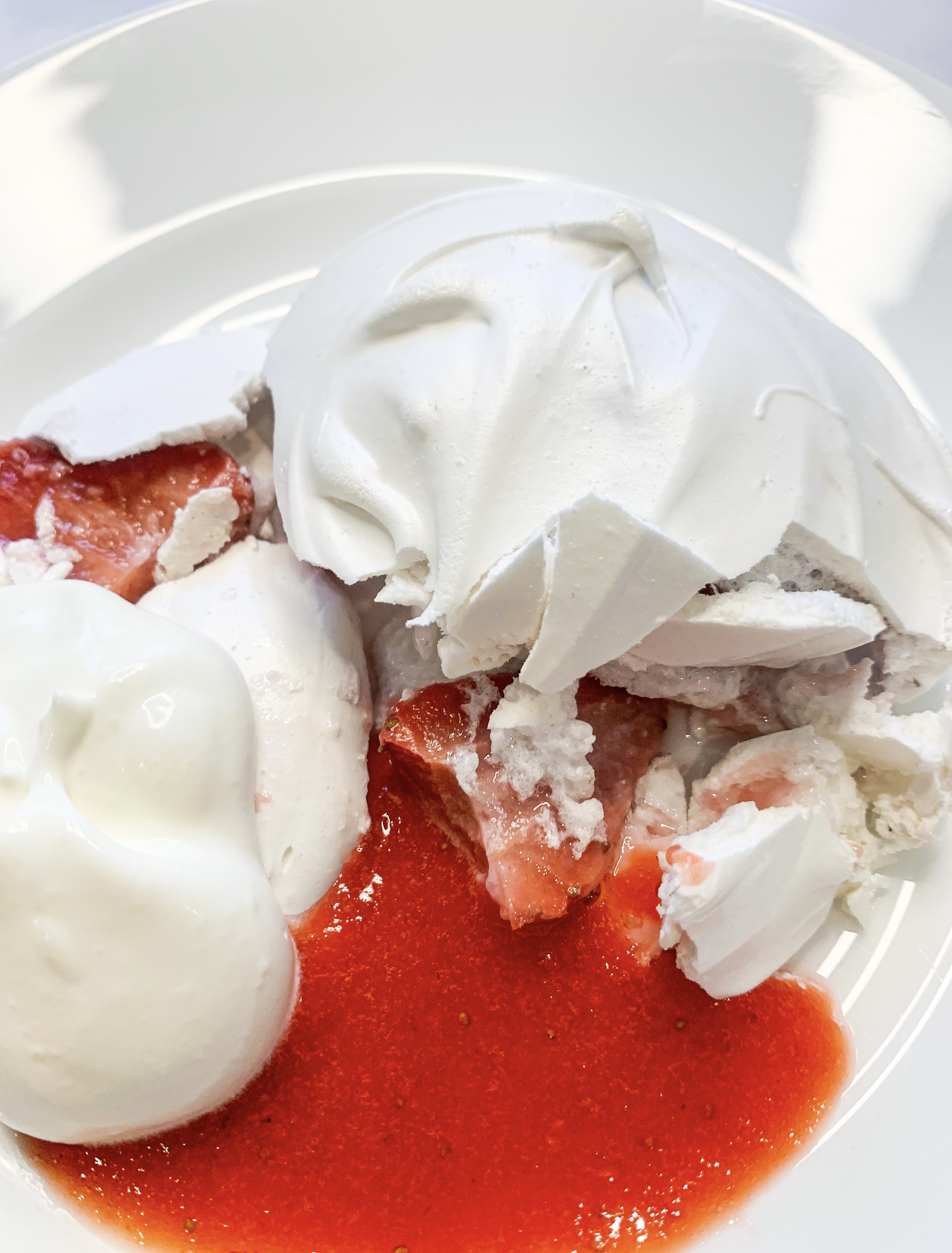
Strawberry Meringues (Serves 4)

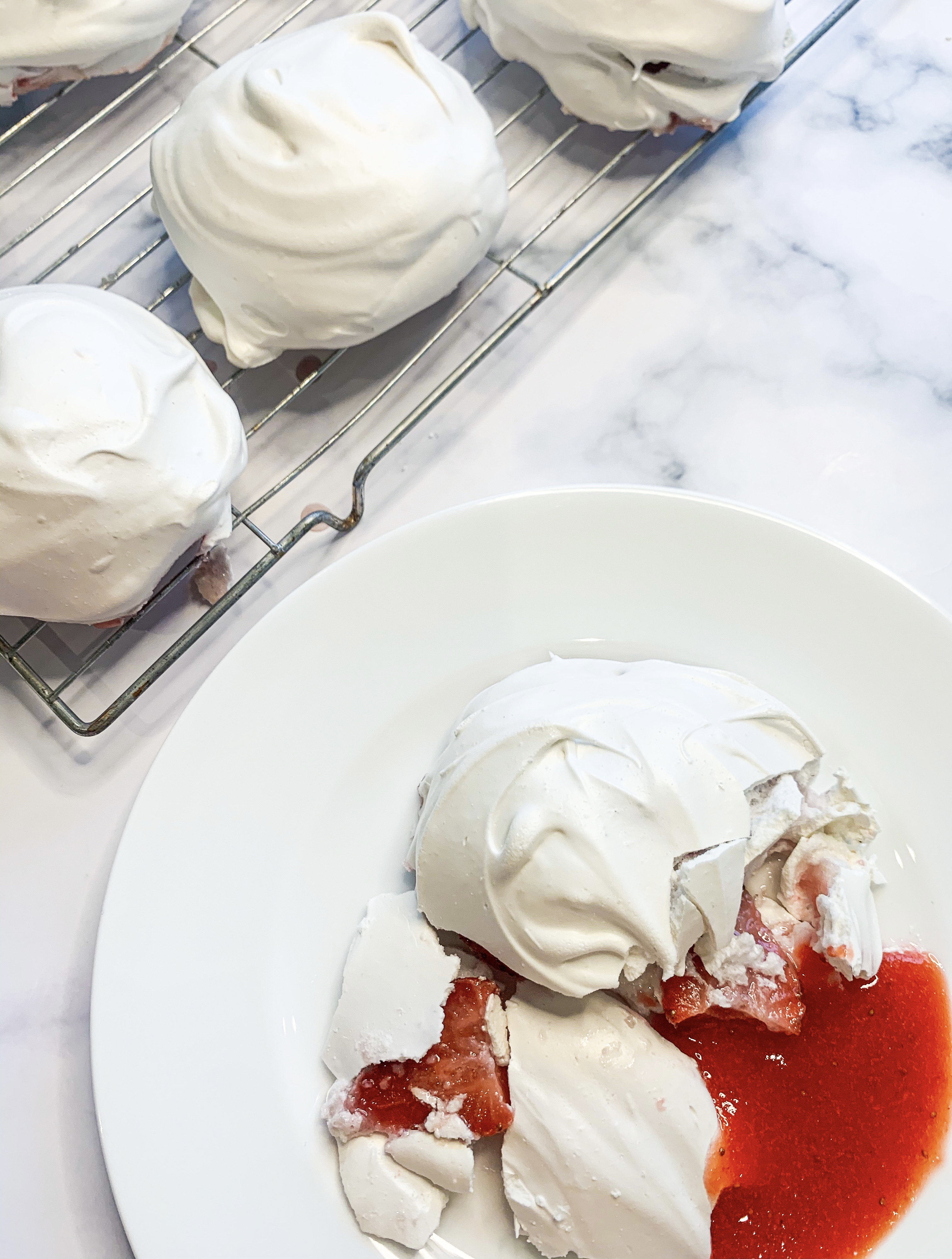
It’s June, so that definitely calls for a treat with strawberries!…and what better way to serve them than combined with meringues?…No, on this occasion I’m not suggesting the classic Eton Mess (you can find that recipe here!)…Instead, in this recipe, the strawberries are actually cooked inside the meringues. By cooking them inside the meringues, the taste of the strawberries becomes more intense – you ‘ripen’ the flavour, so it’s a good recipe for those strawberries which are slightly disappointing. For that reason, it’s worth remembering over the long months after the summer season – when you can only get strawberries that have been flown in from abroad and consequently taste a little bland.

These meringues are best eaten the same day – which I’m sure won’t be a hardship! However, if there are one or two left over they will keep for 24 hrs in the fridge, but no longer. In cooking, you will find that the strawberries will leak out a gooey mixture this just adds to the flavour!

I found this recipe in James Martin’s book ‘Slow Cooking’. The recipes in this book are all simple to prepare yet are cooked or marinated slowly for at least an hour to create show-stopping dishes with little fuss – and this recipe for meringues is definitely one of those!

*You could also make this with raspberries

550g strawberries

4 egg whites

110g caster sugar

110g icing sugar, plus 20g for the sauce

250ml double cream

  1. Hull the strawberries and cut them in half.
  2. Beat the egg whites with the caster sugar in a grease-free bowl until stiff peaks form.
  3. Add 110g of the icing sugar and continue to beat for 4-6minutes until the mixture is smooth and shiny.
  4. Using a large metal spoon, lightly fold just under half of the strawberries into the meringue mixture.
  5. Carefully place 8 evenly sized spoonfuls on the mixture onto a baking sheet lined with greaseproof paper.
  6. Place in a preheated oven, 100’c fan, and bake for 2 hours.
  7. Whilst the meringues are cooking make the strawberry purée. Place the remaining strawberries in a blender with 3 tablespoons water and the 20g icing sugar, process to a purée, then pass through a sieve to remove the seeds. Set aside.
  8. Place the cream in bowl and whip until soft peaks form. Set aside.
  9. When the meringues are cooked, remove from the baking sheet using a palette knife to transfer to a wire cooking rack, allow to cool before serving.
  10. Serve the meringues with the cream and purée on the side.

Week Forty

I have been taking quite a lot of time out of my kitchen recently. In my last blog, I mentioned that I was having a short break in Wales, after months under ‘lockdown’, it certainly was a ‘breath of fresh air’, and gave us the perfect excuse to eat out! We visited the Pembrokeshire coast, an area which I had never been to before. Being forced by Covid to holiday in the UK was perhaps a blessing in disguise as it allowed us to appreciate this corner of the UK; I was blown away by the beauty of this coast – almost literally, as the awful May weather ensured we had our fair share of wind and rain! We stayed in a wonderful hotel in Narberth, The Grove (read the review here!).

In addition to our Pembrokeshire break, last weekend Nick and I visited Felix in York, so once again, I was away from my kitchen and eating out in restaurants – we are definitely embracing the reopening of the hospitality industry!

Not only is eating out again in restaurants enjoyable but also inspiring, and so I have returned to my kitchen this week refreshed and raring to go, although, admittedly, it does take me a few days to get back into the swing of things. For this reason, this week I thought I would share some particularly easy recipes which aren’t too demanding, to give you and me some kitchen respite, but naturally without losing out on the flavour front.

Menu One is a store cupboard fish cake recipe, it’s always good to have a can of sardines in your cupboard for this recipe!  Menu Two is ‘Pork Collar Steak with Gherkins’, this is a recipe that often shows up in my kitchen on those nights when I want something quick and comforting. I love this underrated, tasty cut of pork and in this recipe, it only needs 15 minutes from start to finish! Finally, Menu Three is a wonderfully simple recipe, ‘Spaghetti with Asparagus and Prosecco’, from Skye McAlpine’s cookbook ‘A Table in Venice’. As she herself says, cooking with prosecco always seems rather extravagant, but the delicacy and sweetness of Prosecco lends something extra special to the sauce. Mini bottles of Prosecco are perfect for this recipe, or of course, you could get a full bottle and enjoy the leftovers with your meal…perfect on a summer evening!

I’m also sharing a new ‘Music to Cook To’ playlist (here)…in comparison to my last playlist, it is rather retro, there’s even a Bee Gee’s track on it(!), but it is without doubt uplifting – perfect to cook-a-long to!…

Menu One

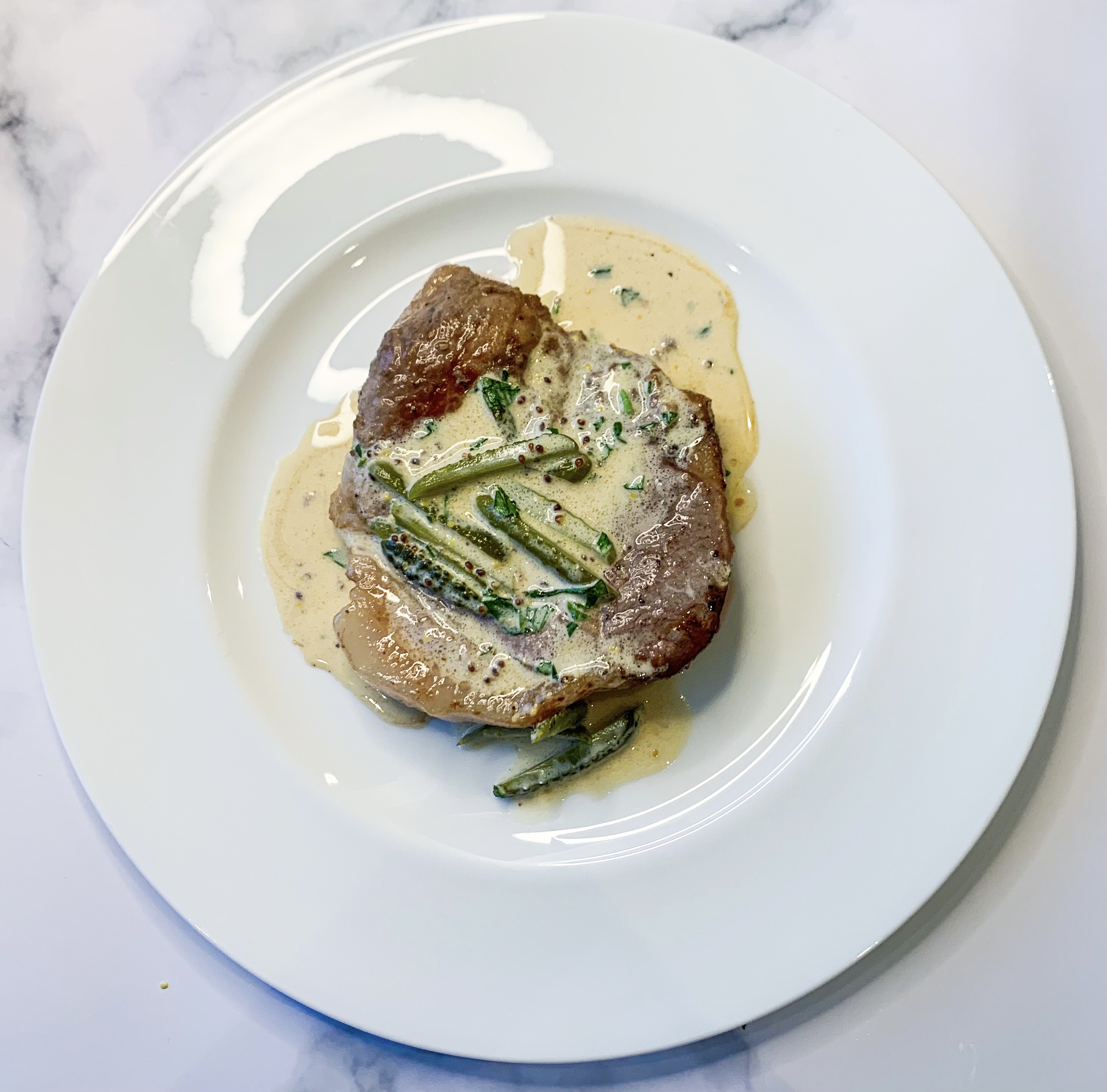
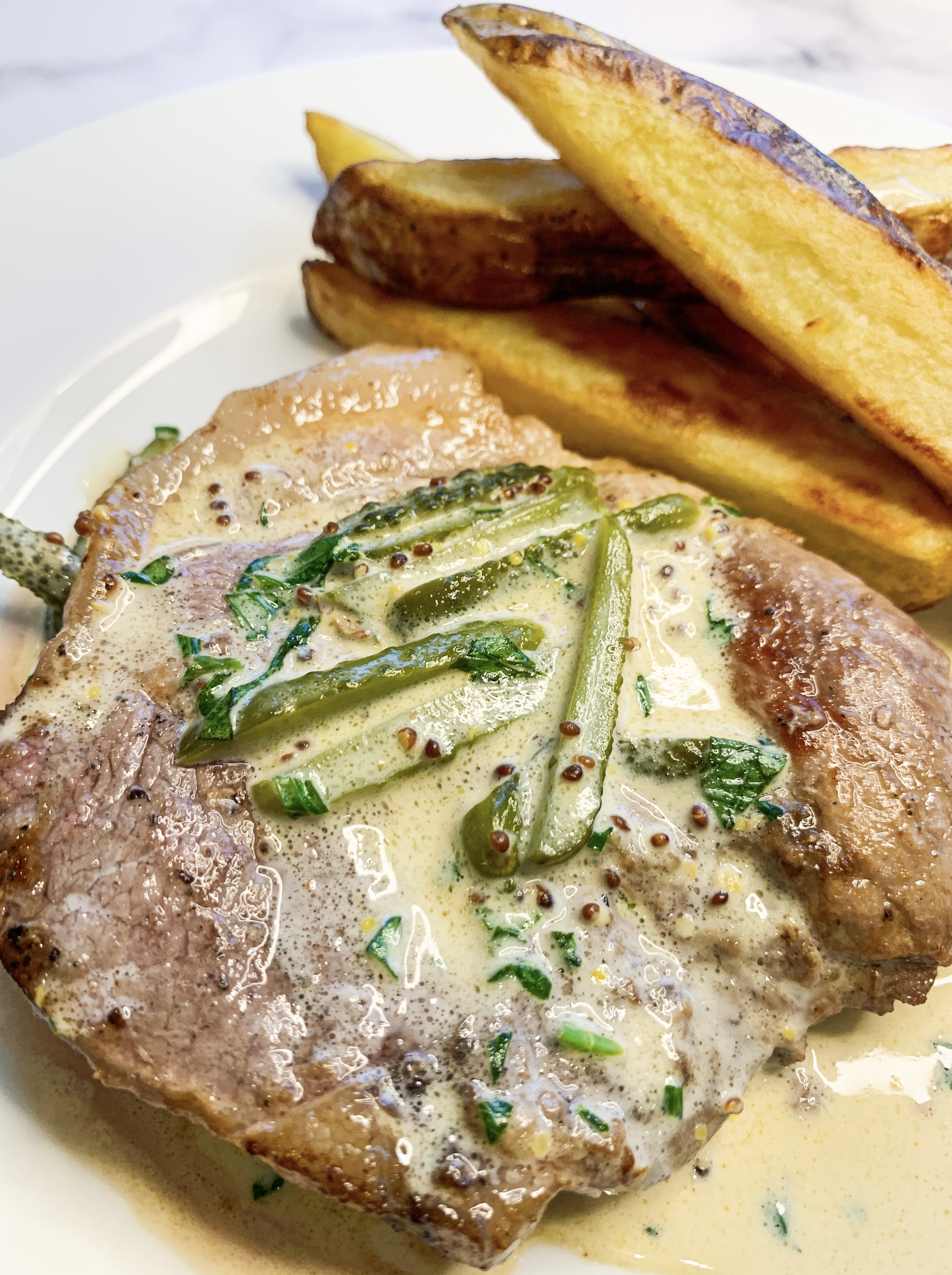
Pork Steak with Mustard & Gherkin Sauce (Serves 4)

Pork collar steak is a cut of meat which is often overlooked, it’s a shame as not only is it one of the cheaper cuts of meat but it is also very tasty. This recipe shows just how special it can be. I found the recipe in Daniel Galmiche’s ‘French Brasserie Cookbook’, it really is an inspiration; the sharpness of the gherkin and mustard in the sauce beautifully cuts the richness of the cream and pork. It is super quick to cook, all it needs is a good crisp salad and perhaps some ‘homemade chips’, or on a cold night, some creamy mash potato is great for mopping up the sauce! (recipes here).

2 tablespoons olive oil

4 pork collar steaks, about 150g each

30g butter

160ml double cream

2 teaspoons wholegrain mustard

4 tarragon sprigs, leaves roughly chopped

8 small gherkins (cornichons), halved and sliced into strips

Sea salt and black pepper

  1. Warm the oil in a frying pan over a medium heat. Add the steaks and cook for 3-4 minutes on each side until golden brown, adding the butter when you turn them over. Remove from the pan and keep warm.
  2. Add 4 tablespoons of water to the pan, stirring to deglaze it. Bring this liquid to a simmer over a low heat and slowly stir in the cream and mustard, then add the gherkins and tarragon and season with salt and pepper.
  3. When the sauce is heated through, pour over the steaks and serve.

Menu Two

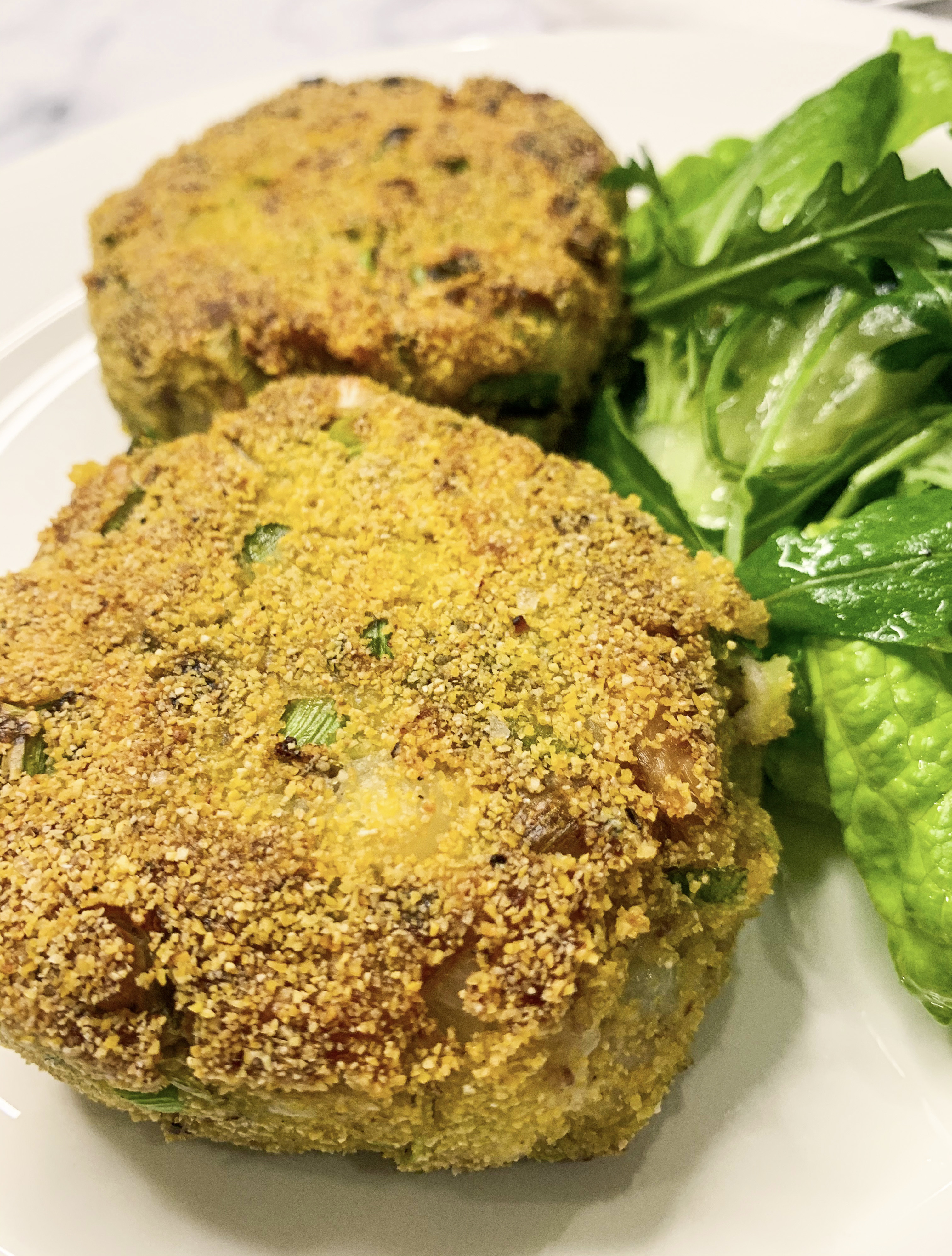
Store Cupboard Fishcakes (Serves 4)

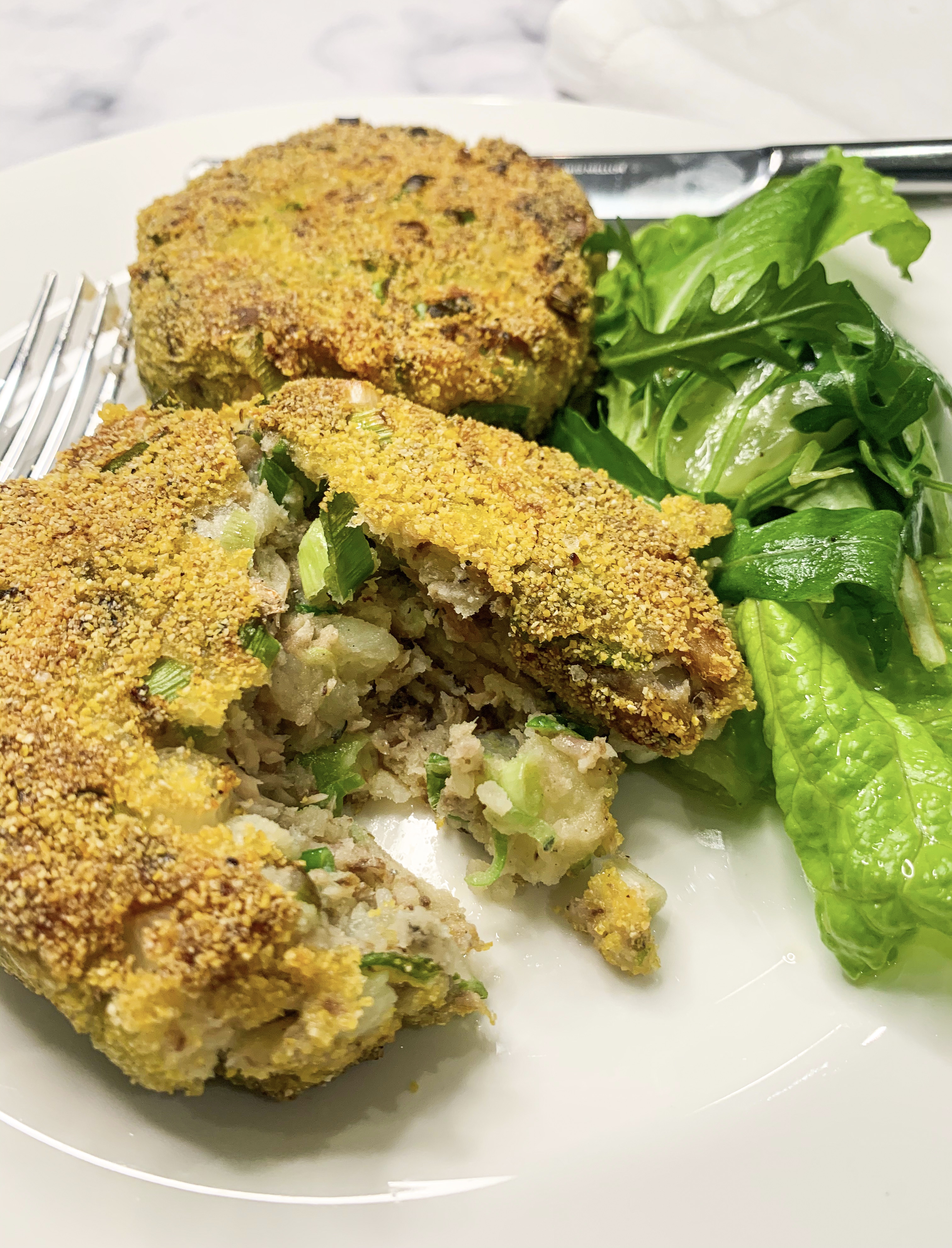
These fishcakes are really tasty and all the better for using ingredients which most of have to hand. I particularly love them as they are totally gluten free – they are crumbed in cornmeal rather than breadcrumbs. They make the perfect supper with a leafy salad and perhaps an couple of cherry tomatoes. This recipe is from Hugh Fearnley-Whittingstall’s book ‘Light and Easy’ – which totally sums up this recipe!

500g cold, cooked potato

250g tinned sardine (or mackerel) fillets in oil, drained

250g spring onions, finely sliced (or 2 onions, finely chopped)

2 tablespoons capers, roughly chopped

2 eggs, lightly beaten

Rapeseed or sunflower oil

8 tablespoons fine cornmeal

Sea salt and black pepper

  1. Mash the potatoes roughly.
  2. Put the tinned fish into a bowl and mash with a fork to break up a little. Add the onions, capers, mashed potato and season with black pepper.
  3. Stir in the beaten eggs, mixing well.
  4. Divide the mixture into 8. Roll each portion into a ball and then squash into a cake.
  5. Heat a thin film of oil over the base of a frying pan over a medium heat.
  6. Put the cornmeal in a bowl and season with salt and pepper. Carefully put a fishcake into the bowl and coat it with cornmeal then gently place in the frying pan. Cook for about 10 minutes turning once or twice until the cornmeal is crisp and golden and the cakes are piping hot through the middle. Repeat with the rest of the fishcakes – you will have to cook them in batches, adding more oil to the pan as needed.
  7. Serve straightaway with a good salad.

Menu Three

Linguine with Asparagus and Prosecco (Serves 4)

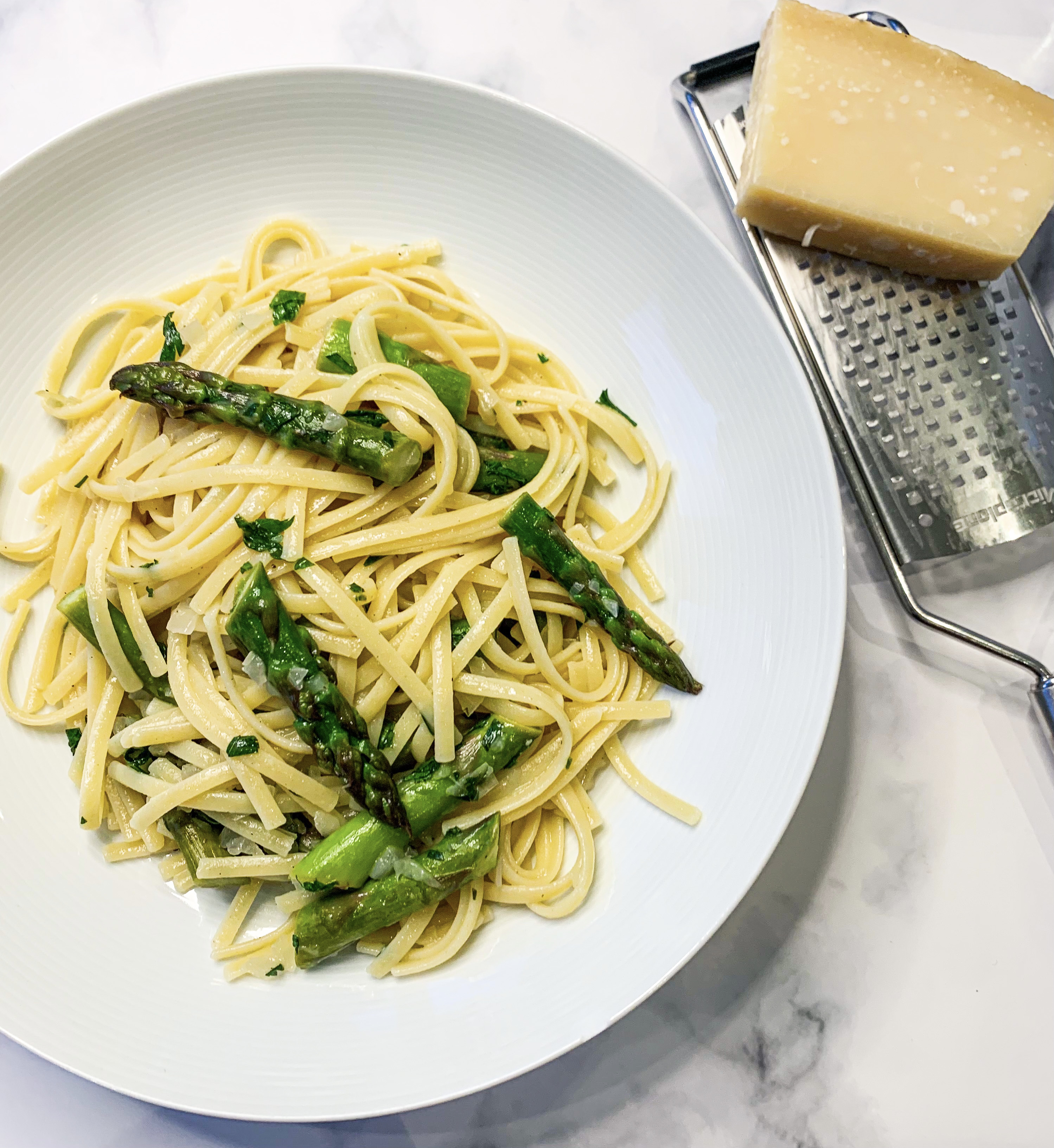
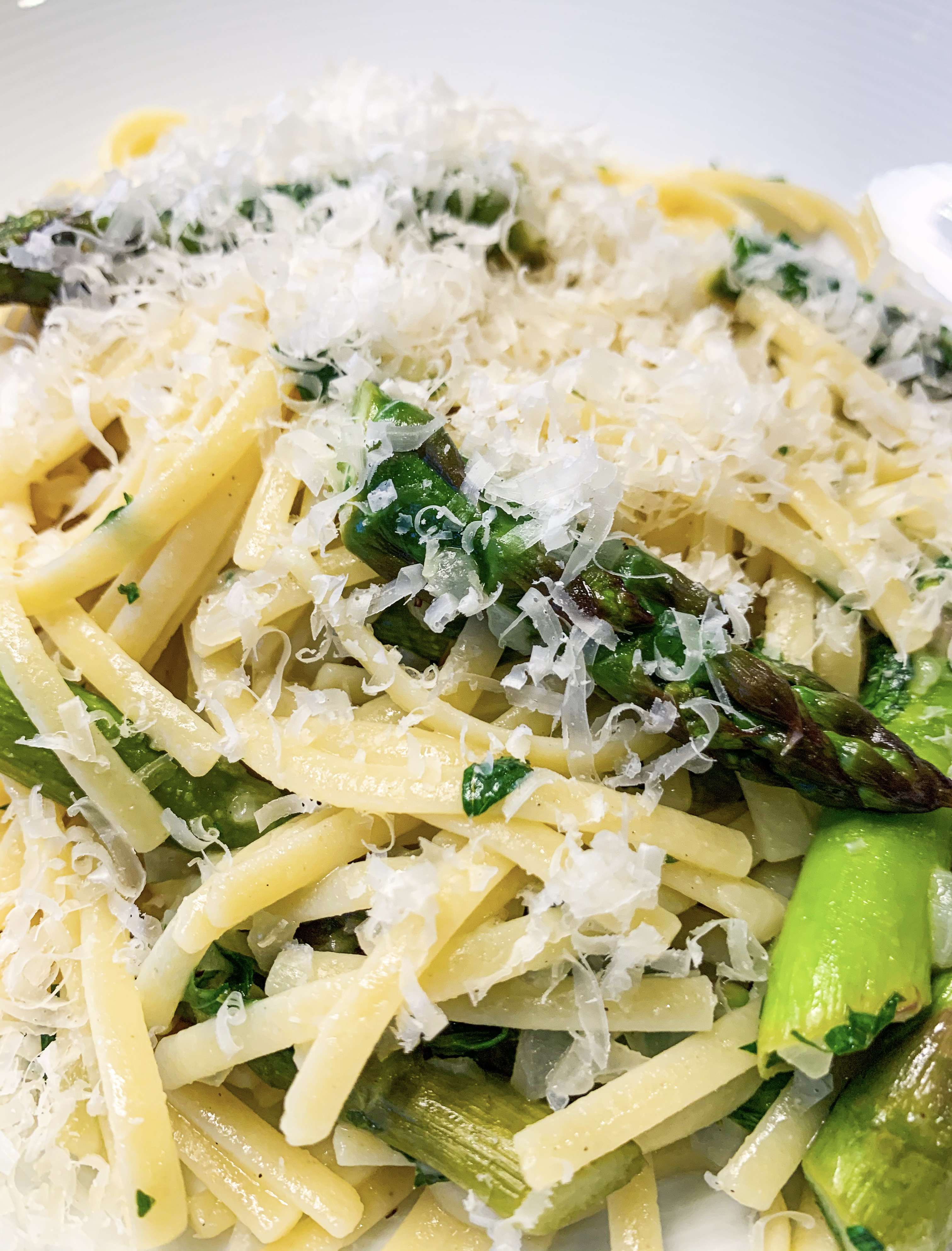
This is a wonderfully simple recipe from Skye McAlpine’s cookbook ‘A Table in Venice’. As she herself says, cooking with Prosecco always seems rather extravagant, but the delicacy of Prosecco definitely lends something extra special to the sauce. I also use Prosecco when I cook ‘Spaghetti Vongole’ (recipe here), as it gives the sauce a lightness (from the bubbles) and a subtle sweetness. You could, of course, use white wine instead of Prosecco, but do try it with Prosecco at some point. The mini bottles of Prosecco are perfect for this recipe, or of course you could get a full bottle and enjoy the remainder of the bottle with your meal!

1 tablespoon olive oil

1 small onion, chopped

400g asparagus, trimmed and cut into 3 cm lengths

100ml Prosecco

Handful of parsley, chopped

400g linguine (gluten free if required)

30g butter

30g parmesan cheese, grated

Sea salt and black pepper

  1. Heat the olive oil in a large frying pan over a medium heat, then add the onion and a generous pinch of salt. Cook, stirring over a low-medium heat for 5-10 minutes until softened but not coloured.
  2. Add the asparagus and Prosecco, and season with salt and pepper.
  3. Cook, stirring, for about 5 minutes, until the Prosecco has evaporated and the asparagus is tender (if it is not quite cooked by the time that the liquid has evaporated add a splash of water and cook for a little longer). Finally stir in the parsley.
  4. Meanwhile cook the linguine according to the packet instructions, until al dente. Just before draining the pasta, scoop out about half a cup of cooking water and set to one side.
  5. Drain the pasta, toss it back into the pan and add a good splash of the reserved cooking water to ‘loosen’ it. Little by little stir in the butter. Finally add the asparagus mixture, give everything a good stir and serve topped with grated Parmesan cheese.

Tuesday Treat

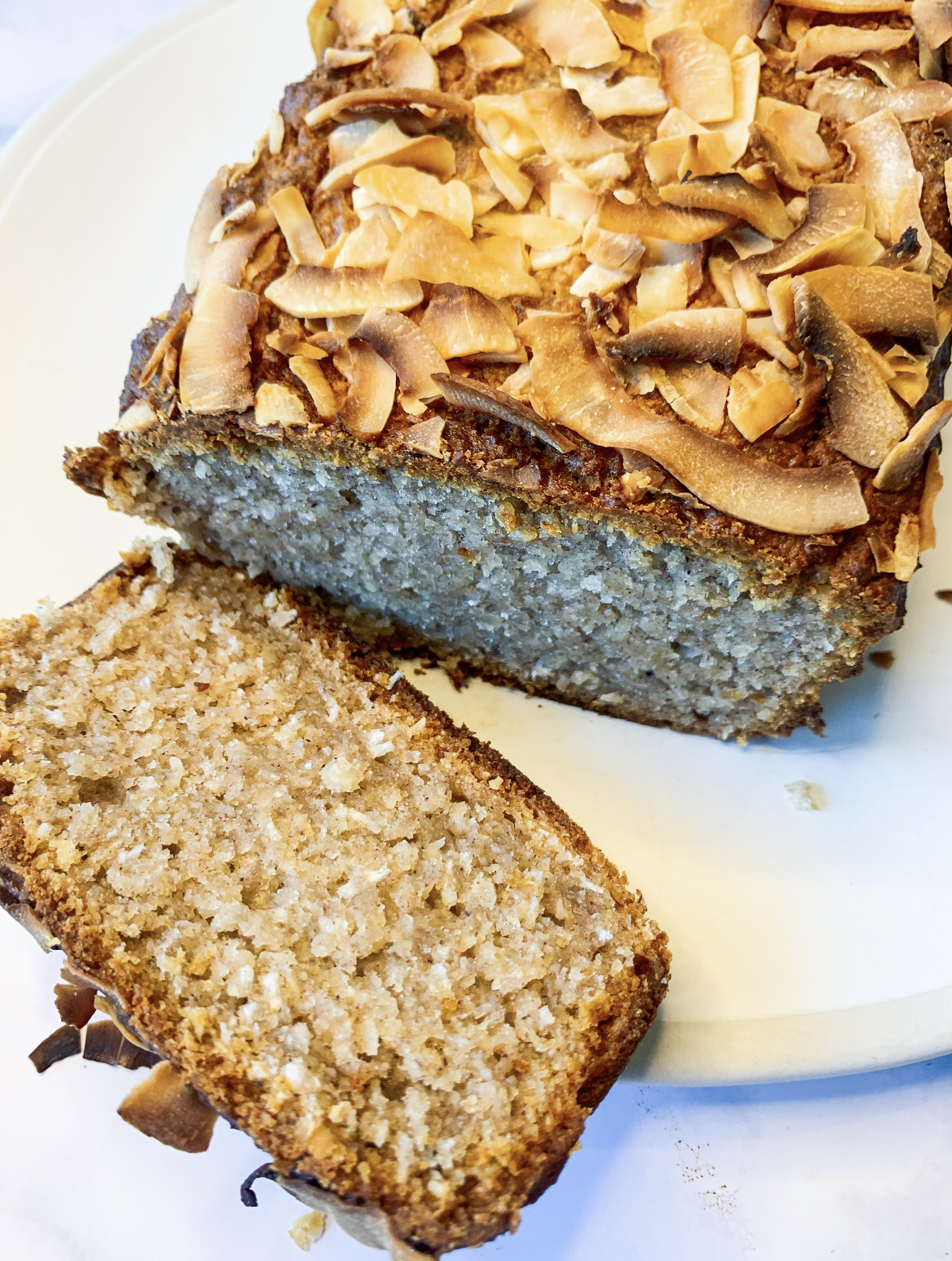
Banana Bread with Toasted Coconut

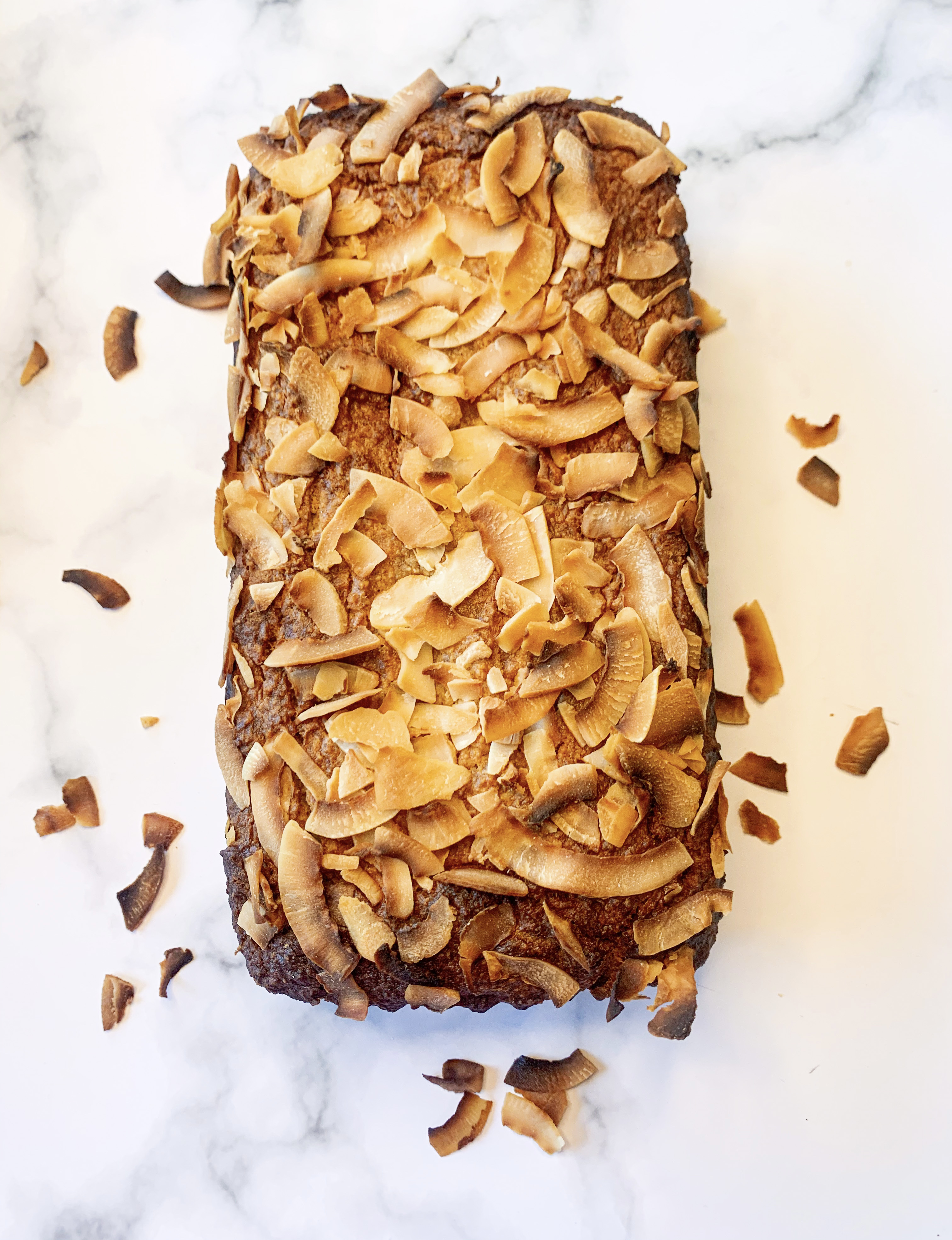
One of the best banana cakes that I have tasted was when I was holidaying in Antigua many years ago. Every morning, the little hotel where we were staying would serve up an incredible banana bread for breakfast – I was truly in paradise! Since then I have tried to emulate the recipe for this banana bread, which was deliciously dense and not too sweet – hence not only great for breakfast but also perfect for afternoon tea. However, the recipes which I made, although admittedly very tasty and moreish, never quite matched that one I had in ‘paradise’. I always blamed it on the lack of Caribbean sunshine – perhaps my London kitchen just didn’t have the ambience required?…But just recently, I found this recipe for banana bread in Meera Sodha’s cookbook ‘East’, Sohda uses both coconut and ground almonds in her recipe, I think that they are the secret to the elusive density that I had been searching for. Don’t be put off if you’re not keen on coconut, as the flavour of the banana overshadows it. It is great toasted and, for a really indulgent snack, unbelievably good spread with peanut butter…!! If you are gluten free, you will be pleased to know that it can be made perfectly well using gluten free flour (I use Doves).

100g coconut oil

100ml maple syrup

1 teaspoon vanilla extract

150g plain flour (gluten free if required)

100g ground almonds

150g desiccated coconut

2 teaspoons baking powder

1½ teaspoons ground cinnamon

1 teaspoon ground nutmeg

450g ripe banana flesh (about 4-5 bananas), cut into chunks

40g untoasted coconut chips

(450g loaf tin, lined)

  1. In a small pan, heat the coconut oil until just melted then remove from the heat and stir in the maple syrup and vanilla, then set aside.
  2. In a bowl, whisk together the flour, ground almonds, desiccated coconut, baking powder, cinnamon and nutmeg.
  3. Put the banana chunks in a food processor and blitz to a smooth puree. Add the flour mixture and the oil and process until just combined, scraping down the sides to ensure all the mixture is incorporated.
  4. Pour the mixture into the lined bread tin and spread out evenly, then sprinkle over enough coconut flakes to cover the top completely – pressing them lightly into the batter.
  5. Bake in a preheated oven, 180’c fan, for 1 hour, then turn the cake around and bake for a further 20 minutes.
  6. Take out of the oven and cool completely in the tin, brushing off any overly scorched coconut flakes.
  7. Serve in generous slices – it is delicious simply as it is, but do try it spread with peanut butter, or even toasted!

Week Thirty Nine

Now that we are out of lockdown and can travel around the UK, I am looking forward to a few escapades. Like many of you, we’ve decided not to book a holiday abroad this year, due to all the uncertainty around Covid and the various rules and regulations. The advantage of this is that we get to discover corners of the UK which we have never had the opportunity to see plus appreciate the great food that our restaurants offer. We are so lucky these days, as when I was growing up in the seventies the UK had, deservedly, a terrible reputation for its food; the choice of restaurants was very limited and the quality of their cooking left a lot to be desired. Thankfully, these days the UK is a great destination for a foodie – from gastro pubs to Michelin starred restaurants, there is something for everyone.

In fact, right now I’m in Wales for a short break, as always, I have done my research and I am hoping that I will be able to share some good ‘foodie’ experiences with you on my return. We will be staying near the Pembrokeshire coast, so no doubt there will be a lot of fish on the menu, I didn’t want you to feel left out, so this week the menus on Menu Mistress are mostly fish related!…

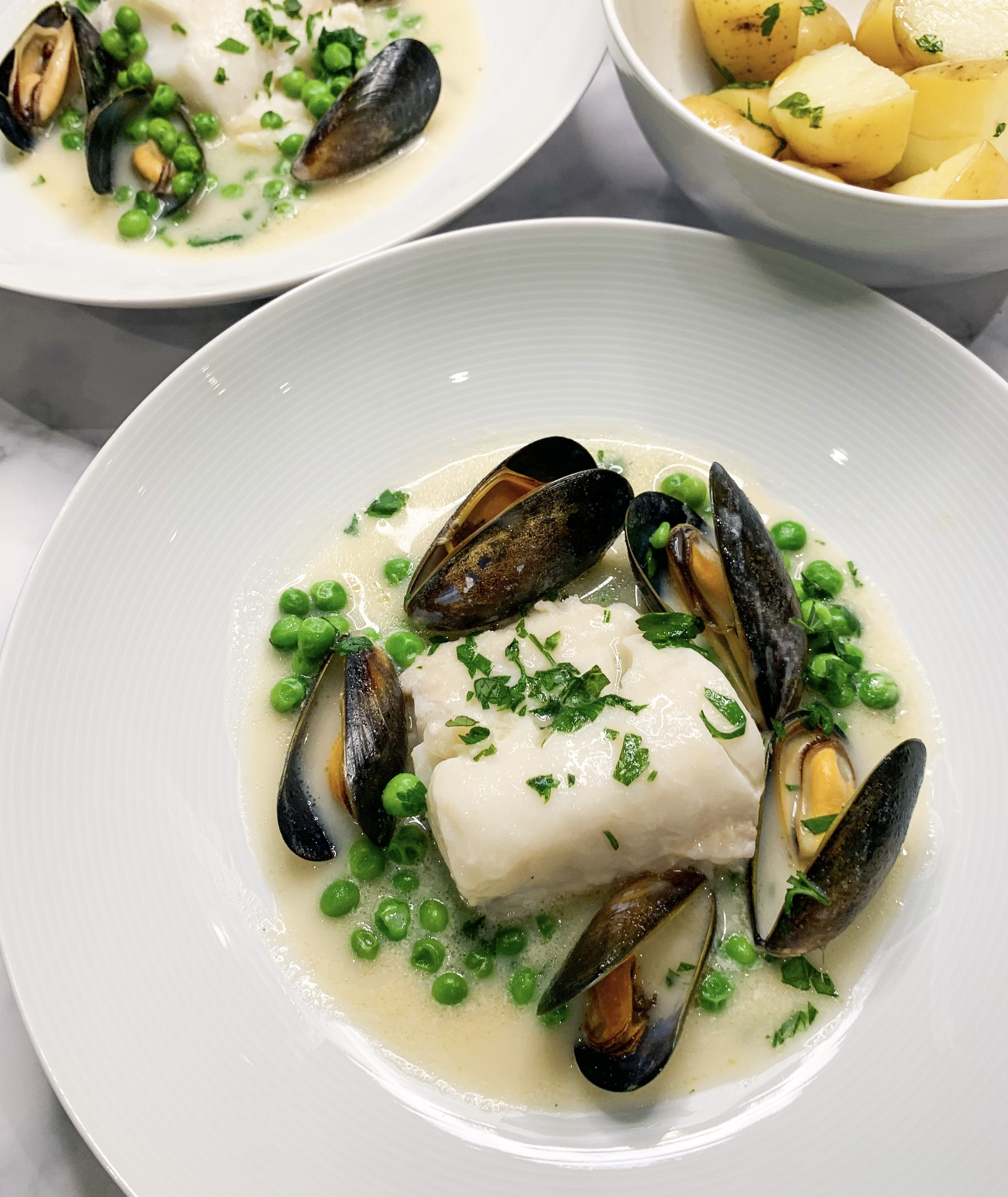
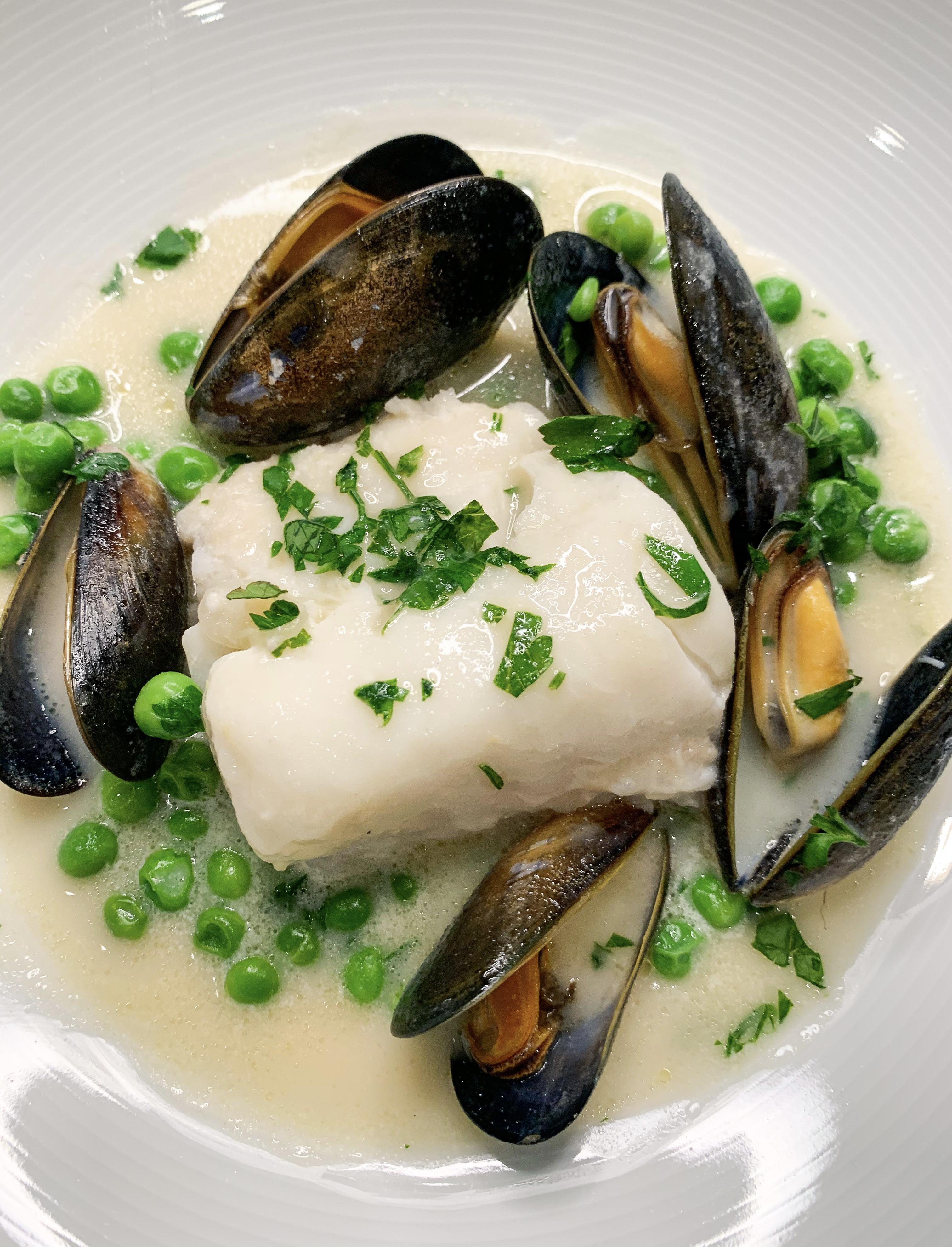
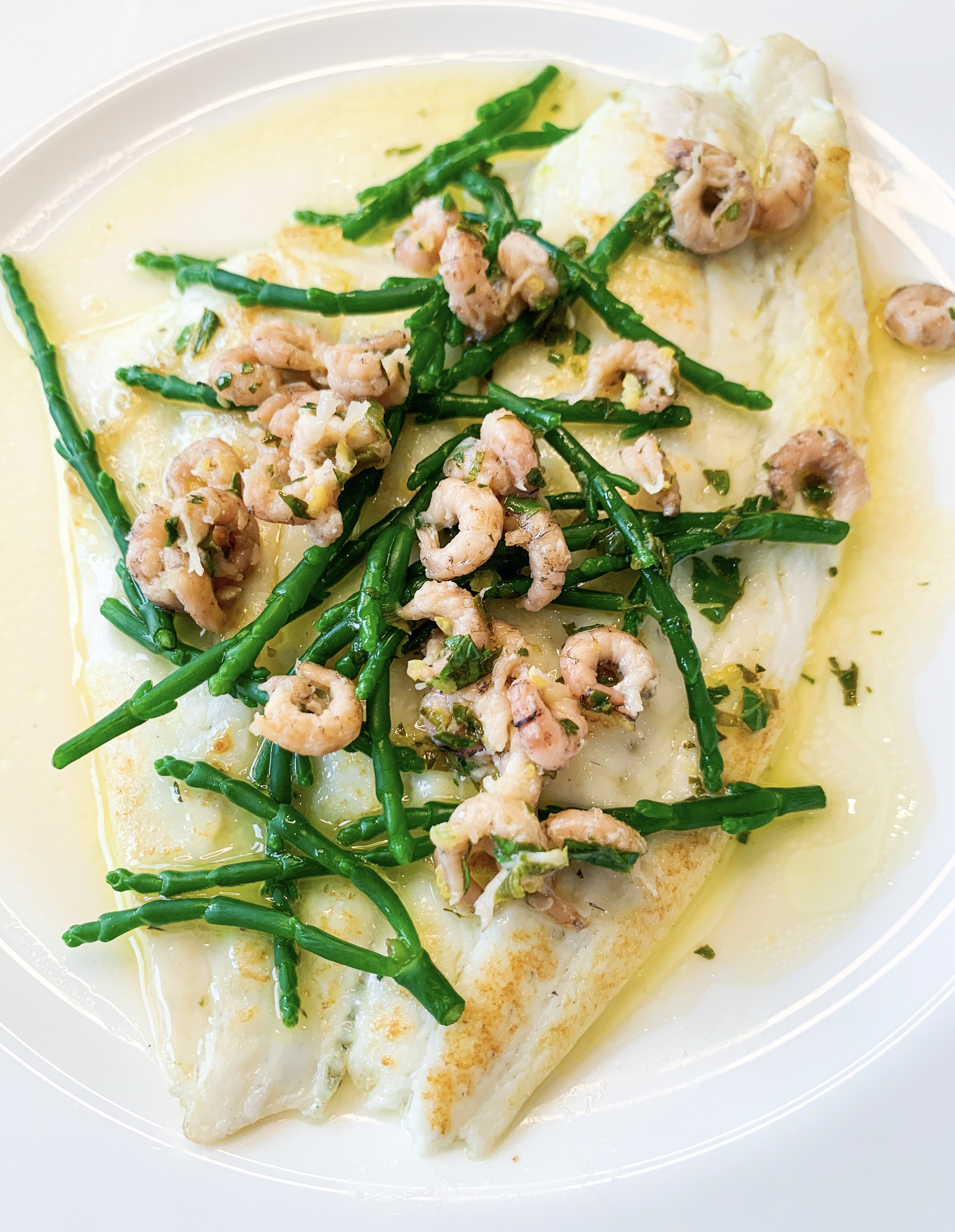
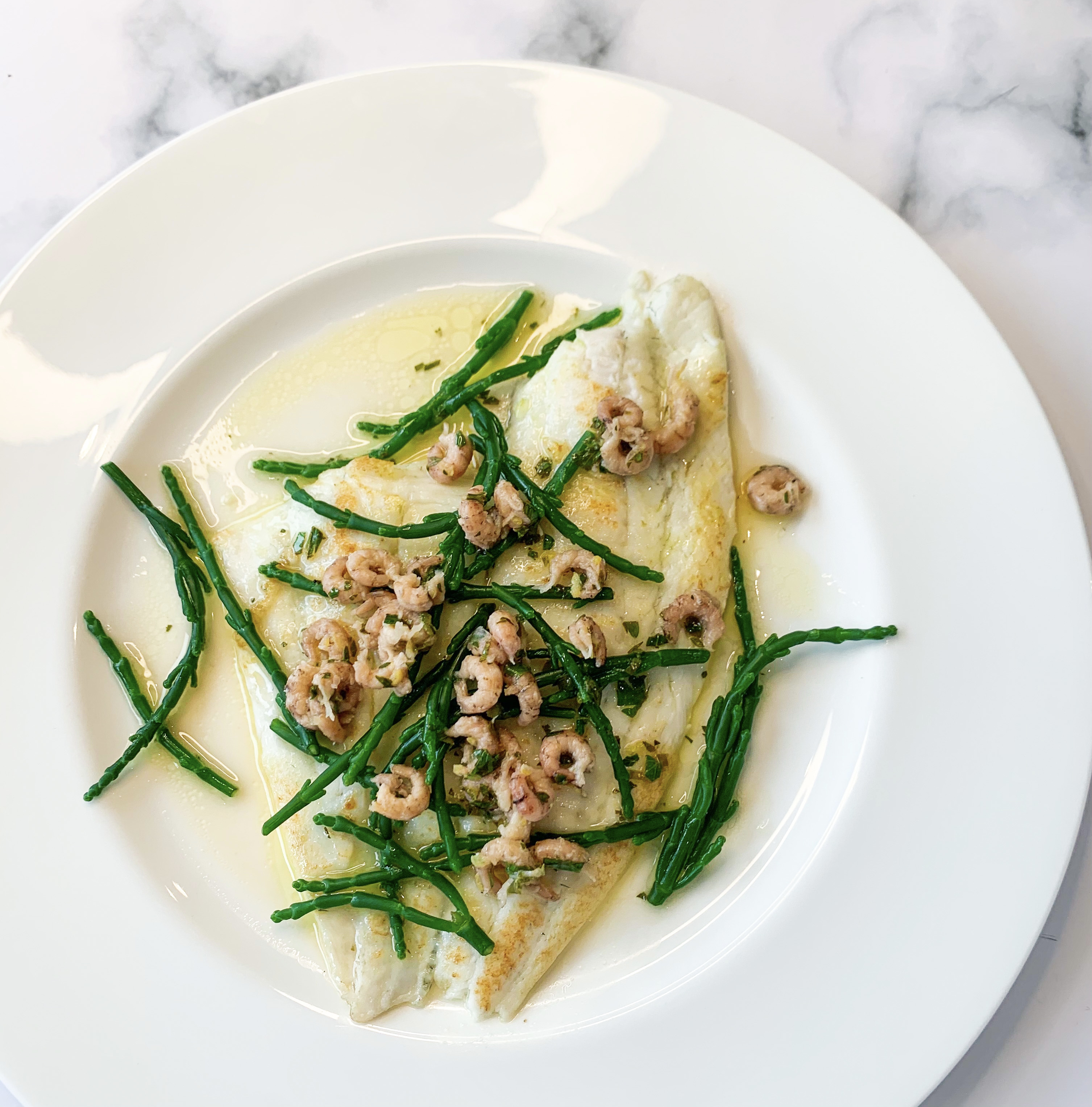
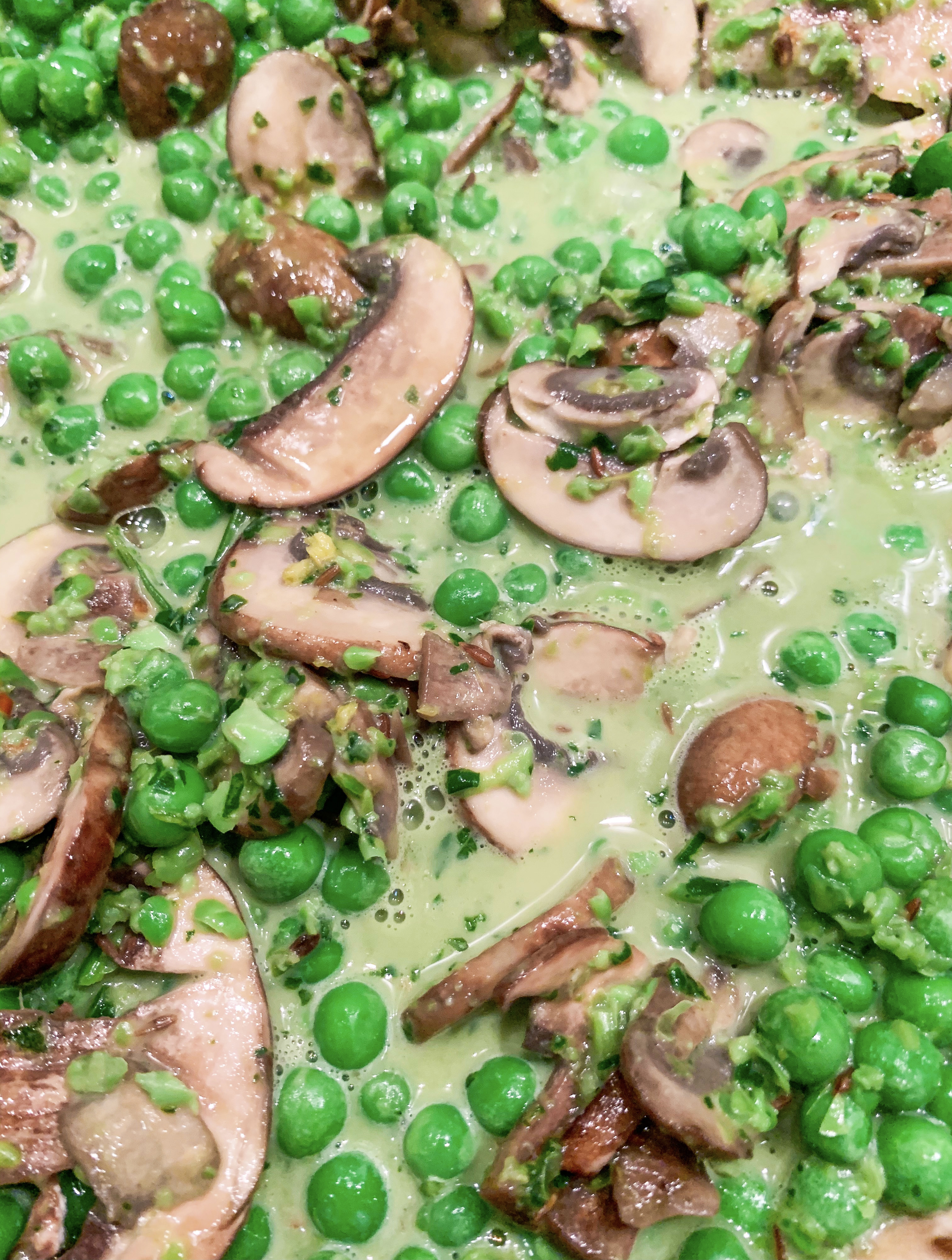
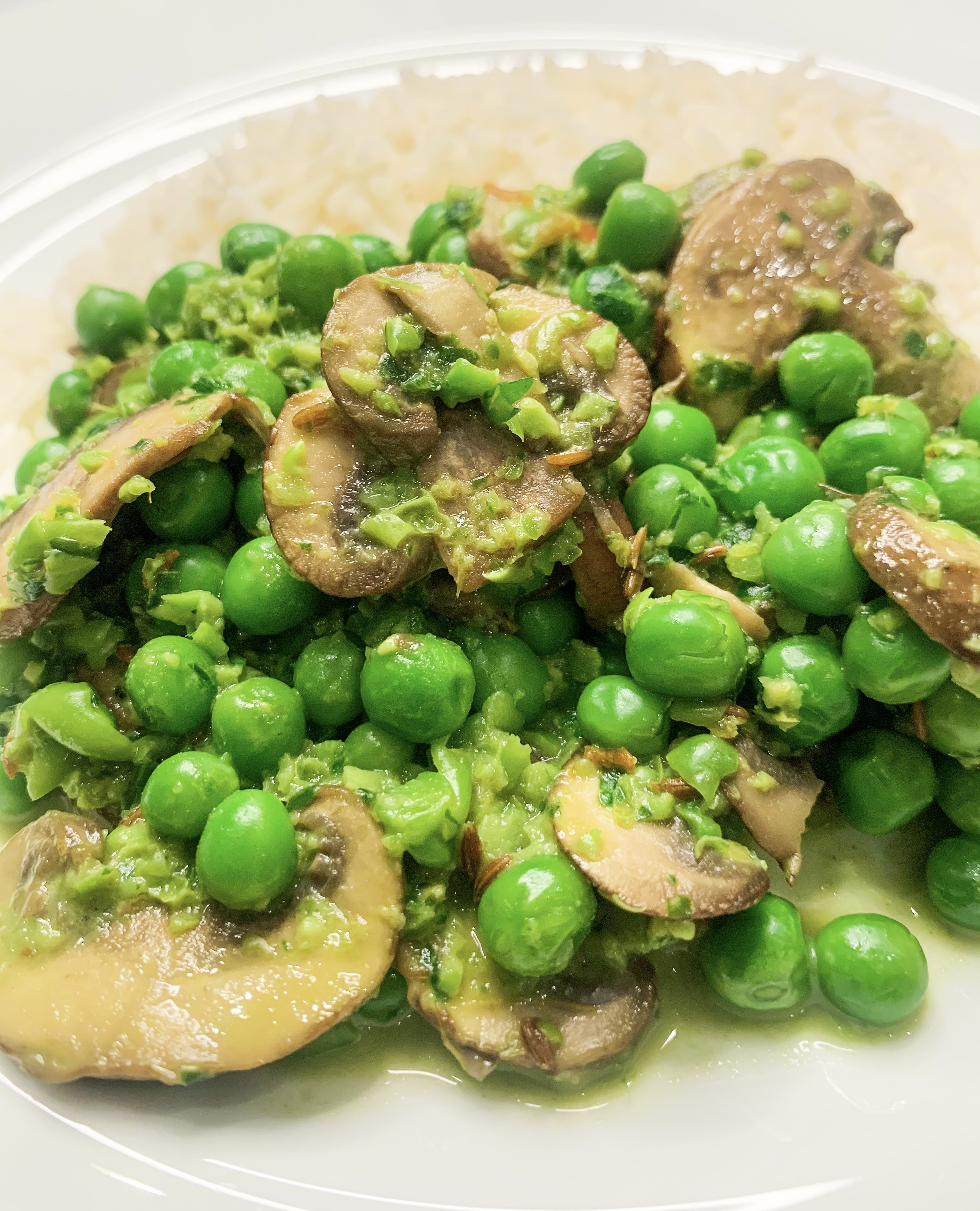
Menu One is Cod with Mussels, I am hoping to try the famous Cowey Welsh Mussels on my travels and so this recipe came to mind. It’s one of those recipes which looks good enough to serve to guests yet is easy enough to serve to the family midweek – what a treat! The broth is light and delicious – perhaps some bread might be good on the side to mop it up! Menu Two is ‘Pan Fried Plaice with Shrimps and Lemon Butter Sauce’, as you can see from the photo, I have served it with samphire which grows abundantly on the Welsh marshes along Carmarthen Bay. Although the samphire in this recipe is optional, if you can get hold of it, it really adds a lovely subtle salty flavour which beautifully complements the buttery lemon sauce. Either way, this is a wonderful dish for a quick midweek meal. Finally, a vegetarian dish, ‘Peas & Mushrooms with a Green Curry Sauce’, admittedly this has very little to do with Wales, I suppose I should have opted for a leek recipe(!), but I’ve cooked this a couple of times lately and wanted to share it. It is a simple recipe from Madhur Jaffrey, it’s great for those days when you are running out of steam; you just need to throw the spices in a blender to create a sauce, then it literally needs 10 minutes to cook – what a great meal to kick start your week!…

Menu One

Poached Fillet of Cod with Mussels, Peas and Parsley (Serves 4)

This is one of those recipes which looks good enough to serve to guests yet is easy and quick enough to serve to the family for a midweek treat! The broth is light and delicious – perhaps some bread might be good on the side to mop it up! Simply serve with steamed new potatoes.

4 fillets of cod, skinless

20g unsalted butter

1 garlic clove, finely chopped

1 shallot, finely sliced

½ tablespoon plain flour (gluten free if required)

100ml white wine

300ml fish stock

24 mussels, beards removed

Dash of double cream

100g peas

½ tablespoon parsley, chopped

Sea salt

  1. To begin cook the peas in a little boiling water for about 4 minutes (longer if fresh) until just tender. Drain and put to one side.
  2. Place the butter in a frying pan (with a lid), melt over a medium heat. Once foaming, add the garlic and shallot and fry until soft but without colour.
  3. Sprinkle over the flour, then add the white wine, stirring constantly so that there are no lumps. Reduce the liquid to a glaze consistency.
  4. Add the fish stock and bring to the boil.
  5. Season the fish with salt and add to the pan with the fish stock. Cover with a lid, lower the heat to a gently simmer, cook for 3 minutes.
  6. Carefully turn over the cod and add the mussels to the pan. Replace the lid and cook for a further 5 minutes.
  7. Carefully remove the cod to a plate, keep warm. Remove the mussels, discarding any that haven’t opened and place on the plate with the fish.
  8. To finish the sauce, pass it through a sieve into a clean saucepan and place over a high heat. Bring to the boil and reduce by half then add a splash of cream.
  9. Finally stir through the cooked peas and chopped parsley.
  10. To serve arrange the cod and mussels on a plate and spoon over the sauce. Serve with steamed new potatoes on the side.

Menu Two

Pan Fried Plaice with Shrimp & Lemon Butter Sauce (Served with Samphire) (Serves 4)

This is one of my favourite simple fish recipes. The samphire is optional, I very often serve it without as I can’t always get hold of it, however if you can get it, do try it as it adds a subtle salty flavour which complements the lemon butter sauce.

100g unsalted butter

2 lemons, juiced and zest finely grated

2 tablespoons olive oil

4 large plaice fillets, skinned

180g brown shrimps

1 tablespoon chives, chopped

1 tablespoon parsley, chopped

80g Samphire (optional)

Sea salt and black pepper

  1. First prepare the sauce. Place the butter in a small saucepan over a medium heat, then cook until the butter starts to turn to a nutty brown colour. Remove from the heat and add the lemon zest and juice, then season with salt and pepper. Keep warm whilst you cook the fish.
  2. Heat the oil in a large frying pan over a medium heat. Season the plaice fillets with salt only and add to the pan, cook for 1½-2 minutes on each side. (You will probably have to cook the fish in batches, adding a little more oil to the pan, keeping the fish warm whilst you cook the second batch).
  3. Meanwhile place the samphire in a pan of boiling water and simmer for 2-3 minutes, drain and set aside.
  4. At the same time add the shrimps to the lemon butter sauce and reheat gently until the sauce is boiling, boil for 1 minute, remove from the heat and add the parsley.
  5. Place the plaice fillets on plates, sprinkle over the cooked samphire and spoon over the shrimp and lemon butter sauce. Serve simply with some steamed new potatoes.

Menu Three

Peas & Mushrooms with Green Curry Sauce

(Serves 4)

This is a great, easy vegetarian curry and extremely quick to cook once you have blended the ingredients for the spice mixture. I like to serve it with rice and chutneys.

1 fresh green chilli, coarsely chopped

30g fresh coriander leaves

2 cloves garlic, peeled

2.5cm cube fresh ginger, peeled and coarsely chopped

¼ teaspoon ground turmeric

425g peas, defrosted if frozen

2 tablespoons vegetable oil

1 teaspoon cumin seeds

250g chestnut mushrooms, sliced

1¼ teaspoons salt

4 tablespoons whipping cream

  1. Put the green chilli, coriander, garlic, ginger and turmeric into a blender. Add 4 tablespoons of water and blend to a purée, pushing down the mixture with a rubber spatula when necessary. Set the green spice mixture aside in a bowl.
  2. Toss 140g of the peas into the blender. Add 4 tablespoons water and blend to a purée. Set the purée aside.
  3. Put the oil in a large frying pan and set over a medium-high heat. Put in the cumin seeds, sizzle for 10 seconds, then add the mushrooms, saute for a few minutes then remove with a slotted spoon.
  4. Now add the green spice mixture, cook, stirring for 2 minutes. Add the remaining peas, pea purée, mushrooms, salt and cream plus 4 tablespoons of water. Stir gently, cover with a lid and cook for 3-4 minutes.
  5. Serve the curry with rice and some chutneys on the side.

Tuesday Treat

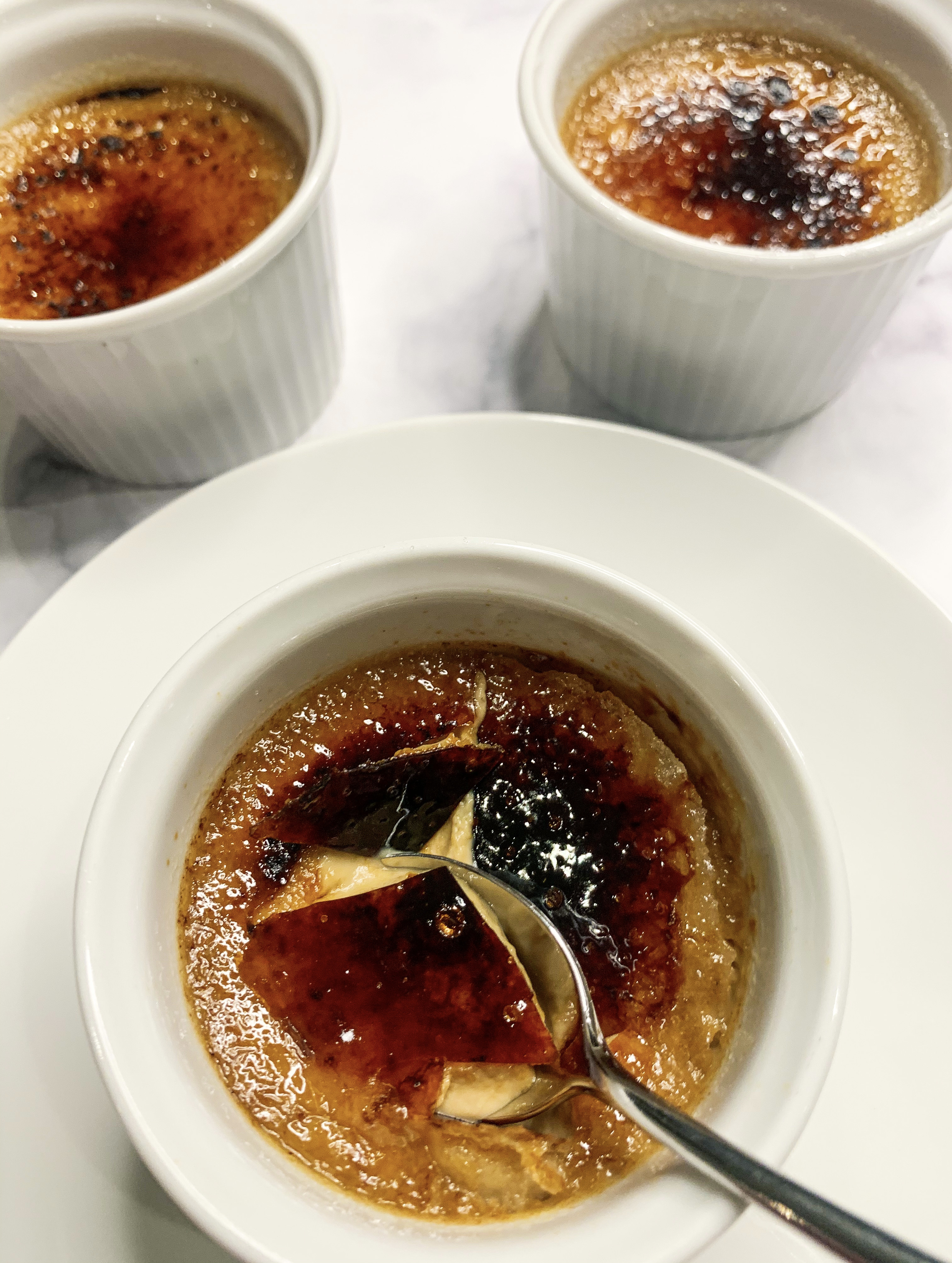
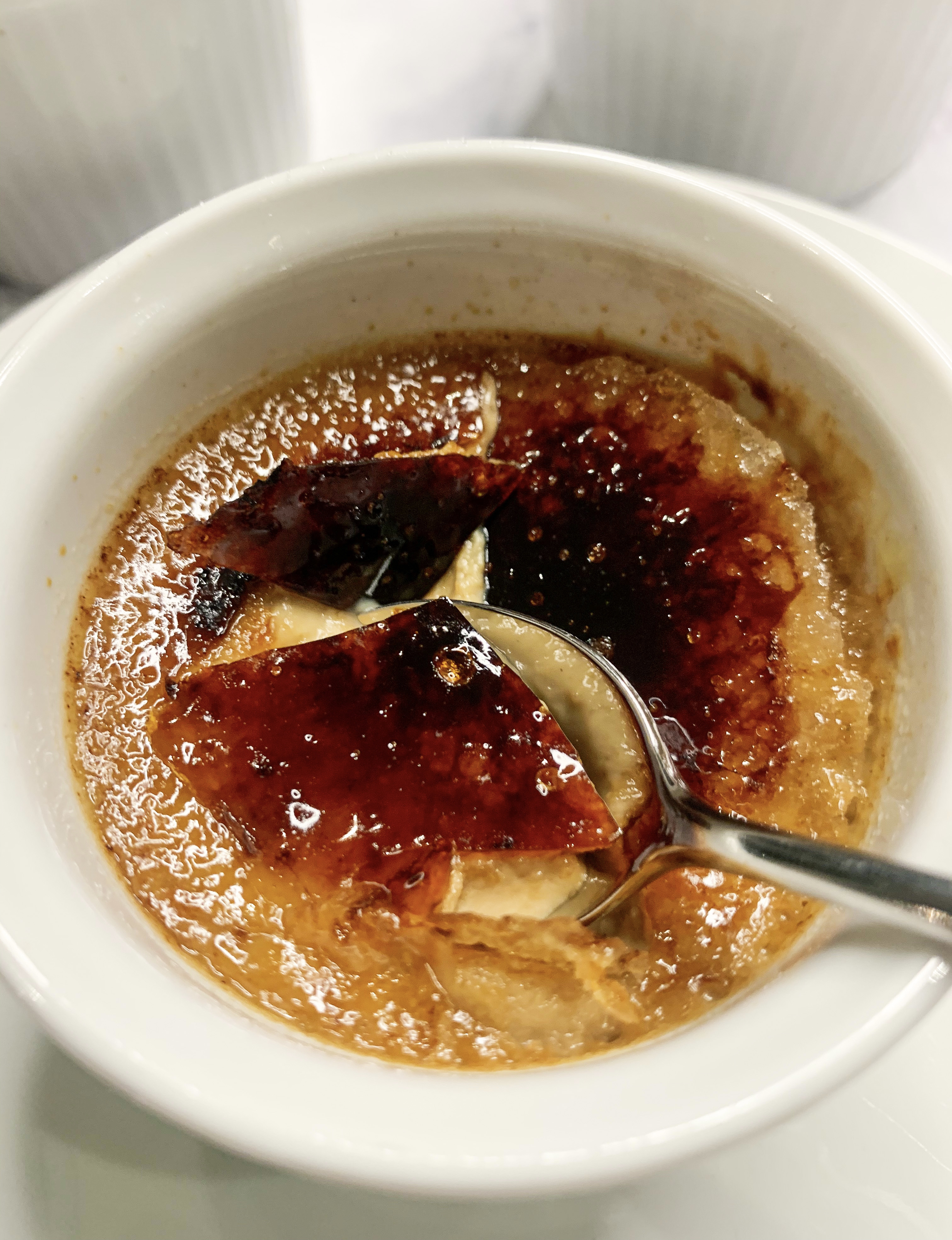
Coffee Crème Brûlée

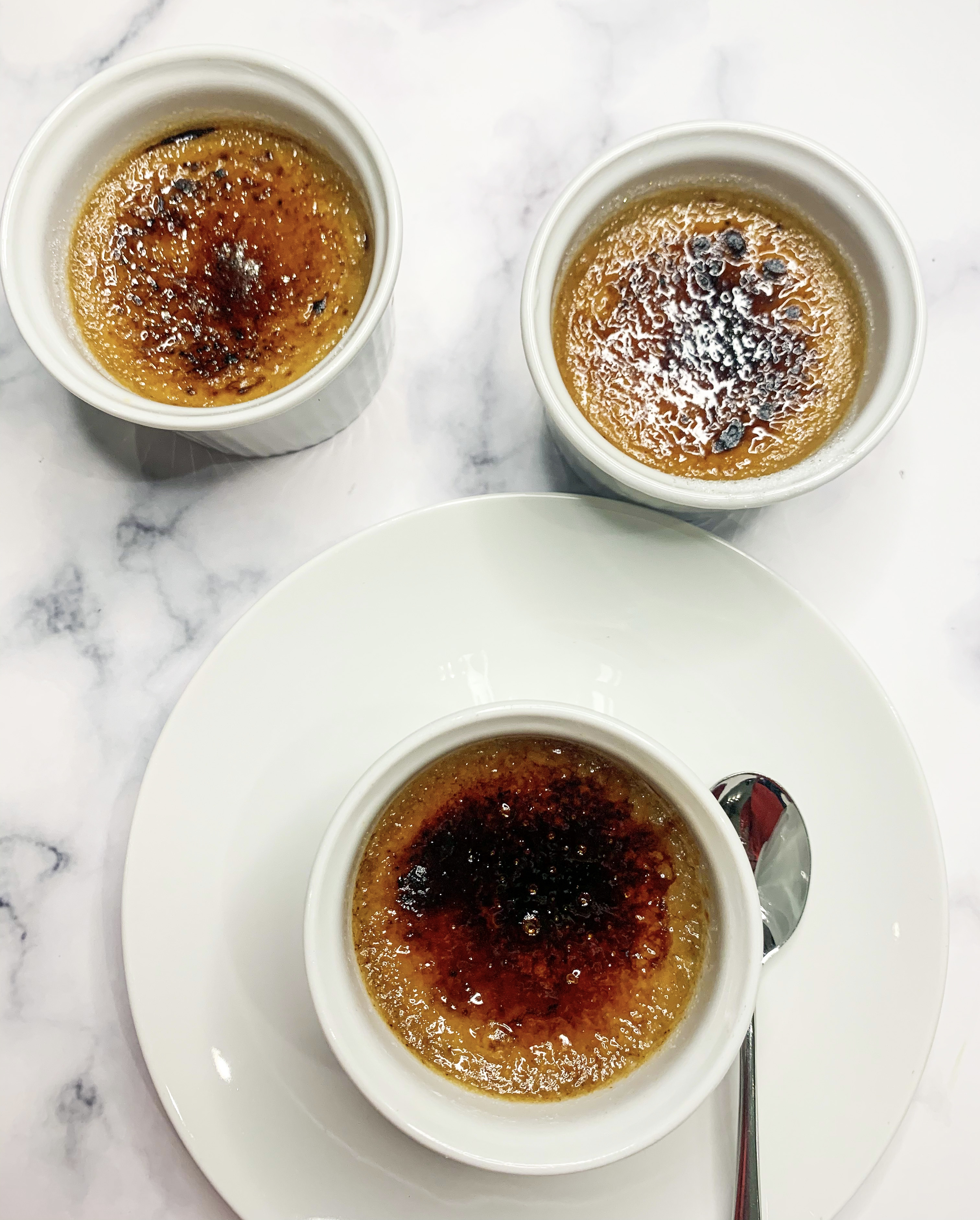
What a treat I have for you this week, these aren’t just any old Crème Brulées, these are Coffee Crème Brulées, they are the perfect end to any meal; coffee and cream, what’s not to like?! There are quite a few recipes around for créme brûlées, but I think that this recipe from David Lebovitz’s cookbook ‘My Paris Kitchen’ (a book which is hugely entertaining not just for it’s wonderful recipes but also for the anecdotes of his life in Paris), is pretty much one of the best – it’s simple yet stylish, very Parisian!

I suggest you use a kitchen blowtorch to create the caramelised topping as it’s much easier than trying to get your grill hot enough to do it. Dare I mention the ‘Amazon’ word?…kitchen blow torches can be found there for around £12-14; they are a great addition to any kitchen and seriously you will appreciate the wonderful crunch they will give to your Brûlée!

330ml double cream

160ml whole milk

50g caster sugar, plus more for caramelising

Pinch of sea salt

4 large egg yolks

1 tablespoon instant espresso powder

2 teaspoons of Kahlua or other coffee flavoured liqueur

You will need 6 ramekins with 125ml capacity

  1. In a small saucepan over a medium heat, warm the cream, milk, sugar, and salt until the sugar has melted.
  2. In a bowl, whisk together the egg yolks. Gradually add the warm cream mixture, stirring rather than whisking, as you don’t want to create too much froth.
  3. Mix 3 tablespoons of the cream mixture to the espresso powder, then return it to the bowl with the rest of the cream mixture, and mix to fully incorporate (I find that by adding it in this way it is easier to dissolve).
  4. Use a sieve to strain the coffee and cream mixture into large jug, then stir in the Kahlua.
  5. Pour the mixture between 6 ramekins (125ml).
  6. Place a tea towel over the base of a roasting tin (this will stop the ramekins from slipping), then place the ramekins in the tin. Pour enough boiling water into the roasting tin so that it comes halfway up the sides of the ramekins. Cover with foil.
  7. Place the roasting tin in a preheated oven, 150’c fan, cook for about 40-45 minutes until they are just about set but still a little ‘jiggly’.
  8. Remove the ramekins to cool on a rack. When cool, refrigerate until ready to serve.
  9. To serve, sprinkle with a thin, even layer of sugar (about 1½ teaspoons), then use a kitchen blow torch to caramelise the sugar – you may need to lift the ramekin to swirl the caramel evenly across the top. Serve immediately.