Tuesday Treat

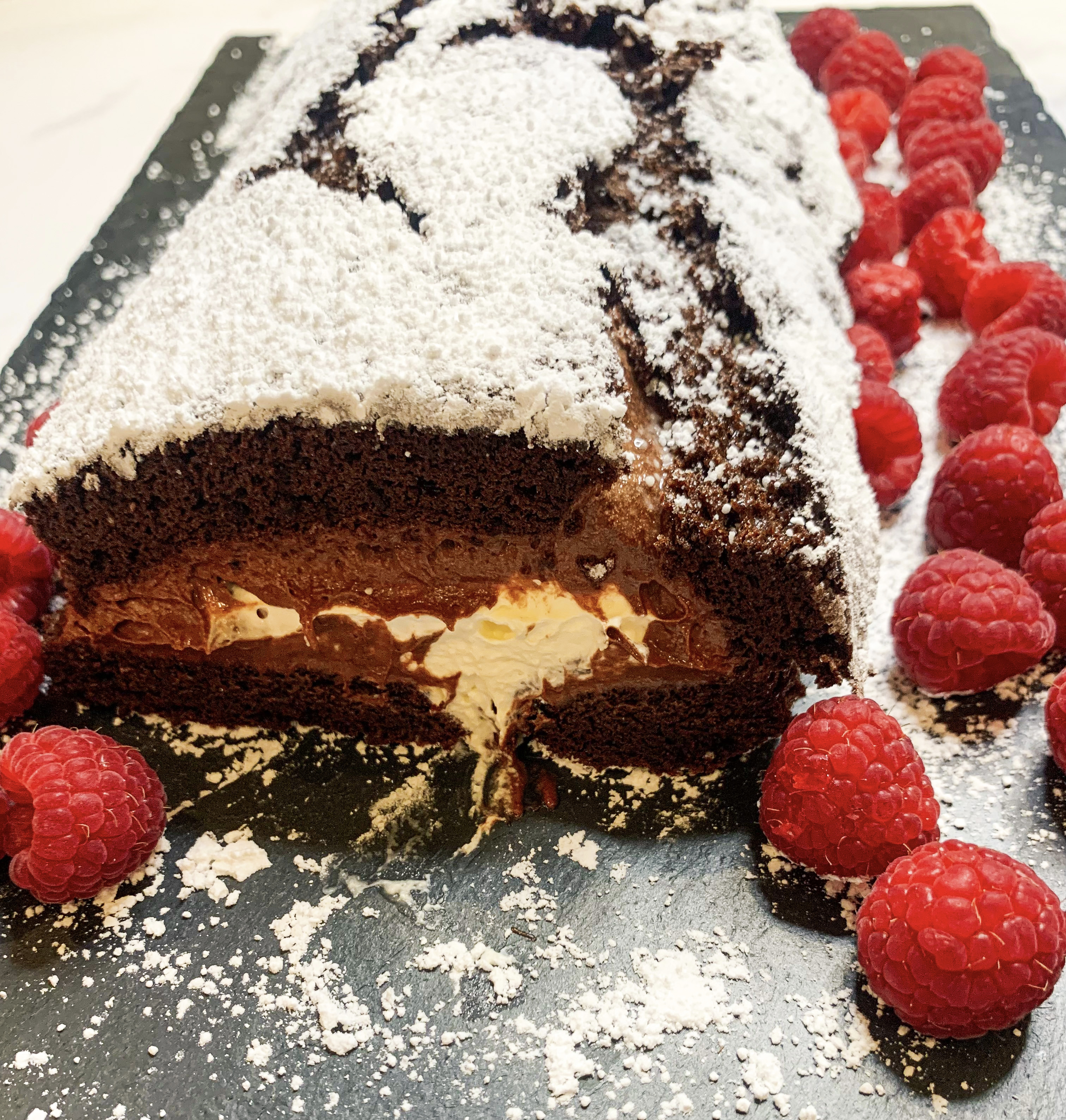
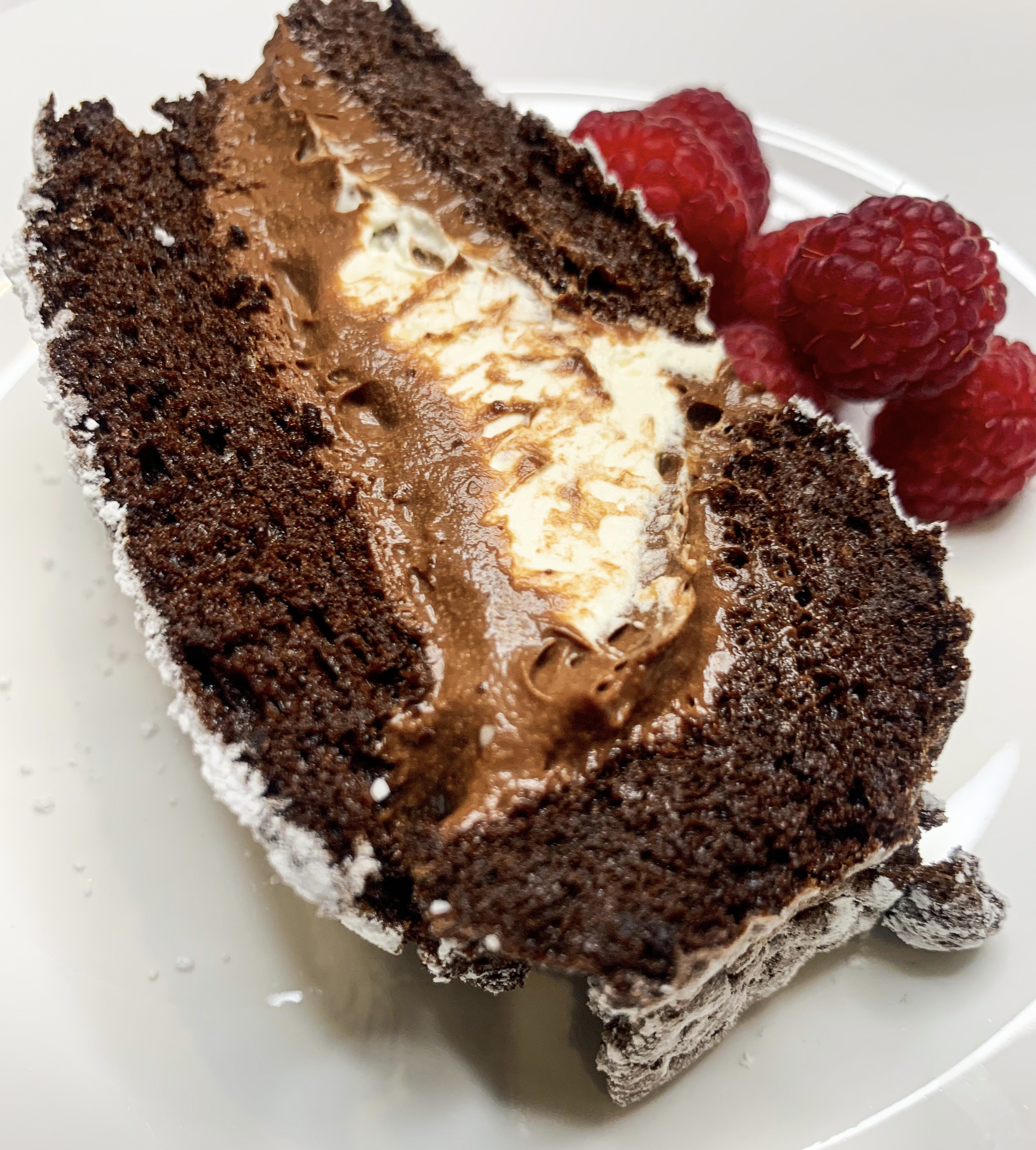
Chocolate Mousse Roulade

I found this recipe in Rachel Allen’s cookbook, ‘Entertaining at Home’. You will definitely thank me for sharing it – with its chocolate mousse and cream filling, it is incredibly delicious and surprisingly light. It also makes a great centrepiece for a Christmas celebration, you could add a sprig of holly to make it really festive! Roulades have a reputation for being difficult to make as they are renowned for cracking, but this is their nature and once you accept this outcome you will realise just how easy they are to bake – personally, I think their cracked style adds to their beauty and deliciousness! Indeed, when I was making this roulade I asked myself why I don’t make them more often, especially as many are naturally gluten-free. So, I have decided to start searching out more roulade recipes (watch this space!), in the meantime, you really should try this one!!… It will keep in the fridge for a couple of days but bring it to room temperature before serving.

6 eggs separated

150g caster sugar

50g cocoa powder

Icing sugar, for dusting

225ml double cream

For the chocolate mousse:

125ml double cream

125g dark chocolate, roughly chopped

2 tablespoons brandy or dark rum (optional)

2 eggs, separated

*You will also need a 20 x 30cm Swiss roll tin, lined

  1. Place the egg yolk and sugar in a bowl and whisk until the mixture starts to thicken, then whisk in the cocoa powder.
  2. In a separate bowl, whisk the egg whites until they are just stiff, then carefully fold these into the chocolate mixture. Pour into the prepared tin and bake in a preheated oven, 180’c for 15-20 minutes until the sponge feels springy to touch. Remove from the oven and allow to cool in the tin.
  3. To make the mousse filling, pour the cream into a saucepan and bring to the boil. Remove from the heat and stir in the chocolate until it has all melted. Add the brandy or rum (if using) and whisk in the egg yolks.
  4. In a clean bowl, whisk the egg whites until stiff, then stir in a quarter of the egg whites into the chocolate mixture, then pour the chocolate mixture into the remaining egg whites and fold in gently. Cover the bowl with clingfilm and chill in the fridge for 1-2 hours to set.
  5. When the roulade sponge has cooled turn it out onto an oblong sheet of greaseproof paper liberally dusted with icing sugar (or you could use cocoa powder if desired).
  6. Carefully pull away the lining paper. Spread the chocolate mousse over the sponge. Now whip up the cream and spread this over the chocolate mousse.
  7. With one long side facing you, gently roll up the roulade into the shape of a log. Transfer to a serving plate with the join facing down – this can be tricky, I usually use both a frying pan spatula and a palette knife to do this!
  8. Finally, dust with a little more icing sugar (or cocoa powder) and enjoy!

Week Fifty Three

Christmas!!!….yes, it’s just around the corner so naturally this week I’m sharing recipes with this in mind; recipes that are elegant enough to serve to guests yet substantial enough for a casual family dinner.

One of my all-time favourite cookbook writers is Delia Smith, I have her to thank for my love of cooking as it was through her ‘Complete Cookery Course’ that I started to cook properly back in the ’90s! Indeed, I still use a few of Delia’s recipes for our Christmas day menu, I will be sharing these with you just before Christmas, but this week I thought I would share one of her recipes which I return to again and again, ‘Curried Parsnip Soup’. This soup has a wonderful combination of flavours; the sweetness of the parsnip is cut by subtle curry spices and the slight acidity of freshly grated apple. It is great for a winter supper, particularly over the festive season, and also elegant enough to serve as a starter for a special meal. Menu Two, is a real treat, ‘Fillet of Venison with Red Wine & Chocolate Sauce’, I have served this on numerous occasions to guests and it has always received lots of compliments! You can prepare the sauce ahead of time so that you only have to cook the fillets of venison at the last minute – perfect if you have guests. I like to serve it with ‘Creamed Cabbage & Celeriac with Pancetta’, a luxurious side dish which complements the rich venison perfectly, as does ‘Gratin Dauphinoise with Gruyere Cheese’; both these side dishes can also be prepared ahead of time. Menu Three is a vegetarian recipe, ‘Sheepless Shepherds Pie’, admittedly it is quite involved, but it really is worth the effort. It would make a great meal between Christmas and New Year when you want a break from ‘meat-heavy festive dishes. It would also be good enough to serve up on Christmas day as a vegetarian option. Once prepared it can be refrigerated until needed, then all you have to do is pop it in the oven to serve – so, in fact, it is quite an easy option to have up your sleeve!

Obviously, we can’t celebrate Christmas without a cocktail so I just had to share one!… I happened to come across this recipe for a ‘Christmas Cosmopolitan’ online. It was posted on youtube by actor Stanely Tucci, the video is rather amusing but it was the cocktail that caught my attention; I love the twist on the original recipe (it uses pomegranate juice) and with its striking colour it makes the perfect aperitif to serve up over the festive season!…

Finally, I thought we should bring some festive spirit to our kitchens so I’m also sharing my very own Christmas music playlist – Christmas Music to Cook To…MenuMusic Six…listen to it here!… Enjoy!

Menu One

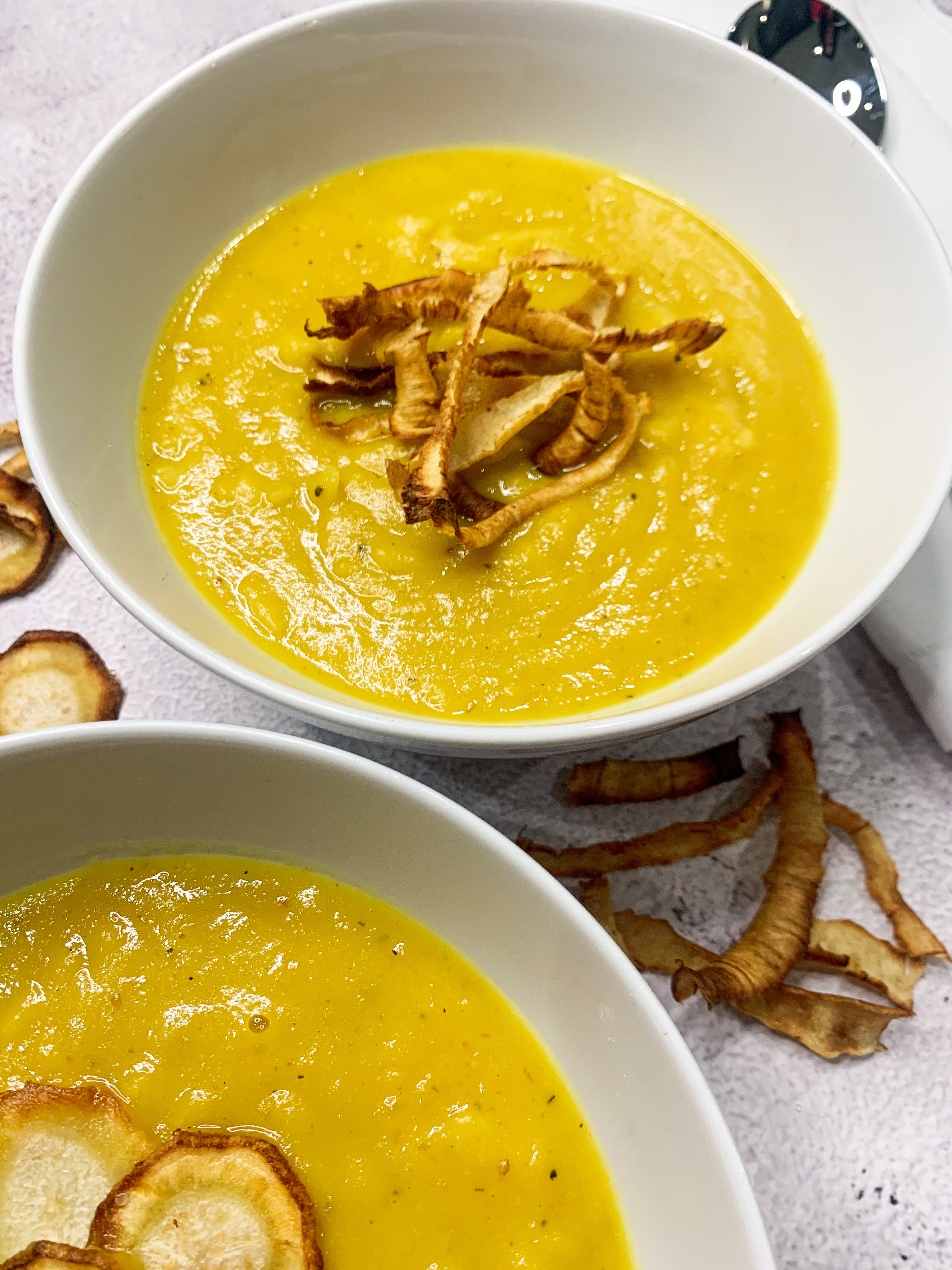
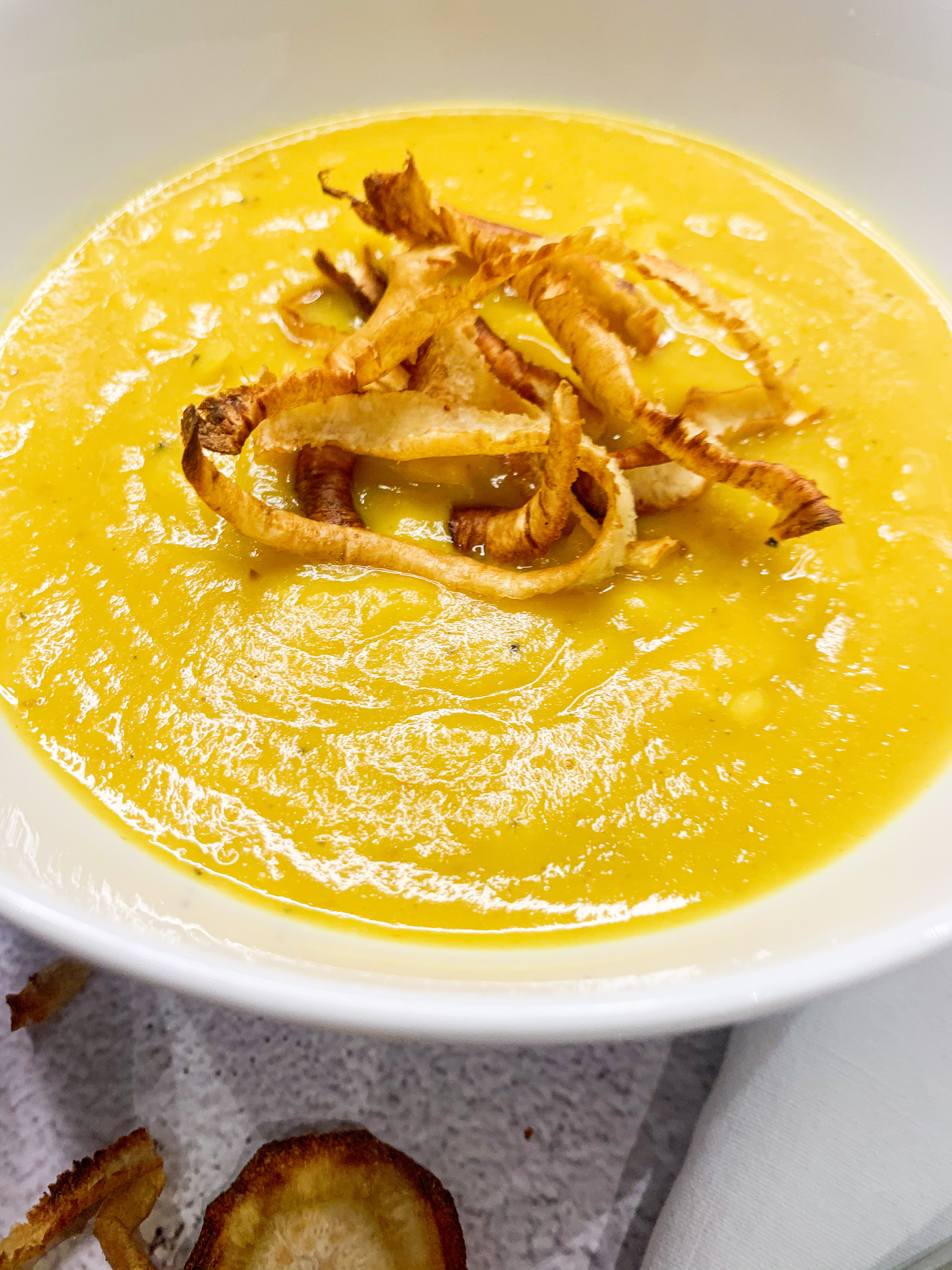
Curried Parsnip & Apple Soup with Parsnip Crisps (Serves 6)

This is one of Delia Smith’s recipes which I return to again and again. It has a wonderful combination of flavours; the sweetness of the parsnip is cut by subtle curry spices and the slight acidity of freshly grated apple. It is great for a winter supper and also elegant enough to serve as a starter for a special meal. The parsnip crisps are a lovely addition, but honestly, if you don’t have the time or energy to make them the soup would still be delicious on its own!

700g parsnips, peeled and chopped into 1 inch dice

40g butter

1 tablespoon groundnut oil

2 onions, chopped

2 cloves garlic, chopped

1.2 litres vegetable stock (I use Marigold Swiss Boullion)

1 medium Bramely apple (about 175g)

1 heaped teaspoon coriander seeds

1 rounded teaspoon cumin seeds

6 whole cardamom pods, seeds only

1 rounded teaspoon turmeric

1 rounded teaspoon powdered ginger

Sea salt and black pepper

  1. First of all, dry roast the coriander, cumin and cardamom seeds by placing them in a small frying pan over medium heat to draw out the flavour – after 2-3 minutes they will change colour and start to jump around in the pan. Remove and crush them finely with a pestle and mortar.
  2. Next heat the butter and oil in a saucepan until the butter begins to foam, then add the onion and gently soften for about 5 minutes before adding the garlic. Cook for a further 5 minutes then add all the crushed spices, the turmeric and the ginger, stir and continue to cook for a few more minutes.
  3. Add the cubed parsnips to the pan, stirring well, then pour in the stock, season and let the soup simmer very gently for 1 hour, without a lid.
  4. Remove the soup from the heat and liquidize it until smooth. Return to the saucepan, check the seasoning and reheat gently. While that is happening peel the apple and grate it into the soup just as it reaches simmering point.
  5. Serve immediately garnished with the parsnip crisps (recipe below).

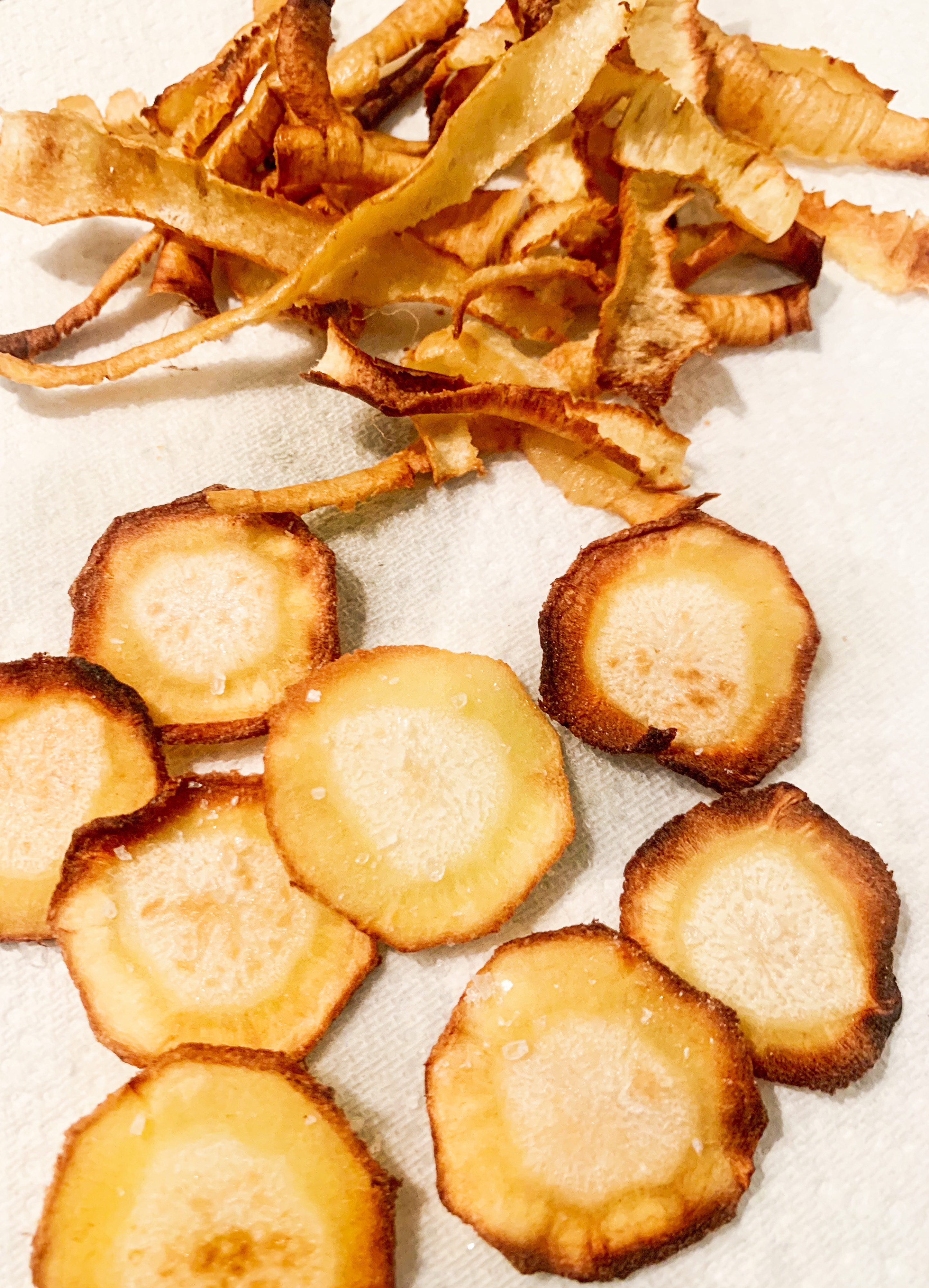
Parsnip Crisps

I like to use the whole parsnip to make these crisps; I use the long peelings of the skin and cut the flesh cut into discs – no waste!

1 medium/large parsnip

6 tablespoons of groundnut oil

Sea salt

  1. Using a potato peeler peel the skin of the parsnip into long strips. Then slice the flesh into thin discs.
  2. Place the groundnut oil in a frying pan and heat until very hot – almost smoking.
  3. First fry the parsnip discs in the hot oil until they are golden brown – 2-3 minutes. Then fry the peelings in the same way, adding more oil if needed.
  4. Remove with a slotted spoon and drain on kitchen roll. Sprinkle with sea salt.

Menu Two

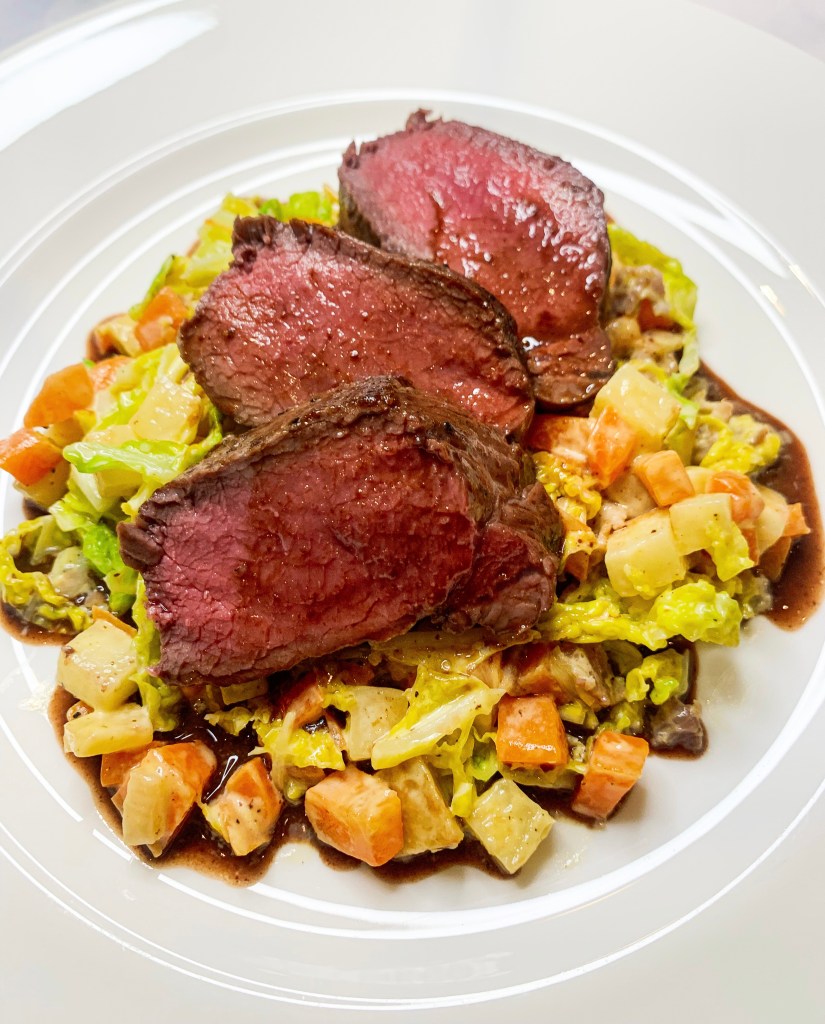
Venison with Red Wine & Chocolate Sauce (Serves 4)

This is one of my favourite recipes, it’s from Gordon Ramsay’s cookbook ‘Sunday Lunch’.  I have served this on numerous occasions to guests and it has always received lots of compliments! You can prepare the sauce ahead of time, so that you only have to cook the fillets of venison at the last minute – perfect if you have guests. I like to serve it with ‘Creamed Cabbage & Celeriac with Pancetta’, a luxurious side dish which complements the rich venison as does ‘Gratin Dauphinoise’ (either simple style or with Gruyere Cheese); these side dishes can also be prepared ahead of time (recipes here).

*I like to serve venison medium-rare, if you have a meat thermometer it should read about 48’c; if you cook it to an internal temperature of 44’c by the time it’s rested the temperature will have climbed to 48’c – perfection!

*The recipe calls for ‘raspberry vinegar’, if this isn’t available you could substitute it with sherry vinegar.

200g smoked bacon lardons

4 garlic cloves, peeled, left whole and crushed lightly with the blade of a knife

250g shallots, peeled and roughly chopped

A few thyme sprigs

2 fresh bay leaves

½ teaspoon black peppercorns, crushed

Olive oil

350ml red wine

1 litre chicken stock

4 venison fillets, about 150g each, trimmed

1 teaspoon raspberry vinegar (or sherry vinegar – see note above)

20g dark chocolate (I use Lindt 70%)

Sea salt and black pepper

*4 small square sheets of foil, about 20cm x 20cm, dull side buttered or you could use butter wrappers.

  1. In a large saucepan, sauté the lardons, shallots and garlic with the herbs and crushed peppercorns in a little olive oil, for about 6-8 minutes until the shallots have softened. Add the red wine and boil for 10 minutes until reduced by half. Add the chicken stock and keep boiling until reduced to a syrupy consistency. This may take up to 20-25 minutes. Pass through a sieve into a clean pan, taste to adjust the seasoning and put to one side until needed.
  2. Heat a little oil in an oven proof frying pan. Season the venison fillets and brown them in the hot pan, allowing 2-3 minutes each side. Remove the pan from heat and loosely wrap each fillet in the buttered foil or butter wrappers (to help retain the moisture). Put the pan in a preheated oven, 200’c fan, cook for 6-8 minutes depending on the thickness of the fillets – keep an eye on them; less is more – see note above! Allow to rest in warm place for up to 10 minutes.
  3. While the meat is resting, gently reheat the sauce and add the raspberry vinegar (or sherry vinegar). Take the pan off the heat and whisk in the grated chocolate until it melts and the sauce is smooth. Taste and adjust the seasoning.
  4. Cut the venison into thick slices and arrange on warm plates, then pour the sauce around. It is delicious served with ‘Creamed Cabbage & Celeriac’ and ‘Gratin Dauphinoise’ (recipes below).

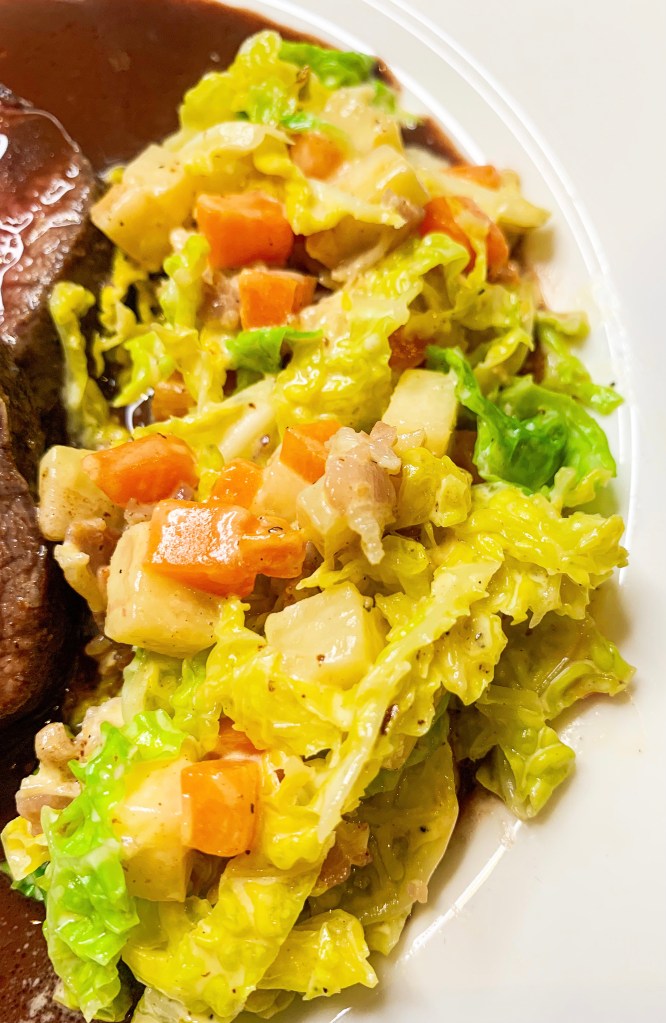
Creamed Cabbage & Celeriac with Pancetta (Serves 4)

This is a wonderfully luxurious way of serving cabbage, the flavours of the celeriac and carrots are fantastic alongside the cream. It goes well with beef and game dishes. You could prepare it up to stage 2 and leave it to one side, then reheat when needed, adding the cabbage and cream just before serving – this makes it an easy dish to serve to guests.

100g streaky bacon, chopped

Olive oil

400g carrots, peeled and diced

½ celeriac, peeled and diced

50g unsalted butter

1 small Savoy cabbage, trimmed and finely shredded

200ml double cream

Sea salt and black pepper

  1. Heat a little olive oil in a large sauté pan and fry the chopped bacon until golden brown. Add the carrots and celeriac, sweat the vegetables for 6-8 minutes until softened.
  2. Add the butter and stir through the cabbage. Cook for 3-4 minutes until the cabbage is tender. Pour in the cream and simmer to reduce slightly. Season generously with salt and pepper before serving.

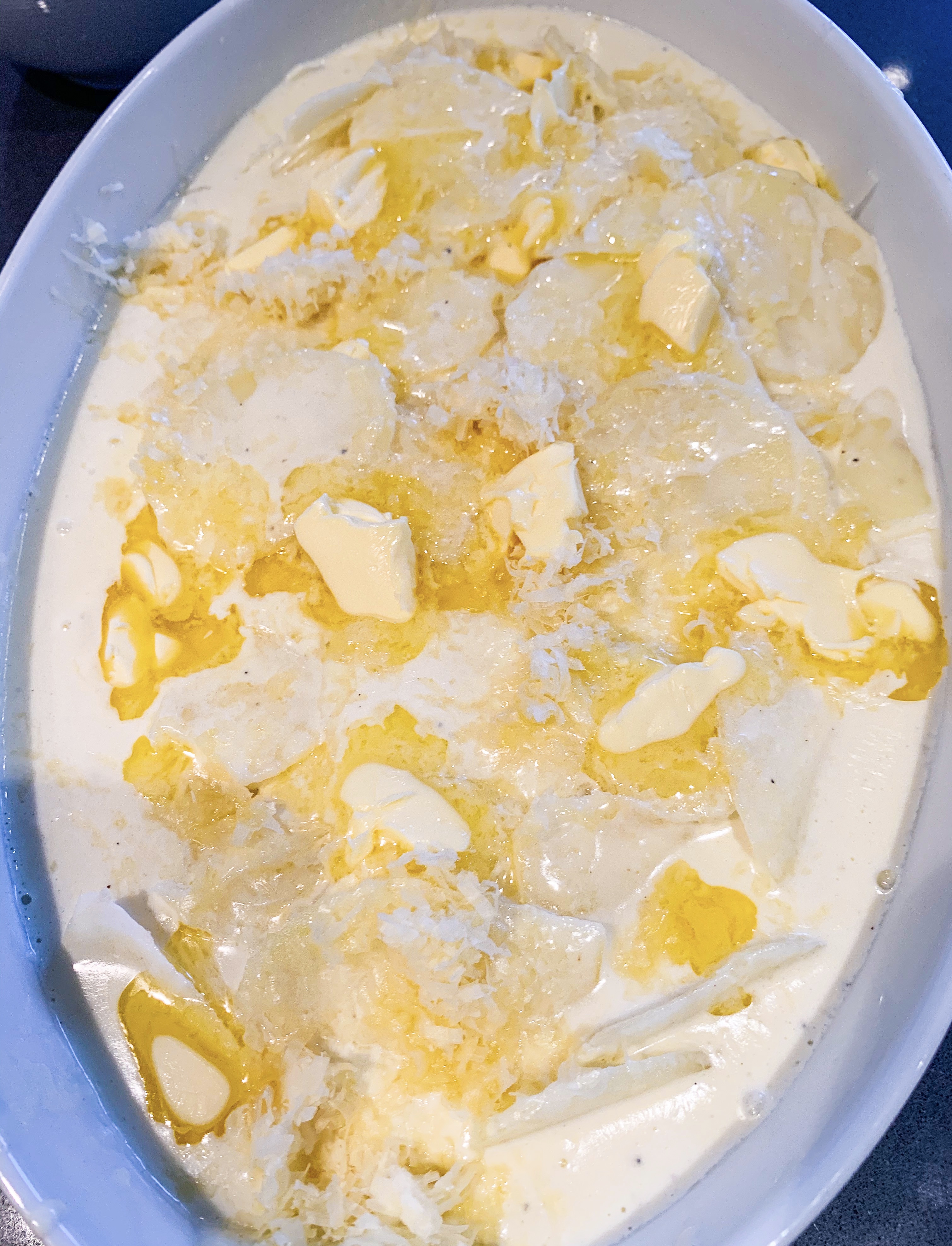
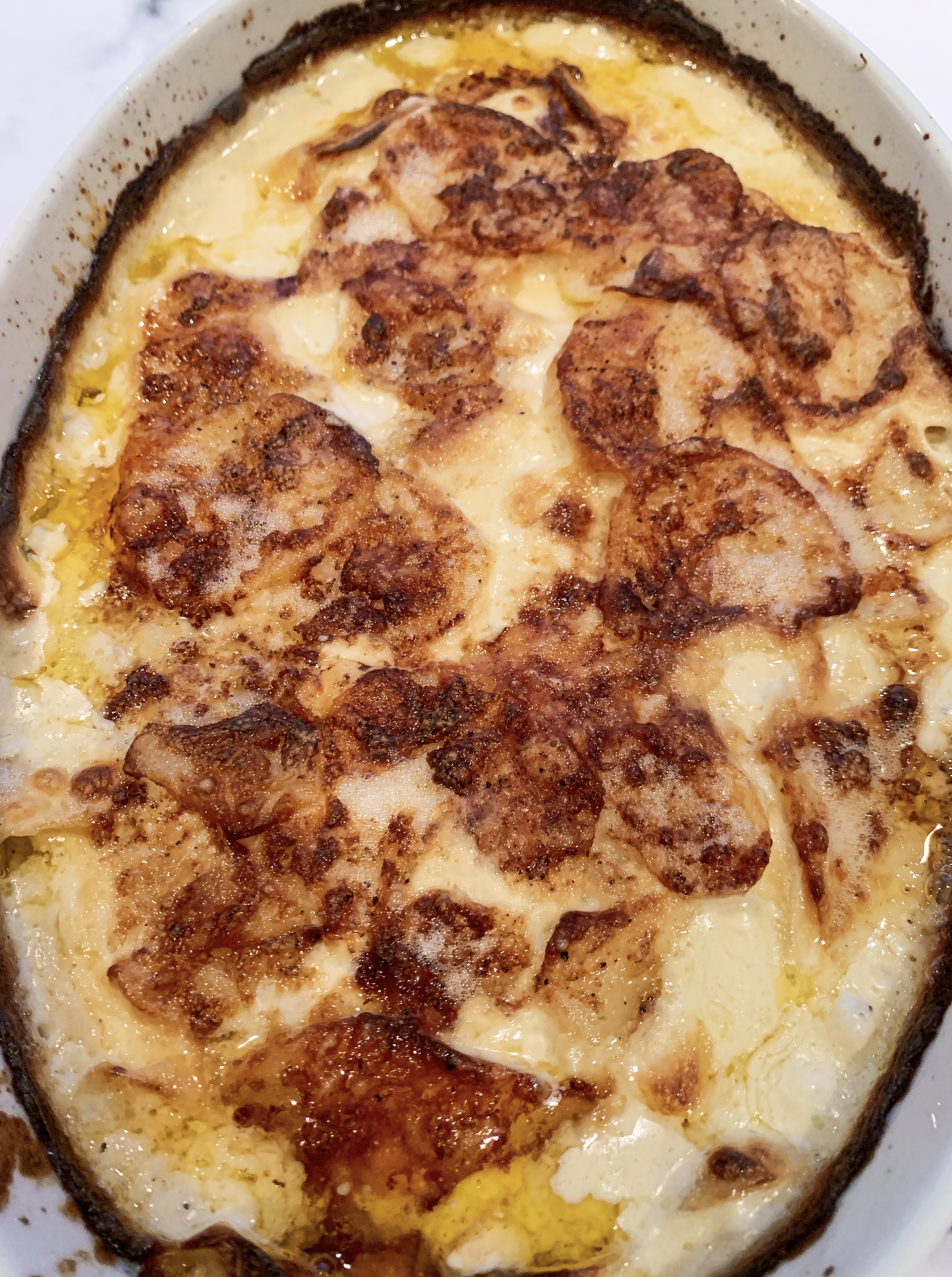
‘Staple Side Dish’ – Dauphinoise Potatoes with Gruyére Cheese

This is one of two recipes that I have posted for Dauphinoise Potatoes; the other recipe (here) is slightly simpler to make and not quite as rich (that’s if Dauphinoise Potatoes can be ‘less rich’!). Either recipe goes very well with the ‘Fillet of Venison with Red Wine and Chocolate Sauce’ (above), but I particularly like this recipe with the Gruyére cheese as it is richer and more unctuous!

I found this recipe in ‘At Home in the Provence’ by Patricia Wells, who in turn took if from renowned French chef, Joël Roubuchon – so it comes well endorsed!

500ml whole milk

250ml double cream

125g grated Gruyere cheese

1 kg firm fleshed potatoes (such as Charlotte), peeled and sliced very thinly

1 plump clove garlic, peeled and halved

45g unsalted butter, diced

Freshly grated nutmeg

Sea salt and black pepper

  1. In a large saucepan bring the milk to boiling point. Add the cream and three-quarters of the cheese. Stir to blend and melt the cheese. Season which salt, pepper and a grating of nutmeg. Add the potatoes and mix well with a wooden spoon. Cook over a low heat for about 20-25 minutes until the potatoes are soft.
  2. Rub a baking dish with the garlic. Transfer the potatoes and their liquid to the baking dish and sprinkle with the remaining cheese and the butter.
  3. Place in a preheated oven, 190’c fan, for about 1¼ hours.
  4. Serve immediately.

Menu Three

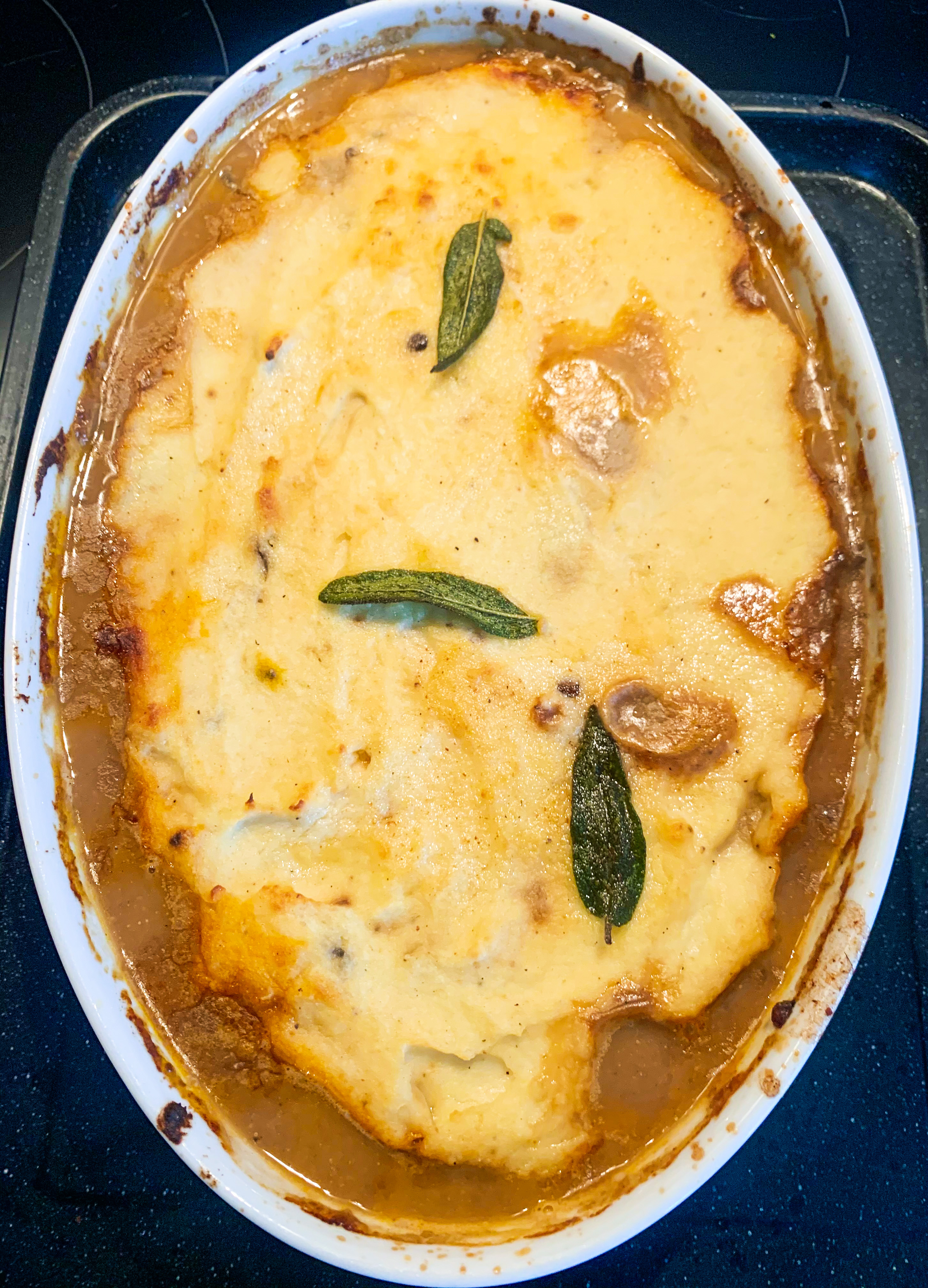
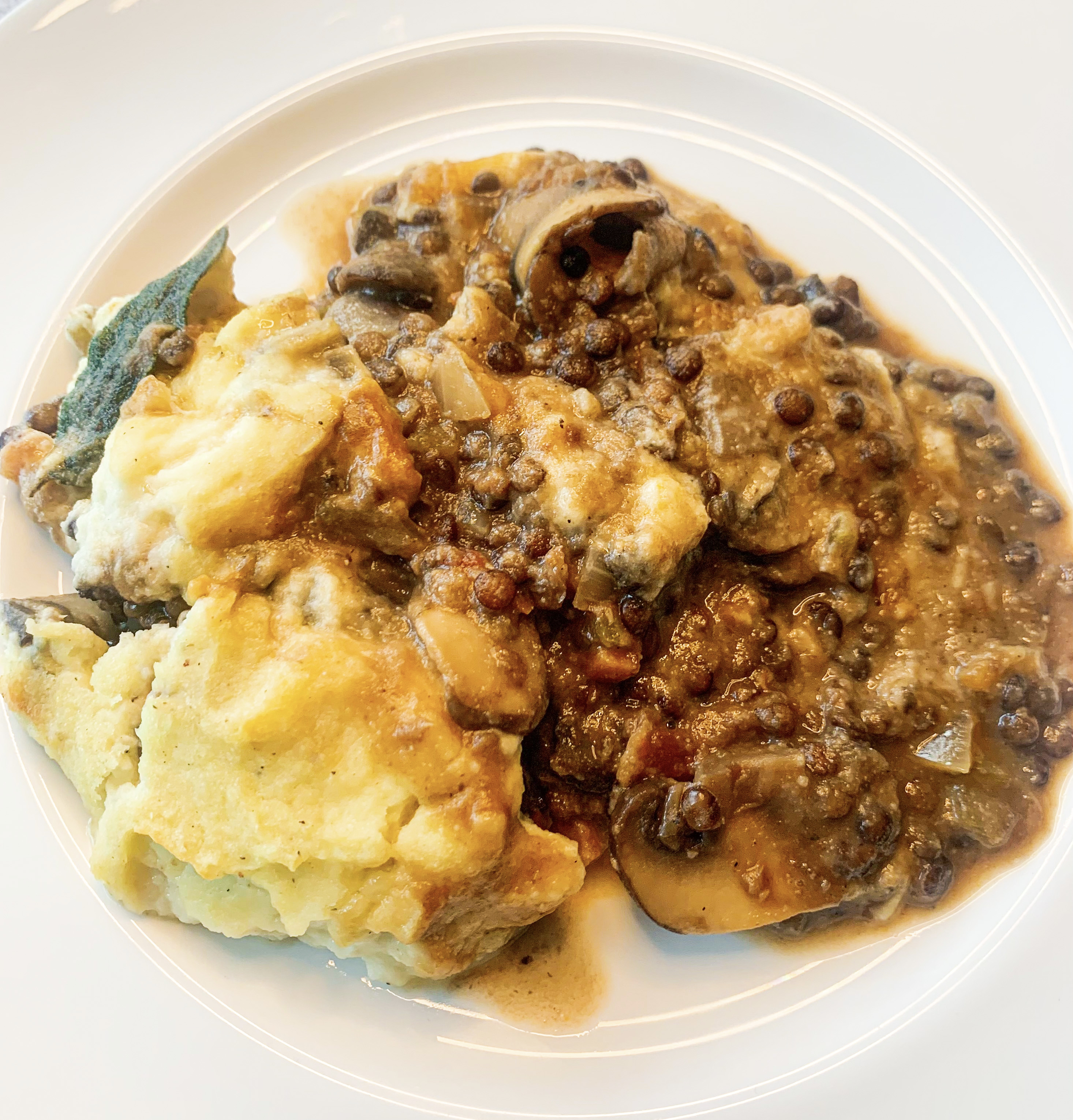
Sheepless Shepherd’s Pie (Serves 6-8)

This meatless shepherd’s pie makes a great vegetarian feast. The rich combination of braised lentils, mushrooms and vegetables are the perfect substitute for lamb. It has complex flavours –  the secret ingredient is pickled walnuts which lend a dark nuttiness and piquancy that really lift the whole dish. The topping is a caramelised celeriac mash rather than potato – it really is delicious! This recipe is from Rosie Birkett’s cookbook ‘The Joyful Home Cook’. The recipe calls for the lentils to be soaked before use, however you could use ‘Merchant Gourmet’ Puy lentils which don’t need soaking.

200g green or puy lentils, soaked in cold water for 30 minutes and drained (or use no-soak, see above)

3 bay leaves

2 tablespoons olive oil

1 onion diced

2 celery sticks, trimmed and finely chopped

1 carrot, diced

2 garlic cloves, crushed

Pinch of dried chilli flakes

½  x 400g tin chopped tomatoes

30g butter, plus a couple of knobs for frying the sage and greasing

6 sage leaves, plus 3 for pie topping

400g field or chestnut mushrooms, sliced

500ml vegetable stock (I use Swiss Marigold Boullion)

1 teaspoon honey

80g pickled walnuts, chopped, plus 1 tablespoon of the vinegar

100g brie, cubed

For the Celeriac Topping:

100ml whole milk

1 celeriac (400-500g) peeled and cubed

50ml double cream

30g butter

Nutmeg, for grating

10g Parmesan cheese, grated

Sea salt and black pepper

  1. Bring a large saucepan of salted water to the boil and add the lentils and one bay leaf. Cook for 15 minutes, or until tender, skimming away any surface scum. Drain and set aside.
  2. Heat the olive oil in a frying pan over a medium heat, add another bay leaf, the onion, celery, carrot, garlic, chilli flakes and a large pinch of salt, fry for 8-10 minutes until the onions have softened and are starting to brown. Add the chopped tomatoes and cook for 5 minutes until they start to break down into a sauce. Remove from the heat and set aside.
  3. Melt the butter in another frying pan over a medium-high heat and stir in the 6 sage leaves and add the mushrooms plus a good pinch of salt, fry for 6-8 minutes until they have given up most of their moisture and are deeply coloured.
  4. Add the mushrooms to the tomato pan, along with the lentils and pour over the vegetable stock. Return this pan to a medium heat, stir and cook for 5-8 minutes until the stock has reduced. Season with pepper, stir in the honey, pickled walnuts and vinegar and the cheese, remove from the heat.
  5. Now cook the topping. Pour the milk into a saucepan, add the remaining bay leaf, the cubed celeriac and a good pinch of salt. Cover and turn the heat to low-medium. Slowly cook, so that the milk starts to evaporate, steaming and caramelising the celeriac. Gently shake the pan every few minutes to stop the celeriac sticking to the bottom of the pan – and if it gets too dry add another splash of milk. Cook for about 15 minutes until tender. Finally add a tablespoon of boiling water and give it a good stir, scraping up any bits from the bottom.
  6. Put the celeriac in a food processor, add the cream, butter, a good grating of nutmeg, the Parmesan and salt and pepper. Blitz until smooth and creamy.
  7. Finally, put the lentil mixture in a buttered pie dish and top with the celeriac mash. At this point, for added luxury, you can melt a knob of butter in a frying pan and fry the remaining 3 sage leaves until crisp, then pour them over the pie, or you can simply top with a few knobs of butter.
  8. Bake the pie in a preheated oven, 180’c fan, for 25-30 minutes.

And A Little Treat…

Christmas Cosmopolitan (Serves 1)

I happened to come across this recipe for a ‘Christmas Cosmopolitan’ online. It was posted on YouTube by actor Stanely Tucci, the video is rather amusing but it was the cocktail that caught my attention; I love the twist on the original recipe (it uses pomegranate juice) and with its striking colour it makes the perfect aperitif to serve up over the festive season… Enjoy!

3 tablespoons pomegranate seeds

25ml Cointreau ⠀

50ml vodka⠀

25ml cranberry juice

25ml pomegranate juice

Ice

1 tablespoon caster sugar

1 Sprig of Rosemary, 1 mint leaf and 1 raspberry for garnish

  1. First prepare your cocktail glass; put the sugar on a saucer, then dampen the rim of the glass with a wet piece of kitchen roll and dip it into the sugar so that you create a sugared rim.
  2. To make your garnish, thread the rosemary sprig through the mint leaf followed by the raspberry.
  3. Place the pomegranate seeds in a cocktail shaker, use a wooden spoon or pestle to muddle them (mush together).
  4. Add the Cointreau, vodka, cranberry juice and pomegranate juice, then add a large handful of ice. Shake well for 15 seconds until very cold.
  5. Strain into the prepared cocktail glass and garnish. Merry Christmas!

Weekend Treat

This week I’m sharing my ‘Tuesday Treat’ a little early, so it’s become a ‘Weekend Treat’!…

(I’ll be back as normal on Wednesday 8th December with some delicious savoury recipes!)

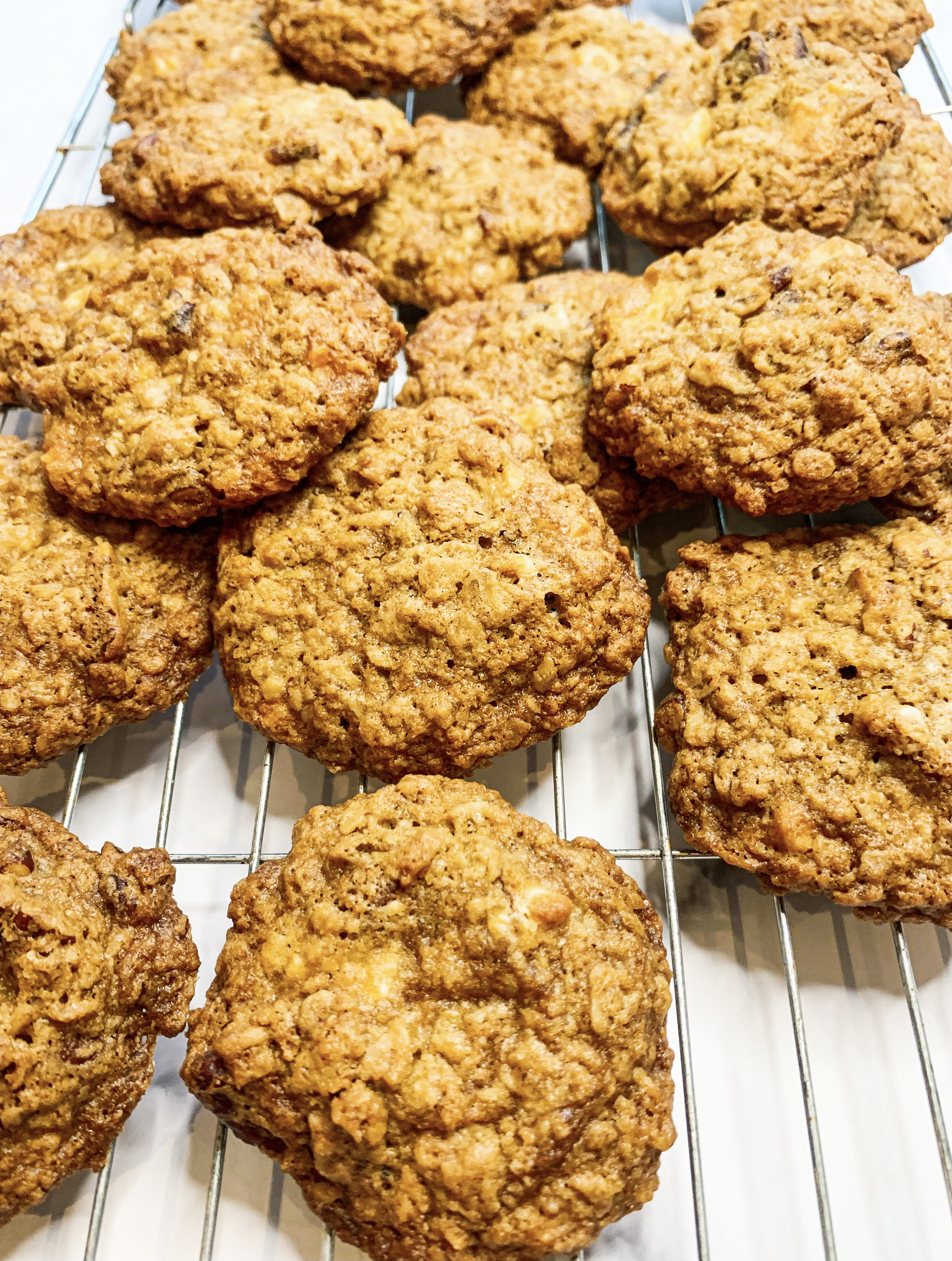
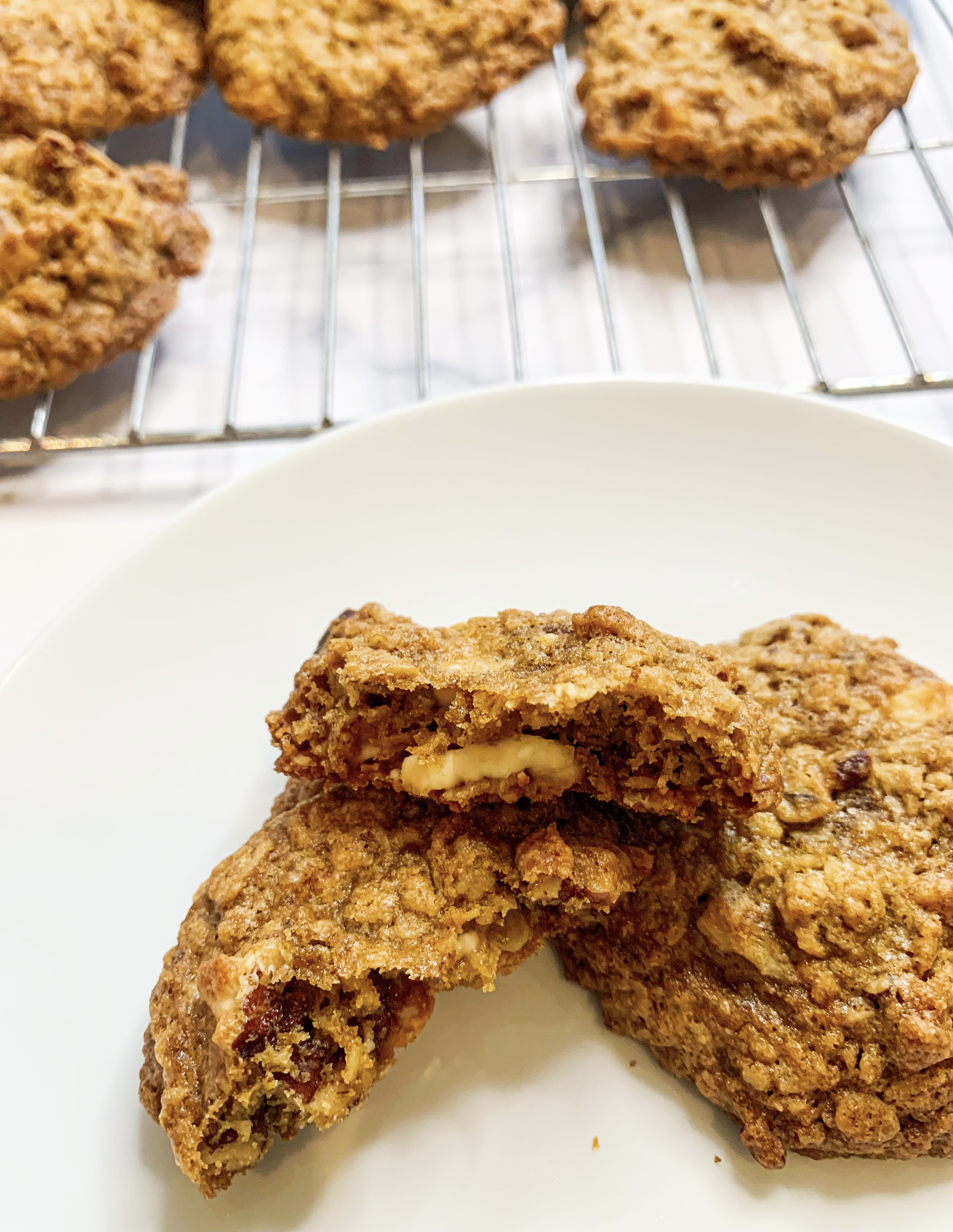
White Chocolate, Pecan Nut & Oat Cookies (Gluten Free)

These are very good and very moreish, they are the type of cookie that can be easily eaten at just about any time of the day – you have been warned! The recipe is from the cookbook, ‘A Love of Eating: Recipes form Tart London’, written by Lucy Carr-Ellison and Jemima Jones. In their recipe they use macademia nuts which I’m not so keen on, so I have substituted them for pecan nuts which are delicious with the sweet, white chocolate, a little like that other match made in heaven – pecan and maple syrup. This recipe works well with gluten-free flour, I use Dove’s. (Makes about 20 cookies)

150g unsalted butter, softened

130g light muscovado sugar

1 egg, beaten

1 teaspoon vanilla extract

50g plain flour (gluten-free if required – see note above)

1 teaspoon bicarbonate of soda

130g porridge oats

100g pecan nuts

100g white chocolate, chopped

*A couple of baking sheets, lined with baking paper.

  1. First, place the pecan nuts on a baking tray and bake in a preheated oven, 180’c fan, for 5-10 minutes until golden and toasted. Remove from the oven, allow to cool then chop.
  2. Cream the butter and the sugar together until soft and pale. Add the egg, vanilla, flour and bicarbonate of soda and beat until smooth.
  3. Add the oats, chopped white chocolate and pecan nuts, fold until combined.
  4. Take walnut size amounts of the sticky dough and place on the lined baking sheets, spacing them well apart. Bake in a preheated oven, 180’c fan, for 10-12 minutes until golden brown. Transfer to a wire rack to cool….before eating…enjoy!!

Week Fifty Two

As we are fast approaching 25th November I think it’s safe for me to mention the ‘Christmas’ word, as it’s undoubtedly on all of our minds!… This year it should be a lot more joyous than last year, as without the stringent covid rules we will be able to entertain our friends and family. With this in mind, I thought that I would share a few recipes that are relatively quick to cook and will please the fussiest of guests, leaving you time to enjoy their company!….

Menu One is Chicken with Red Grapes and Marsala,  I adore cooking with Marsala wine, both in savoury and sweet dishes, as it lends a wonderful musky sweetness without being overpowering. In this recipe from Nigella Lawson’s cookbook ‘At My Table’, it is combined with grapes and chicken to make a classic dish, it is delicious served simply with steamed new potatoes. I love the uncomplicated elegance of Menu Two – ‘Hake with Capers, Saffron and Tomatoes’ is super quick and easy to cook – it really is my favourite kind of recipe! I have taken it from the cookbook ‘Memories of Gascony’ by Pierre Koffman, one of the world’s greatest Michelin starred chefs, so, without doubt, it is the type of dish that is equally good enough to serve to guests as it is to the family! Menu Three is ‘Pan-Roasted Duck with Spiced Peaches’, this is a very special dish, with a beautiful combination of flavours and magnificent colours. On paper, it seems a rather complex recipe, but it is actually straightforward!… I recommend that you serve it with two of my staple side dishes, ‘Sautéed Spinach with Garlic’ and ‘Concetta’s Potatoes’ (recipes below). Finally, this months ‘Blast from the Past Recipe’ is a recipe that I first shared last November, now that the season for game is well underway I think it’s a good time to re-share this recipe for pheasant. ‘Roast Pheasant with Whisky & Peppercorn Sauce’,  would be an easy and equally impressive dinner to serve over the festive season, it is particularly good with roast potatoes and buttered savoy cabbage (I’m also reposting these recipes!). Even if you’re not entertaining, these recipes will be the perfect complement to the festive season, and will be a good addition to any Christmas cooking list!… Enjoy!…

Menu One

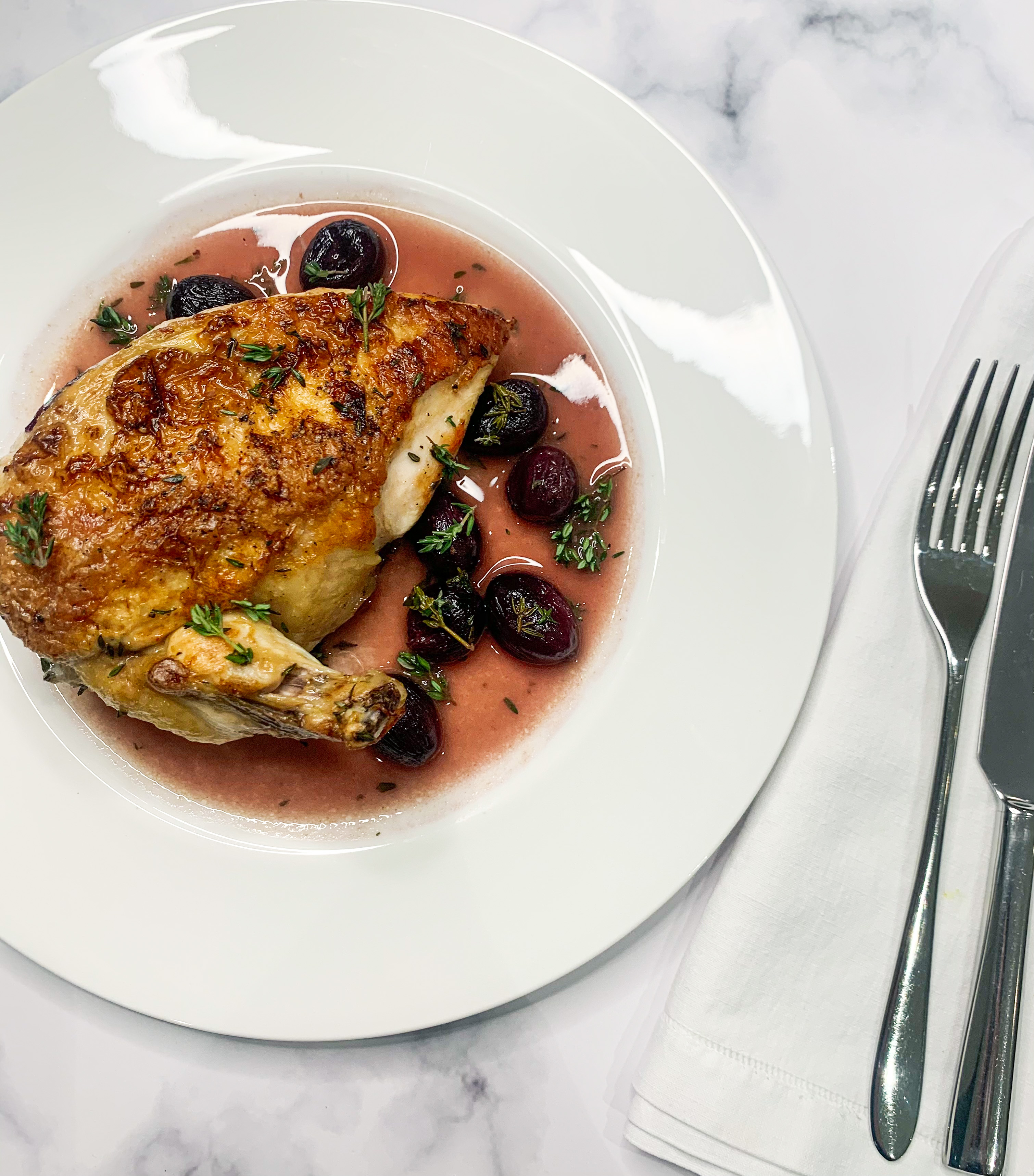
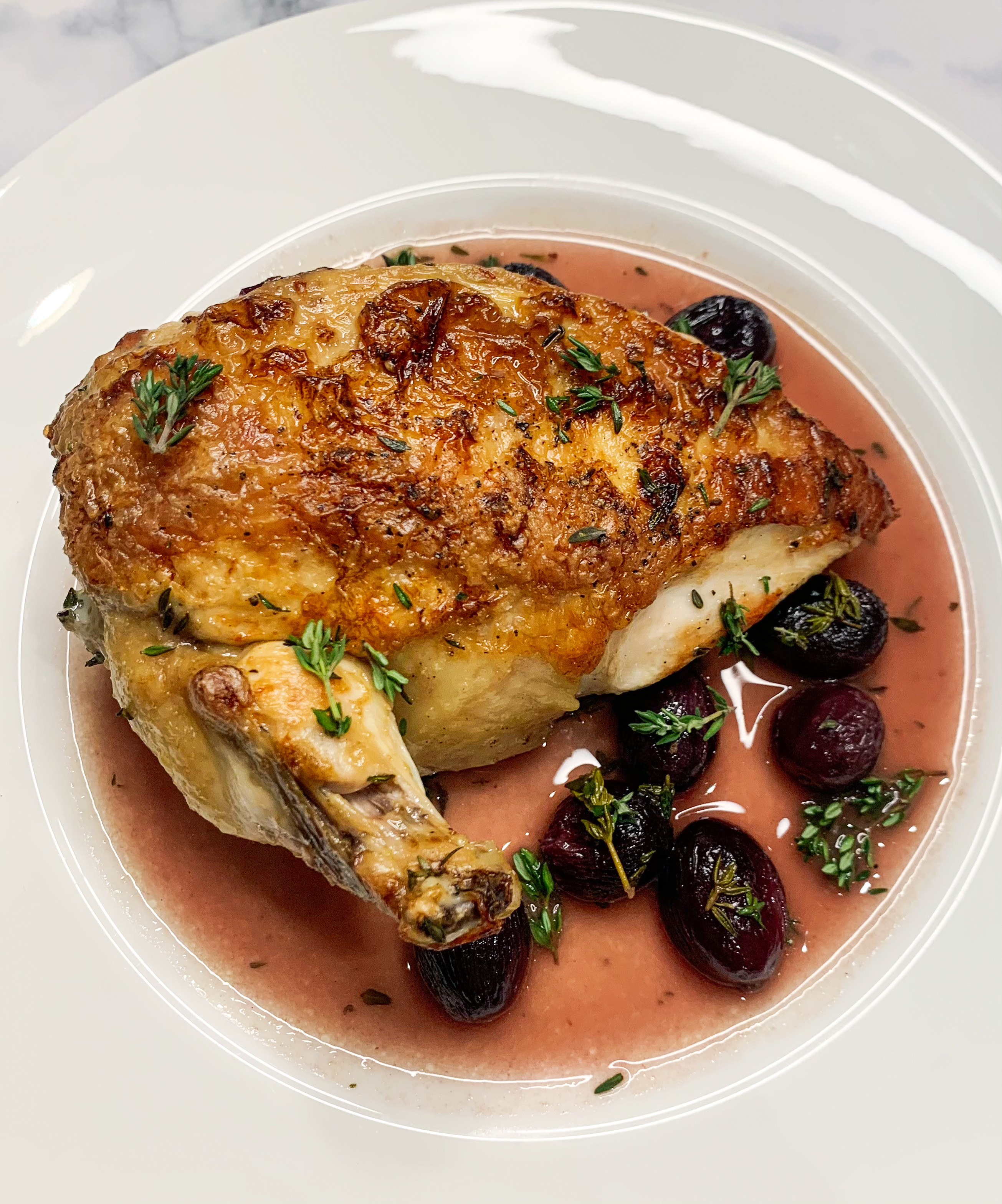
Chicken with Red Grapes and Marsala (Serves 4)

I adore cooking with Marsala wine, both in savoury and sweet dishes, as it lends a wonderful musky sweetness without being overpowering. In this recipe from Nigella Lawson’s cookbook ‘At My Table’, it is combined with grapes and chicken to make a very elegant dish. In the photo above you can see that I used chicken supremes, which are chicken breasts with the bone still attached, they are particularly plump and juicy, however, this recipe would work equally well with regular skin-on chicken breasts (perhaps reduce the cooking time by 5 minutes if they are smaller). This dish is delicious served simply with steamed new potatoes.

120ml Marsala wine

120ml Chicken stock

2 teaspoons Dijon mustard

2 tablespoons olive oil

4 Chicken supremes or chicken breasts with skin-on (see note above)

40 or so Seedless red grapes

2 tablespoons fresh thyme leaves, plus a few sprigs for decoration

  1. Mix the Marsala, chicken stock and mustard together.
  2. Heat the oil in a casserole dish or deep oven-proof frying pan, fry the chicken supremes, skin-side down for about 5 minutes or until they are golden brown. Turn the chicken skin-side up and add the Marsala mixture to the pan, let it bubble up, then add the grapes and sprinkle over the thyme leaves. Bring everything to a gentle boil, then transfer to a preheated oven, 180’c fan, for about 20 minutes, until the chicken skin is bronzed and crisp and the meat is cooked through.
  3. Transfer the chicken and grapes to a serving plate. Place the pan with the cooking juices over a high heat and allow them to bubble away for a few minutes until they are reduced and thickened.
  4. To serve, pour the sauce around the chicken (avoiding the crisped skin) and scatter over some thyme sprigs.

Menu Two

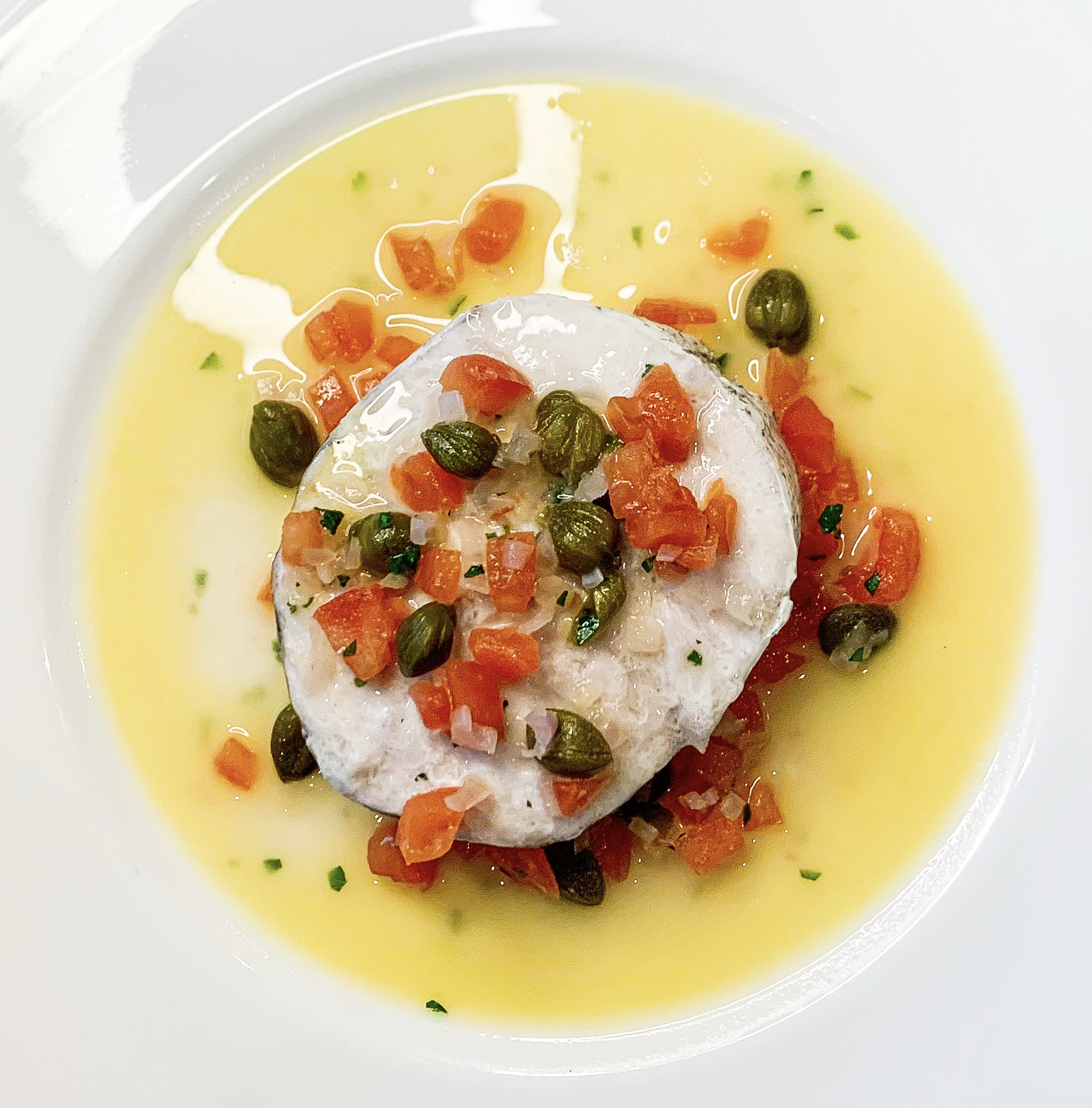
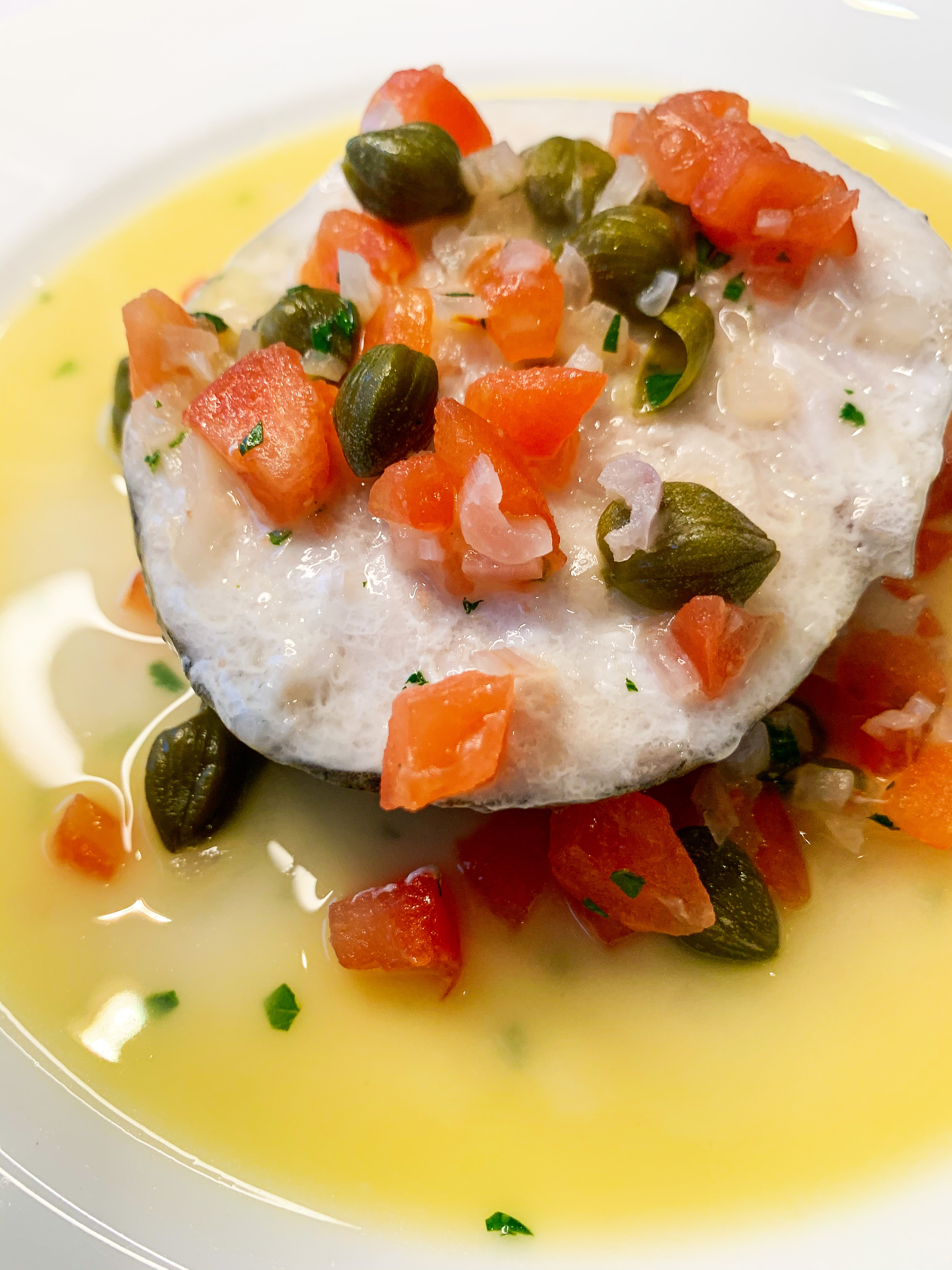
Hake with Capers, Saffron & Tomatoes (Serves 4)

I love the simple elegance of this dish, it’s super quick and easy to cook – it really is my favourite kind of recipe! It is from the cookbook ‘Memories of Gascony’ by Pierre Koffman, one of the world’s greatest Michelin starred chefs, so it is the type of dish that is equally good enough to serve to guests as it is to the family! If you can’t get hold of hake, you could substitute it for cod steaks. This simple yet elegant dish is delicious with steamed new potatoes.

4 Hake steaks (see note above)

2 shallots, finely chopped

250ml dry white wine

A pinch of saffron

Sea salt

50g butter

50g capers

2 large tomatoes, skinned deseeded and diced

1 teaspoon fresh parsley, chopped

  1. Put the fish in a flameproof dish with the shallots, white wine and 50ml water, saffron and salt to taste. Bring to simmering point, cover with foil and place in a preheated oven, 190’ fan, for 15 minutes.
  2. Transfer the fish to a serving dish, keep warm. Place the dish over a medium/high heat and allow to bubble to reduce the cooking juices by half. Whisk in the butter and then add the capers and tomatoes, check the seasoning.
  3. Pour the sauce over the hake and sprinkle with the chopped parsley to serve.
Menu Three

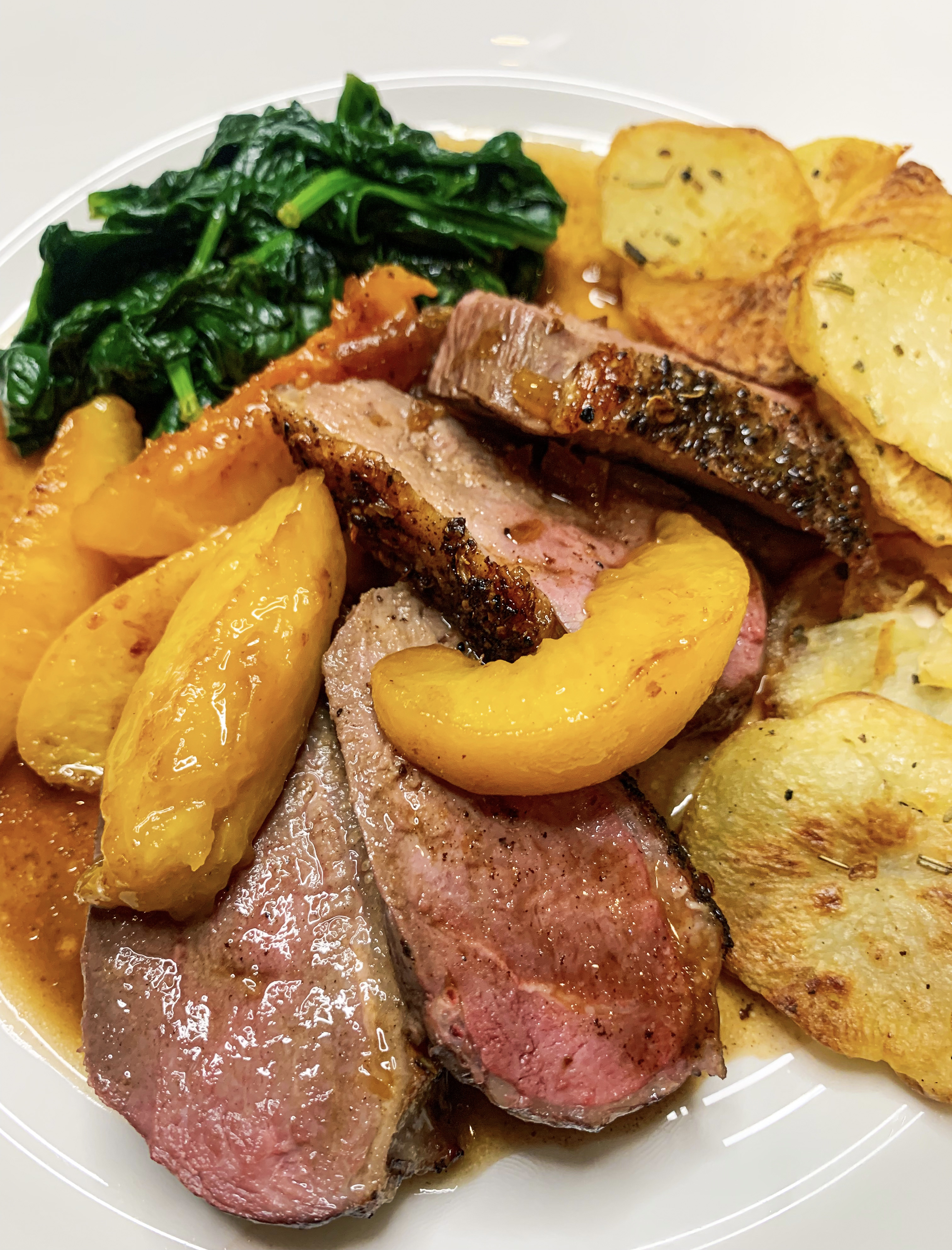
Pan-Roasted Duck Breast with Spiced Peaches (Serves 4)Served with Sautéed Spinach and Concetta’s Potatoes

This is a beautiful looking dish, the colour of the peaches totally lifts the plate. Despite looking like a rather complex recipe it is actually very straightforward; you just need to have two frying pans on the go and read the recipe through first! If you are serving it to guests it is a good idea to prepare the peaches, sauce and duck beforehand (to stage 6) and then when your guests arrive, just oven cook the duck and finish off the sauce. You could use nectarines if peaches aren’t available. This is a recipe which I have taken from Daniel Galmiche’s cookbook, ‘French Countryside Cooking’. I like to serve this dish with my staple side dishes, ‘Sautéed Spinach with Garlic’ and ‘Concetta’s Potatoes’ (both recipes are below).

100g caster sugar

1 inch piece of cinnamon stick, broken

4 unripe peaches or nectarines

4 duck breasts

2-3 teaspoons Szechuan peppercorns

50g unsalted butter

1 shallot, chopped

4 tablespoons sherry vinegar

125ml chicken stock

Sea salt and black pepper

  1. First place the Szechuan peppercorns in a dry frying pan over a high heat and ‘roast’ for a few minutes until aromatic. Then crush using a mortar and pestle. Set aside.
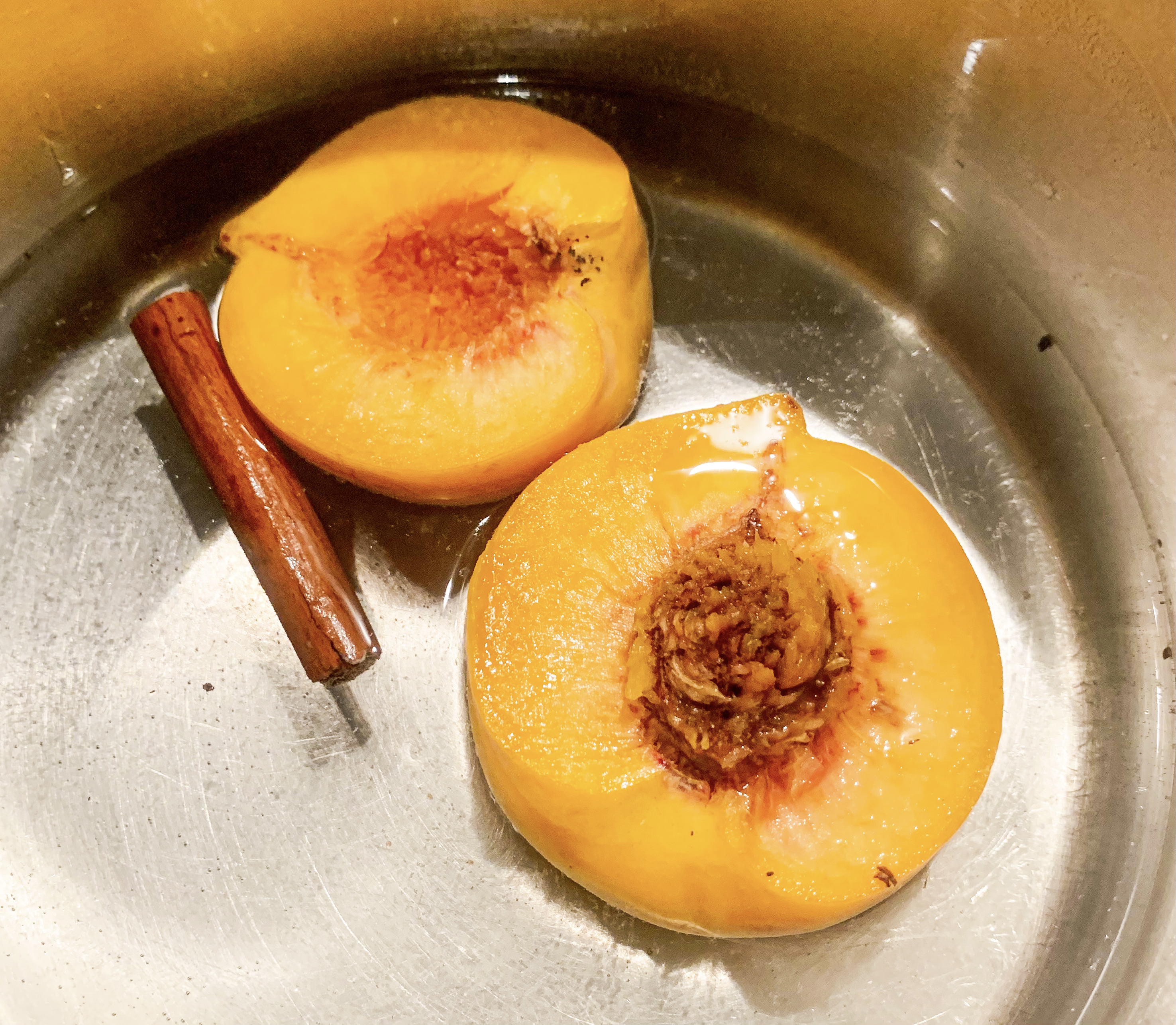
  2. Cut the peaches in half (I find it is easier to skin them if they are cut them in half before cooking). Put the sugar in a large pan with the cinnamon stick and 750ml water, cook over a medium heat, stirring, until the sugar has dissolved. Add the peaches and poach for about 5 minutes. Remove the peaches and reserve 125ml of the syrup. When the peaches have cooled, skin them, removing any stones, cut each half into slices. Set aside.
  3. Season the duck breasts on both sides with salt and pepper, then sprinkle the crushed Szechuan peppercorns over the skin. Place the breasts in a dry frying pan, skin side down, over a low heat to render down most of the fat, this may take as much as 10-15 minutes. When the fat is rendered, turn up the heat to crisp up and brown the skin (about 2 minutes). Finally, turn over to sear the underside for minute or so. Remove the duck breasts from the pan to a baking tray (keep to one side), pour off all but 1 tablespoon of the fat from the frying pan.
  4. To make the sauce, return the pan with the tablespoon of duck fat to the hob, heat gently over a medium heat, then add the shallot and cook for 5 minutes until softened, then pour in the sherry vinegar and deglaze the pan, stirring to remove any caramelised bits on the bottom. Add the stock, bring to the boil, then simmer, stirring for 5 minutes until reduced by half.  Set the pan to one side.
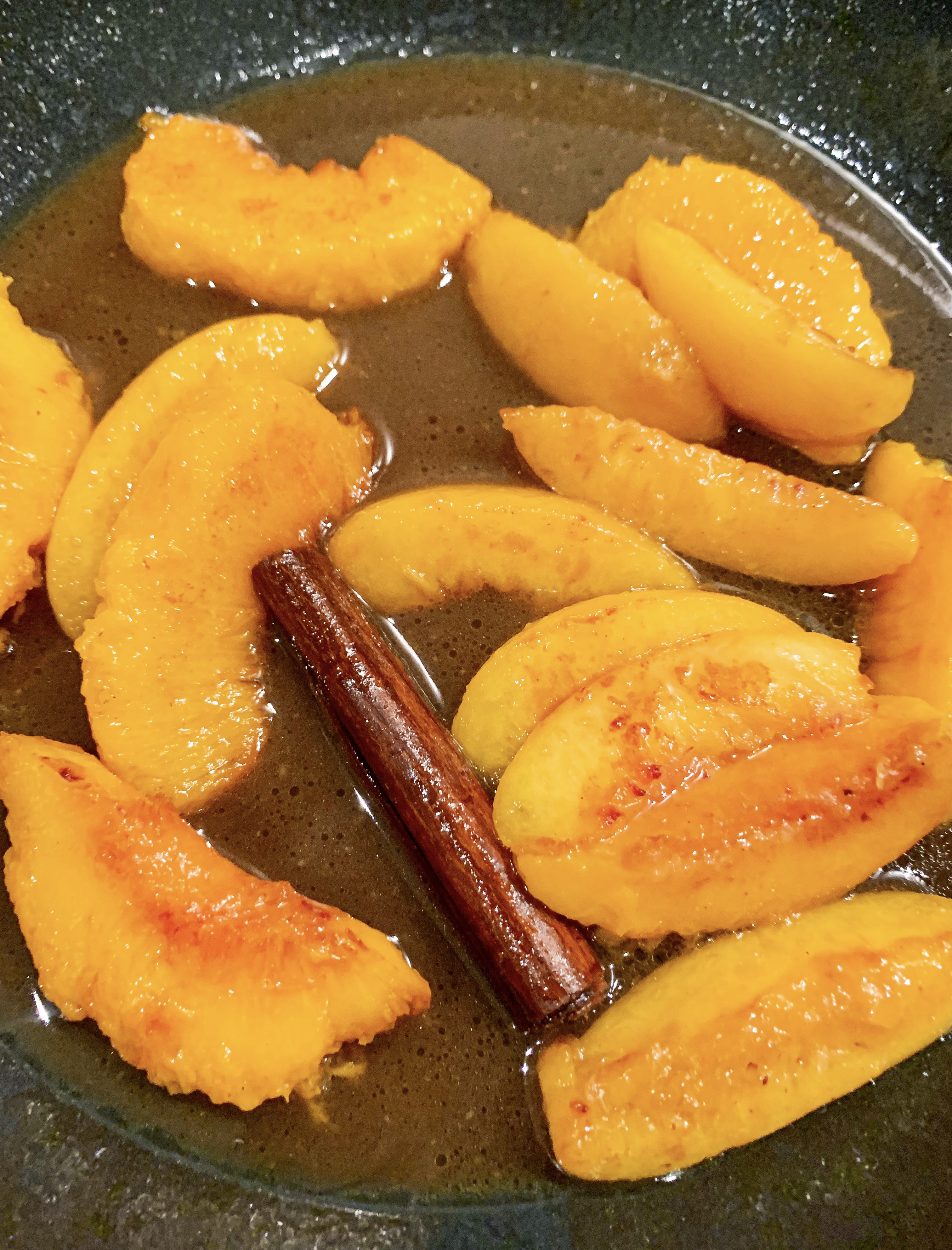
  5. In another frying pan, melt 25g of the butter over a medium heat. Add the peaches and cook for about 5 minutes, turning occasionally until they are golden brown and slightly caramelised. Remove and leave to one side. Add the cinnamon and the 125ml of reserved poaching syrup to the pan. Cook over a medium heat, until then syrup turns a caramel colour and has slightly thickened. Return the peaches to the pan, toss gently in the syrup, then remove from the heat – cover with foil and leave to one side.
  6. To finish cooking the duck breasts, place the baking tray with the duck, in a preheated oven, 200’c fan, for 8-10 minutes (depending on their size). Remove from the oven and rest for 5 minutes, before cutting into thick slices.
  7. Meanwhile return the pan with the peaches and syrup to the stove and gently reheat. Remove the peaches from the syrup, put to one side and keep warm, reserving the syrup.
  8. Finally, gently reheat the sauce (with the shallots), then add the remaining 25g butter, swirl around to make a shiny sauce and add the juices of the rested duck and the reserved peach syrup, bring to the boil so that it thickens slightly.
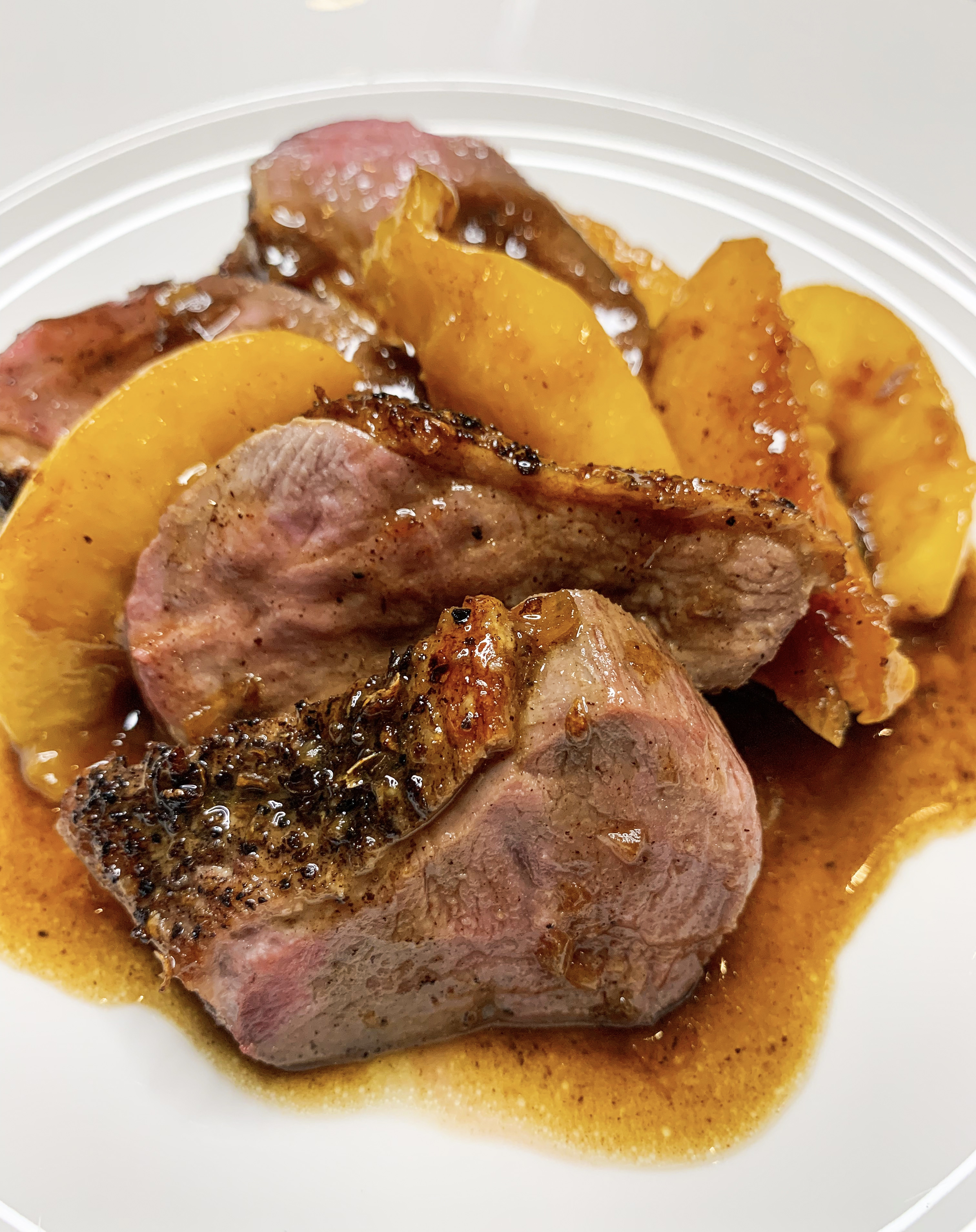
  9. To serve, place each sliced duck breast on a plate surrounded by the peach slices and with the sauce spooned over.

Staple Side Dish’ – Sautéed Spinach with Garlic (Serves 4)

2 large bunches of baby spinach (washed) – about 400g

Olive oil

2 cloves of garlic, sliced

Sea salt and black pepper

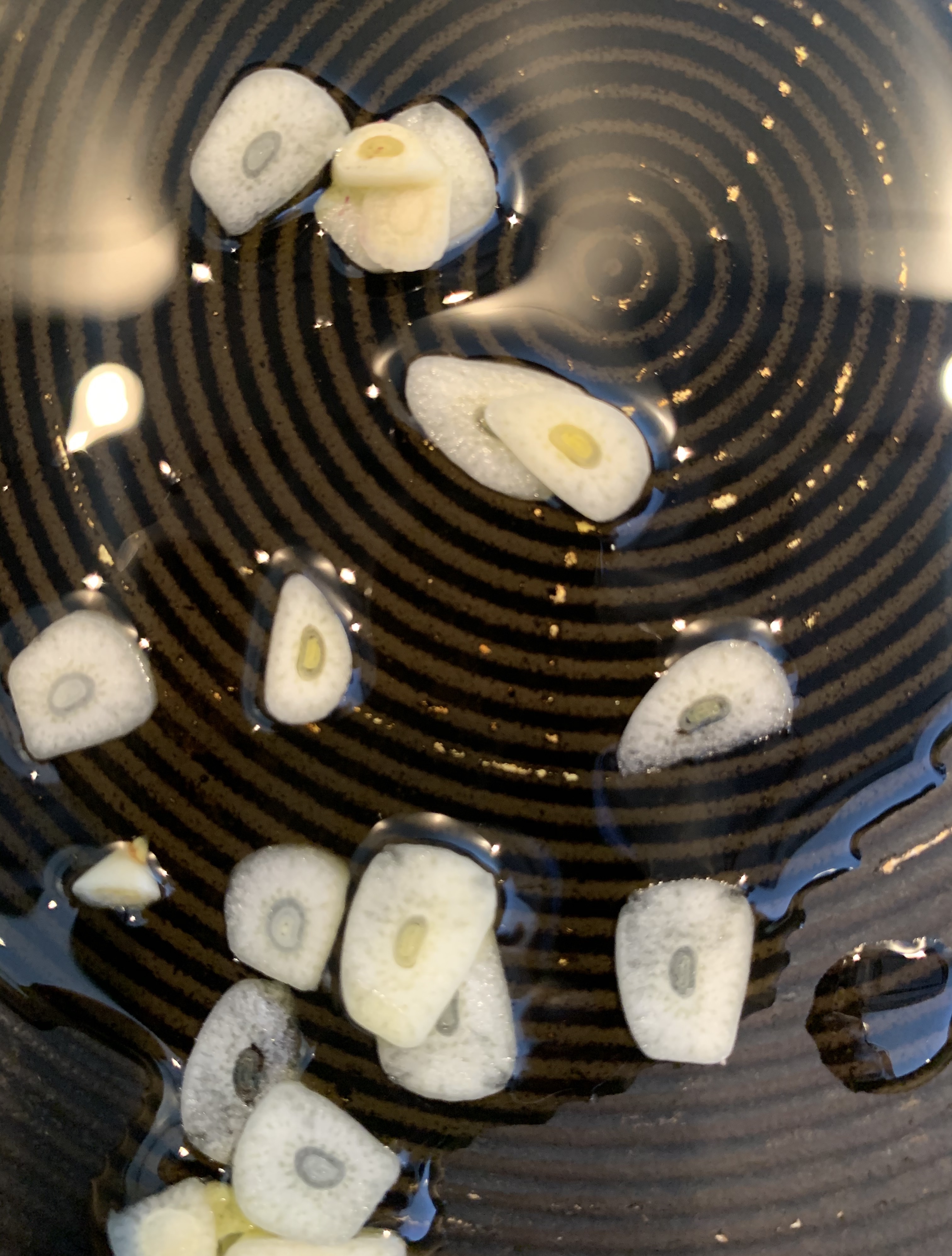
  1. Heat 2 tablespoons of olive oil in a large frying pan. Add the garlic and sauté for about 1 minute until the garlic is beginning to brown.
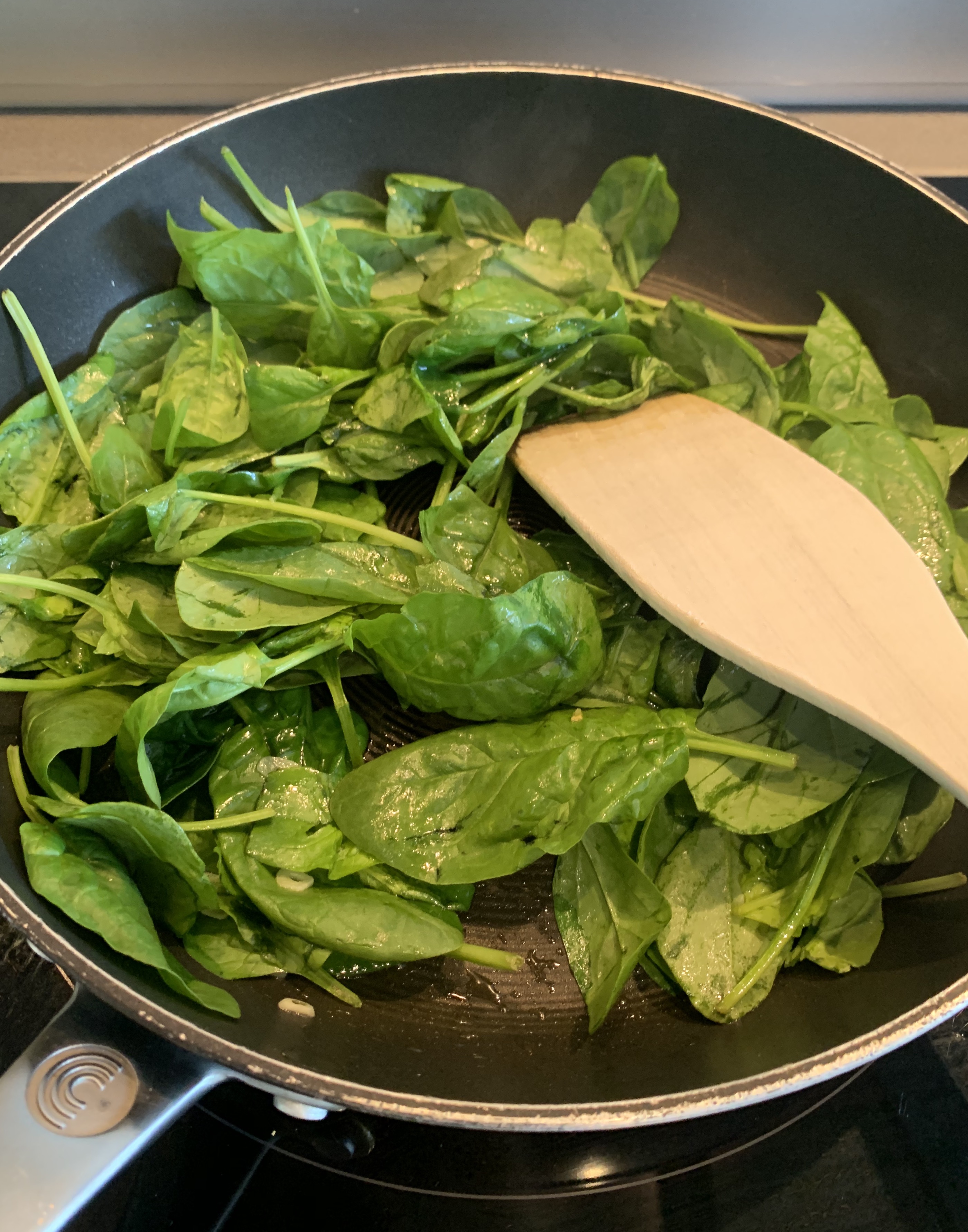
  2. Add the spinach, turning it over to coat in the olive oil. Place a lid over the pan and cook for 1 minute. Remove the lid and stir. Return the lid and cook for a further minute.
  3. The spinach should now be wilted, add a drizzle of olive oil, season with salt and pepper, and serve.

‘Staple Side Dish’ -Concetta’s Potatoes (Serves 4)

I have named these after our Italian friend (and chef), Concetta, who gave me the recipe many years ago; they are simply sliced baked potatoes with garlic, rosemary and sage.

4 large potatoes – such as Maris Piper (roasting potatoes)

1 teaspoon dried rosemary

1 teaspoon dried sage

Sea salt and black pepper

2 cloves garlic, crushed

Olive oil

  1. Peel and slice the potatoes, and parboil in boiling water for 4 minutes.
  2. Place in a roasting tin, sprinkle over the rosemary, sage and garlic, season with salt and black pepper and drizzle over some olive oil – mix well.
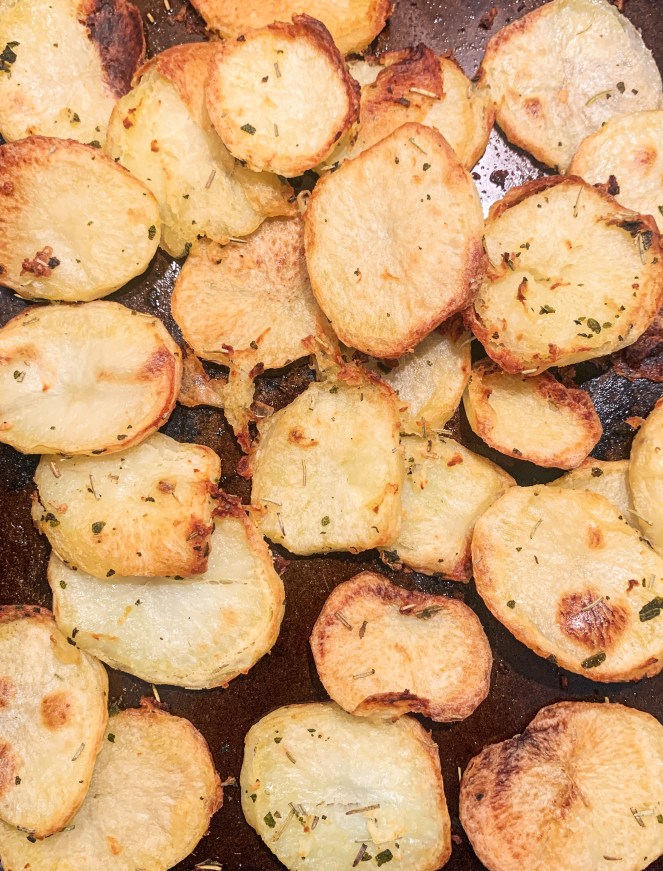
  3. Place in a preheated oven, 200’c fan, for 35-40mins until crispy and well browned.

Blast From the Past Recipe

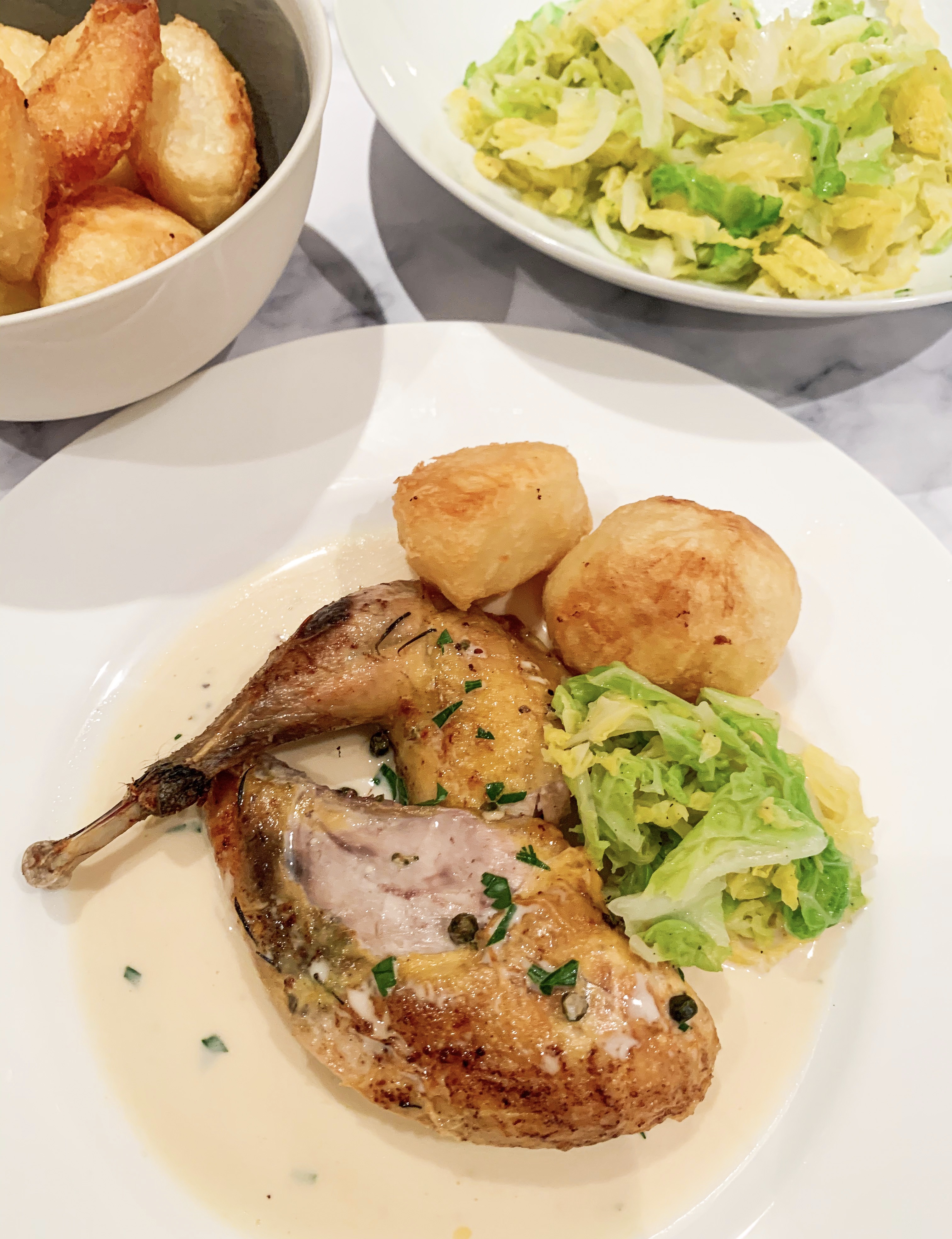
Roast Pheasant Breast with Whisky and Peppercorn Sauce, Roast Potatoes & Savoy Cabbage (Serves 4)

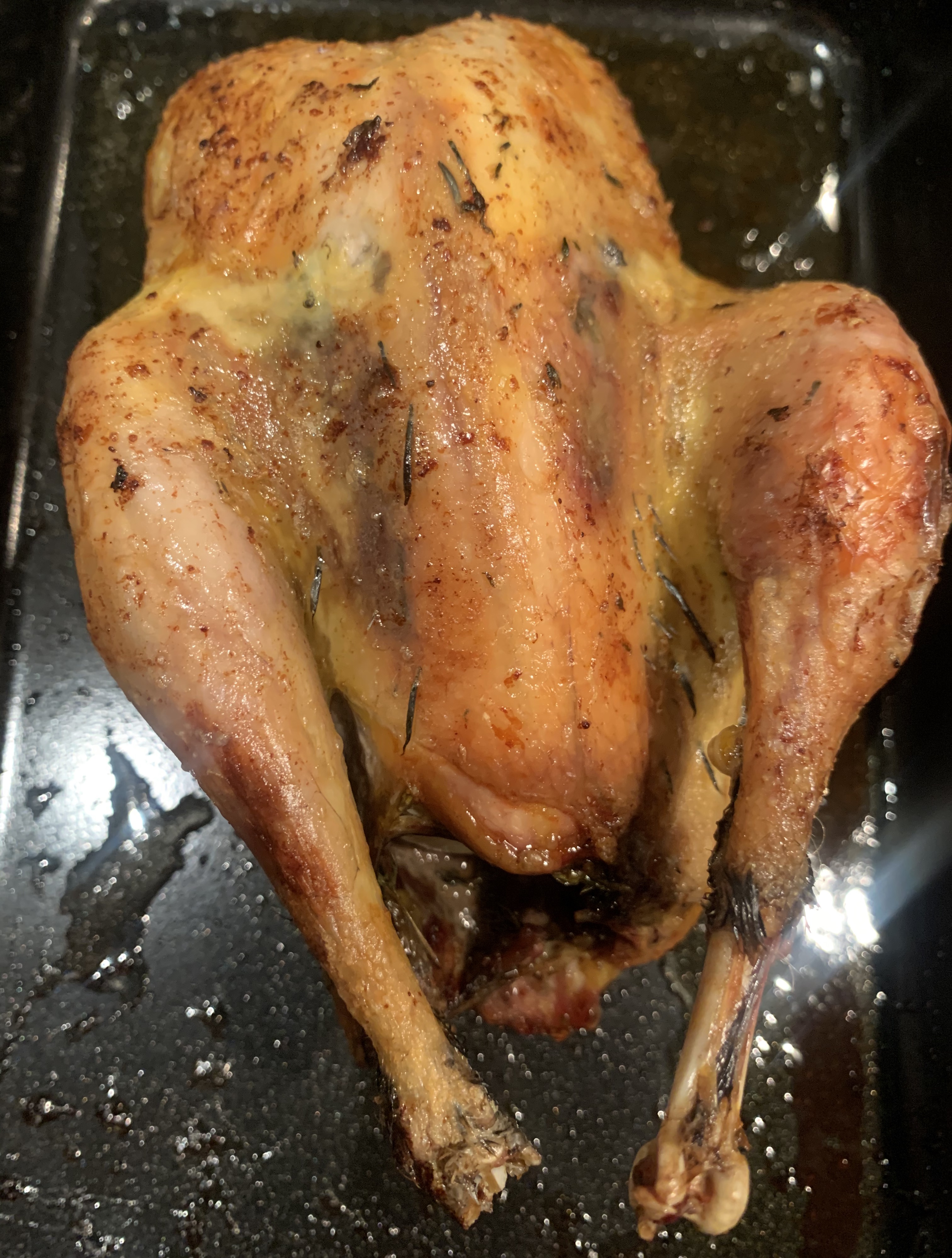
If you have never cooked pheasant before, I urge you to cook this recipe, it is super easy. Pheasant meat can easily dry out during cooking, but by cooking bird whole and then removing the breasts, the meat remains juicy. I like to serve this with buttered savoy cabbage and roast potatoes (recipes below)

2 pheasants

1 onion cut into 4 wedges

Small bunch of thyme

40g butter, softened

800ml chicken stock

150ml whisky

300ml whipping cream

3 teaspoons finely chopped green peppercorns

1 tablespoon finely chopped flat leaf parsley

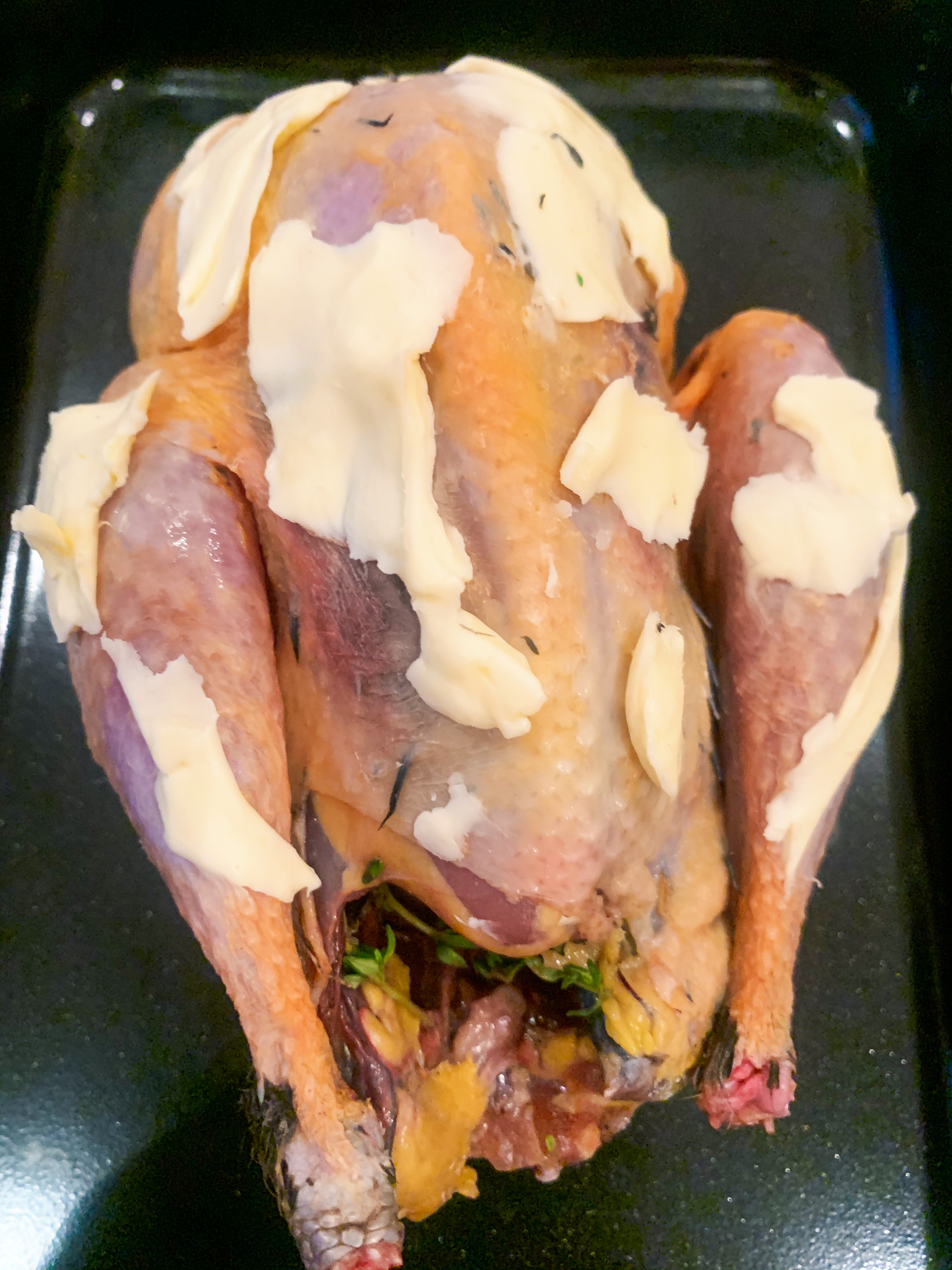
  1. Place the pheasants in a roasting tin large enough to have at least 4 cm between them. Stuff each cavity with a wedge of onion and a few sprigs of thyme. Smear the butter over the breasts and legs and season with salt and pepper.
  2. Roast in a preheated oven, 190’c fan, for 45 minutes, basting twice during cooking.
  3. While the pheasants are roasting,  pour the stock into a large saucepan and bring to the boil. Reduce by a third – you need about 500ml.
  4. Pour the whisky into a large frying pan, warm through and then carefully light with a match – flambé to allow the alcohol to burn off. Pour in the reduced stock, followed by the cream and leave the sauce to simmer gently until it is reduced and just thick enough to coat the back of a spoon. Finally stir in the chopped peppercorns and check the seasoning.
  5. Meanwhile when the pheasants are cooked, cover with foil and leave to rest for 10-15minutes.
  6. To remove the breasts from the bone, carefully run a sharp knife down one side of the breastbone and ease off the whole breast.
  7. Place each breast on a plate, sprinkle with the chopped parsley and pour over the whiskey and peppercorn sauce, and serve with buttered cabbage and roast potatoes. (as you will notice from the photo, I often place the legs on the plates too, more for decoration than for taste as there isn’t much meat on them).

Buttered Savoy Cabbage (Serves 4)

Such an easy and useful recipe to have…

1 Savoy cabbage, trimmed and finely sliced

25g unsalted butter

Sea salt and black pepper

  1. Place the finely sliced cabbage in a saucepan of boiling water for 2 minutes to blanch it. If you are not using straightaway, immediately refresh with cold water and drain well.
  2. When you are ready to serve the cabbage, melt the butter in a large frying pan, add the drained cabbage and season well with salt and pepper. Toss over a medium heat for 1-2 minutes until the cabbage is just tender. Serve at once.

A Staple Side Dish – Perfect Roast Potatoes (Serves 4)

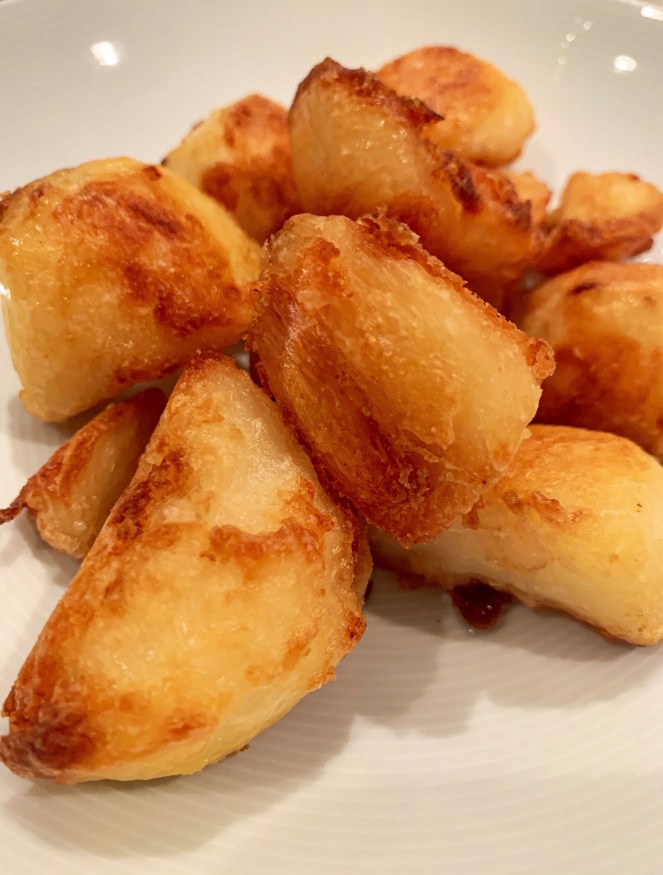
Everybody has their favourite roast potato recipe. I must admit that having tried various recipes, I have always returned to the one I found years ago in Delia Smith’s ‘Winter Collection Cookbook’ – you can’t beat it in my opinion. I use either olive oil or goose fat (I buy it in jars), depending on my mood. The olive oil gives a lighter, cleaner taste, whereas the goose fat has a richer flavour – both crisp up the potatoes equally well.

1.8kg Maris Piper or other floury, roasting potatoes

110g olive oil or goose fat (see note above)

Sea salt

  1. Place the fat in the roasting tin and place in the oven, 190’c fan, on the highest shelf so that the oil preheats whilst you prepare the potatoes.
  2. Peel the potatoes and cut into evenly sized pieces.
  3. Place the potatoes in a saucepan, cover with boiling water and add the salt. Simmer for 10 minutes until the outer edge of the potatoes is fluffy – test with the points of a fork.
  4. Drain the potatoes well and return to the saucepan. Place a lid over the pan and shake it vigorously. By shaking the potatoes in the saucepan in this way the cooked edges will become floury and fluffy – perfect for crisping up in the oven.
  5. Remove the roasting tin from the oven and place the potatoes in the hot fat – careful as the oil may spit! Baste them well and return to the oven for about 40 minutes until they are golden brown and crisped.
  6. Sprinkle with salt and serve straightaway – do not allow them to sit around otherwise they will loose their crunch (if they are cooked before you are ready, turn off the oven and leave them inside – but with caution, they don’t like to wait!)

Tuesday Treat

Bicerin (Serves 1)

As the evenings are closing in and the days are getting colder, I think we may all need a little ‘pick-me-up’ to take us through to Christmas… and so this week I thought I’d share a Bicerin!..

A Bicerin is a luxurious coffee-and-chocolate drink topped with cream that originates from Turin. Rather than being mixed together like a ‘mocha’, the espresso and hot chocolate are poured in layers and topped with whipped cream – so initially through the light cream you taste the sweetness of the velvety chocolate this is then followed by the punch of espresso coffee; it is heavenly! I first tasted it at Caffè Al Bicerin when I visited Turin a few years ago. Caffè Al Bicerin is a beautiful little cafe with just 6 or so tables, the interior is wonderfully antiquated and dimly lit by candles on white marble tabletops. It really is a ‘must-see’ place if you visit Turin (I would definitely recommend a long weekend in this historic Italian city!). The cafe is not only renowned for having invented the Bicerin, but it is also famous for its other delicious sweet treats such as Zabaione – but that’s another story… (I will be sharing that recipe in the future!).

Back to the Bicerin… If you love coffee and chocolate (and cream!), you can’t go wrong with this recipe. It is important to make it with the very best, strong espresso coffee and velvety hot chocolate; I think that the following recipe is pretty authentic!.. Enjoy!

50ml double cream

½ teaspoon icing sugar

125ml full fat milk

50g chocolate, roughly broken up

½ tablespoon caster sugar

75ml hot espresso coffee

  1. Firstly whip the cream with the icing sugar until is just forms soft peaks.
  2. Put the chocolate, milk and caster sugar in a small saucepan, whisk until it begins to boil, then reduce the heat and let it simmer for a minute, continue whisking, ensuring that the chocolate has melted.
  3. Pour the hot espresso coffee into a heatproof glass. Carefully and slowly pour the hot chocolate over the top. Finally, top with a generous dollop of whipped cream. Heaven!