
For me, travelling means discovering new food and restaurants; very often it’s the flavours of a city that I remember rather than its sights. Just recently my taste buds have been very spoilt with a few trips abroad. Armed with lists of restaurants I’ve been eating my way through Puglia (mostly Lecce), then shortly after I visited Lisbon and finally just last week Porto. It’s been a mixed bag but nevertheless inspiring; I chose not to try the horse meat which appeared on more than one menu in Lecce – apparently it’s very popular in this region – but loved the ‘Café Leccese’ (iced coffee made with almond milk)! Whilst in Italy I had the opportunity to try my hand at making fresh orecchiette – it was lots of fun but something which I don’t think I’d have the time or patience to do at home! One of the best things I returned home with was a recipe for the lightest lemon and white chocolate cake which the chef of a local trattoria very kindly shared with me (I will of course be sharing this with you in the future!). Similarly, Lisbon was a fantastic culinary adventure (see my restaurant reviews here), as was Porto with of course its port wine!..
Back in the reality of my kitchen, and thinking about Menu Mistress, I’ve been ‘travelling’ through my cookbooks. I’ve decided to share a mixed bag of recipes with you for June, all of which will get you in the mood for some balmy summer days (here’s hoping!). There’s a French inspired chicken dish, a Southern Indian inspired fish curry and an Italian seafood pasta which would no doubt be at home on the shores of Puglia!.. Menu One is ‘St Tropez Chicken’. It’s a celebration of summer herbs – the taste of the South of France. So, even if the sun isn’t shining you at least have the flavour of it! I like to serve it with ‘Brutto’s Green Salad’ and ‘Italian-Style Small Roast Potatoes’; I’m also sharing both of these recipes. Admittedly Menu Two, ‘Smoked Haddock Curry with Coconut and Sweet Potato’, requires some prep – there is quite a lot of chopping and the ingredient list is long. However, it pays off as the result is wonderful and once the prep is done it’s super quick to cook; it’s a great recipe for the weekend! In comparison Menu Three, ‘Pasta with Clams & Prawns’, is a super quick recipe from the ‘River Café Cook Book Easy’… supper will be on the table in fifteen minutes!..
Menu One
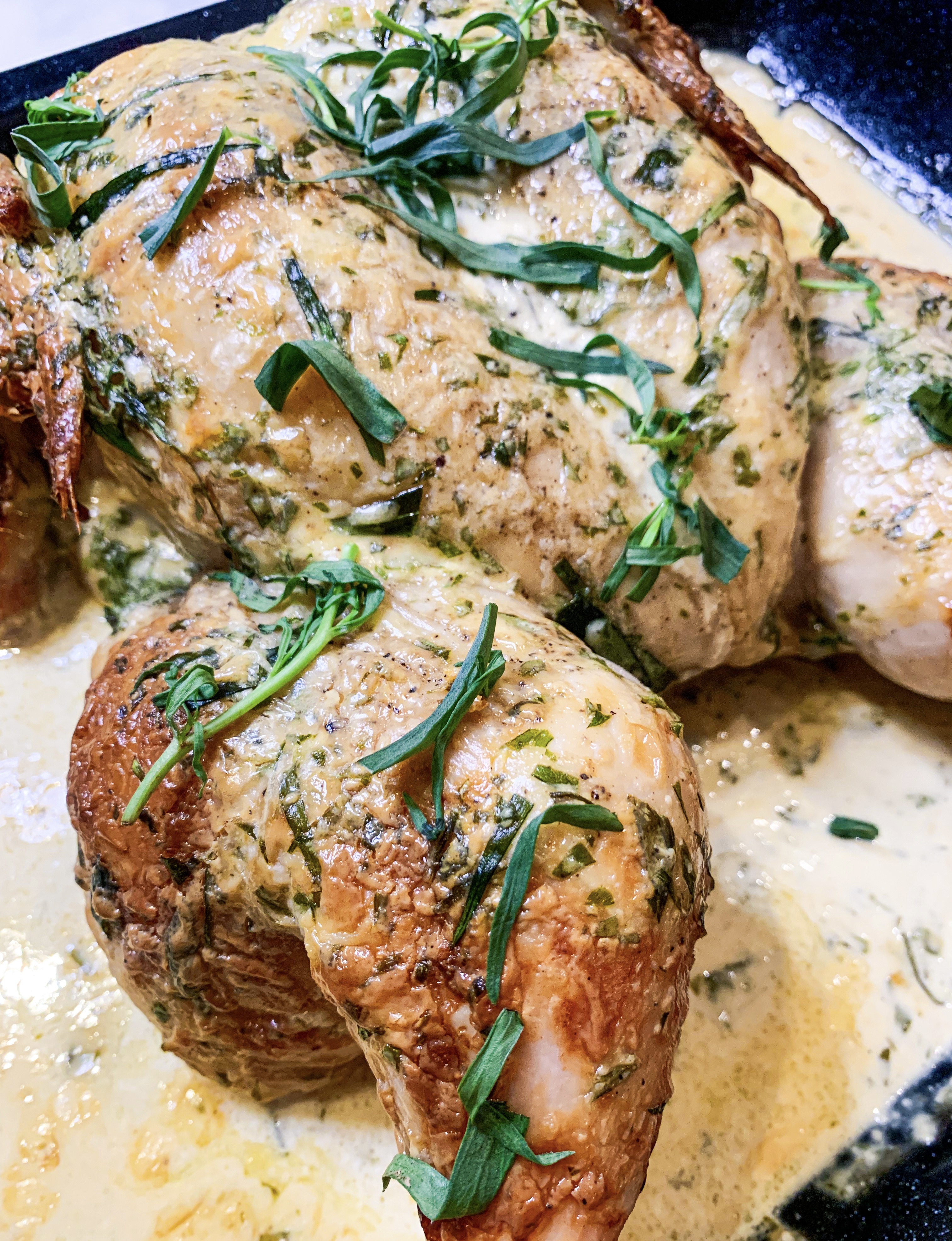
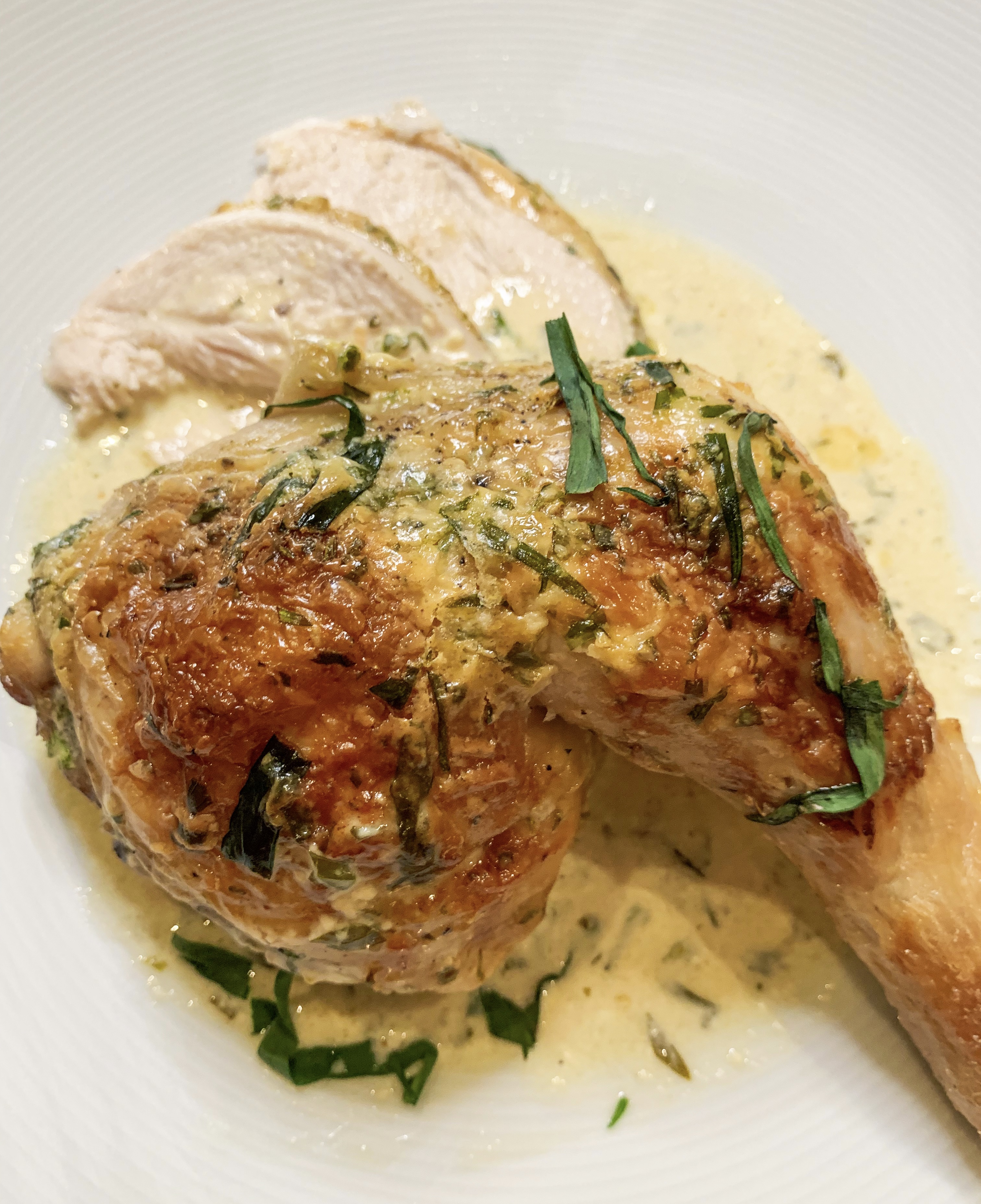
St Tropez Chicken (Serves 4-6)
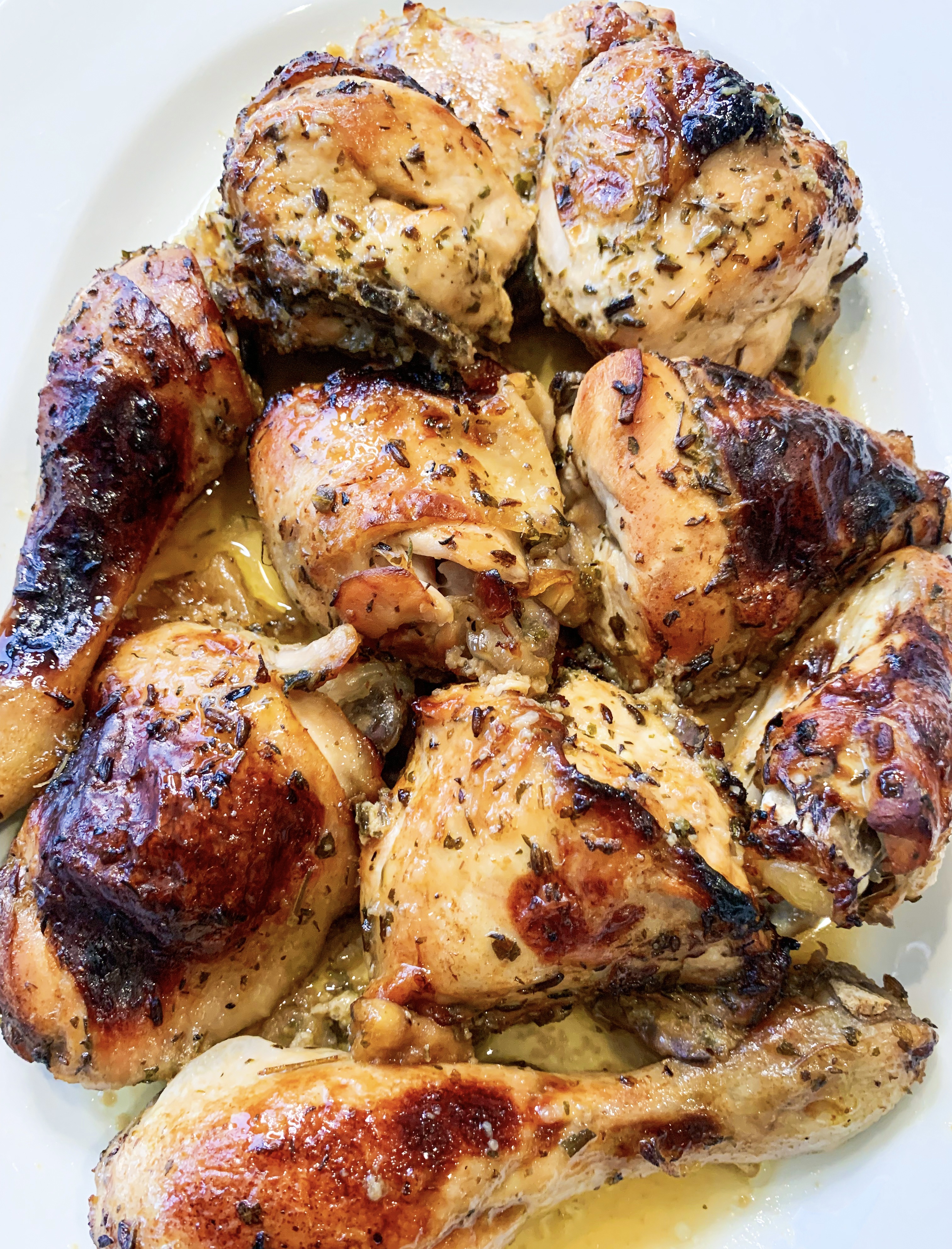
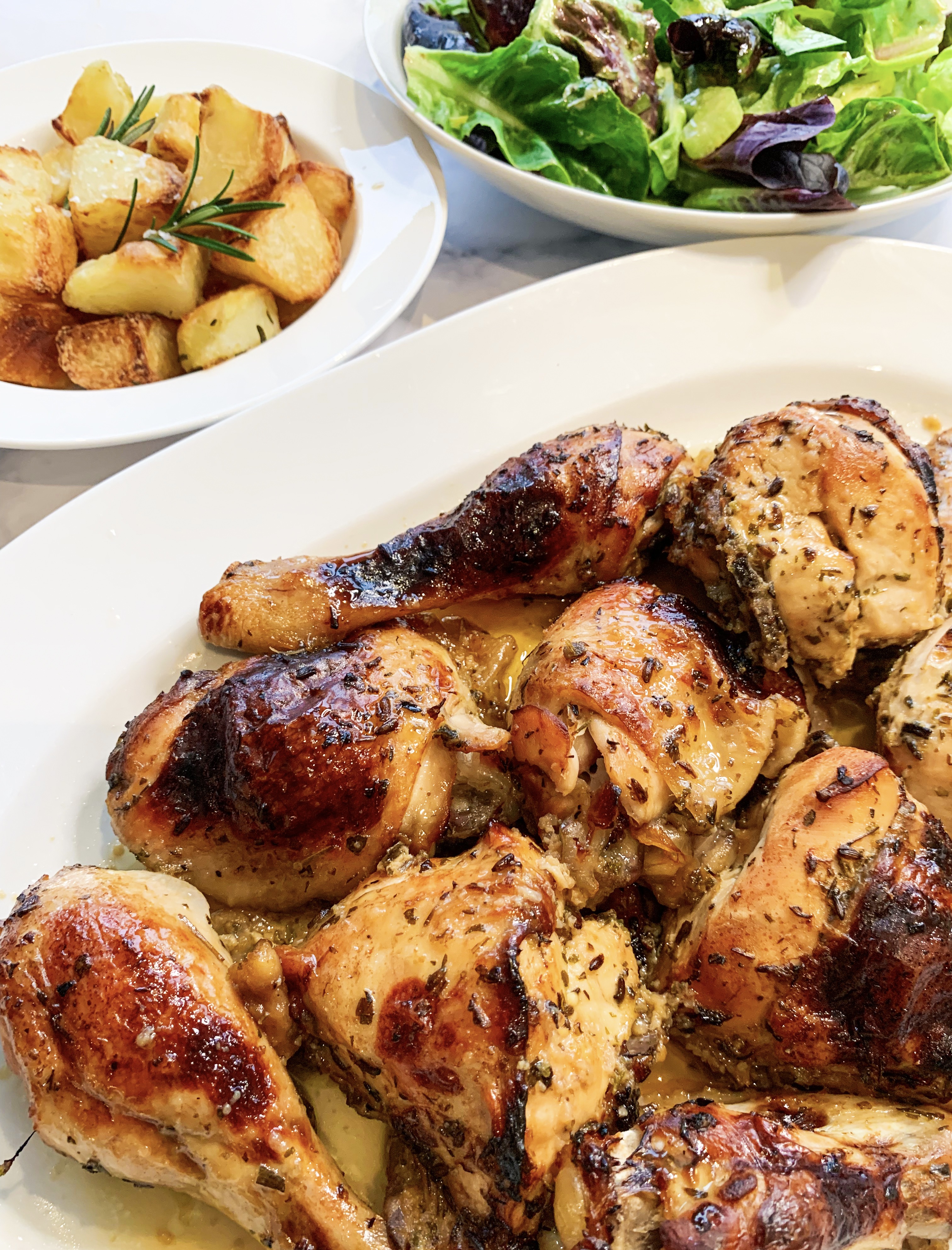
This is a recipe from one of Nigella Lawson’s older cookbooks, ‘Feast’. It’s a celebration of summer herbs – the taste of the South of France. So, even if the sun isn’t shining you at least have the flavour of it!.. It’s an easy recipe, just remember to marinate it the day before cooking. Simply serve with a good, green salad and some Italian-style roasted potatoes (see the recipes below – my new favourites!).
1 large chicken, jointed into 10 pieces
Juice of 1 lemon
60ml olive oil
60g honey
150ml rose wine
2 garlic cloves, crushed
1 tablespoon Herbes de Provence
2 teaspoons dried lavender
- Put the jointed chicken into a large freezer bag. Combine the lemon juice, oil, honey, wine, crushed garlic and herbs, stirring to dissolve the honey. Pour this mixture into the bag, seal and refrigerate overnight or for up to two days.
- Place the chicken, skin-side up, into a roasting tin with its marinade, and cover with foil. Cook in a preheated oven, 170’c fan, for two hours, then remove the foil and turn up the heat to 200’c. Cook for another 15 to 25 minutes or until the skin of the chicken is bronzed. Keep an eye on it, though, as the honey can burn.
- Remove the chicken from the tin and place on a warmed plate. Spoon off any excess fat from the cooking juices then pour into a small saucepan and place over a medium heat, stirring to amalgamate the juices, adding a little water if needed, to make a glossy, golden-brown gravy.
‘Brutto’ Green Salad (Serves 4)
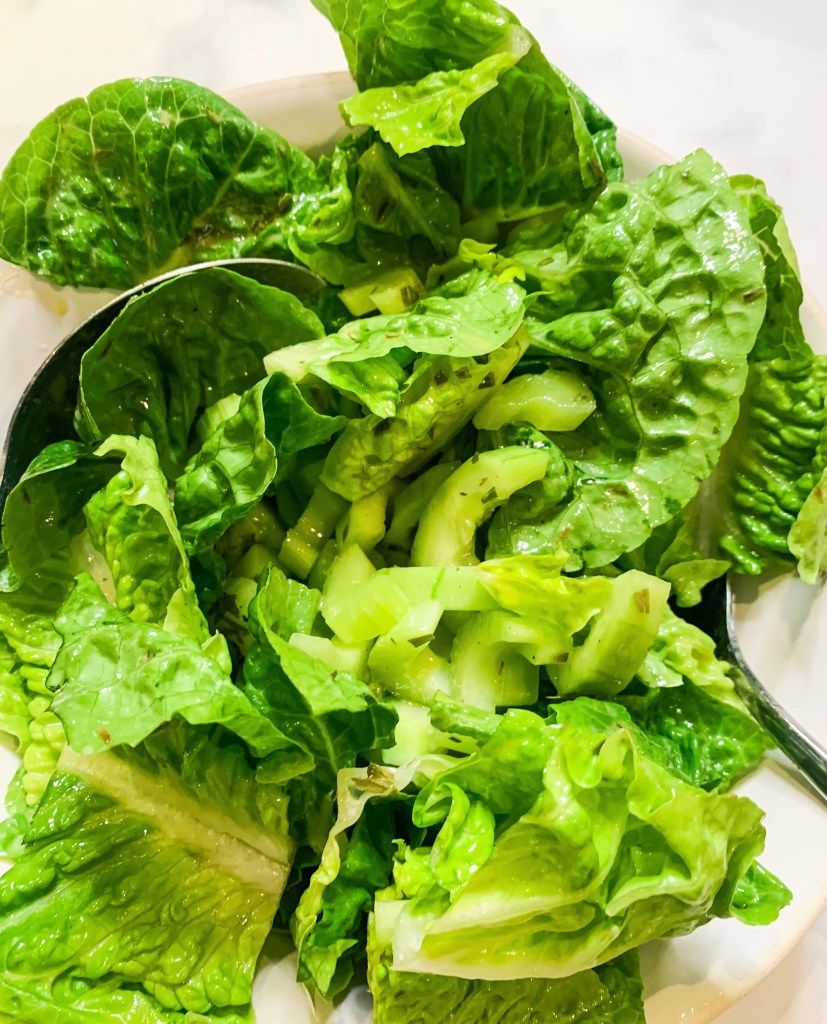
This salad, particularly the dressing, is my new favourite! It’s from the cookbook ‘Brutto’.
1 large head of romaine lettuce
2 celery stalks
1 large cucumber
3 tablespoons extra virgin olive oil
1 tablespoon red wine vinegar
2 teaspoons Dijon mustard
2 teaspoons dried tarragon
Flaky sea salt
Black pepper
Caster sugar
- Remove the base from the lettuce and discard, roughly shred the leaves into bitsize pieces. Wash thoroughly and use a salad spinner to dry them. Place in a large salad bowl.
- Peel the celery (gently pull the ‘strings’ from the base up the length of the stalk), then slice finely. Peel the cucumber, cut in half lengthways and remove the seeds and discard, then slice finely. Add both the celery and cucumber to the lettuce in the bowl.
- Put the dressing ingredients (olive oil, vinegar, mustard, tarragon) in a jam jar with a tight fitting lid. Add a good pinch of salt and a good twist of black pepper and a couple of pinches of caster sugar. Shake vigorously until combined and emulsified.
- Use the dressing to dress the salad to you taste.
Italian-Style Small Roasted Potatoes (Serves 4)
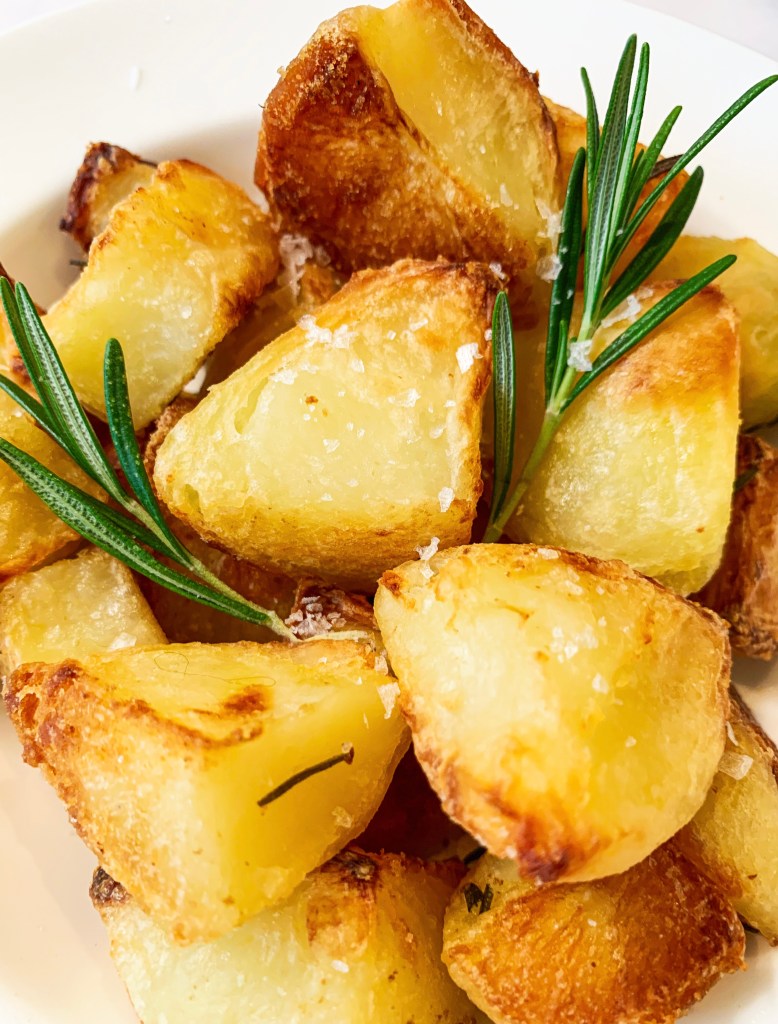
This is another recipe from the cookbook ‘Brutto’. A classic recipe for Italian-style roasted potatoes; they are cut much smaller than our traditional UK roast potatoes, thus are slightly crunchier. You can use either floury potatoes or new potatoes for a smoother, nuttier flavour – those in the photo above are made with floury potatoes.
*I’ve found that the cooking time on these potatoes can vary; I often cook them for a total of 1 hour rather than the recipe’s suggested total of 1 hour 10 -15 minutes, adding the remaining rosemary in the final 10 minutes of cooking.
500g floury potatoes (Maris Piper, King Edward etc) or new potatoes
Extra virgin olive oil
Sunflower oil
4 cloves of garlic, unpeeled
Flaky sea salt
A large handful rosemary leaves
- Peel and cut the potatoes into small triangular pieces (if using new potatoes, don’t peel them, simply cut into pieces).
- Add the potatoes to a pan of salted, boiling water and cook for 5-6 minutes until they are still firm but can be pierced with the tip of a sharp knife. Drain.
- Pour a few glugs of each oil into a large roasting tin and place in a preheated oven, 190’c fan, for 3-4 minutes. Place the flat of a blade of a knife on each of the unpeeled garlic cloves and hit firmly with your palm to smash them. Add the drained potatoes, the smashed garlic cloves, a good pinch of salt and half the rosemary to the hot oil, turning the potatoes to coat them. Return to the oven.
- After 30 minutes remove and turn the potatoes again. Return to the oven for a further 20-30 minutes, then once again turn them and this time add the remaining rosemary (if using new potatoes you can slightly squash some of them with a spatula). Continue to roast for a further 10-15 minutes – maybe a little more or less – until golden and crisp.
- Serve in a large bowl sprinkled with flaky sea salt.
Menu Two
Smoked Haddock Curry with Coconut & Sweet Potato (Serves 3-4)
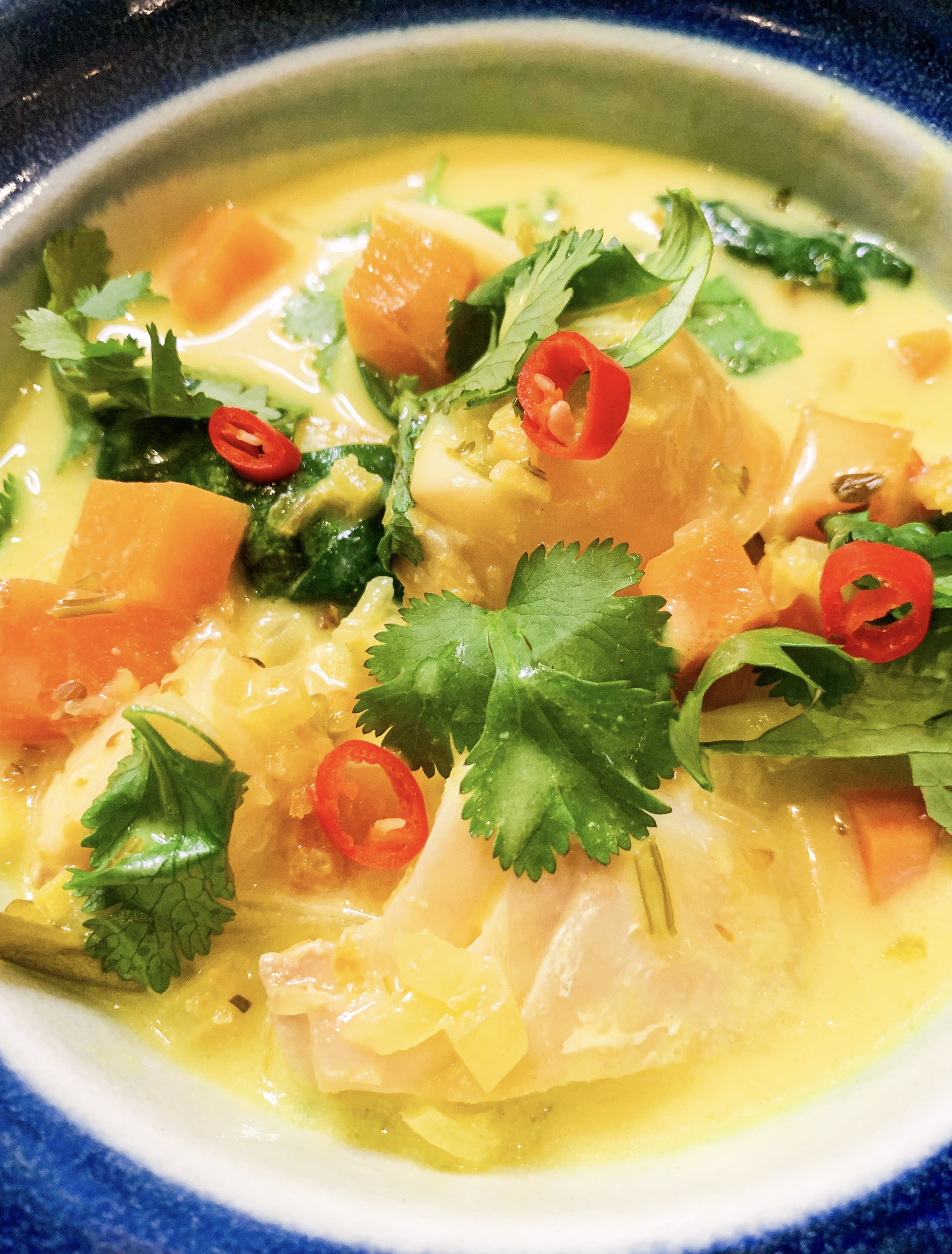
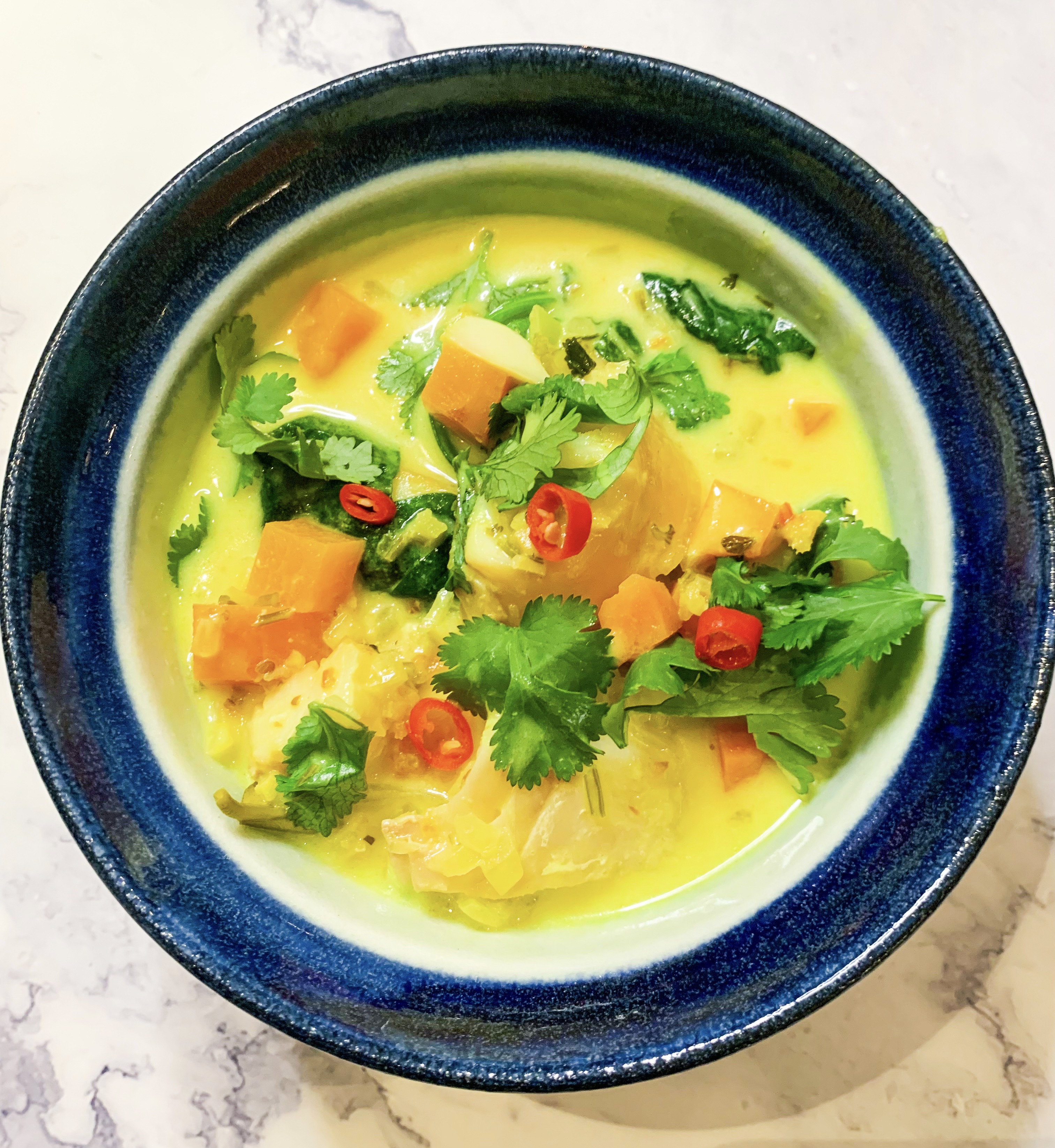
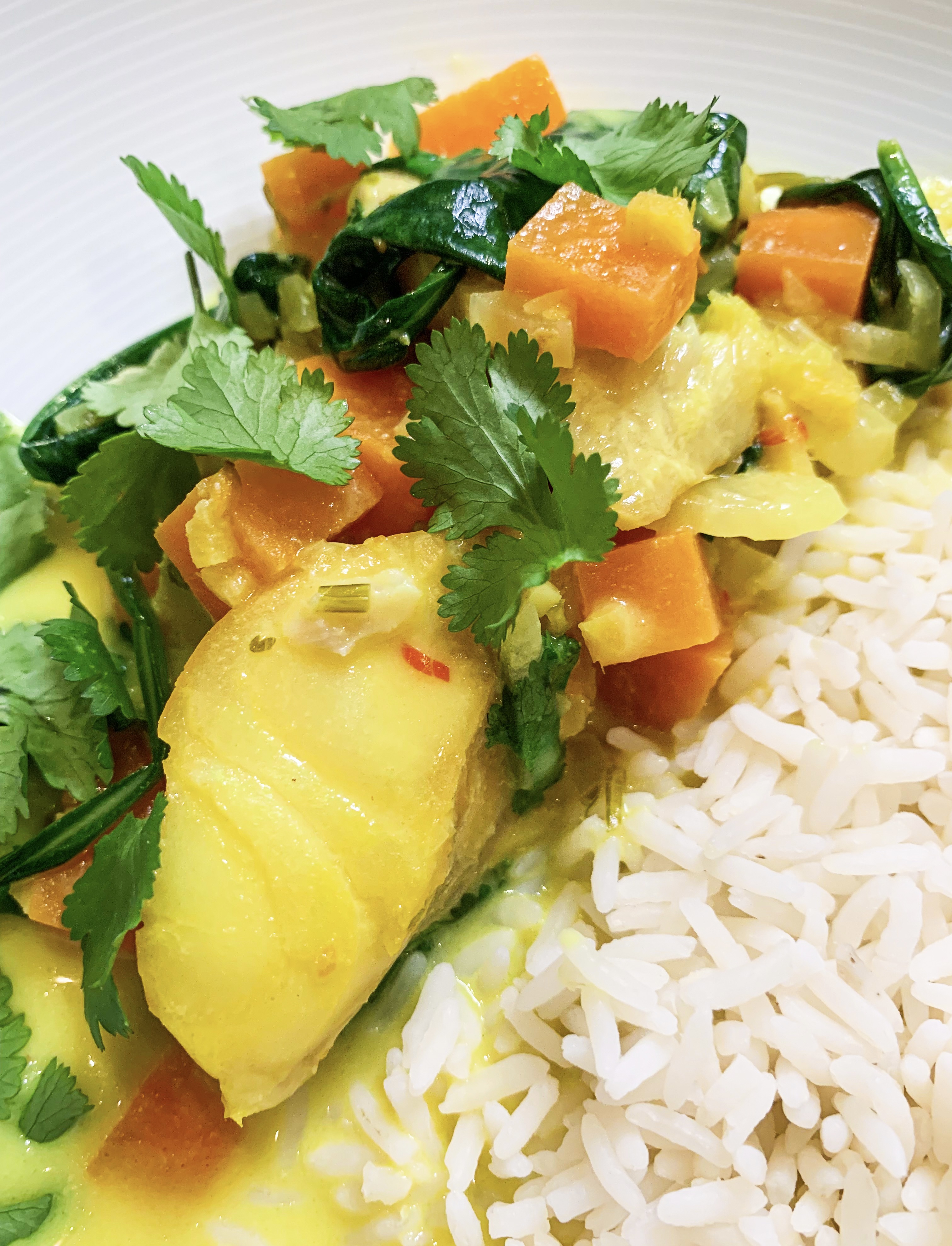
Admittedly this curry requires some prep – there is quite a lot of chopping and yes, the ingredient list is long. However, it pays off as the result is wonderful and once the prep is done it’s super quick to cook; it’s a great recipe for the weekend! It’s a wonderfully fragrant dish, the smoked haddock complements the flavours creating a tasty yet light curry. It’s important to get fresh lime leaves as they’ll not only make all the difference to the dish but fill your kitchen with their wonderful citrus aroma. I use fresh turmeric (use gloves as it seriously stains) but apparently you can use ground turmeric, mixed with a little water to form a paste. Serve with flatbreads (recipe below) or rice.
1 tablespoon coconut oil
1 large onion, chopped
3 cloves garlic, chopped
Thumb-sized piece of fresh ginger, peeled and chopped
1 birds eye red chilli, finely chopped
Bunch of coriander, stalks chopped and leaves reserved for garnish
1 teaspoon coriander seeds, crushed
Thumb-sized piece of fresh turmeric, peeled and grated (or use 2 teaspoon turmeric powder mixed to a paste with a little water – see note above)
4 lime leaves
1 sweet potato, peeled and chopped into 1cm cubes
2 teaspoons fish sauce
250ml white wine
1 x 400ml tine coconut milk
500g skinless smoked haddock fillet, cut into large chunks
1 lime, zest and juice
Handful of spinach
Salt and pepper
To Serve:
Yogurt
Sliced chilli
Lime wedges
Flat breads or rice
- Heat the coconut oil in a large pan, then add the onion and garlic and sauté for a few minutes over a medium heat. Next add the ginger, chilli, coriander stalks, coriander seeds, turmeric and lime leaves and continue to sauté for 5 minutes, stirring occasionally.
- Add the sweet potato, fish sauce, white wine and coconut milk and bring to a simmer. Simmer for 12-15 minutes until the sweet potato is soft.
- Add the haddock to the pan, stir carefully and cook for 4-5 minutes, then add the lime zest and juice, spinach and season.
- Divide between warmed bowls, scatter over the coriander leaves and serve the with yogurt, sliced chilli, lime wedges and flatbreads (recipe below) or rice.
‘Staple Side Dish’ – Speedy Flatbreads (with a Gluten-Free option) (Serves 4)
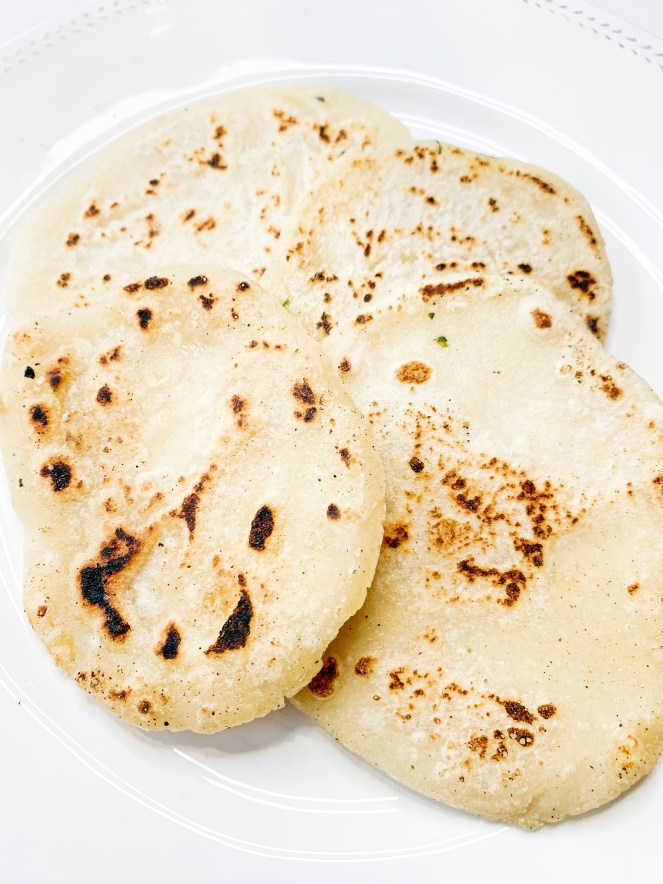
This is a fantastic recipe – a real revelation. These flatbreads are great as a side to a curry, but are equally good as a snack for lunch! They are super easy to make – the dough just needs 15 minutes to rest before cooking, so bear this in mind.
120g plain flour (gluten-free if required – I use Doves)
Pinch of salt
Glug of olive oil
120ml water (approx)
- Place the flour and salt in a bowl, add a glug of olive oil and then, stirring gradually enough water to form a dough (you probably won’t use all the water).
- Rest the dough for 15 minutes.
- Divide the dough into 4 equal pieces, roll into small balls and then gently roll each ball out into thin flatbreads.
- Heat a frying pan over a high heat, sprinkle with salt and a drizzle of olive oil. Place each flatbread in the hot pan, one at a time, and cook for 1-2 minutes on each side until slightly charred.
Menu Three
Pasta with Clams & Prawns (Serves 4)
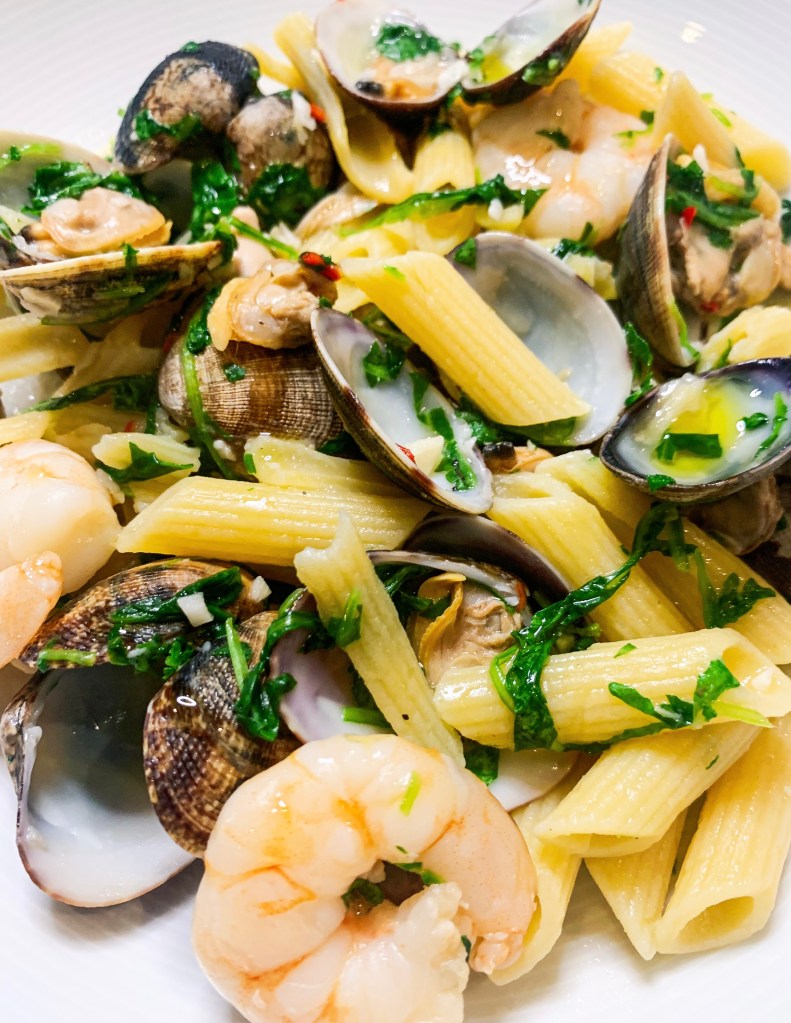
This is a super quick recipe from the ‘River Café Cook Book Easy’. It makes a great supper!
320g Penne or Fusilli
1kg clams
250g peeled prawns
3 garlic cloves ,finely chopped
1 fresh red chilli, chopped
100g rocket leaves, roughly chopped
150g white wine
Extra virgin olive oil
- Firstly, rinse the clams in cold water, making sure that they are all closed – tap on those that are open and discard them if they do not close, and discard those with cracked or damaged shells.
- In a large thick-bottomed pan with a lid heat 3 tablespoons olive oil and add the garlic, cook until soft, then add the clams and wine. Cover and cook until the clams have opened, about 2 minutes. Discard any that remain closed.
- Add the prawns, rocket and chilli and cover again to wilt the rocket. Keep warm.
- Meanwhile cook the pasta until al dente according to the packet instructions. Drain and add to the clams. Heat together for a minute, season and drizzle with olive oil.

 Menu Mistress