March 2023

I am, by my own admission a chatterbox, so it’s not surprising that I enjoy writing these little ‘intros’ to each month’s chosen recipes, however sometimes, despite my chattiness, words escape me. This month is one of those times, I’m struggling to find a conversational way to introduce March! At a loss, I’ve been looking back at what I wrote last March (and the one before that), and it seems the subject of ‘Spring’ is a favourite theme! That’s probably because, like most of us, I’m desperate to shrug off the winter. I usually have a couple of trips on the horizon – giving me hope that there is light at the end of the ‘winter’ tunnel! In fact this March I’m looking forward to my annual getaway with my Italian group – I may have mentioned before that I’ve been learning Italian for more years than I care to mention (taking one step forward, two steps back with the grammar!). I adore the Italian language, culture and of course the food, and I feel fortunate that I’m able to study with a fantastic group of friends who I would never have met if it had not been for our enthusiasm to speak Italian. Anyway, every year our lovely teacher organises a trip to one of Italy’s wonderful cities, this year it’s Padua (or Padova if you’re in Italy!). I’m looking forward to being immersed in Italian – we aren’t allowed to speak English for the whole week! So for me, spring means Italy and all its wonderful food; hence with its advent, this March I thought that I should share at least one classic Italian recipe! And on that note, I have just realised that I’ve managed to chat again and have written my intro for this month’s recipes!…

March’s recipes have some bright flavours for those lighter evenings we’re all looking forward to. Menu One is ‘Chicken with Sweet Tomatoes’, this recipe is from Jamie Oliver’s cookbook, ‘Jamie’s Dinners’, which came out in 2004; I have cooked this dish on many occasions since then. Although it may not be an authentic Italian recipe, I’m sure that Oliver took inspiration from Italy for this dish, it’s simply chicken legs slow-cooked on a bed of tomatoes with handfuls of basil and garlic – delicious! Menu Two is ‘Baked in a Bag Fillet of Fish, Peas & Leeks’. You could use any white fish fillet such as cod or haddock, either way, it’s a wonderfully fresh-tasting dish and is very easy to make! Finally, Menu Three is that classic Italian recipe that I was alluding to, ‘Aubergine Parmigiana’. With the wonderful mix of tomato, parmesan, mozzarella and aubergine, the flavours of this dish will brighten any day! Buon Appetito!

See you next week for my ‘Tuesday Treat’!…

(With spring in the air, I’ve been cooking along to ‘Music to Cook to…Menu Music Twenty Three’, this is a mix of soft rock and pop which I find strangely uplifting considering that some of the lyrics are a little ‘depressing’ – it’s perfect for a spring re-awakening!…)

Menu One

Chicken with Sweet Tomatoes (Serves 4)
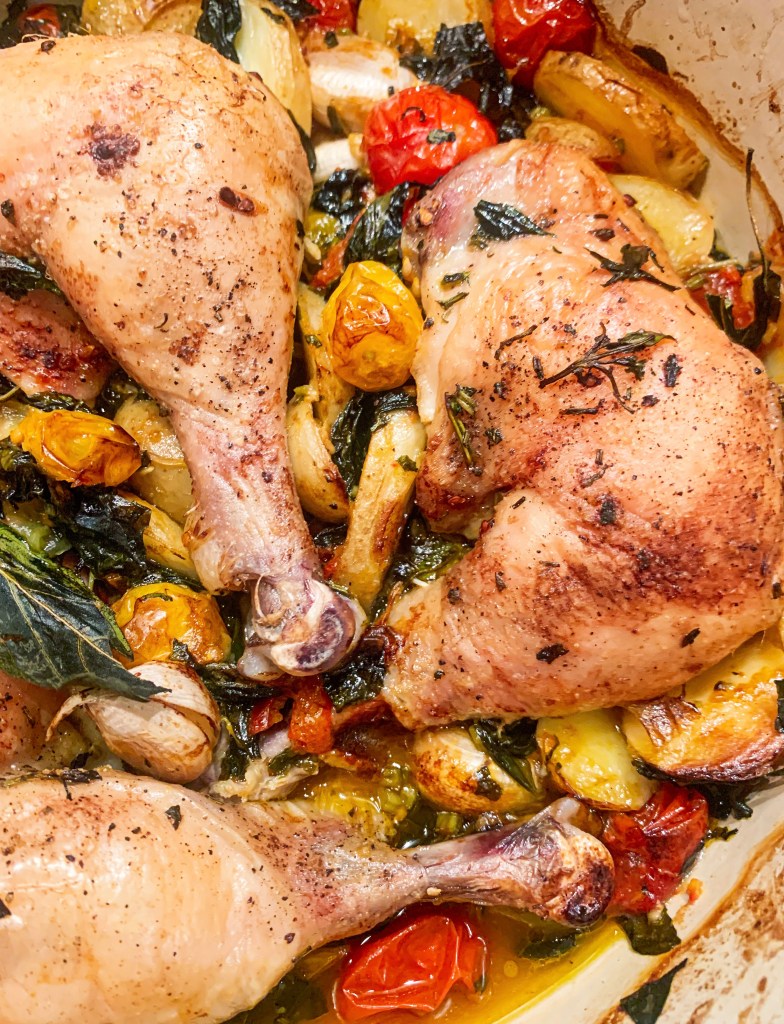
This recipe is from Jamie Oliver’s cookbook, ‘Jamies’s Dinners’, which came out in 2004 and I have cooked it on many occasions since then. Although it may not be an authentic Italian recipe, I’m sure that Oliver took inspiration from Italy for this dish, it’s simply chicken legs slow-cooked on a bed of tomatoes with handfuls of basil and garlic. The skin of the chicken ends up beautifully crispy whilst the meat literally falls off the bone, meanwhile the slow roasted tomatoes create a fabulous broth – it’s all delicious! I like to add some new potatoes to the pot or you could add cannellini beans instead – either way it makes a great ‘one-pot supper’!

4 chicken legs

A big bunch of fresh basil, leaves picked, stalks finely chopped

1 big handful of red and yellow cherry tomatoes, halved

1 big handful of ripe plum tomatoes, quartered

1 whole bulb of garlic, broken up into cloves, unpeeled

1 fresh red chilli, finely chopped

Olive oil

2 handfuls of new potatoes halved or 1 x 400g tin of cannellini beans, drained (optional – see above)

Sea salt and black pepper

  1. Season the chicken pieces and put them in a casserole in on single layer. Add the basil leaves and chopped stalks, then the tomatoes. Scatter over the garlic cloves and the chopped chilli and drizzle with some olive oil (at this point you can also add the new potatoes or cannellini beans if you are using). Mix everything around, tucking the tomatoes under the chicken. Make sure that the chicken legs are skin side up.
  2. Place in a preheated oven, 180’c fan, for 1½ hours, turning the tomatoes halfway through, until the chicken skin is crisp and golden.
  3. Serve, making sure you squeeze the soft roasted garlic out of the skins!

Menu Two

Baked in a Bag’ Fillet of Fish, Peas & Leeks (Serves 4)
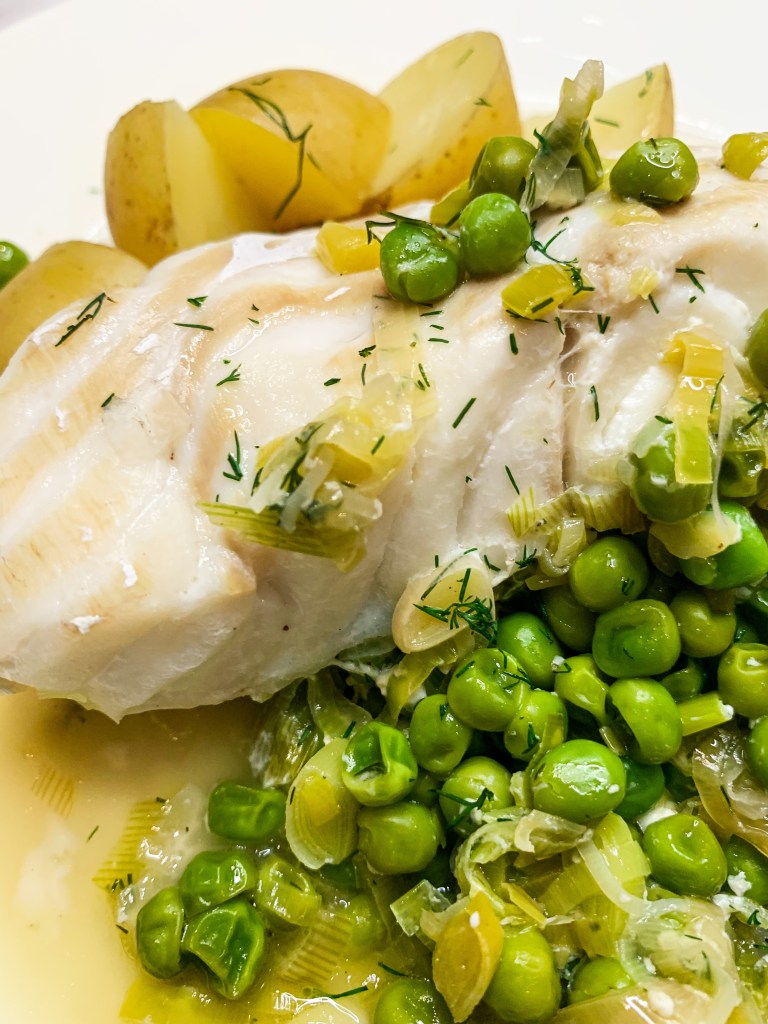
You could use any white fish fillet such as cod or haddock for this recipe, either way, it’s a wonderfully fresh-tasting dish and is very easy to make!

4 x white fish fillets such as haddock or cod, 150g each

60g butter

1 tablespoon olive oil

8 baby leeks, trimmed and thinly sliced

150g peas, defrosted if frozen

8 tablespoons white wine

4 teaspoons fresh dill, chopped

Sea salt and black pepper

  1. Cut out 4 squares of kitchen foil, big enough to hold the fish and vegtables.
  2. Melt the butter with the olive oil in a pan over a medium heat. Add the leeks and peas and fry gently, covered by a lid, for 10 minutes.
  3. Add the wine and dill, season to taste and simmer until the liquid has evaporated.
  4. Put a quarter of the vegetables in the middle of each piece of foil. Top with a piece of fish and season. Fold over to make a loose but tightly sealed parcel.
  5. Put the parcels on a baking sheet and bake in a preheated oven, 170’c fan, for 25 minutes.
  6. Open the parcels carefully onto serving plates.

Menu Three

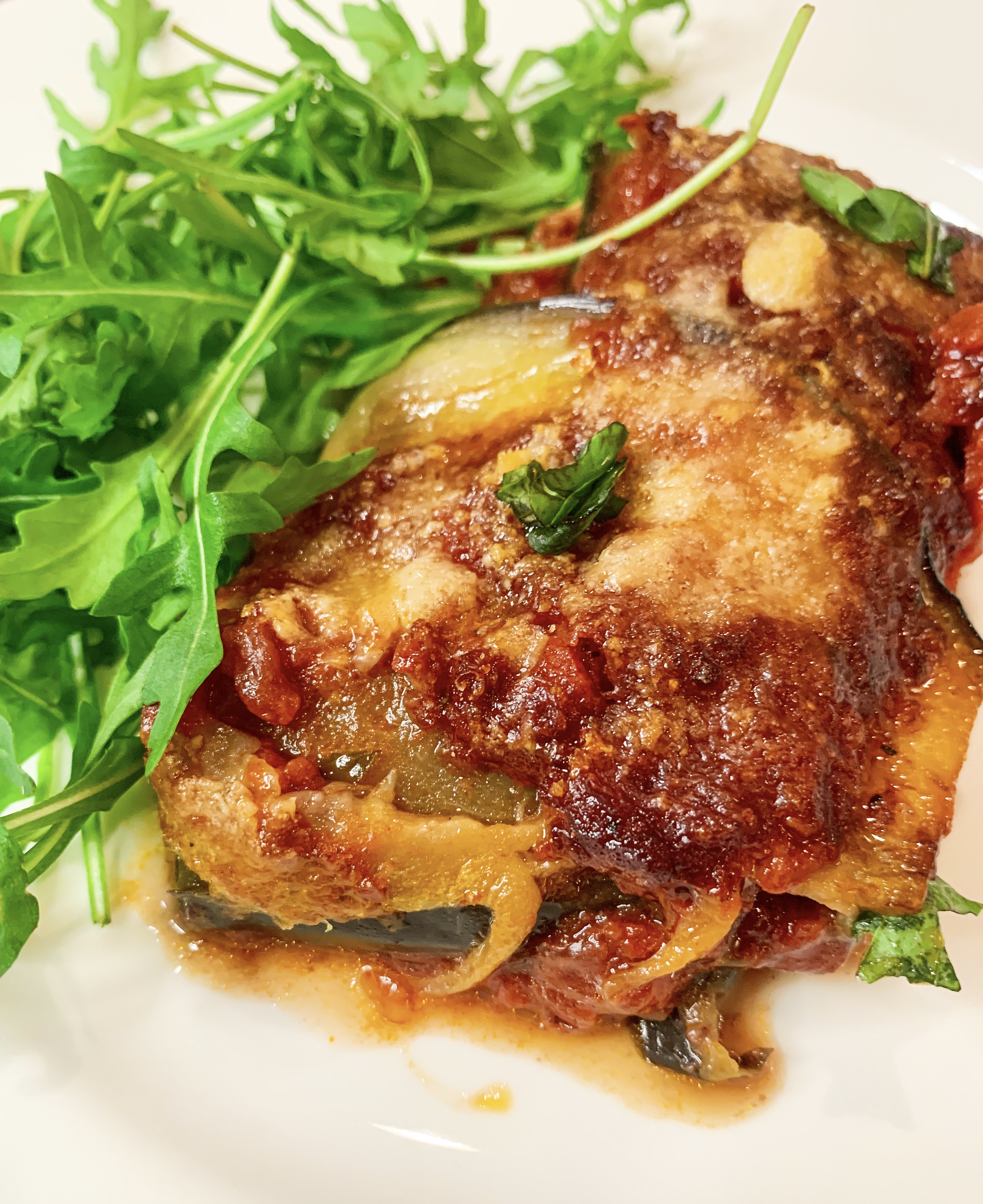
Aubergine Parmigiana (Serves 4)
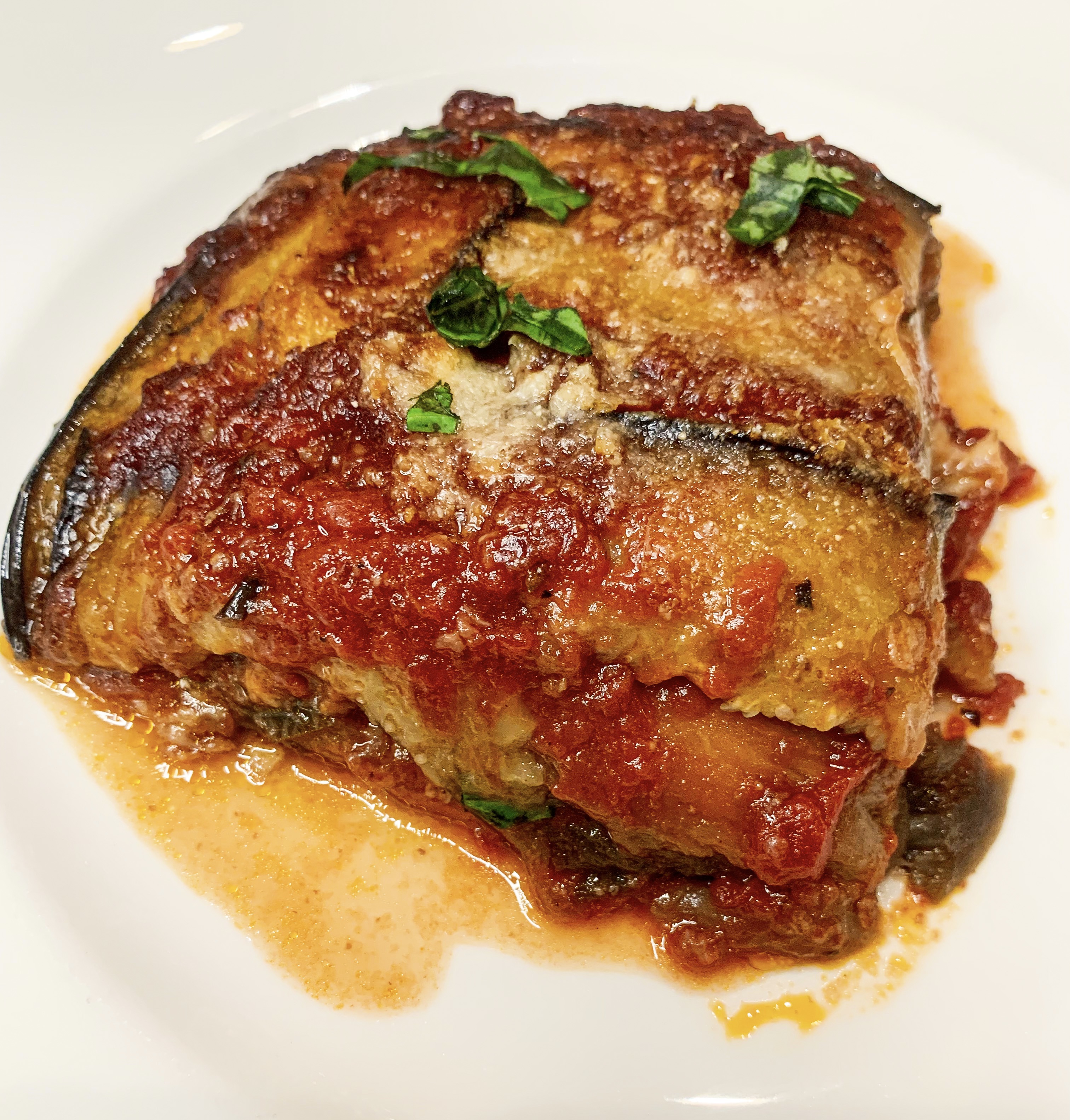
With the wonderful mix of tomato, parmesan, mozzarella and aubergine, the flavours of this dish will brighten any day! Simply serve with a well-dressed green salad. I like to fry half of the aubergine slices and blanch the other half, in this way the parmigiana isn’t too oily yet still very tasty. Simply leave out the breadcrumbs for a gluten free option.

1kg aubergines (about four large ones)

2 tablespoons olive oil, plus more for frying

3 garlic cloves, crushed

800g tinned tomatoes

150ml red wine

Pinch of sugar

½ teaspoon dried oregano

200g mozzarella, thinly sliced

100g Parmesan cheese, grated

50g dried breadcrumbs (optional)

Handful of basil leaves

Sea salt and black pepper

* A rectangular baking dish approx. 30cm x 20cm

  1. Heat the 2 tablespoons of olive oil in a pan over a medium-high heat and add the garlic. Fry for a minute before adding the tomatoes and wine. Bring to the boil, stirring and mashing the tomatoes. Add a pinch of sugar, a little seasoning and the oregano, reduce the heat and simmer for 40 minutes, stirring occasionally.
  2. Meanwhile cut the aubergines, lengthways, into thin slices (about 5mm).
  3. Pour enough oil into a frying pan to coat the bottom well and put over a medium-high heat. Fry half the aubergine slices until golden brown on both sides, working in batches and removing to drain well on kitchen roll.
  4. Put a large pan of water on to boil. When boiling add the other half of the aubergine slices and blanch for 2 minutes. Remove and drain on kitchen roll – it is important to dry them well.
  5. To assemble the parmigiana, spread a thin layer of tomato sauce over the bottom of a baking dish, followed by a layer of the fried aubergines (packing them tightly), then half of the mozzarella slices, quarter of the parmesan cheese and seasoning. For the next two layers use the blanched aubergine slices, followed by a thin layer of tomato sauce, a generous sprinkling of parmesan and seasoning (no mozzarella). Finally, for the fourth layer use the remaining fried aubergine slices, the tomato sauce, and the mozzarella slices. At this point if using breadcrumbs mix them with the remaining parmesan cheese and a little olive oil and sprinkle over the top (if not using breadcrumbs simply sprinkle over the parmesan).
  6. Bake in a preheated oven, 180’c fan, for about 30 minutes until browned and bubbling. Allow to cool slightly and sprinkle over with torn basil leaves before serving.

Tuesday Treat

Daiquiri Cocktail (Serves 1)

I thought it was about time that I shared this classic cocktail. There are many ‘daiquiri twists’, but this is the original recipe. It’s simply a mix of white rum, lime juice and sugar syrup – a crisp, light and refreshing cocktail perfect for any occasion…

50ml white rum (such as Bicardi Carta Blanca)

15ml freshly squeezed lime juice

10ml sugar syrup

A handful of ice cubes

Slice of lime to garnish (optional)

  1. Simply add the ingredients to a cocktail shaker, add a handful of ice cubes and shake until the mixture is well chilled, 15-20 seconds.
  2. Strain into a chilled coupe glass and garnish with a slice of lime.

‘Blast From the Past Recipe’

Chocolate Gourmandise (Serves 4)

I don’t know about you but I’m in need of a treat, this winter seems to be longer than ever! So this month’s ‘Blast From the Past’ is a dreamy chocolate dessert. I shared this recipe back in February 2021, it definitely deserves another mention…

‘Chocolate Gourmandise’ is one of those desserts that everyone, yes, everyone loves! On first appearance it seems to be a little sponge in a cup, but when you dip your spoon into it, you get the wonderful surprise of a molten chocolate centre. What really will steal your heart, is that this recipe, is not only delicious but incredibly easy to make, and so, it is not only the perfect midweek family treat, but also the perfect dessert to end a dinner party… It must be baked at the very last minute, but can be prepared several hours in advance. And the other good news is that, it works perfectly well with gluten free plain flour (I use Doves). This recipe is from a cookbook which I have had for over 20 years, ‘Patricia Wells at Home in the Provence’. Whilst there are other recipes in this book that I have enjoyed, it always naturally falls open onto the page for Chocolate Gourmandise (with all its cooking stains)!

Watch the video of this dessert being made here!

125g dark chocolate, roughly chopped (I use Lindt Excellence 70% Cocoa Dark Chocolate)

125g butter

3 large eggs

150g caster sugar

35 g plain flour (gluten free if required – I use ‘Doves’)

Butter and flour for preparing the ramekins

(you will also need 4 small ramekins with 150ml capacity)

  1. Place the chocolate with the butter in a bowl over a pan of barely simmering water, stir until melted.
  2. In another bowl, whisk the eggs with the sugar and flour, mixing just to blend.
  3. Gradually whisk in the melted chocolate mixture.
  4. Leave the mixture to rest for an hour, to allow the flavours to mellow.
  5. Generously butter and flour the ramekins. Place on a baking sheet. Spoon the mixture into the ramekins.
  6. Bake in a preheated oven, 200’c fan, for 12-14 minutes, they should be still wobbly.
  7. Transfer the ramekins to sit on dessert plates and serve immediately.

Tuesday Treat

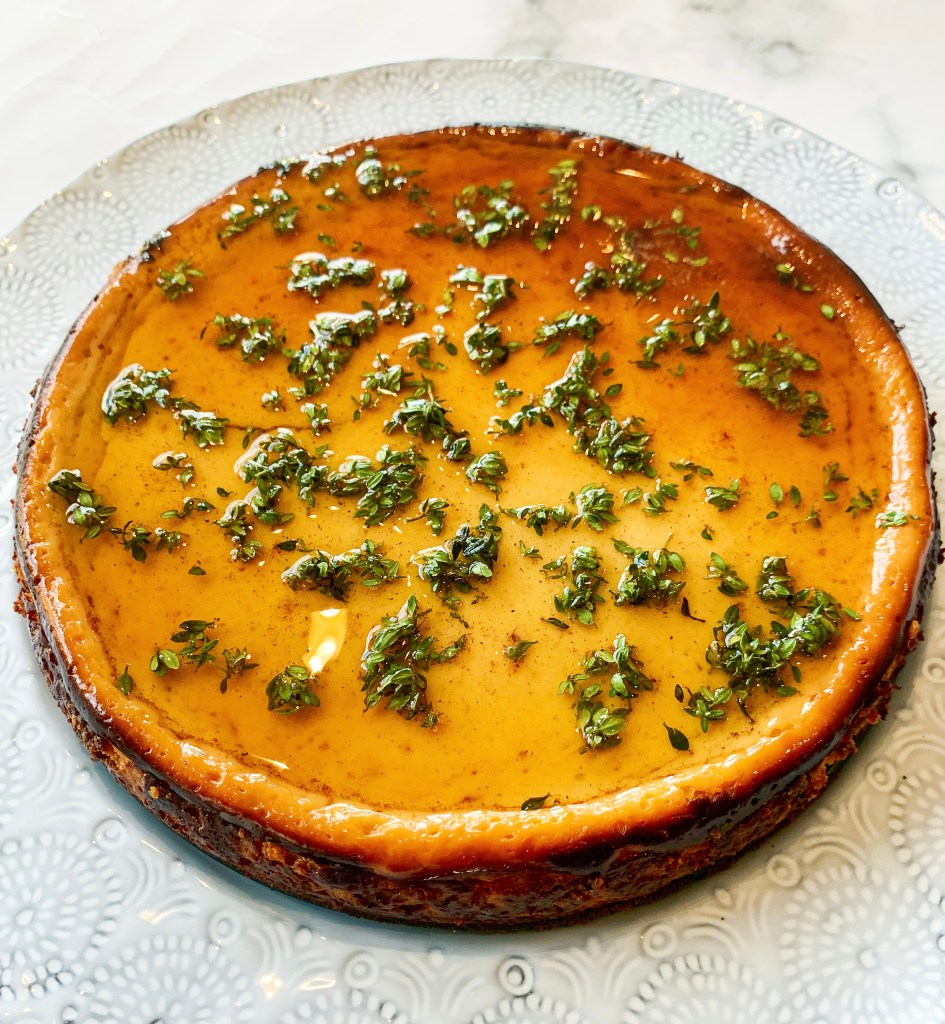
Honey & Ricotta Cake

This is one of those cakes which you can eat for breakfast, lunch, afternoon tea or dinner!… It’s a very moist cheesecake, made with creamy ricotta, honey and a sprinkling of thyme leaves. The honey syrup will seem very runny but believe me it works. It’s a Greek recipe from Yasmin Khan’s cookbook ‘Ripe Figs’, you can serve it warm, as a soft pudding or cold when it is set and firm – it’s great with an espresso on the side!

650g ricotta cheese

150ml runny honey

1 teaspoon vanilla extract

1 teaspoon ground cinnamon

1 teaspoon finely grated lemon zest

1 tablespoon lemon juice

3 large eggs, lightly beaten

1 tablespoon cornflour

Salt

For the topping:

6 tablespoons runny honey

2 tablespoons thyme leaves

18  teaspoon ground cinnamon

*You will need a 20cm springform baking tin, greased with butter and sides lined with baking parchment.

  1. Place the ricotta in a large bowl and add the honey, vanilla, cinnamon, lemon zest and juice and a pinch of salt. Whisk the mixture until it is smooth and free of any lumps.
  2. Add the eggs to the cheese mixture along with the cornflour and whisk again.
  3. Spoon the batter into the prepared tin and bake for 50-60 minutes, 180’c fan, until the top of the cake is golden brown.
  4. Meanwhile, heat the honey for the topping in a small saucepan with the thyme and cinnamon until it comes to the boil. Switch off the heat and leave the mixture to infuse.
  5. When the cake is cooked, remove from the oven and cool in the tin for 5 minutes, then gently transfer to a serving plate. Reheat the infused honey until it is loose and pourable, then spoon it over the cake.
  6. You can now either leave it to cool for 10 minutes before serving it as a warm pudding, or leave it until is completely set and serve it cold.

February 2023

It’s probably an understatement to say that after all the excitement of Christmas and New Year, January can seem a little flat. But, it’s often February that I find more ‘testing’, just when I start to look forward to the end of January I realise that February is not going to get much better as it’s still cold and gloomy outside. So this year I’ve decided to start February off with a celebration to really kick-start it – with Valentine’s day just around the corner, I thought I’d show some old friends a little ‘love’ by inviting them over for cocktails and dinner. It’s not really a ‘Valentine’s dinner’, after all, it will be taking place at the beginning of the month, before the 14th; but call it what you will – a belated New Year’s Eve or Valentine’s Dinner – the point is we’ll be enjoying a meal and raising a glass to each other which is a great start to any month! So with my February celebration in mind, this month’s recipes both reflect the need to impress loved ones and also for us, the cooks, to feel loved. You don’t want to be feeling frazzled in the kitchen – the best recipes are those that leave a good impression and leave you feeling just a little smug at how easy they are to cook. So whether you’re wanting a recipe for Valentine’s Day or an evening with friends, or simply for a family supper, I think that these recipes will impress…

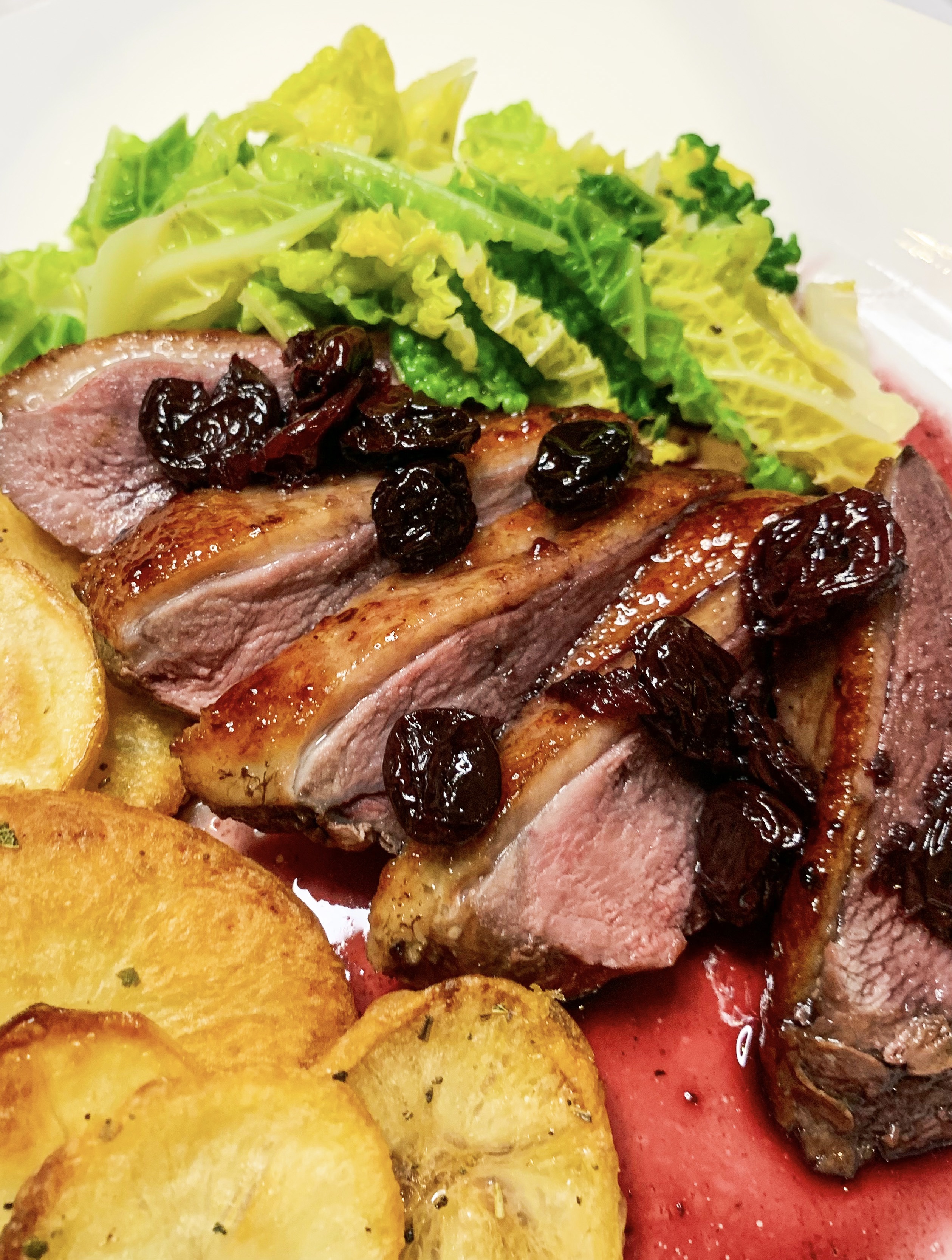
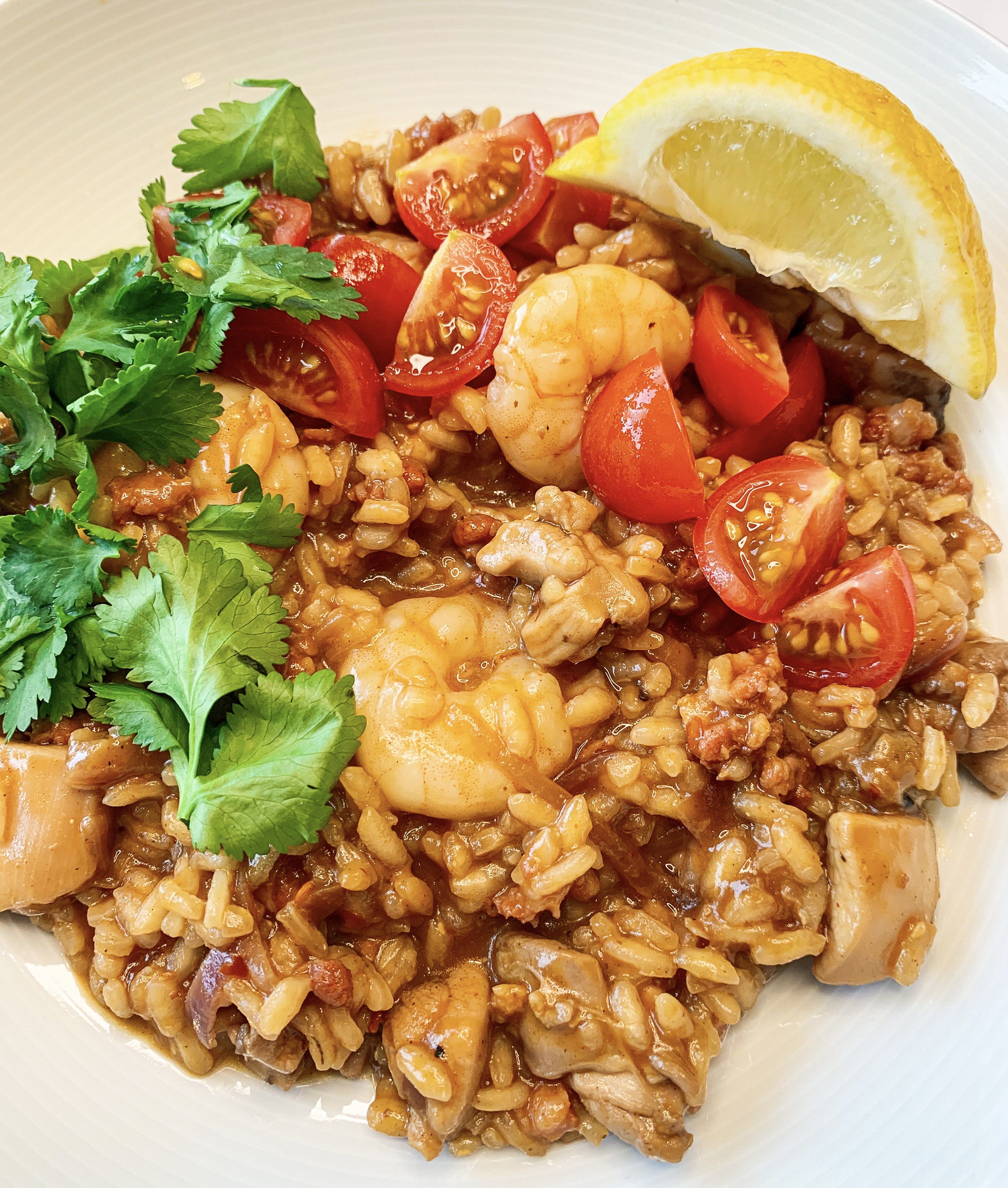
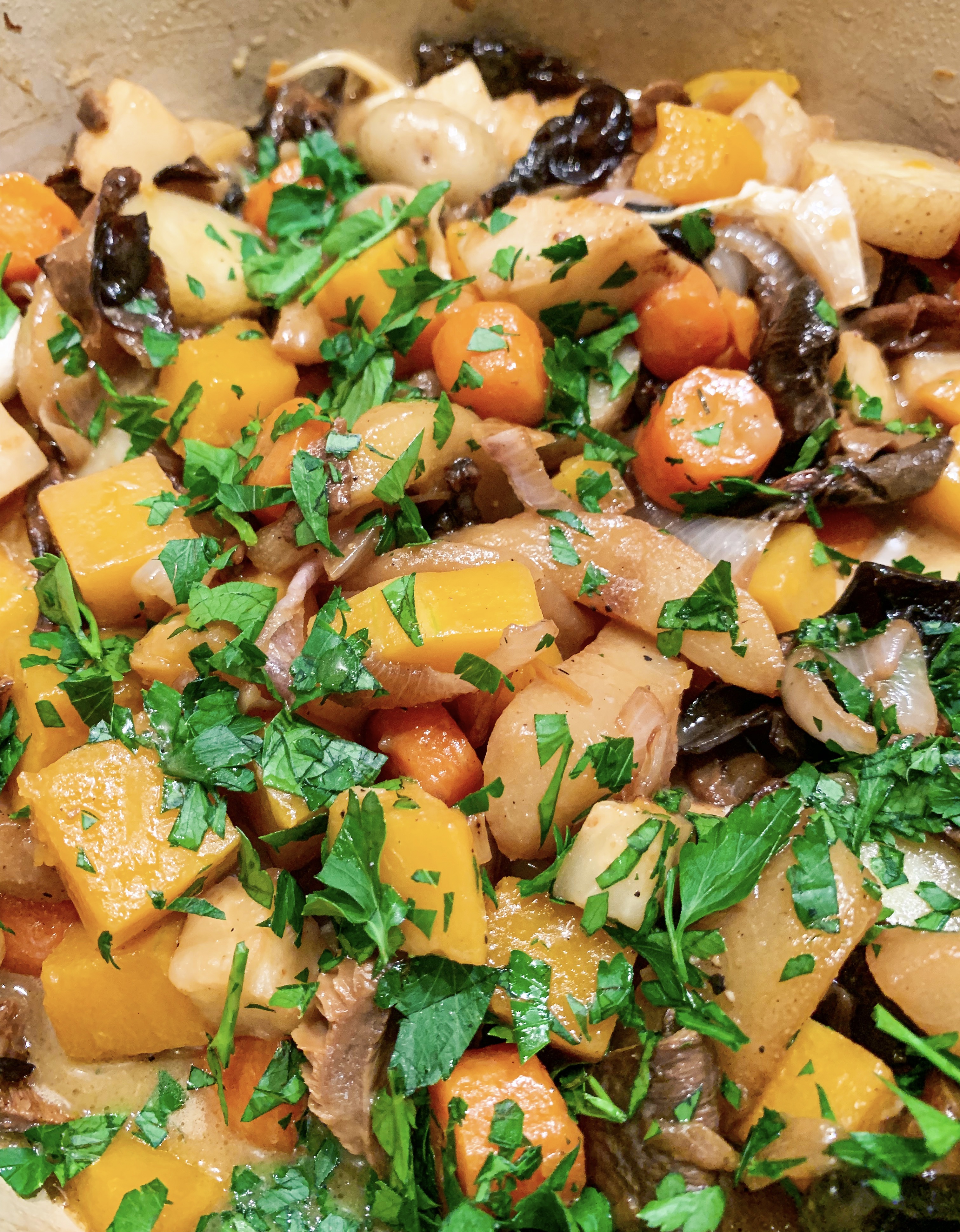
Menu One is ‘Guinea Fowl with Cabbage and Grapes’, it’s a French take on sweet and sour – the cabbage is cooked with vinegar whilst the guinea fowl is roasted with sweet grapes. Not only is it delicious but very easy to make, the cabbage is cooked on the stove whilst the guinea fowl roasts for about 40 minutes. You could of course make this recipe with chicken joints, but I do think that guinea fowl gives the dish a little more depth, as it has a slightly gamey flavour. Menu Two is ‘Roast Duck Breasts with Sour Cherry Sauce’, the original recipe, from Delia Smith’s ‘Winter Cookbook’, calls for a whole duck to be roasted which can be a bit of a faff, fortunately the sauce works just as well with roasted duck breasts! Menu Three is ‘Simple Paella’, this is what Donna Hay calls her ‘cheat’s version of paella’, but despite taking next to no time to cook it is extremely tasty and will definitely impress both family and friends! It’s wonderful fresh flavours will put a tantalizing taste of warmer days on your plate (yes, I know, it’s only February!… ). Finally, Menu Four is ‘Casserole of Vegetables with Pears and Ceps’; the sweet flavour of the pears lift this simple casserole to higher realms – making it a really special vegetarian choice.

Menu One

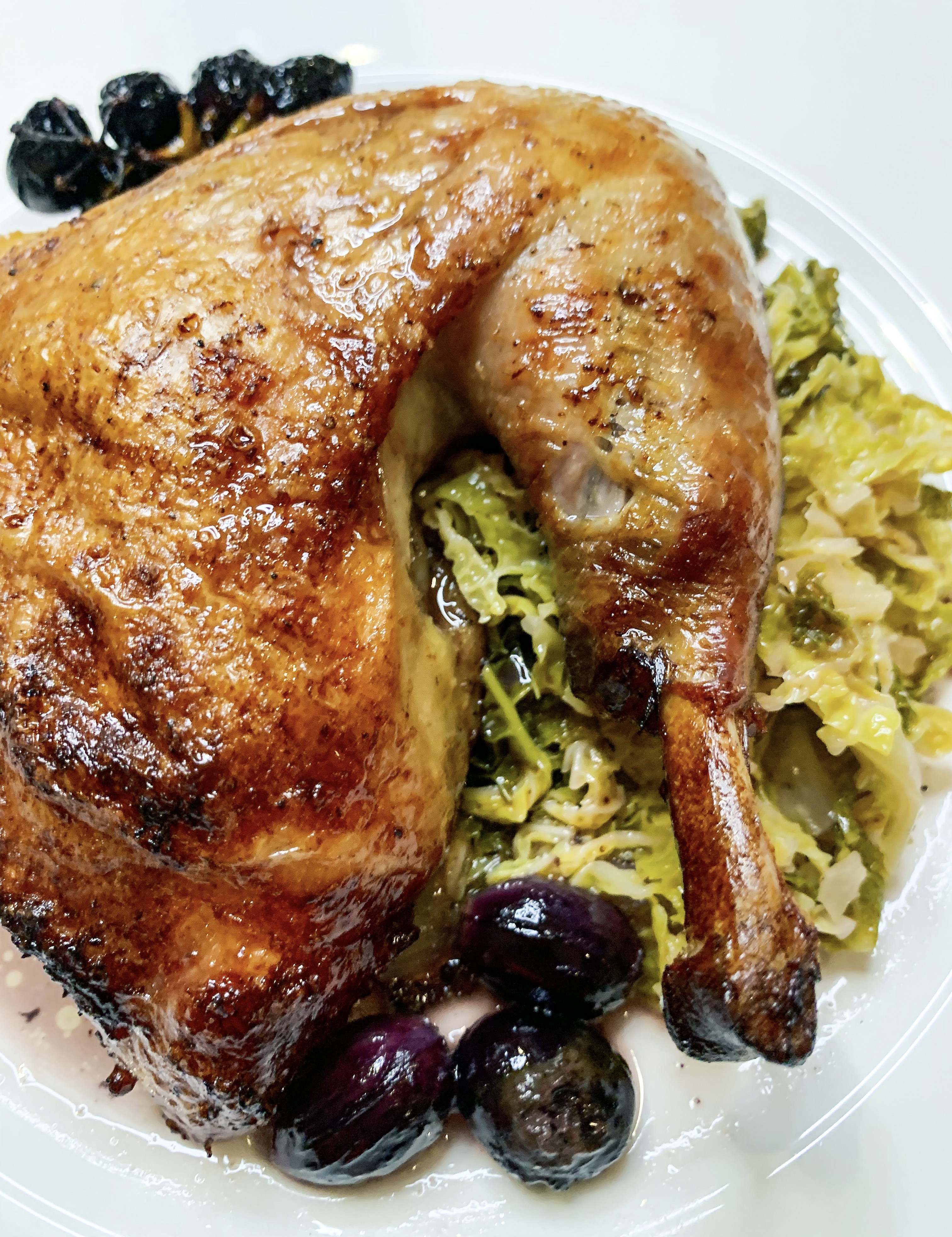
Guinea Fowl with Cabbage and Grapes (Serves 4)

This recipe is a French take on sweet and sour – the cabbage is cooked with sugar and vinegar whilst the guinea fowl is roasted with sweet grapes. Not only is it delicious but very easy to make, the cabbage is cooked on the stove whilst the guinea fowl roasts for about 40 minutes. You could of course make this recipe with chicken joints, but I do think that guinea fowl gives the dish a little more depth, as it has a slightly gamey flavour. Serve with boiled new potatoes.

2 guinea fowls, each jointed into 4 pieces

2 tablespoons olive oil

60g butter

1 onion, chopped

1 garlic clove, crushed

1 large Savoy cabbage

2 tablespoons caster sugar

50ml white wine vinegar

350ml chicken stock

Small bunch of sweet, seedless grapes (I like ‘Sable black grapes’)

Few sprigs fresh thyme

Sea salt and black pepper

  1. Cut the cabbage into quarters, remove and discard the core, then shred the leaves.
  2. Put half the oil and 30g of the butter in a large frying pan over a moderate heat. Add the chopped onion, stir for 5-8 minutes until softened. Add the garlic and cabbage, half the sugar and all of the vinegar, stir and season. Cook for 20-30 minutes, stirring frequently, over a moderate heat. Reserve in the pan.
  3. Meanwhile, put the rest of the oil and 15g of the butter in a large frying pan, over a medium to high heat. Add half the guinea fowl pieces and fry for about 5 minutes until coloured, turn over, season and sprinkle with half the remaining sugar, continue to cook for 5 minutes. Remove and transfer to a roasting tin. Repeat with the remaining guinea fowl.
  4. Pour the stock into the frying pan. Turn up the heat, bring to the boil, stirring. Add the remaining butter, boil for another minute then pour over the guinea fowl and scatter over the grapes and thyme. Roast in a preheated oven, 200’c fan, for 35-40 minutes. Turn off the oven, open the door and allow the guinea fowl to settle whilst you reheat the cabbage.
  5. Serve the joints of guinea fowl and their juices on a bed of cabbage with the grapes scattered over.

Menu Two

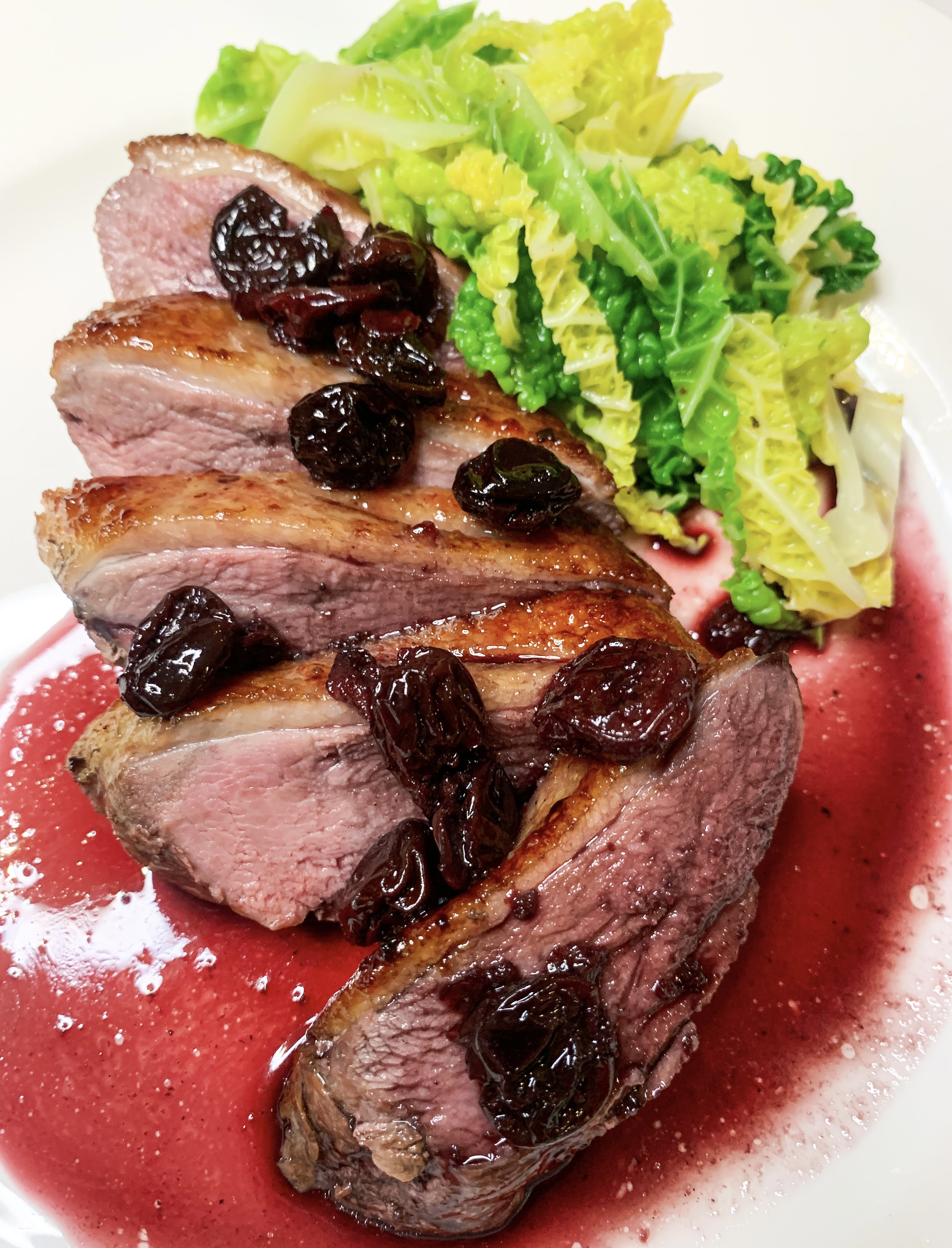
Roast Duck Breasts with Sour Cherry Sauce (Serves 4)

This is one of those recipes which shouts ‘impressive’ yet is incredibly easy to cook. The original recipe, from Delia Smith’s ‘Winter Cookbook’, calls for a whole duck to be roasted which can be a bit of a faff, fortunately the sauce works just as well with roasted duck breasts!… I like to serve the duck quite pink, but if you prefer them more well done cook for a little longer. This recipe is delicious with ‘Concetta’s potatoes’ and ‘Buttered Savoy Cabbage’ or ‘Stir Fried Swiss Chard’ (recipes here)

4 duck breasts

5 tablespoons of Morello cherry jam (with a high fruit content)

40g dried sour cherries

425ml red wine

Sea salt and black pepper

½ teaspoon cornflour (optional)

Watercress to garnish (optional)

  1. Measure the wine into a small saucepan and add the cherries to pre-soak, leave to one side.
  2. Score the skin of the duck breasts, through the fat but not all the way through to the flesh, and salt them.
  3. Place the breasts in a dry frying pan, skin side down, over a low heat to render down most of the fat, this may take as much as 10-15 minutes. When the fat is rendered, turn up the heat to crisp up and brown the skin (about 2 minutes). Finally, turn over to sear the underside for minute or so.
  4. Place the duck breasts on a baking tray. Pass 1 tablespoon of the jam through a sieve and brush it all over the skin of each duck breast as a glaze. Then place the duck breasts in a preheated oven, 200’c fan, for 8-10 minutes (see note above). Remove from the oven and allow to cool for 5 minutes.
  5. Whilst the duck is resting, put the saucepan with the wine and sour cherries over a medium/high heat and let it bubble and reduce to about two-thirds of its original volume, then add the remaining 4 tablespoons of jam and season with salt and pepper. Whisk and allow to bubble and reduce for another 2 minutes (if you prefer a thicker sauce whisk in a little cornflour).
  6. To serve, slice the breasts and spoon some of the sauce over each portion. Garnish with watercress (if using).

Menu Three

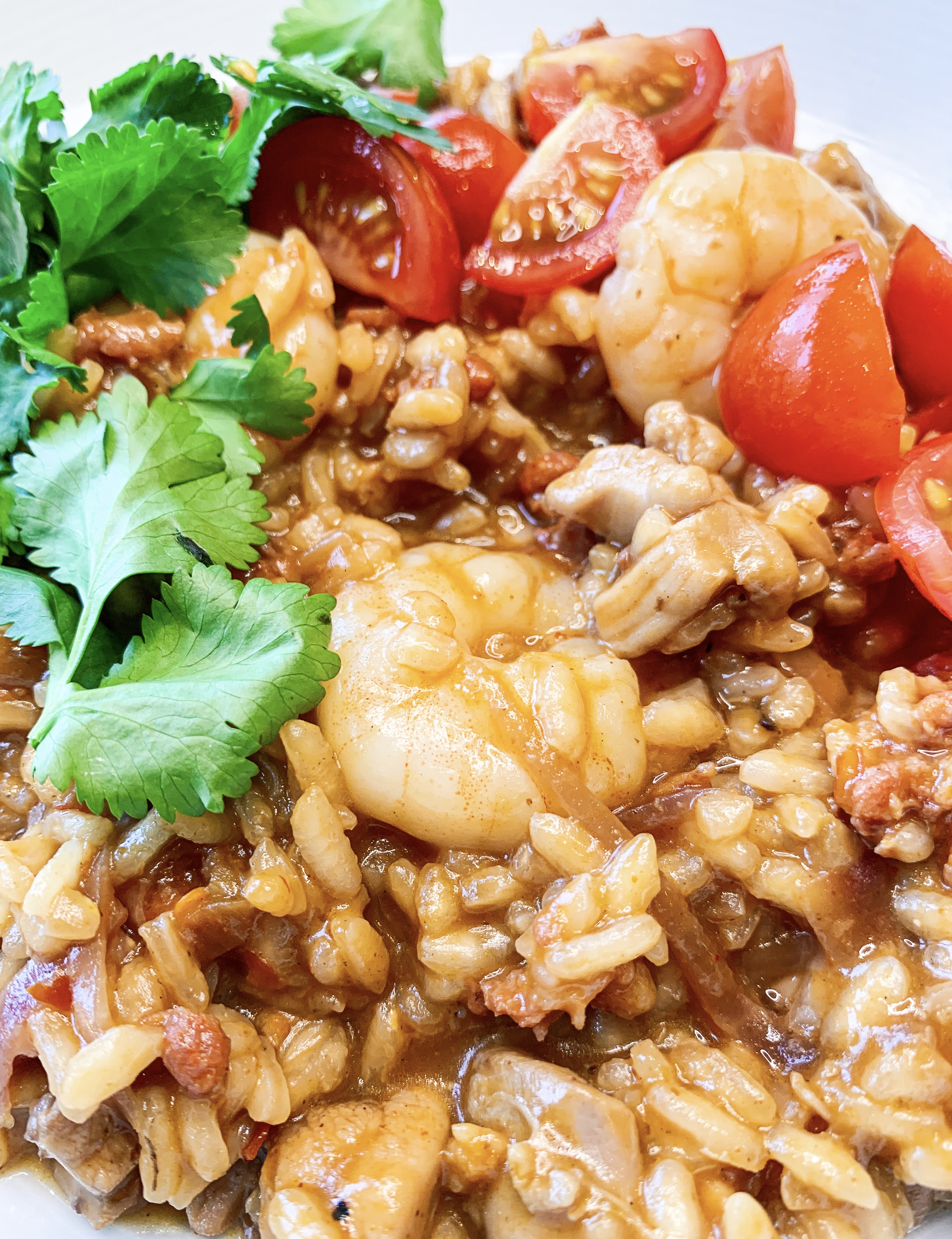
Simple Paella (Serves 4)

This recipe is what Donna Hay, in her cookbook ‘Simple Dinners’, calls her ‘cheat’s version of paella’, despite taking next to no time to cook it is extremely tasty and will definitely impress both family and friends!…

1 red onion, sliced

½-1 teaspoon dried red chilli flakes (depending on your tastebuds)

1 teaspoon smoked paprika

3 chorizo sausages, sliced

4 chicken thighs, boneless and skinless, chopped into bitesize pieces

250g short-grain paella rice

1 litre chicken stock

12 raw king prawns, peeled

25g coriander, leaves picked

250g cherry tomatoes, quartered

Lemon wedges to serve

  1. Heat a large frying pan over a high heat. Add the onion, chilli, paprika and chorizo and cook for 3-5 minutes until golden.
  2. Add the chicken, cook, turning, for 3 minutes or until sealed.
  3. Add the rice and stir until coated with the oil. Add the stock, bring to the boil and cook for 10 minutes.
  4. Add the prawns and cook for a further 5 minutes or until the rice is tender.
  5. Divide between the plates and top with the tomatoes and coriander and serve with a lemon wedge.

Menu Four

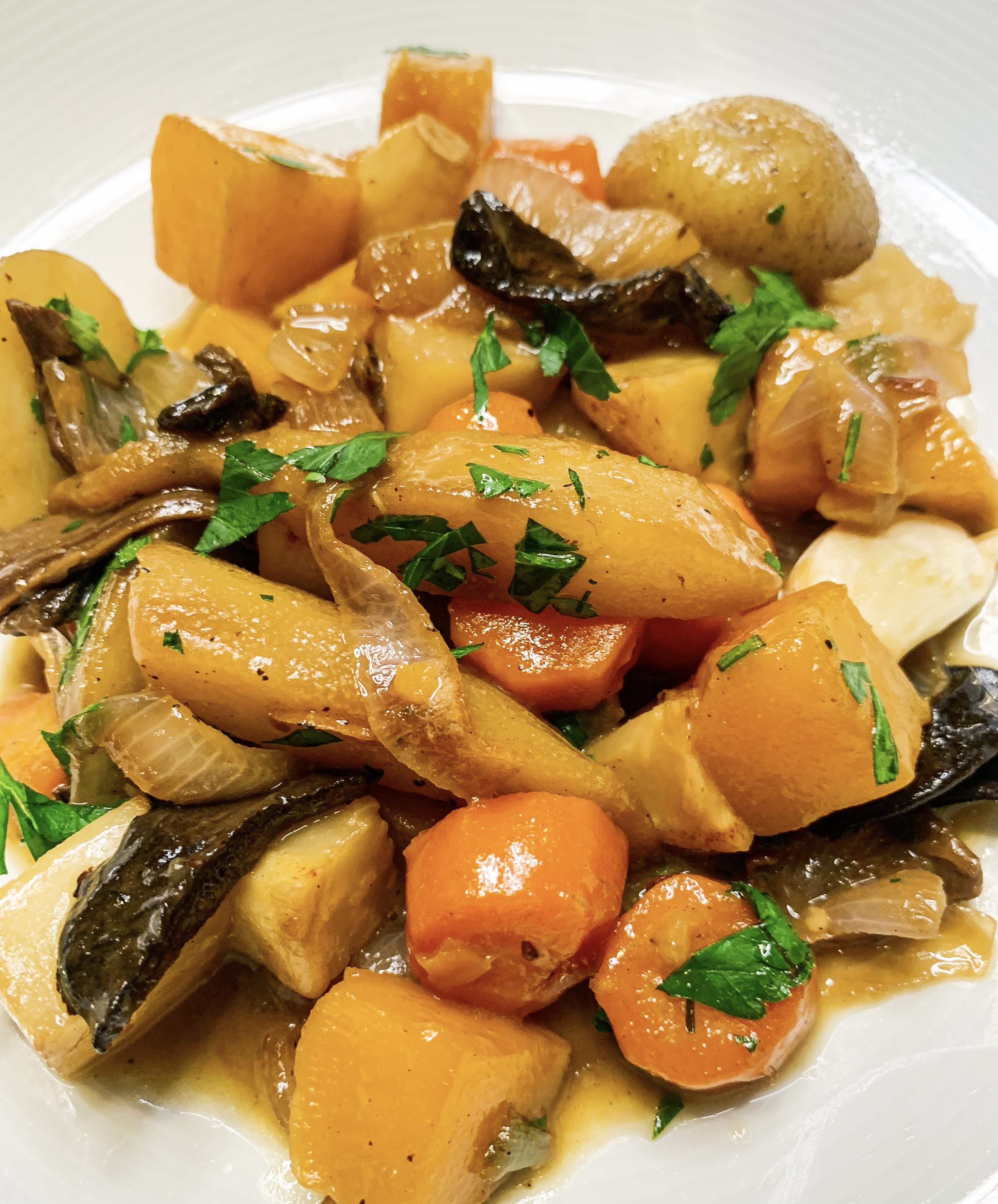
Casserole of Vegetable with Pears and Ceps (Serves 4)

This casserole may lack meat but believe me it will please the most ardent meat-lover. The sweet flavour of the pears lift this simple casserole to higher realms – making it a really special vegetarian choice! The recipe is from Daniel Galmiche’s cookbook ‘French Countryside Cooking’.

80g unsalted butter

1 tablespoon sunflower oil

200g carrots, peeled and cut into 2cm chunks

200g swede, peeled and cut into 2cm chunks

2 firm pears, peeled, cored and cut into 8 wedges

2 large shallots, cut into thick rings

40g dried ceps or porcini

2 thyme sprigs

200g celeriac, peeled and cut into 2cm chunks

12 garlic cloves, unpeeled

200g butternut squash cut into 2cm chunks

4 small new potatoes, scrubbed and each cut into three pieces

125ml Vegetable stock

1 tablespoon flat leaf parsley, chopped

Sea salt and black pepper

  1. Place the ceps (or porcini) in a small bowl, add 150ml of warm water and leave to one side to soak.
  2. Heat 20g of the butter with the sunflower oil in a casserole dish over a medium-high heat. When the butter is foaming add the carrots. Turn down the heat, partially cover and cook for 12-15 minutes, stirring occasionally, until the carrots just start to soften around the edges but do not colour. Add the swede, cover again and cook for a further 12-15 minutes.
  3. Meanwhile, heat 20g butter in a frying pan. When foaming add the shallots and pears and cook for 8-10 minutes until just tender and starting to caramelize.
  4. Using a slotted spoon remove the ceps (or porcini) from the soaking water, put on a paper towel and pat dry. Strain and reserve the soaking water.
  5. Add the ceps (or porcini) to the pan with the pears and shallots, then stir in the thyme and sauté for a further 3-4 minutes over a medium heat until the ceps have softened. Leave to one side.
  6. Add another 20g of butter to the casserole along with the celeriac and garlic. Partially cover and cook for 8-10 minutes, stirring occasionally, until slightly softened. Add the butternut squash and potatoes and cook for a further 8-10 minutes. Turn up the heat and add the remaining butter, stock and reserved soaking water. Cook for 5-8 minutes until the liquid has reduced enough to just coat the vegetables – do this quickly so that the vegetables don’t overcook.
  7. Remove the casserole from the heat and add the reserved pear mixture and chopped parsley, stir gently to combine and heat through. Serve straightaway.