
(All Recipes have Gluten-Free Options)
Rigatoni with Pork Shoulder Ragu & Creamy Goat Cheese (Serves 6-8)
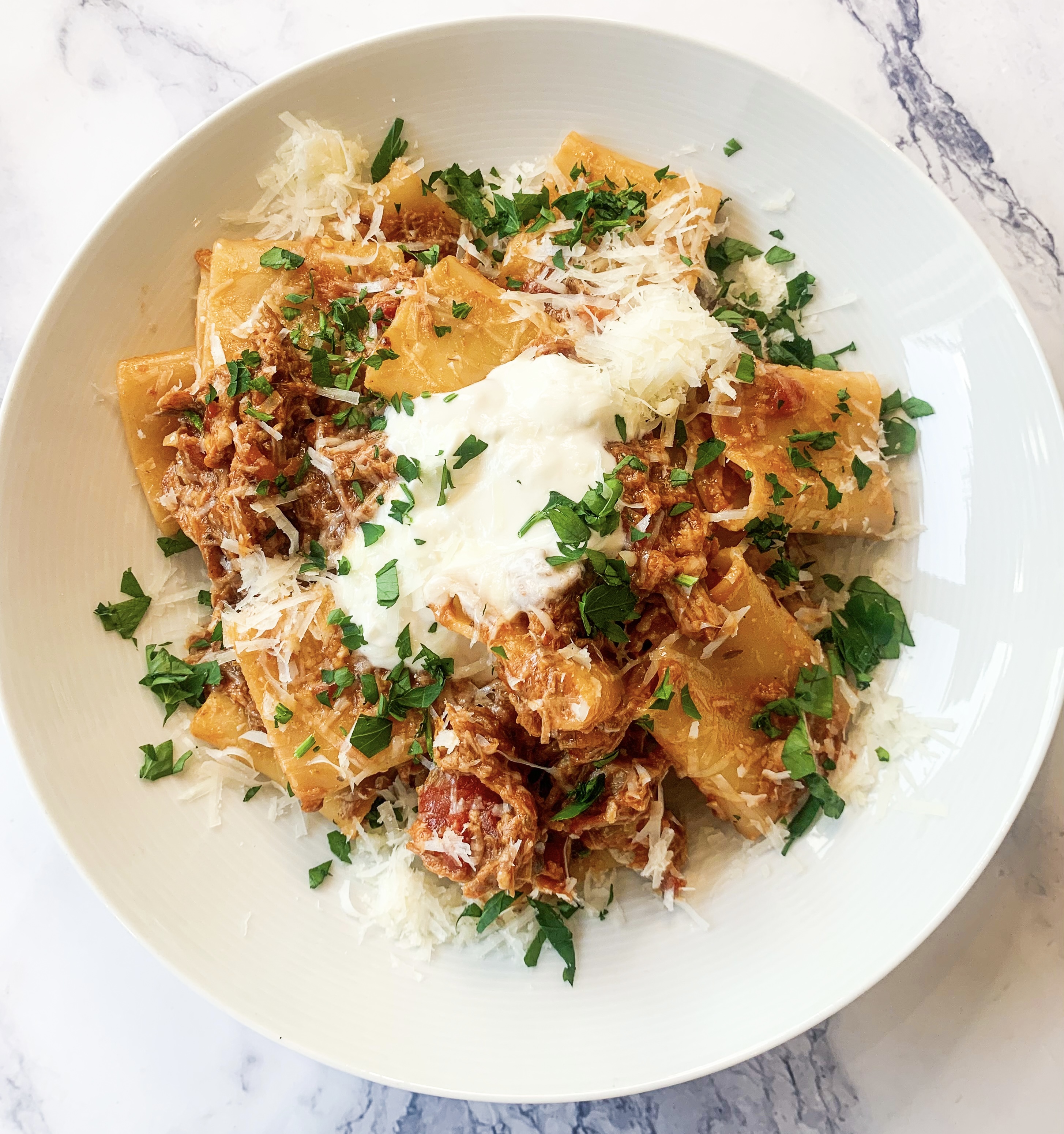
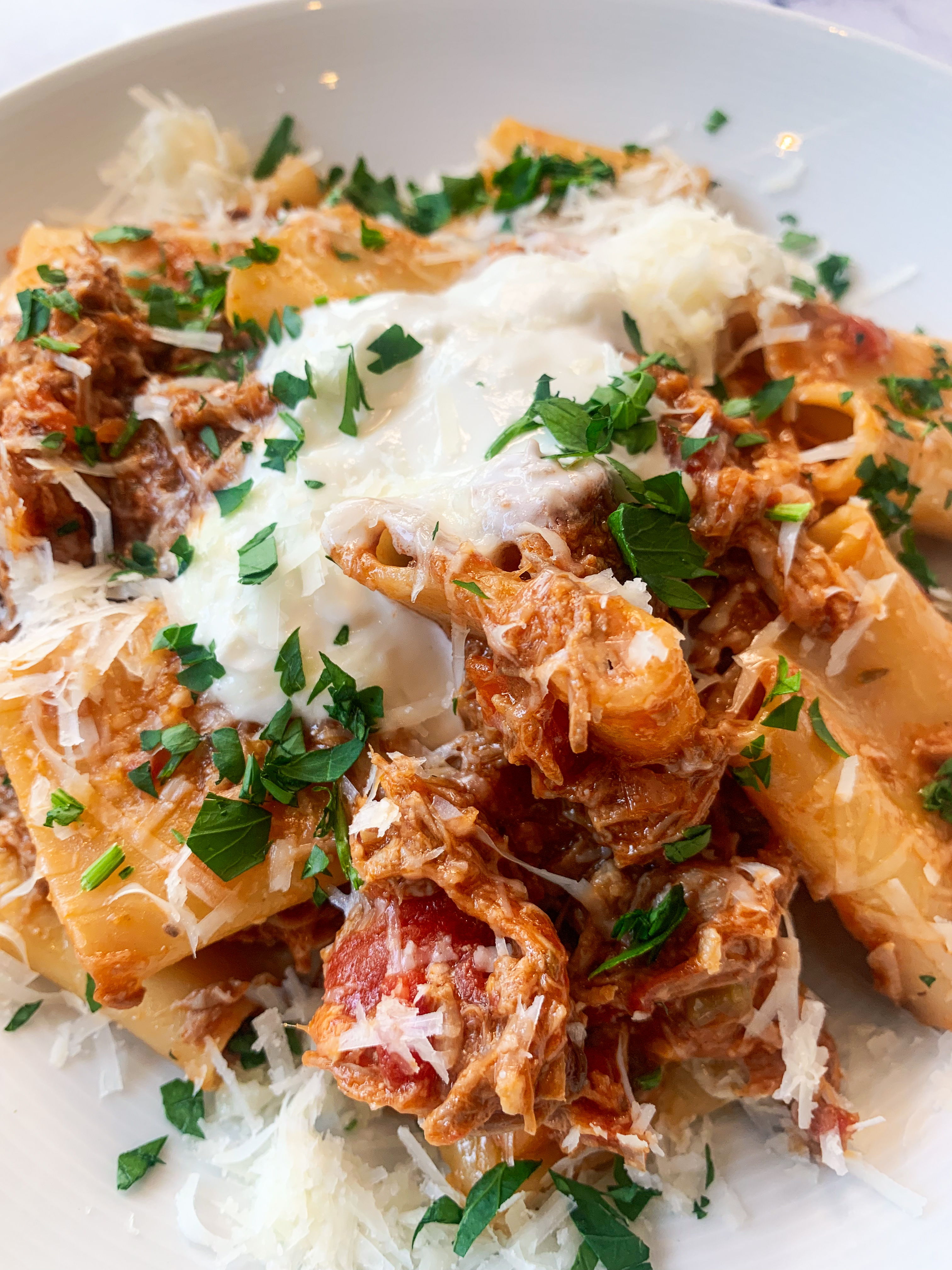
This recipe is from Athena Caldrone’s ‘Cook Beautiful’ cookbook. At first, I was sceptical of this book as the author is first and foremost an Instagram ‘lifestyle influencer’ rather than a chef, however, I’ve been very impressed with its recipes and this ragu has become a firm favourite. Often, slow-cooked Ragu’s can be very heavy but this one is surprisingly light plus the creamy goat cheese topping gives it a very modern edge. From the depths of the winter to a sunny summer’s day this is a recipe you’ll make time and time again!
*Do try to get tinned ‘San Marzano’ tomatoes, they are more expensive but so much tastier – I’m a convert! (If you can only get whole tomatoes simply cut them up in the tin with a pair of kitchen scissors).
1.8kg boneless pork shoulder, excess fat trimmed, cut into 5cm pieces
2 tablespoons olive oil
2 sprigs fresh rosemary
3 sprigs of fresh sage
240ml dry white wine
1.2 litres chicken stock (just enough to cover the meat)
55g unsalted butter
2 teaspoons fennel seeds, toasted in a dry frying pan and lightly crushed
2 carrots, finely chopped
1 stalk of celery, finely chopped
1 onion, finely chopped
4 cloves of garlic, chopped
1 teaspoon chilli flakes
240ml whole milk
2 x 400g tins chopped tomatoes – San Marzano if possible (*see note above)
1 tablespoon tomato paste
455g rigatoni pasta (gluten-free if required)
115g soft goat cheese
50g coarsely grated pecorino Romano cheese
4 sprigs of parsley, chopped
Sea salt and black pepper
- Season the pork generously with salt and pepper. In a large casserole pan, heat the oil over a medium-high heat and working in two batches sear the pork until well browned on all sides. Transfer to a plate.
- Drain all but 2 tablespoons of fat from the pan. Tie the rosemary and sage into a bundle with kitchen string, then add it to the pan along with the wine. Using a wooden spoon, scrape up any browned bits of pork stuck to the bottom of the pan. Simmer over a medium-low heat until the wine has reduced by half.
- Return the pork to the pan, pour in the stock and bring to a simmer. Cover the pan with a lid and place it in a preheated oven, 165’c fan, for 1½ to 2 hours, or until the pork is very tender.
- Using a slotted spoon, transfer the pork to a plate. Skim off the fat from the braising liquid and return the pan to the stove. Bring the braising liquid to the boil and boil vigorously for approximately 30 minutes, until the liquid is reduced to about 240ml. Meanwhile, shred the pork with a fork.
- Transfer the reduced braising liquid to a bowl. Return the pan to the stove and melt the butter over a medium heat. Add the fennel seeds, carrots, celery, onion and garlic and sauté for 6-8 minutes, until the onion is soft and translucent. Stir in the chilli flakes and sauté for a minute. Add the milk, tomatoes, tomato paste, pork and reserved braising liquid. Simmer, uncovered, for about 45 minutes to 1 hour, until the flavours meld and the ragu slightly thickens. Taste and adjust the seasoning.
- Meanwhile cook the rigatoni according to the packet instructions, until al dente.
- In a small bowl combine the goat cheese with a little warm water – add a little at a time until it is smooth, thick and creamy, similar to the consistency of sour cream.
- To serve divide the pasta among bowls and pile each with the ragu. Top with some grated pecorino cheese and a dollop of goat cheese, season with freshly cracked black pepper.
Hainanese Pork and New Potato Curry (Serves 3- 4)
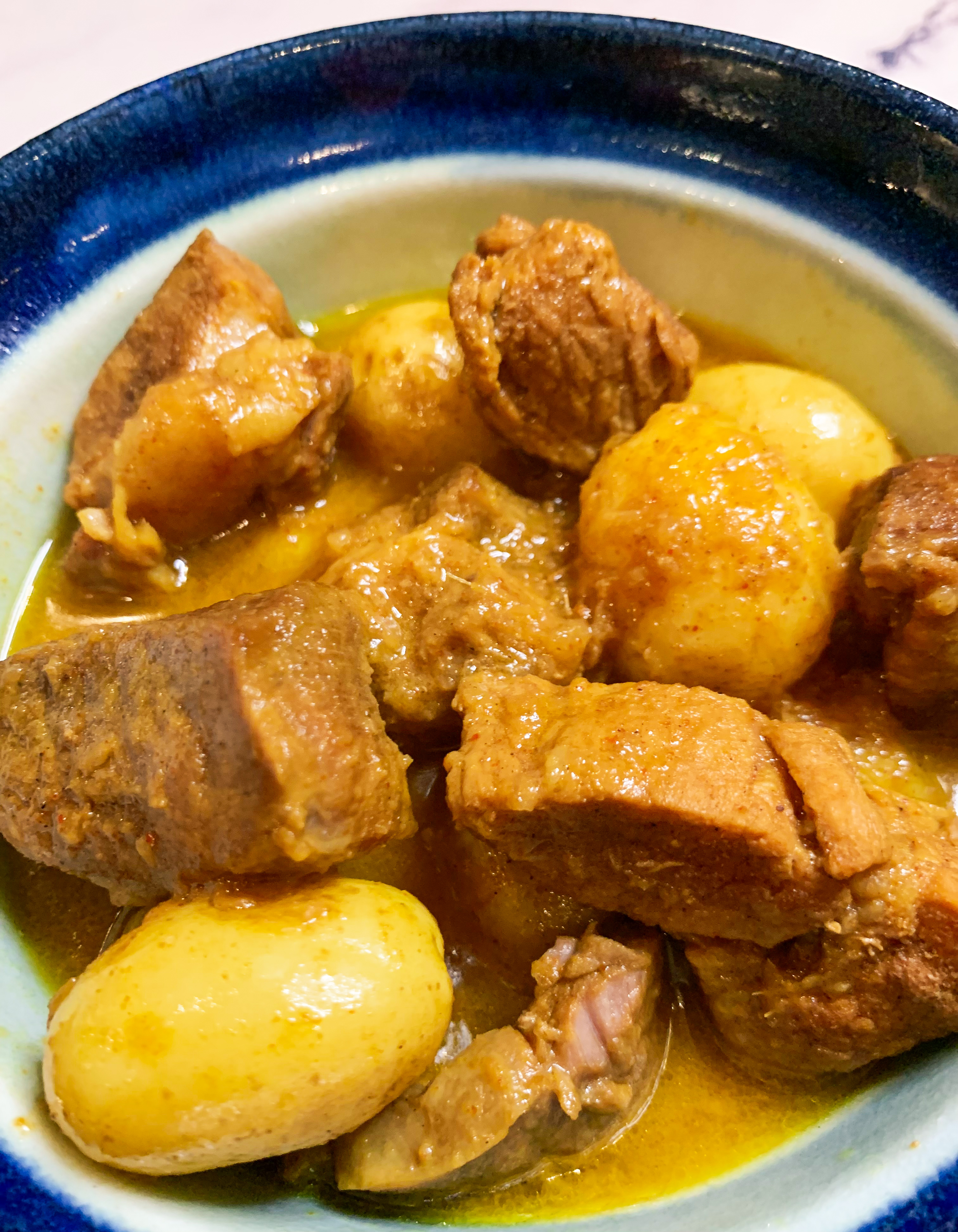
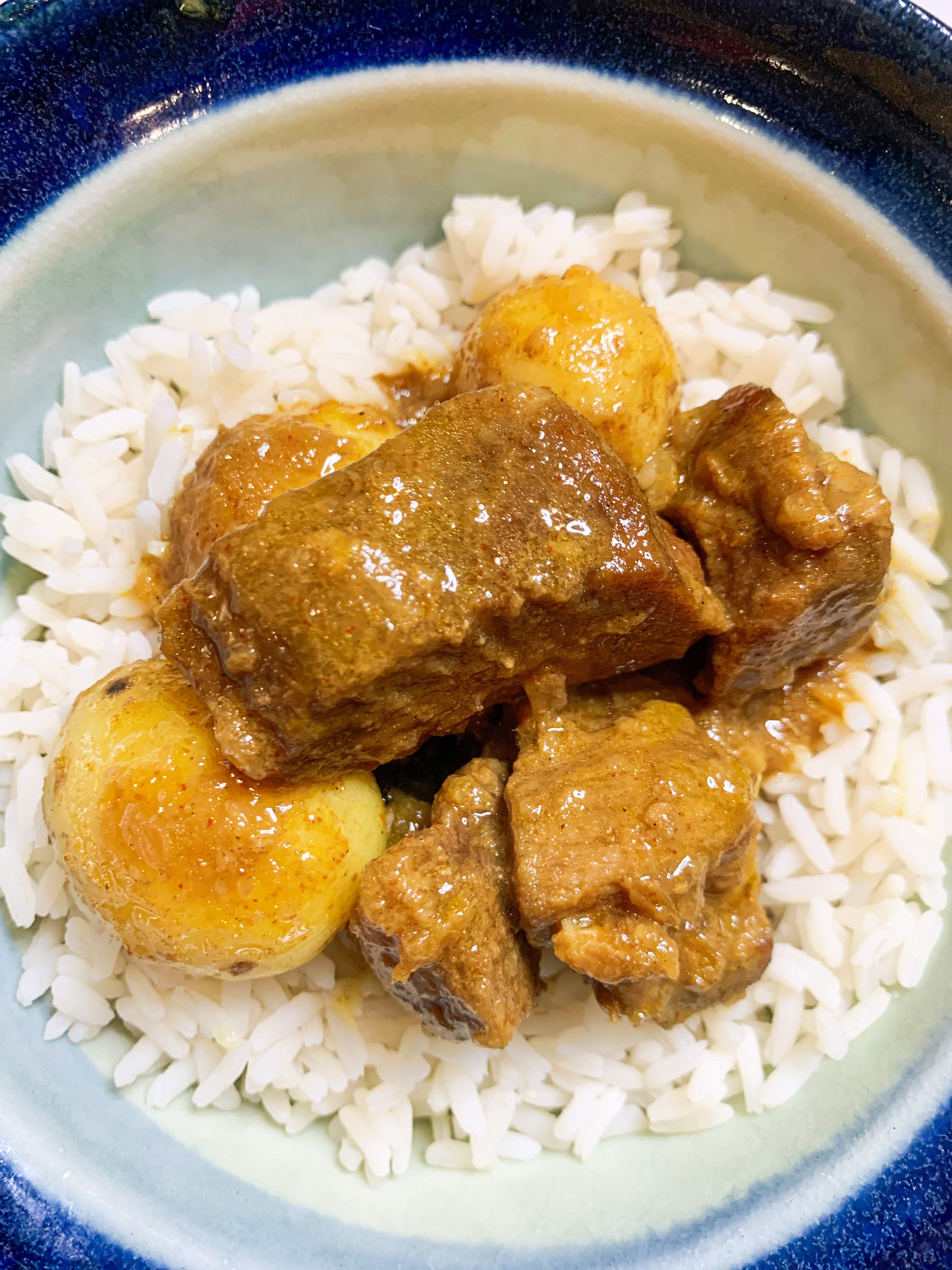
This recipe, from the Singaporean cookbook ‘Agak Agak’, is a sweet and mild dish with a depth of moreish fragrant flavours. It’s one of those curries which the whole family will love – they’ll be wanting second helpings so you might want to double the recipe!
500g pork shoulder, cut into 3cm chunks
1 cinnamon stick
2 star anise
2 lemongrass stalks, bashed lightly
4 tablespoons vegetable oil
200ml coconut milk
About 250ml water
250g baby new potatoes, unpeeled, left whole, larger ones halved
3 tablespoons light soy sauce or to taste (gluten-free if required)
2 teaspoons light brown sugar or to taste
For the spice paste:
100g shallots, roughly chopped
15g piece fresh ginger, peeled and roughly chopped
4 garlic cloves, peeled
2 teaspoons Kashmiri chilli powder
1 teaspoon white pepper
1 teaspoon ground coriander
1 teaspoon ground turmeric
½ teaspoon ground cumin
Big pinch of sea salt
- For the spice paste, pound the shallots, ginger and garlic using a pestle and mortar or whizz in a blender until you get a smooth paste. Then mix in the ground spices and salt. Coat the pork chunks with the spice paste and set aside to marinate for 15 minutes.
- In a wok or shallow casserole, fry the whole spices and the lemongrass in the oil over a medium heat for about 1 minute, to help release their fragrance.
- Add the marinated pork, scraping in all the spice paste, then fry for about 10 minutes until the pork browns.
- Next stir in the coconut milk and enough water to just cover the pork. Bring to a gentle boil, then turn the heat down to low and cook, partially covered, for 1 hour and 30 minutes.
- Gently tip in the potatoes and season the curry with soy sauce and sugar. Pop the lid back on and cook for another 20 minutes, or until the pork and potatoes are very tender. Taste and adjust seasoning with more soy sauce or sugar if you like. Serve with rice.
Slow-Roast Hoisin Pork Shoulder (with Radish & Cucumber Salad) (Serves 4-6)
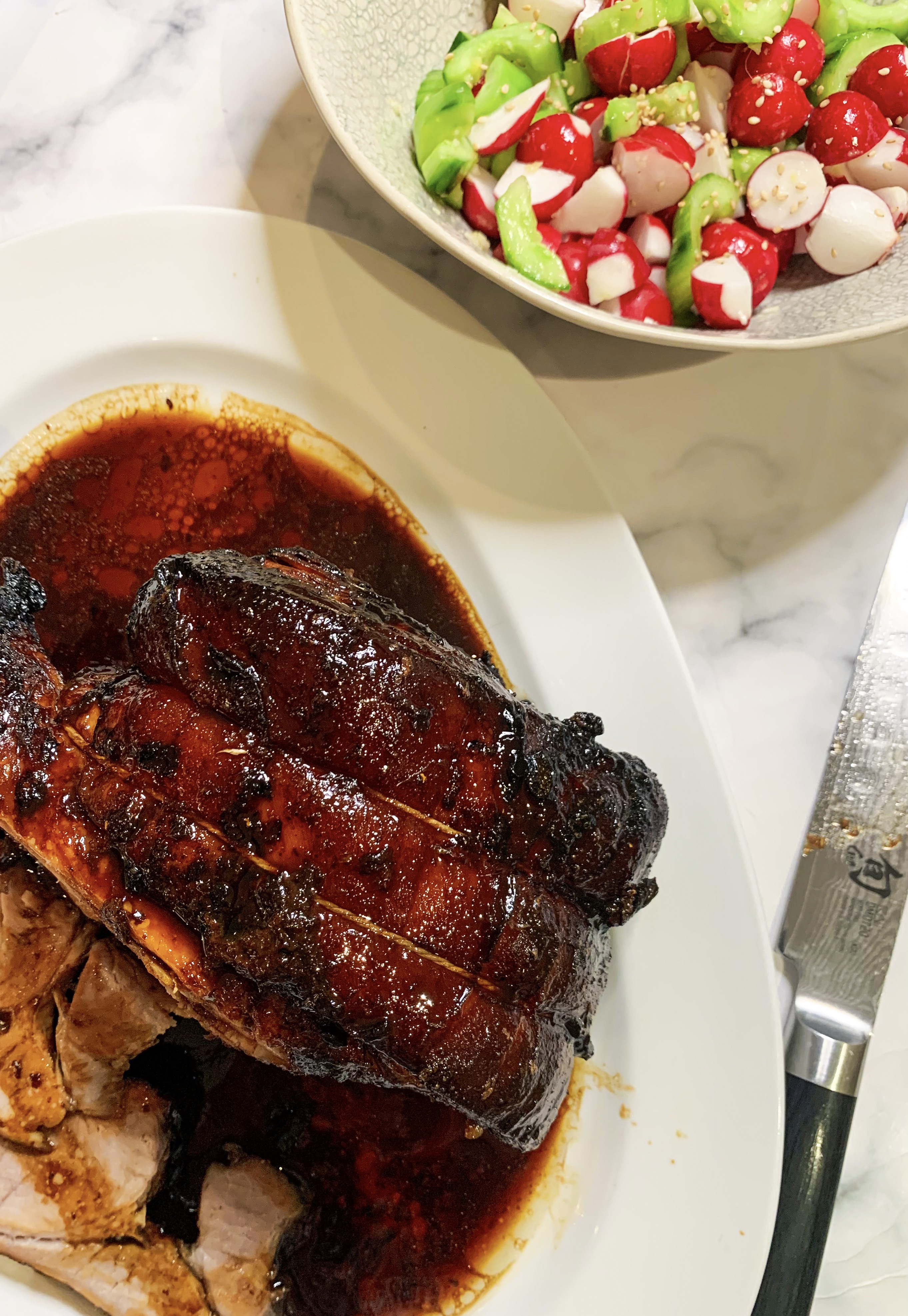
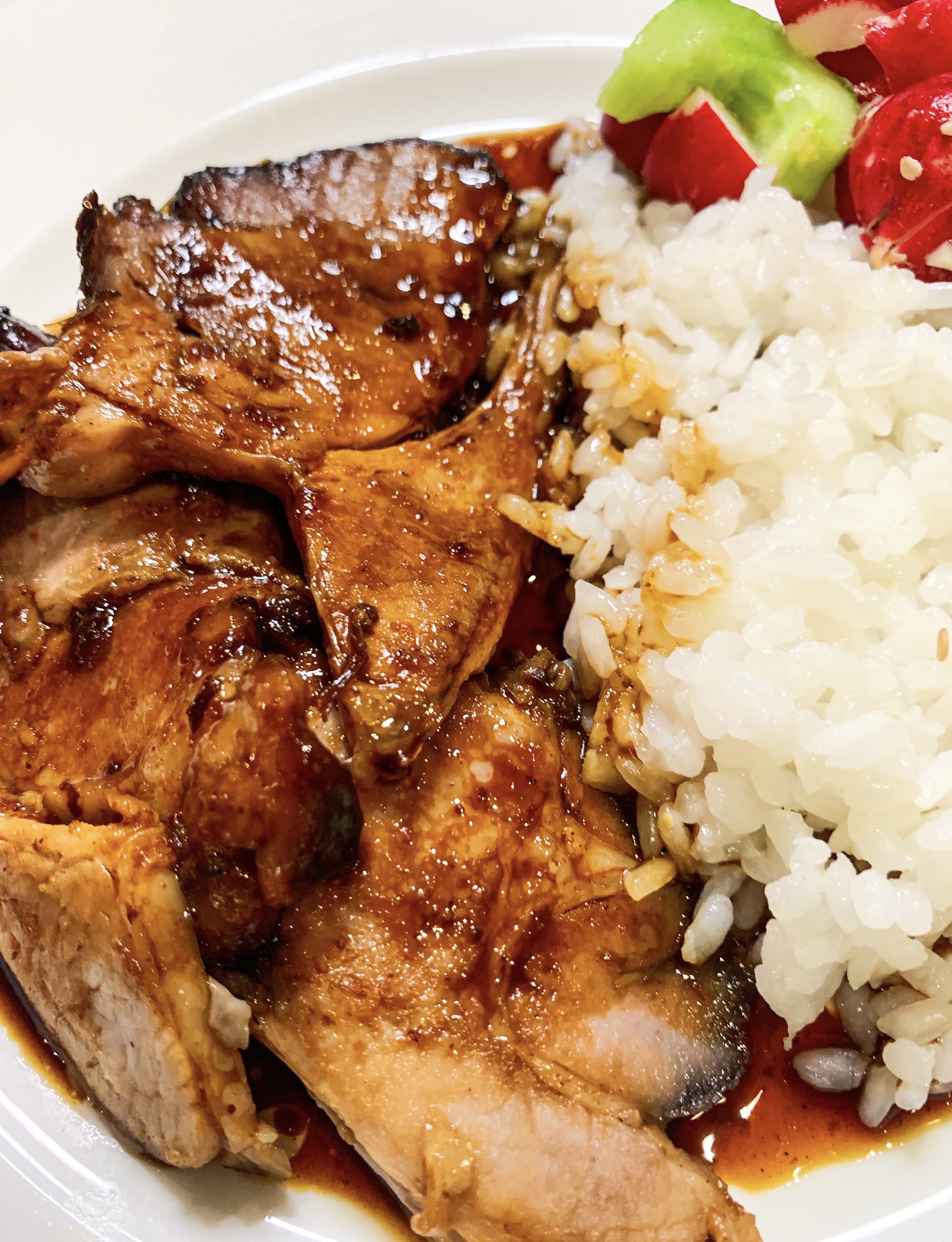
This is another wonderful recipe from Diana Henry, it’s a sweet and subtly spicy dish which everyone will love. Although the pork is cooked for over 5 hours it’s a very hassle free dish – apart from basting the meat for the last hour of cooking you simply ignore it in the oven. It makes a delicious dinner served with sticky rice and a crunchy radish and cucumber salad (recipe below). *The skin is removed from the pork but rather than discarding it why not make some pork crackling?! – recipe below…
1.9kg shoulder of pork, boned, skin removed/ fat left on (*see note above)
125ml soy sauce (gluten free if required)
125ml runny honey
125ml hoisin sauce (gluten free if required)
125ml dry sherry
2 teaspoons five-spice powder
3cm piece ginger, peeled and grated to a purée
- Mix together the ingredients to make a marinade and put this in a large Ziploc bag with the pork. Marinate in the fridge for anything from 24-48 hours.
- Bring the pork back to room temperature for an hour before you are going to cook it.
- Place the pork in a roasting tin in which it will fit snugly (if there is too much room around it the juices and marinade will run off and burn) and pour the marinade into a bowl.
- Cook the pork in a preheated oven, 120’c fan, fro 4½-5 hours or until the meat is soft and melting.
- Ladle some of the marinade over the pork and return to the oven. Keep adding more marinade and basting the pork every 10 minutes for another hour, turning the meat over each time you do this. The pork should end up dark and glossy. If the joint starts to get too dark on the outside cover it with foil.
- Serve with Radish and Cucumber salad (recipe below) and sticky rice.
Radish and Cucumber Salad (Serves 4)
3 tablespoons rice vinegar
3 teaspoons caster sugar
2cm piece of root ginger, peeled and grated
1 large garlic clove, very finely chopped
1 cold cucumber, peeled in stripes and cut in half along its length
300g radishes (a mixture of colours if possible), cut into quarters or eighths
1 teaspoon sesame oil
1 teaspoon toasted sesame seeds (or a mixture of white and black sesame seeds)
- Make the dressing by mixing the vinegar, sugar, ginger and garlic together with a pinch of salt.
- Scoop out the seeds from the cucumber and cut it into 4cm-thick pieces. Bash these with a rolling pin.
- Put the cucumber in a bowl with the dressing and chill for 20 minutes.
- Add the radishes and sesame oil, and toss the salad. Scatter the sesame seeds on top.
Best Pork Crackling
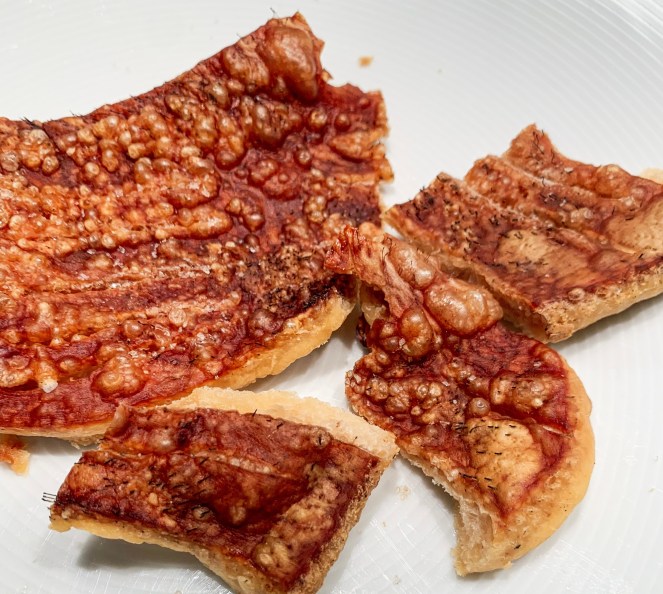
Oh yum, pork crackling, who can resist?..
Pork skin, scored
Malt vinegar (or if gluten free use cider vinegar)
Sea salt
1. Set the pork skin on a rack and pour over boiling water. The water will drain away.
2. Dry the skin, rub with vinegar and salt and set aside for 20 minutes.
3. Place the skin in a roasting tin and roast in a preheated oven, 200’c fan, for an hour, until crisp.
Cider Roasted Pork Shoulder (Serves 4)
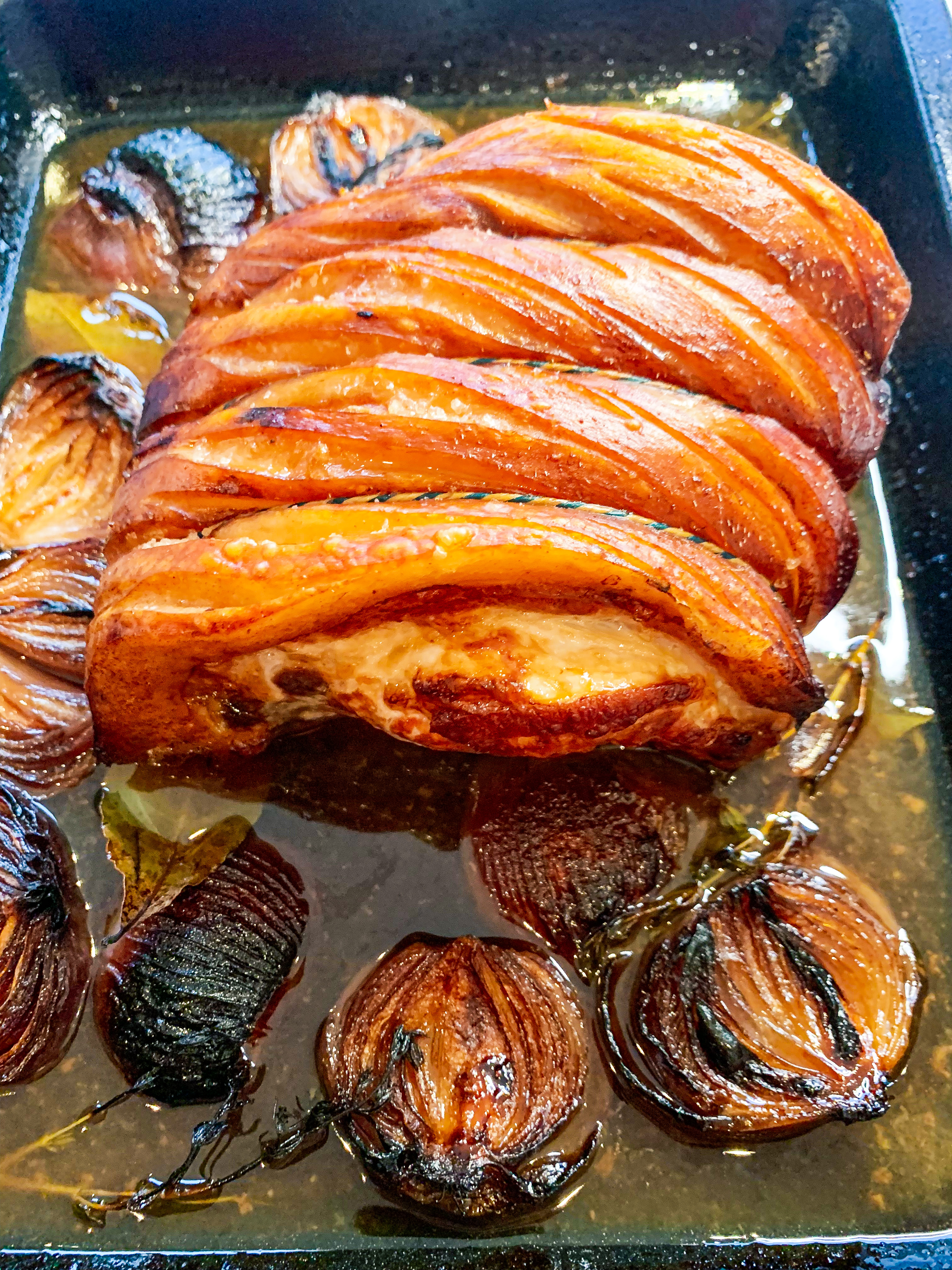
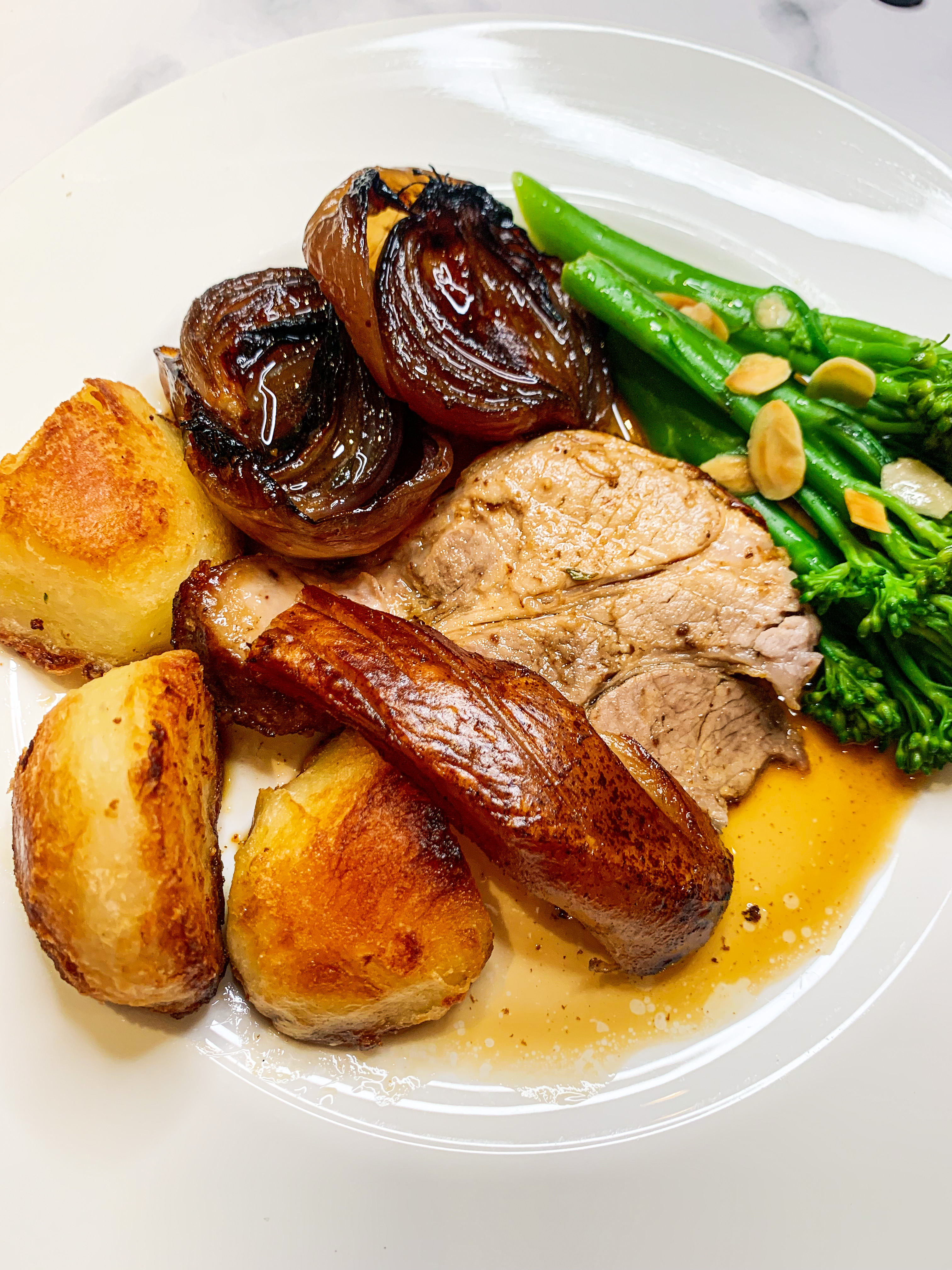
This is a recipe that simply cries to be eaten on a cold day! Pork, cider and apples how can one resist?! I found this recipe in Donna Hay’s cookbook ‘Seasons’, and as with a lot of her recipes, it’s super easy to make. This really is a recipe you need to make a note of…
1.8kg pork shoulder, tied and skin scored
Sea salt
2 tablespoons olive oil
6 red onions, peeled and halved
250ml apple juice
750ml dry cider
75g brown sugar
4 fresh bay leaves
4 sprigs thyme
- Rub the skin of the pork with the salt.
- Place the oil and onions in a deep baking dish, top with the pork and roast a preheated oven, 220’c fan, for 30 minutes.
- Place the apple juice, cider and sugar in a bowl and whisk to combine. Add the apple mixture, bay leaves and thyme to the pork (do not pour it over the skin of the pork as you want this to crisp up), cover with foil. Reduce the oven temperature to 180’c and roast for a further 2 hours.
- Remove the foil, increase the heat to 200’c and roast for a further 30 minutes or until the skin is gold and crispy.
- Remove the pork and set aside. Place the baking dish over a medium heat and cook the juices for 10 minutes or until thick and syrupy.
- Serve the pork with the juices and onions. Roast potatoes and ‘Tenderstem Broccoli with Lemon & Almonds’ are good accompaniments (recipes here).
 Menu Mistress