Week Twenty Four

It’s December!…And during these strange, uncertain times, there is at least one thing that we can be sure of…it will be Christmas soon, and of course, Christmas goes hand in hand with food! So, this week I’ve been getting my Christmas cooking list organised; even though there will be very little entertaining going on at home this year, I don’t see any reason why Nick, Felix and I can’t enjoy the menus I normally like to cook when entertaining for friends and family. Although I love cooking, I don’t necessarily like overcomplicated recipes, this definitely applies to those which I cook when I’m entertaining, I like dishes which don’t need too much last minute attention. So, over the next few weeks I thought that I would share a few of these recipes, which are equally suitable for midweek family meals as they are for special occasions.

This week’s Menu One is a fine example of a recipe which can be cooked easily for a midweek meal but is also special enough to be served as a festive treat, Duck breasts with Pomegranate and Walnuts. I think that I have mentioned before, that I like duck breasts as a midweek meal as they are so quick to cook – once the fat is rendered in a frying pan they just need about 10 minutes in the oven. The pomegranate and walnut sauce in this weeks recipe is also extremely quick to cook, so it really is an ideal midweek meal! I like to serve it with spinach and dauphinoise potatoes or if time is of essence, steamed potatoes.

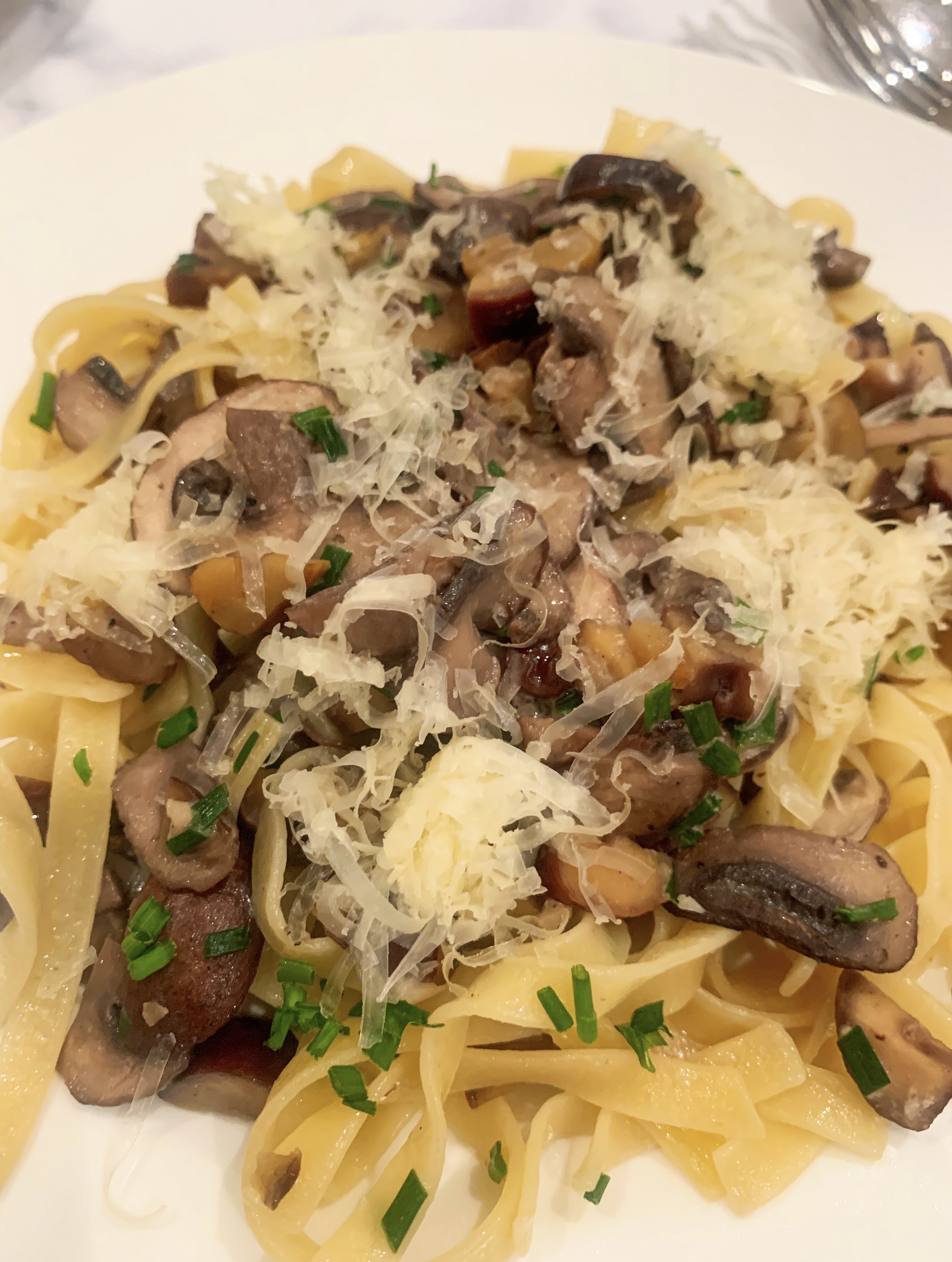
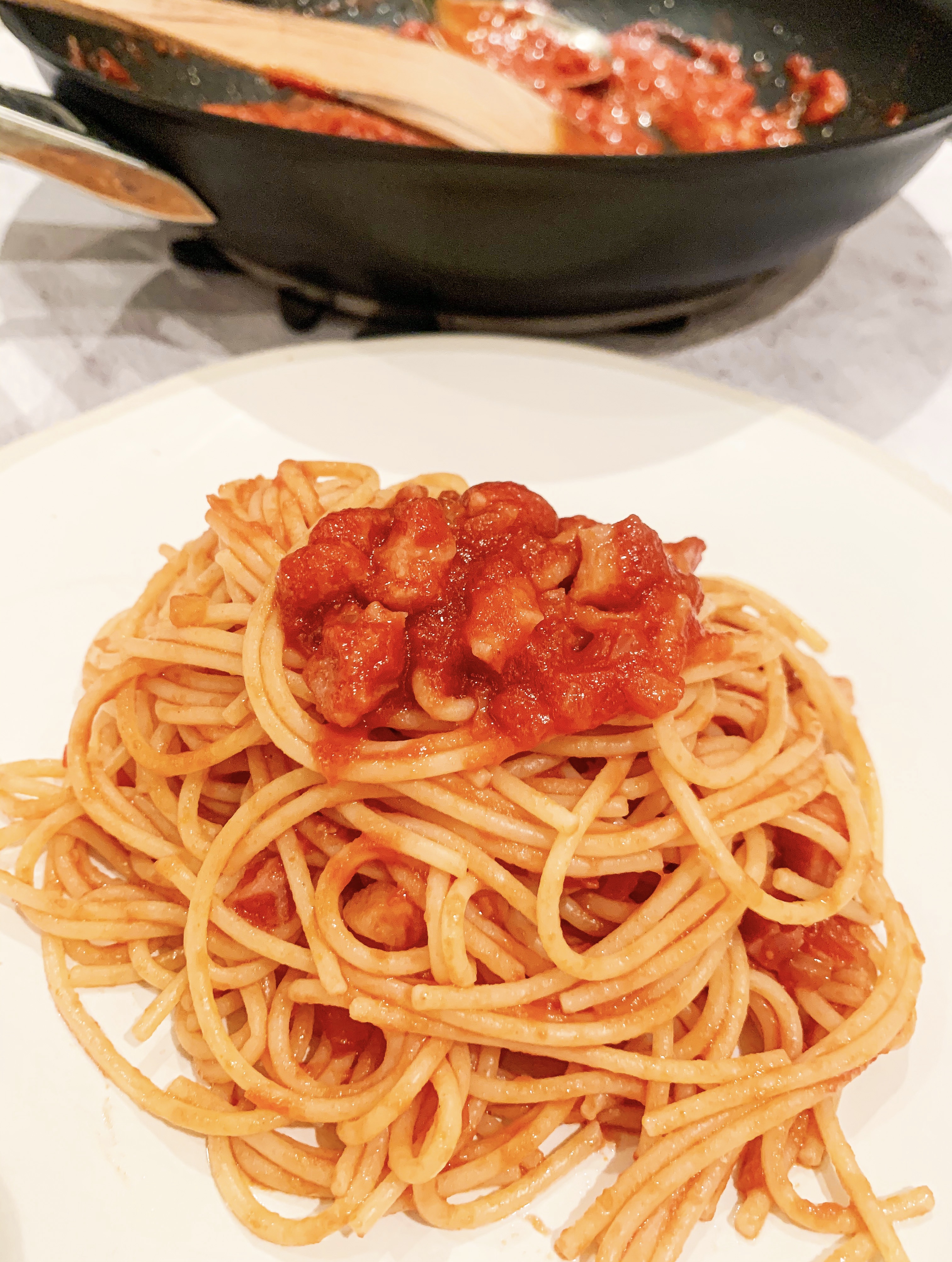
Menu Two is a good family midweek pasta dish, Tagliatelle with Mushrooms and Chestnuts. It is a s a lovely winter vegetarian pasta recipe, I must admit that I often over indulge with rich meat dishes over the Christmas period so this recipe offers some light relief. Finally, Menu Three is another pasta dish, this one has an ‘Amatrice’ Style Sauce with pancetta and tomato, it is a real crowd pleaser and can be made in around 15 minutes, so it is a good recipe to have on your Christmas cooking list for a casual supper.

Who knows what Christmas will be like this year under the Covid conditions, but I think that even if we can’t entertain in the usual numbers, we can, without doubt, continue to enjoy the treat of some good food, and this week’s recipes are definitely the perfect starting point!…

Have a great week and enjoy cooking!

Menu One

Duck Breasts with Pomegranate & Walnuts served with Sautéed Spinach and Dauphinoise Potatoes (Serves 4)
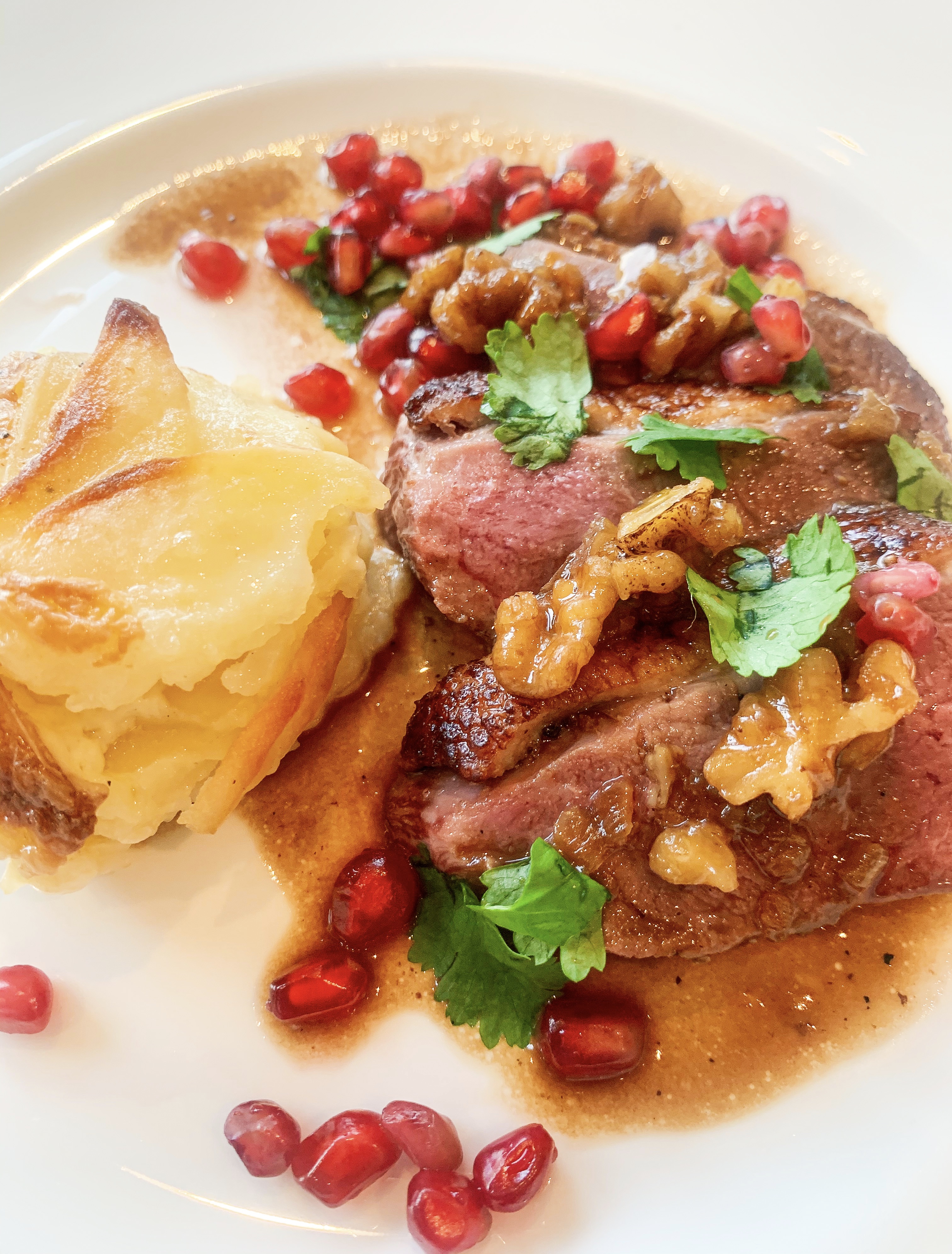
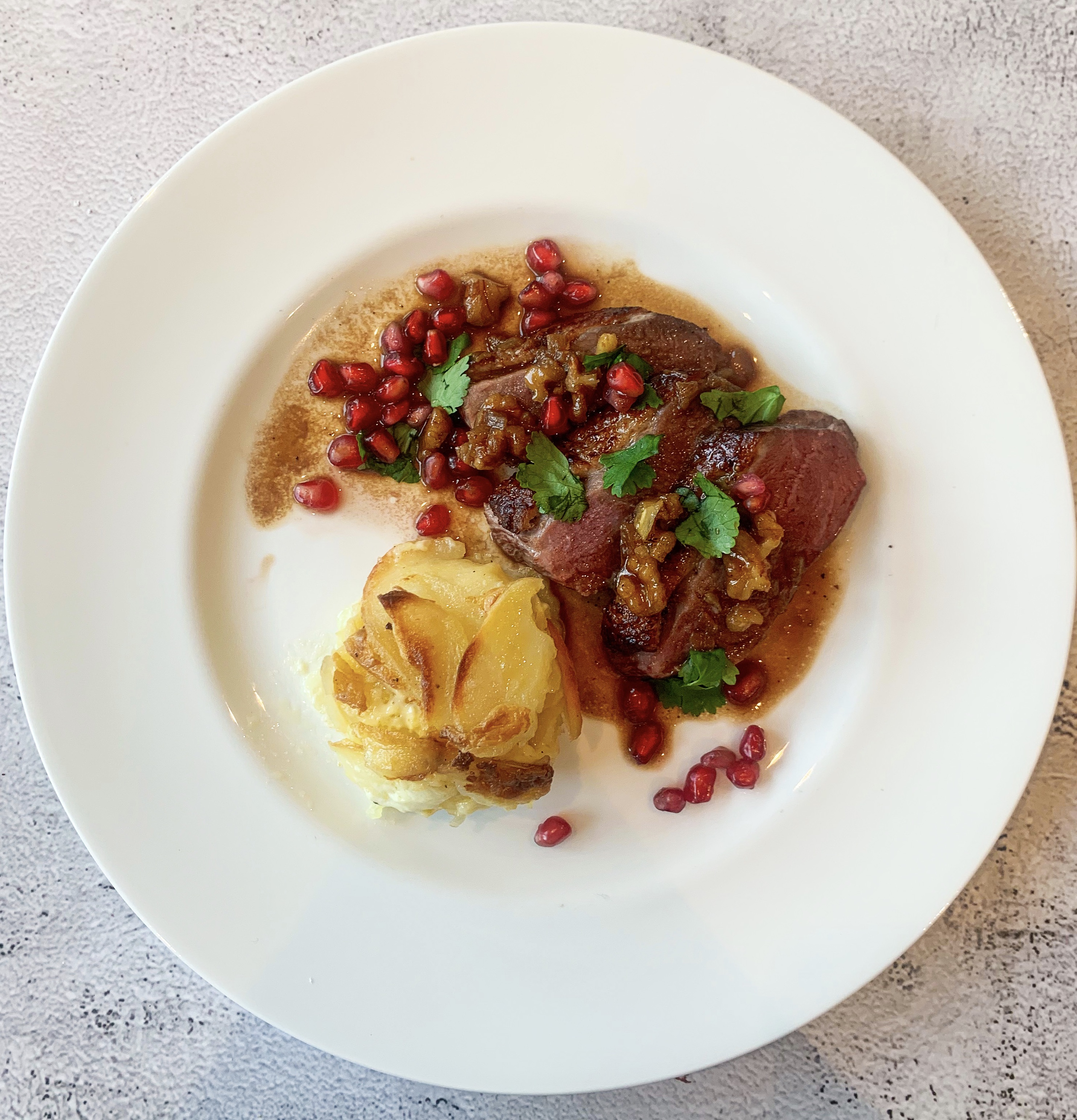
This is such an easy, quick recipe but it looks so special that one would think you had spent hours in the kitchen – definitely my kind of recipe!! I like to serve it with sautéed spinach, which is super quick to make, and depending on time and the occasion, either with dauphinoise potatoes (I prefer the recipe without cheese for this dish) or steamed potatoes. The garnish of the coriander leaves and pomegranate seeds is very important, as they give the dish a lovely fresh, sweet tangy finish! I like to serve the duck breasts quite pink, but if you prefer them more well done, cook for a little longer.

4 duck breasts

2 medium onions, finely chopped

125g walnuts, roughly chopped

6 tablespoons pomegranate molasses

2 cloves garlic, crushed

200ml chicken stock

Coriander leaves to garnish

Pomegranate seeds to garnish

Sea salt and black pepper

  1. Score the skin of the duck breasts, through the fat but not all the way through to the flesh,and salt them.
  2. Place the breasts in a dry frying pan, skin side down, over a low heat to render down most of the fat, this may take as much as 10-15 minutes. When the fat is rendered, turn up the heat to crisp up and brown the skin (about 2 minutes). Finally, turn over to sear the underside for minute or so.
  3. Place the duck breasts on a baking try and place in a preheated oven, 200’c fan, for 8-10 minutes (see note above)
  4. Meanwhile remove half the duck fat from the frying pan, add the onion with a pinch of salt, cook until soft and lightly golden. Add the garlic and cook for a further minute or so.
  5. Add the chicken stock, pomegranate molasses, walnuts and some seasoning to the pan, simmer for 5 minutes.
  6. Once the duck is cooked allow it to rest for 5 minutes before slicing.
  7. Serve on plates with the sauce and sprinkled with pomegranate seeds and coriander leaves.

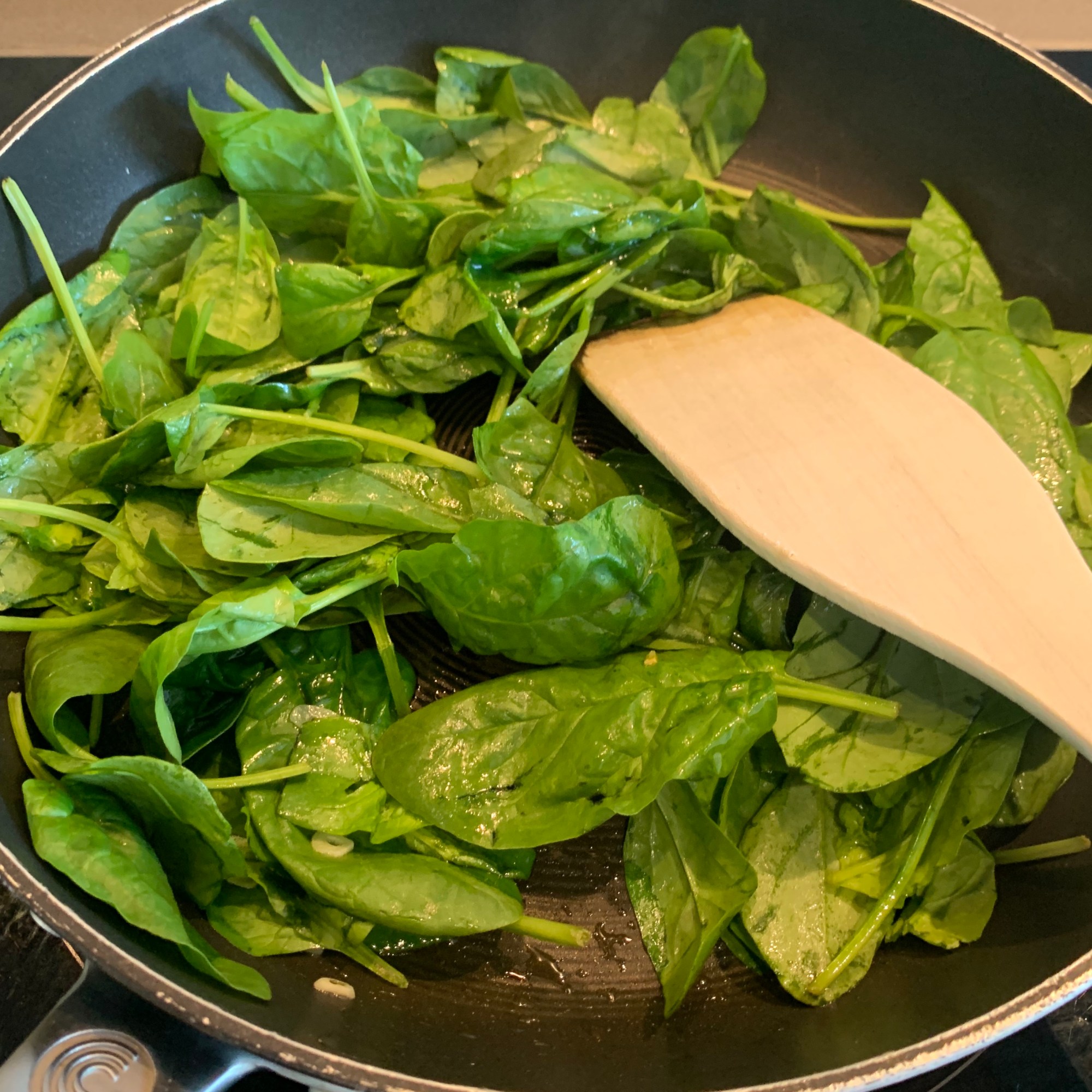
Staple Side Dish – Sautéed Spinach with Garlic (Serves 4)
2 large bunches of baby spinach (washed) – about 400g

Olive oil

2 cloves of garlic, sliced

Sea salt and black pepper

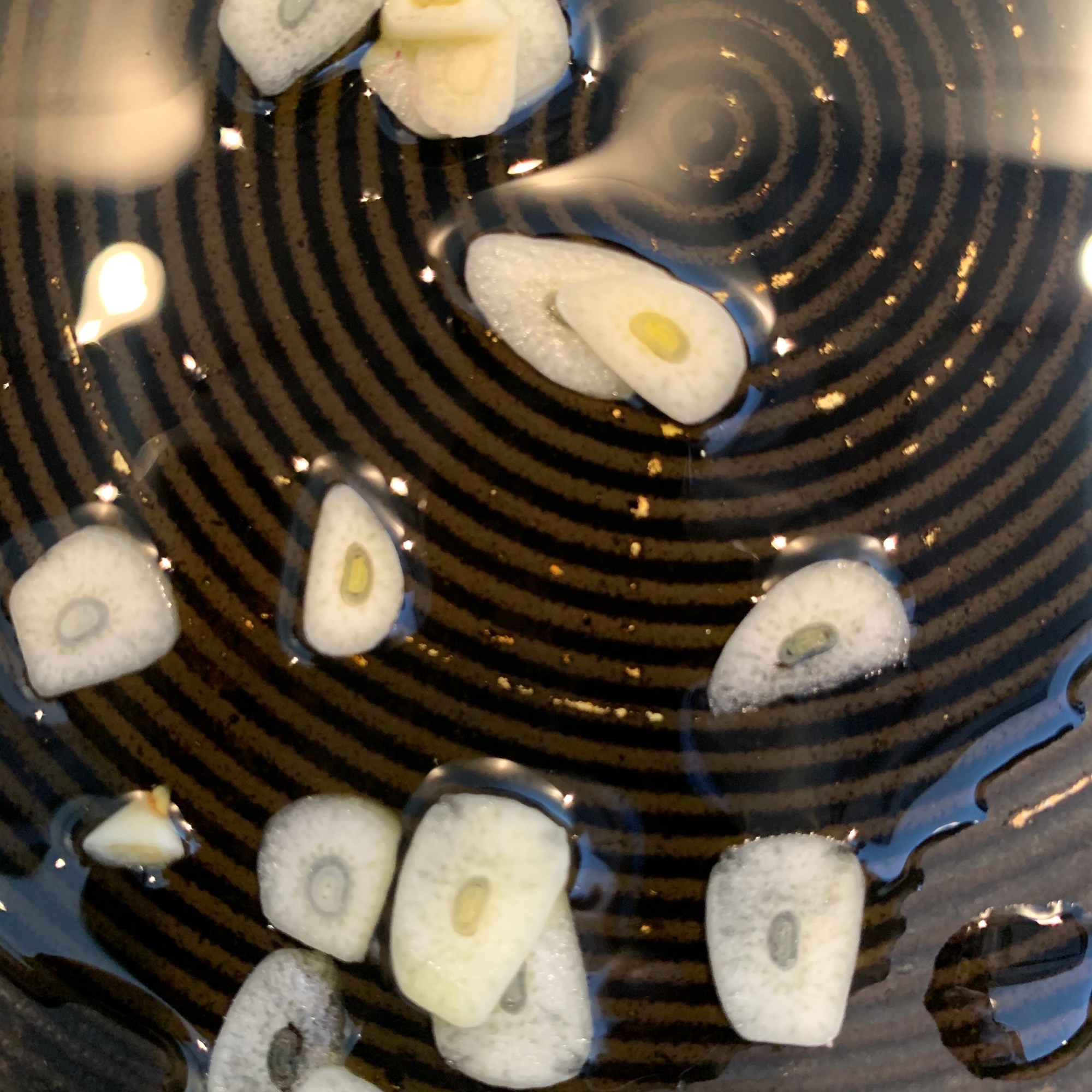
  1. Heat 2 tablespoons of olive oil in a large frying pan. Add the garlic and sauté for about 1 minute until the garlic is beginning to brown.
  2. Add the spinach, turning it over to coat in the olive oil. Place a lid over the pan and cook for 1 minute. Remove the lid and stir. Return the lid and cook for a further minute.
  3. The spinach should now be wilted, add a drizzle of olive oil, season with salt and pepper, and serve.

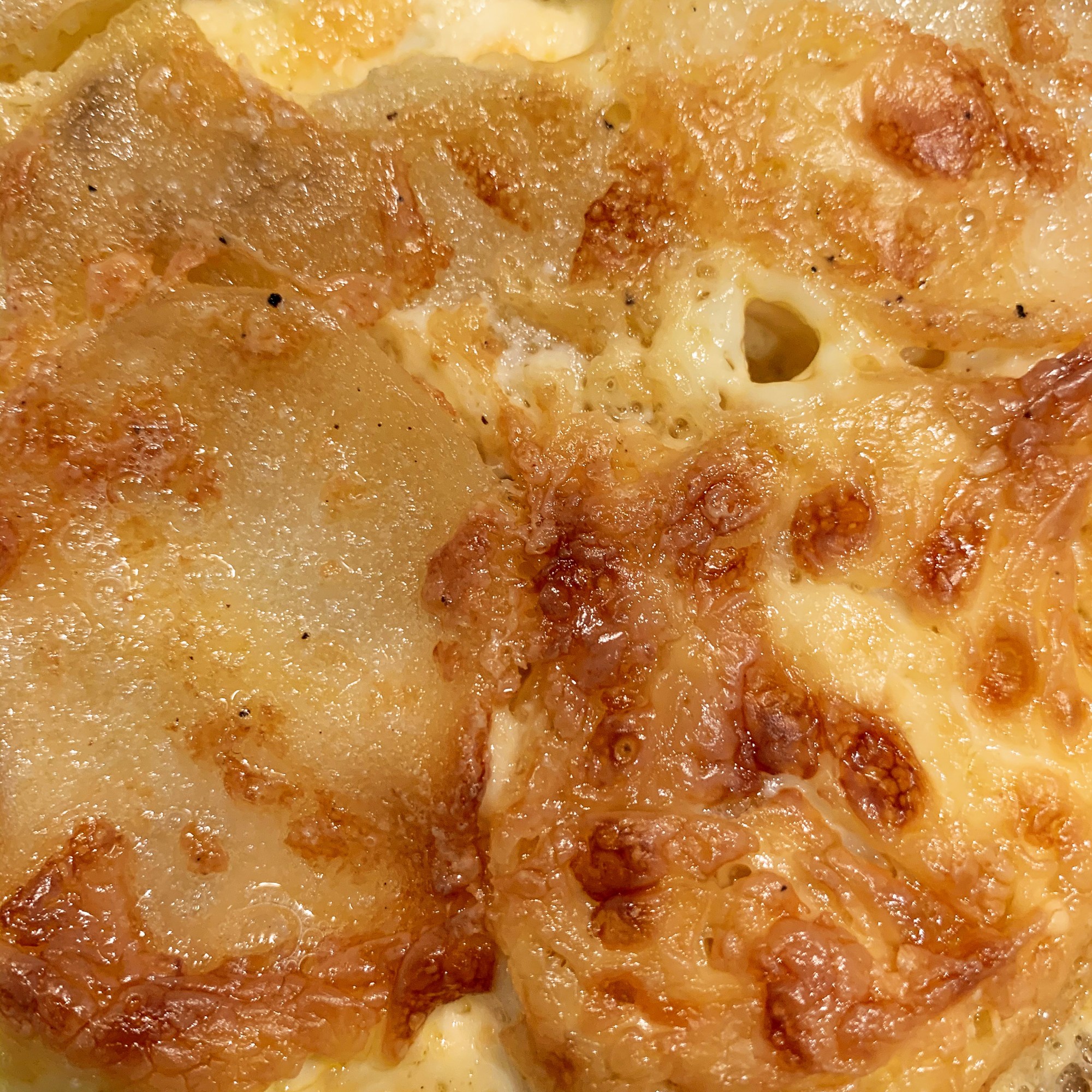
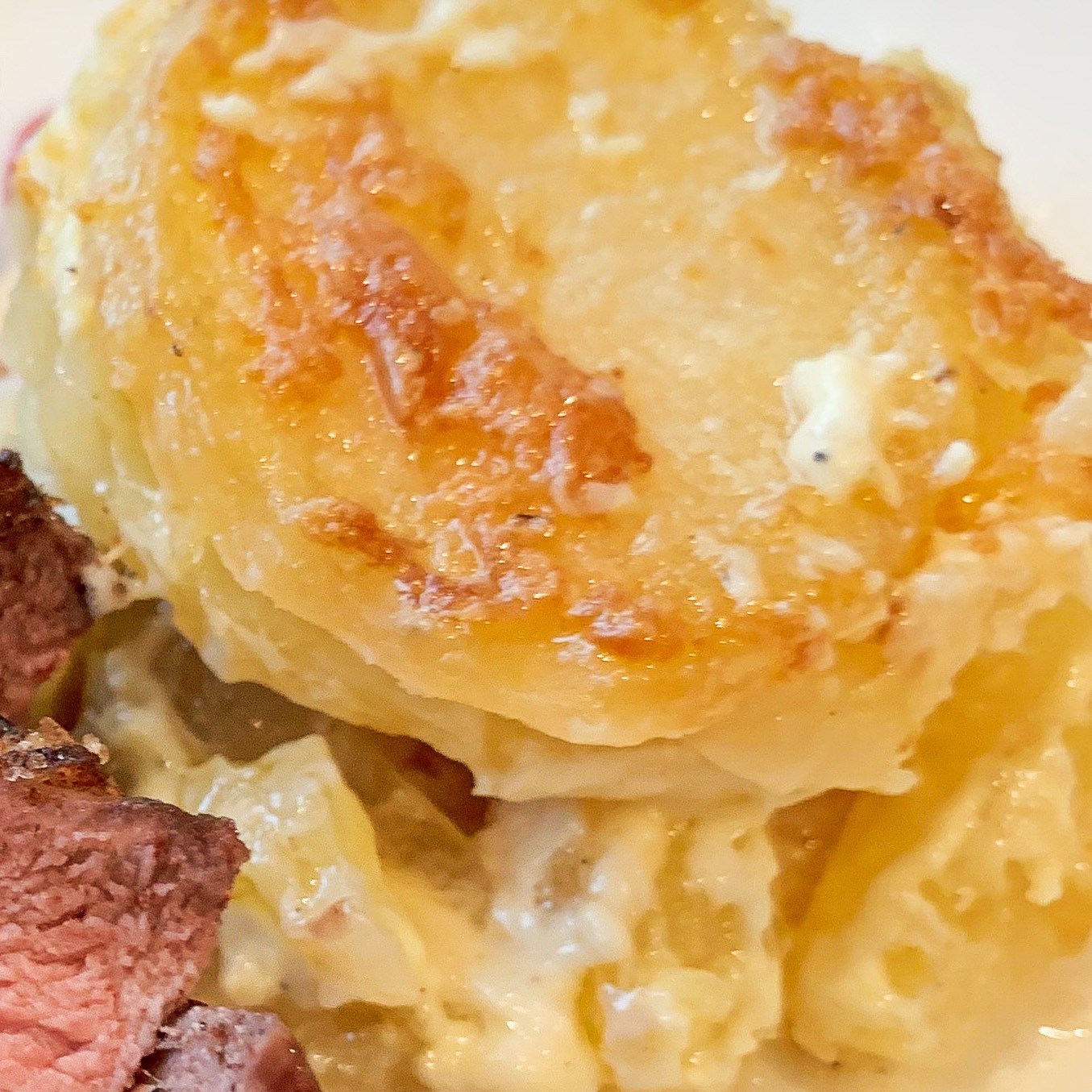
Staple Side Dish -Simple Dauphinoise Potatoes (without cheese) Serves 4
15g butter

1kg floury potatoes, such as Maris Piper

400ml double cream

2 large garlic cloves, crushed

¼ teaspoon freshly grated nutmeg

Sea salt and black pepper

  1. Rub a gratin dish liberally with the butter.
  2. Peel the potatoes and slice them thinly.
  3. In a large bowl whisk together the cream, garlic, nutmeg and season well with salt and pepper. Toss the potatoes in this cream mixture.
  4. Layer the potatoes in the gratin dish, spreading them flat and evenly, pour over any remaining cream.
  5. Place in a preheated oven, 160’c fan, for 1 – 1 hour 15 minutes. Every 15 minutes or so press the down the potatoes with a spatula to stop them drying out. The gratin is ready when the top is golden and bubbling, and the potatoes are tender. You may want to turn up the oven to 190 -200’c for the last 5 minutes of cooking to achieve an extra golden crisp.

Menu Two

Tagliatelle with Mushrooms & Chestnuts (Serves 4)
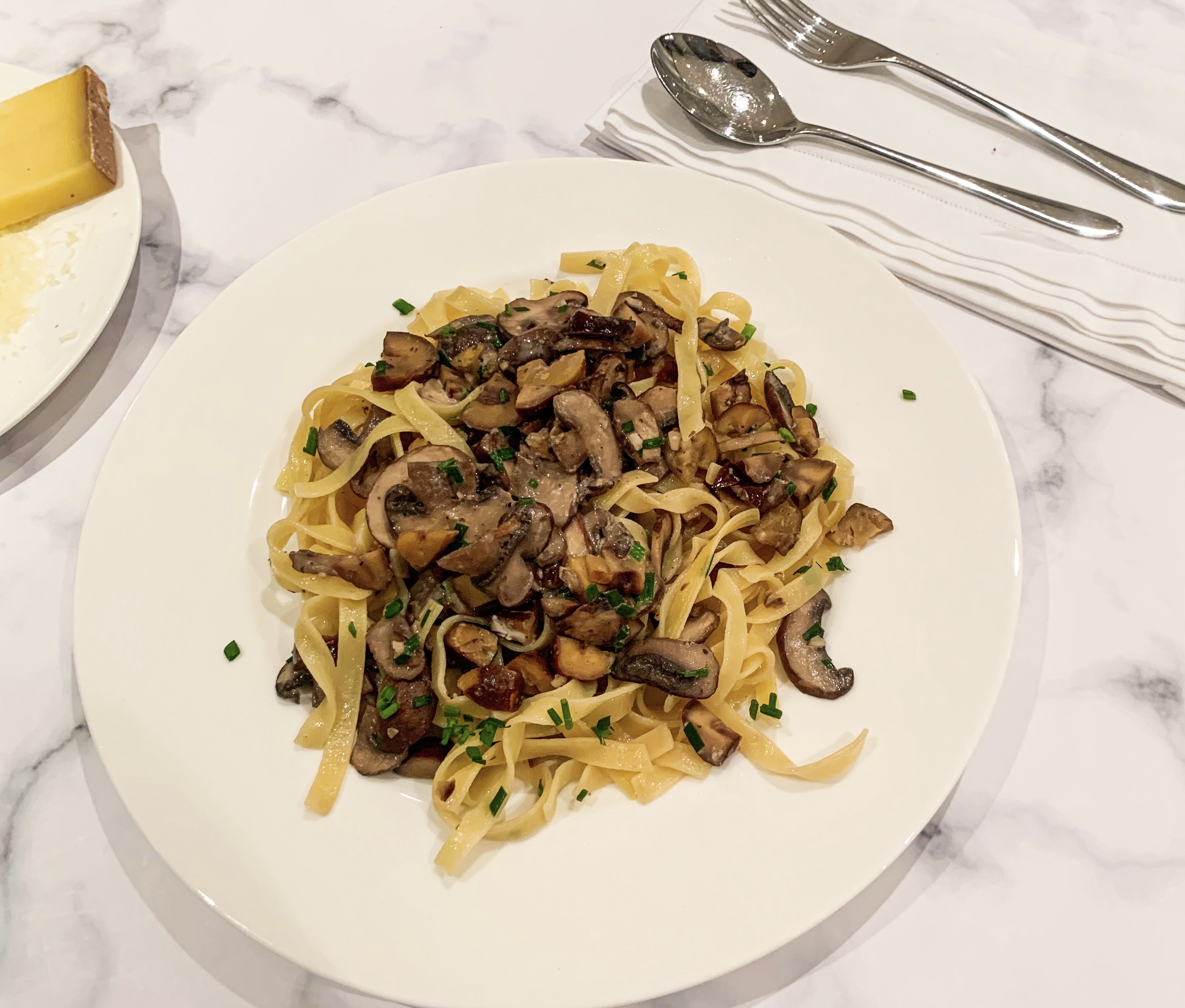
This is a beautiful pasta recipe with lovely earthy flavours. It is particularly comforting during the winter months, however I cook it all year round as we like it so much. Unusually this pasta dish calls for Comté cheese to be grated over it, it really is a delicious addition, complementing the sweetness of the chestnuts. I use the vacuum packed bags of cooked and peeled chestnuts – ‘Merchant Gourmet’ is a good brand. It is worth investing in a quality bottle of truffle oil for this recipe, as it really does enhance the flavour.

This recipe is from one of my favourite cookbooks ‘Nina St Tropez’ by Nina Parker.

4 tablespoons olive oil

500g chestnut mushrooms, sliced

400g tagliatelle (gluten free if required)

4 cloves garlic, finely diced

150g cooked chestnuts chopped (see note above)

4 tablespoons fresh chives, chopped

2 tablespoons crème fraiche

4 tablespoons truffle oil

Comté cheese, grated to serve

Sea salt and black pepper

  1. Heat the olive oil in a large frying pan, add the mushrooms and cook until they have shrunk in size by about a half.
  2. Add the garlic to the mushrooms and let it cook for a few minutes before adding the chestnuts and seasoning generously.
  3. Meanwhile cook the tagliatelle according to the instructions on the packet until al dente.
  4. Before draining the pasta, add about three or four spoonfuls of pasta cooking water to the mushroom mixture to loosen it.
  5. Finally add the drained tagliatelle to the mushrooms along with the chives, crème fraiche and truffle oil, taste to check the seasoning.
  6. Sprinkle with cheese and serve!

Menu Three

Amatrice Style Pasta – All’Amatriciana (Serves 4)
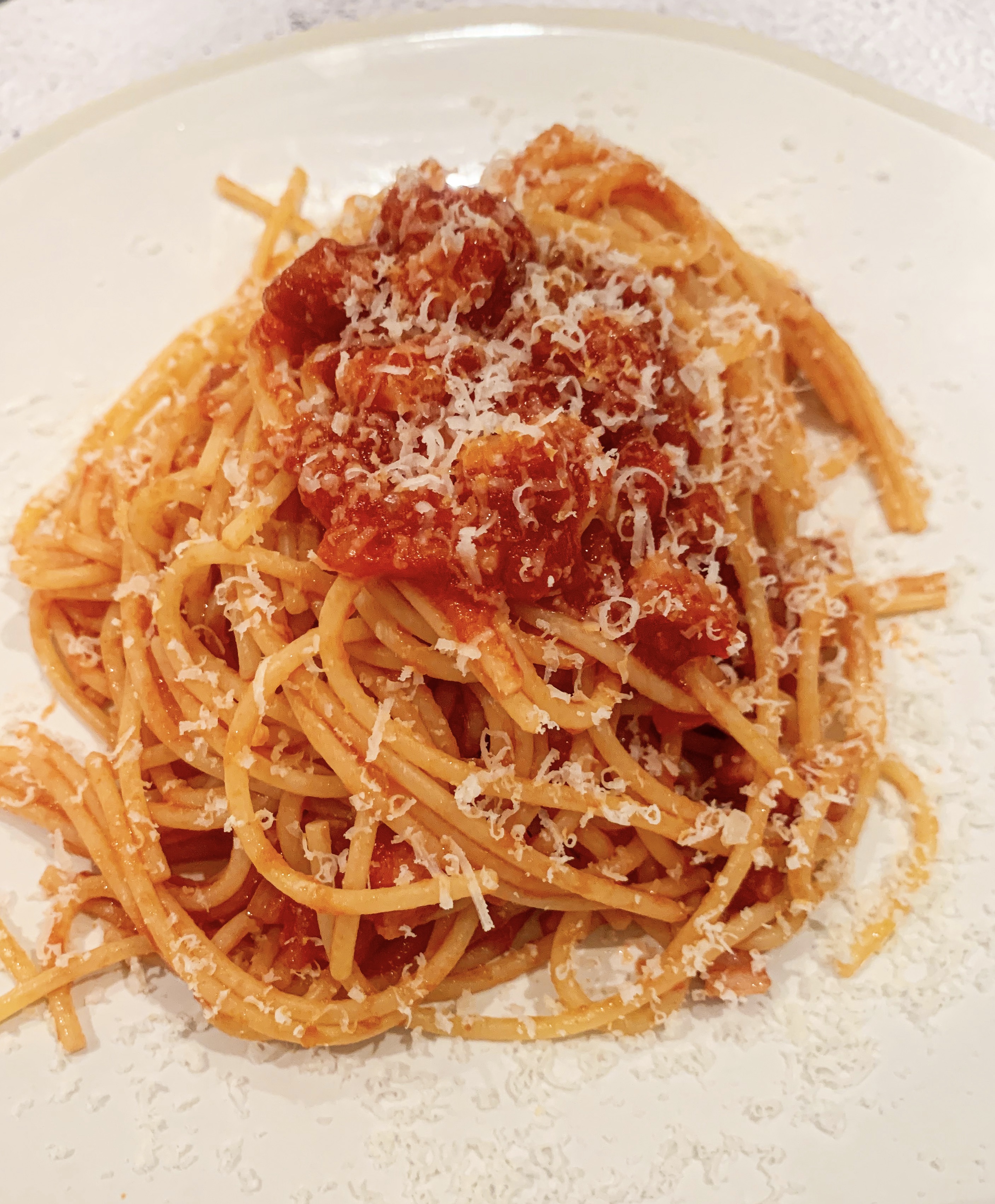
This is a great sauce for pasta, traditionally served with bucatini, but also, in my opinion, great with spaghetti, or dare I say it penne (I’m sure some Italians would disagree!). Whatever pasta you choose, I can assure you it will be a very delicious sauce, ready in 15 minutes – it’s a great crowd pleaser! The recipe calls for Pecorino cheese rather than the traditional Italian Parmesan cheese, Pecorino is saltier and gives this dish a tangy flavour which I particularly like, but you could substitute it for Parmesan if you wish.

This recipe is taken from Antonio Carluccio’s cookbook ‘Passion for Pasta’.

3 tablespoons olive oil

150g diced pancetta

1 small onion, chopped

1 small chilli pepper, chopped

450g tomato passata

400g bucatini pasta or spaghetti (see note above)

50g freshly grated Pecorino cheese (or Parmesan cheese – see note above)

  1. Heat the oil in a frying pan, fry the pancetta, the onion and chilli for 3-4 minutes until slightly brown.
  2. Add the tomatoes and cook for 10-15 minutes.
  3. Meanwhile cook the pasta according to the instructions on the packet until al dente.
  4. Drain the pasta and mix with the sauce.
  5. Serve sprinkled with the grated cheese.
Week Twenty Three

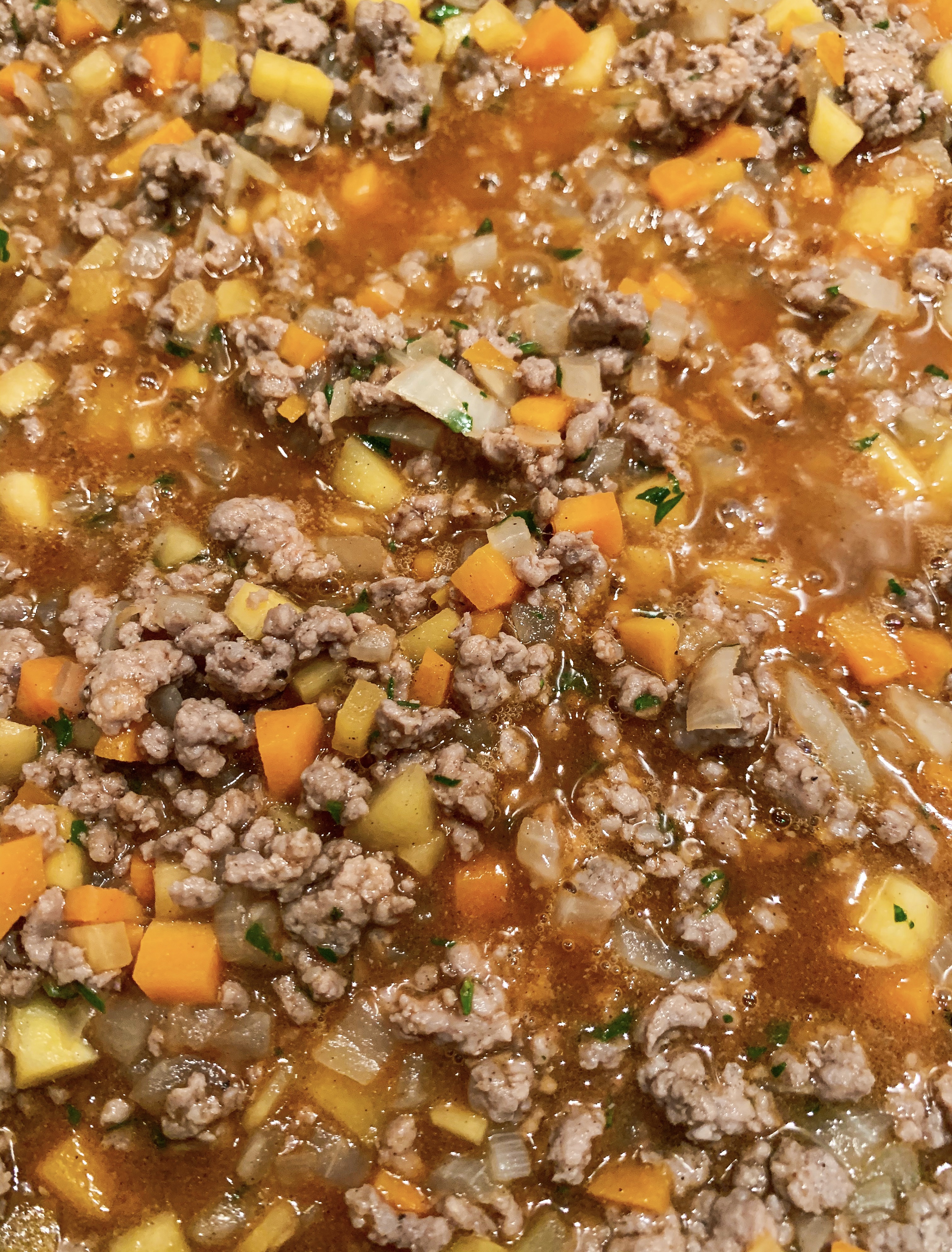
This week’s recipes have been a family collaboration. At the weekend I had a Zoom dinner party with my sister, you may remember that I did my first Zoom dinner party, following the last lockdown, back in July, and was surprised at how successful and enjoyable it had been. So, my sister and I thought that we would have another one during this second lockdown. We once again decided on a menu which would be easy to prepare beforehand and one which would allow us to synchronise the cooking times during our ‘Zoom reunion’. This time we chose to cook my favourite Shepherd’s Pie, a Delia Smith recipe which is topped with leeks and cheese, making it that extra bit special. For dessert we both made the same delicious Chocolate Almond Torte served with strawberries and a dollop of cream. We also shared a cheeky cocktail, an Amaretto Sour, a simple cocktail recipe which I found online.

This week, I am sharing these recipes, plus, in keeping with the ‘family collaboration’, I am also sharing a recipe which my sister has been cooking for years and one which she suggested that I try and test for Menu Mistress – consequently I have discovered a winning recipe, ‘Salmon with Chilli Ginger Sauce’… thank you, Michelle, for the tip! In fact that reminds me, to remind all of you out there, that if you have a favourite recipe please share it with me…you can message me privately through the link on my Contact Page, I just need to know its name and author, and I will search it out!

Anyway, have a great week with these family recipes!…

Menu One

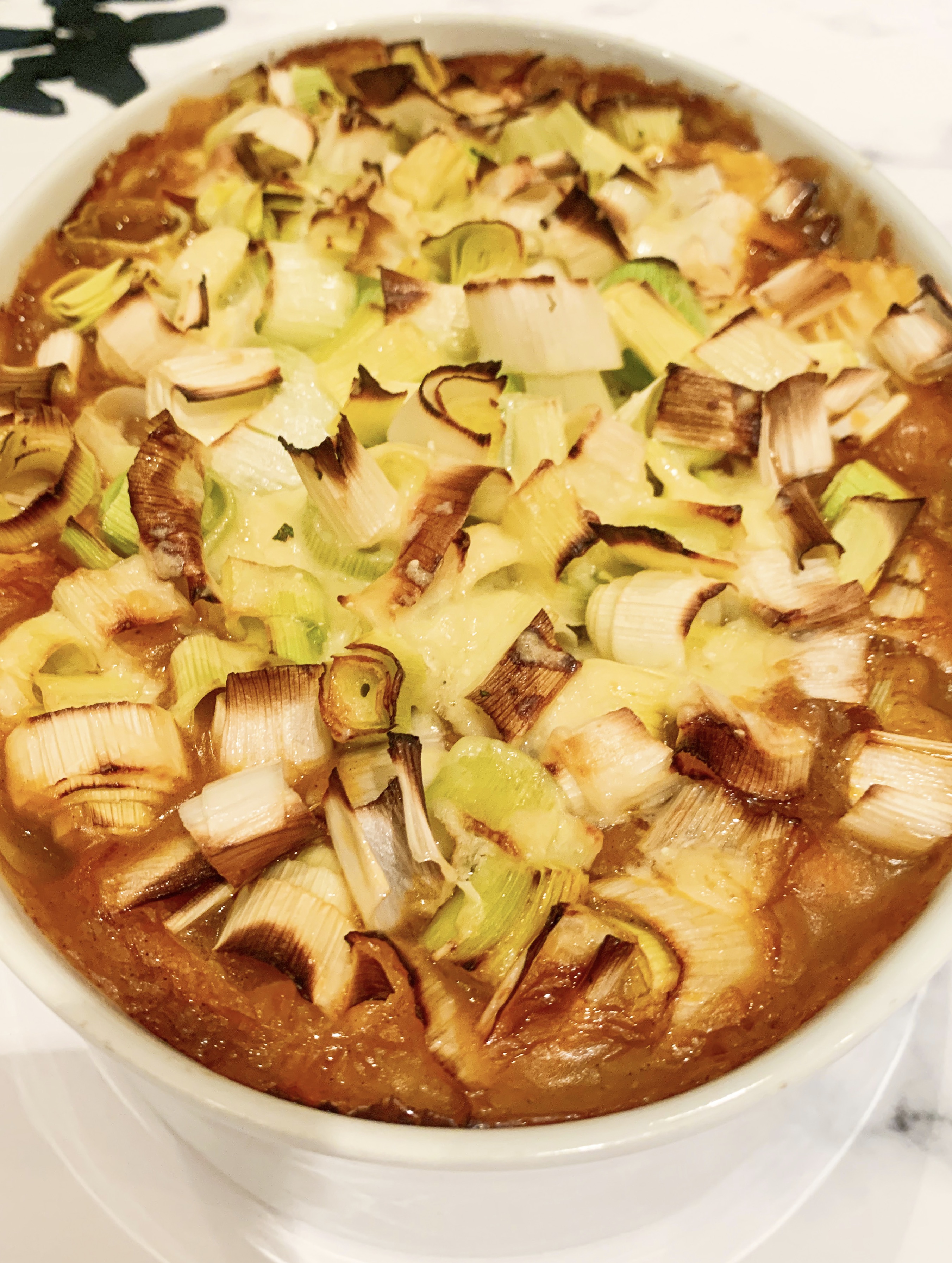
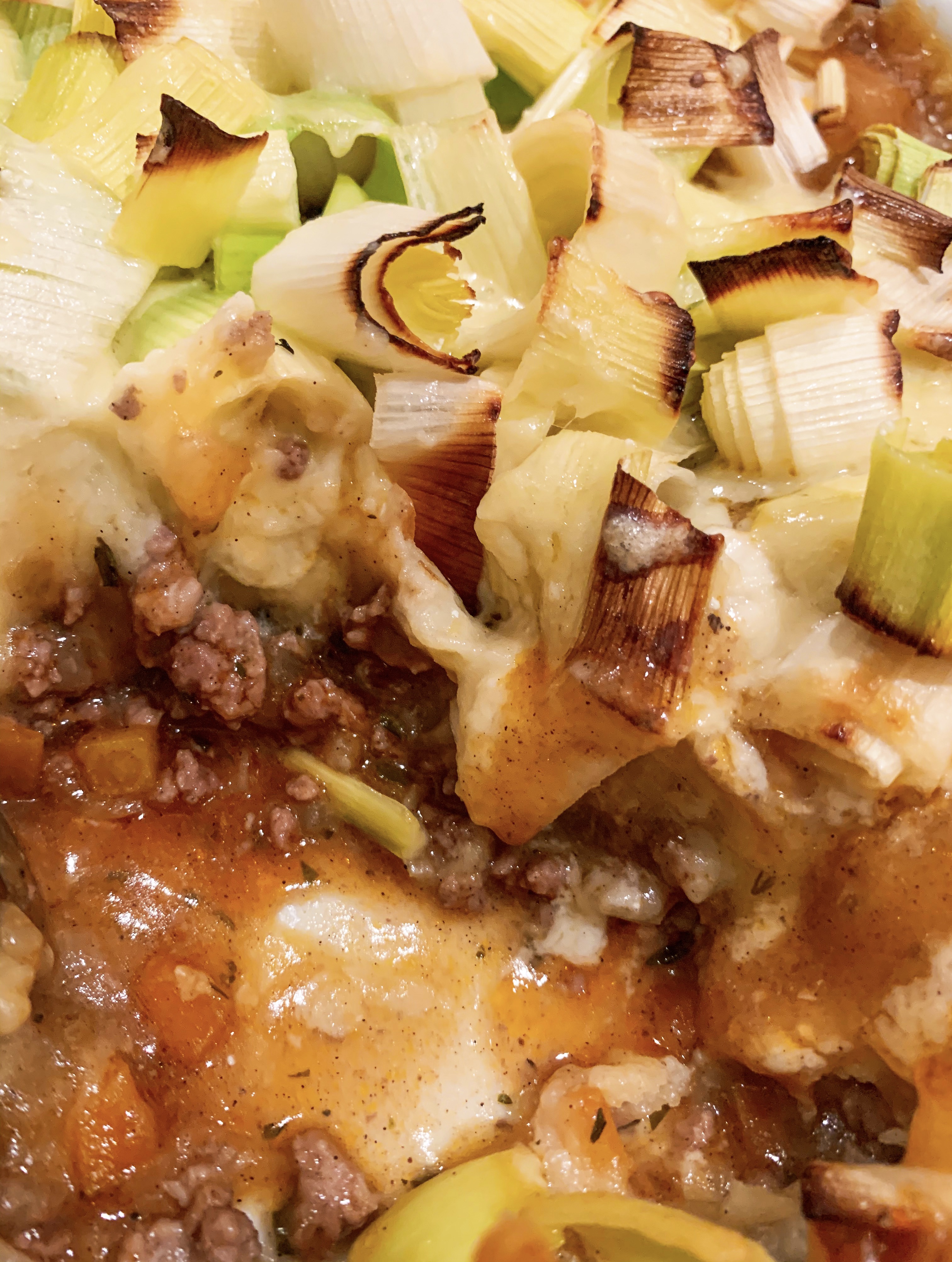
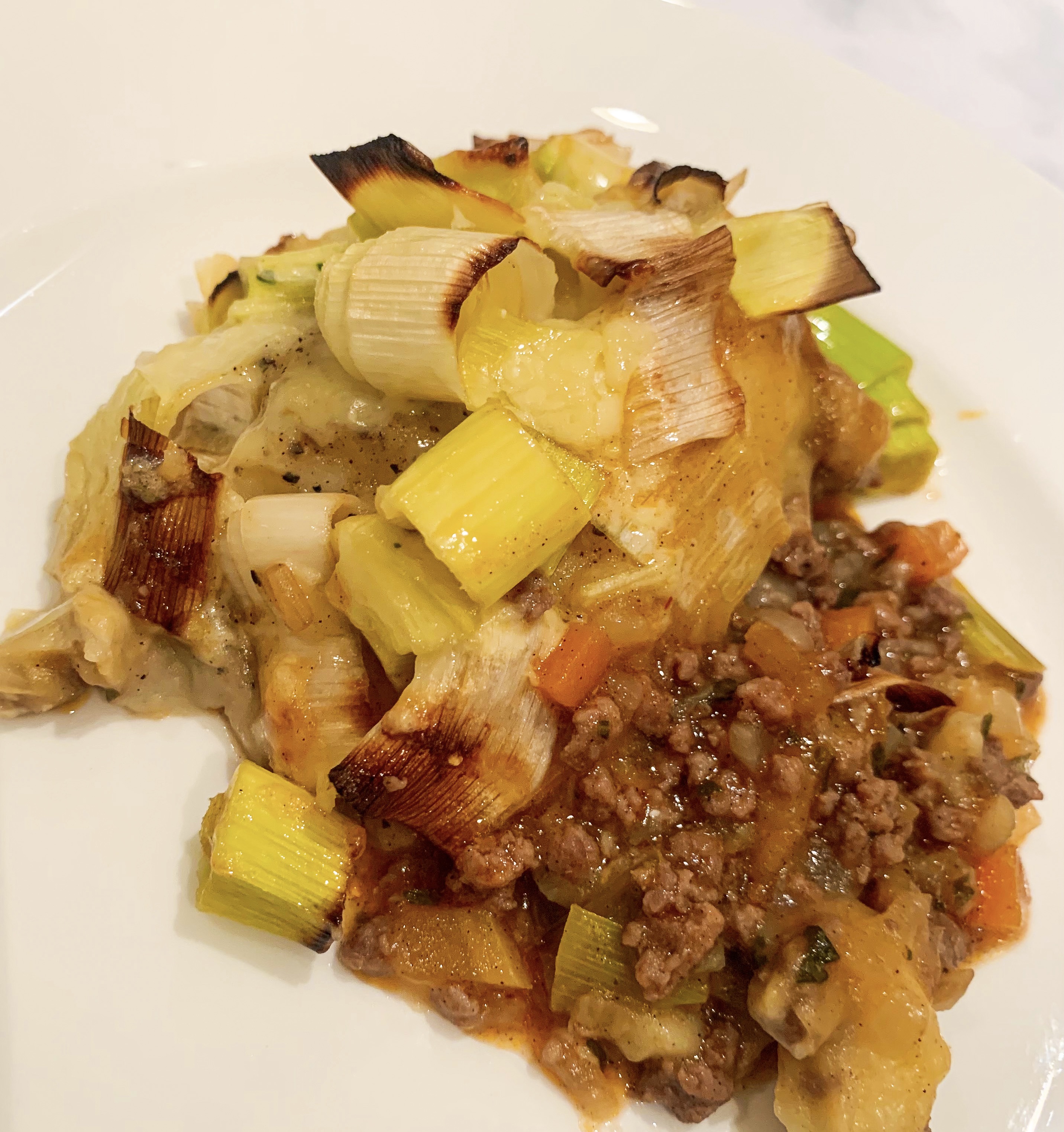
‘My Favourite’ Shepherds Pie (Serves 4)

If you have grown up in the British Isles there is no doubt that you have eaten numerous variations of this traditional dish. Shepherds pie is the perfect winter comfort food, and this recipe by Delia Smith is my all time favourite, the addition of the cheese and leeks, slightly caramelised on top of the mashed potato, takes the dish to a higher level!…Serve simply with peas.

450g minced lamb

1 tablespoon olive oil

2 medium onions, chopped

75g swede, peeled and chopped

75g carrot, peeled and chopped

½ teaspoon ground cinnamon

1 teaspoon fresh thyme

1 tablespoon fresh parsley

1 tablespoon plain flour (gluten free if required)

275ml lamb stock

1 tablespoon tomato purée

Salt and black pepper

For the topping:

50g mature Cheddar, grated

2 medium leeks, cleaned and cut into 1cm slices

900g floury potatoes (such as Maris Piper or King Edward)

50g butter

Salt and black pepper

(You will need a buttered baking dish approx. 19cm square x 5cm deep)

  1. Gently heat the olive oil in a frying pan. Add the onions, fry for 5 minutes until slightly browned. Add the chopped carrot and swede and cook for a further 5 minutes. Remove all the vegetables to a plate.
  2. Now turn up the heat, and brown the meat, stirring to break it up.
  3. Add a good seasoning of salt and pepper, return the vegetables to the pan along with the cinnamon, thyme and parsley. Next stir in the flour and gradually add the lamb stock, stirring to incorporate. Finally stir in the tomato purée.
  4. Cover the pan with a lid and turn the heat to low, cook gently for about 30 minutes .
  5. While the meat is cooking, make the topping. Peel the potatoes and cut into even sized chunks, steam until they are completely tender.
  6. Drain the cooked potatoes and mash with the butter and some seasoning (you can use an electric hand whisk, on a low setting, to do this)
  7. When the meat is ready, spoon into a baking dish, level it out, then top, evenly, with the mashed potato. Sprinkle over the leek slices and finally with the cheese.
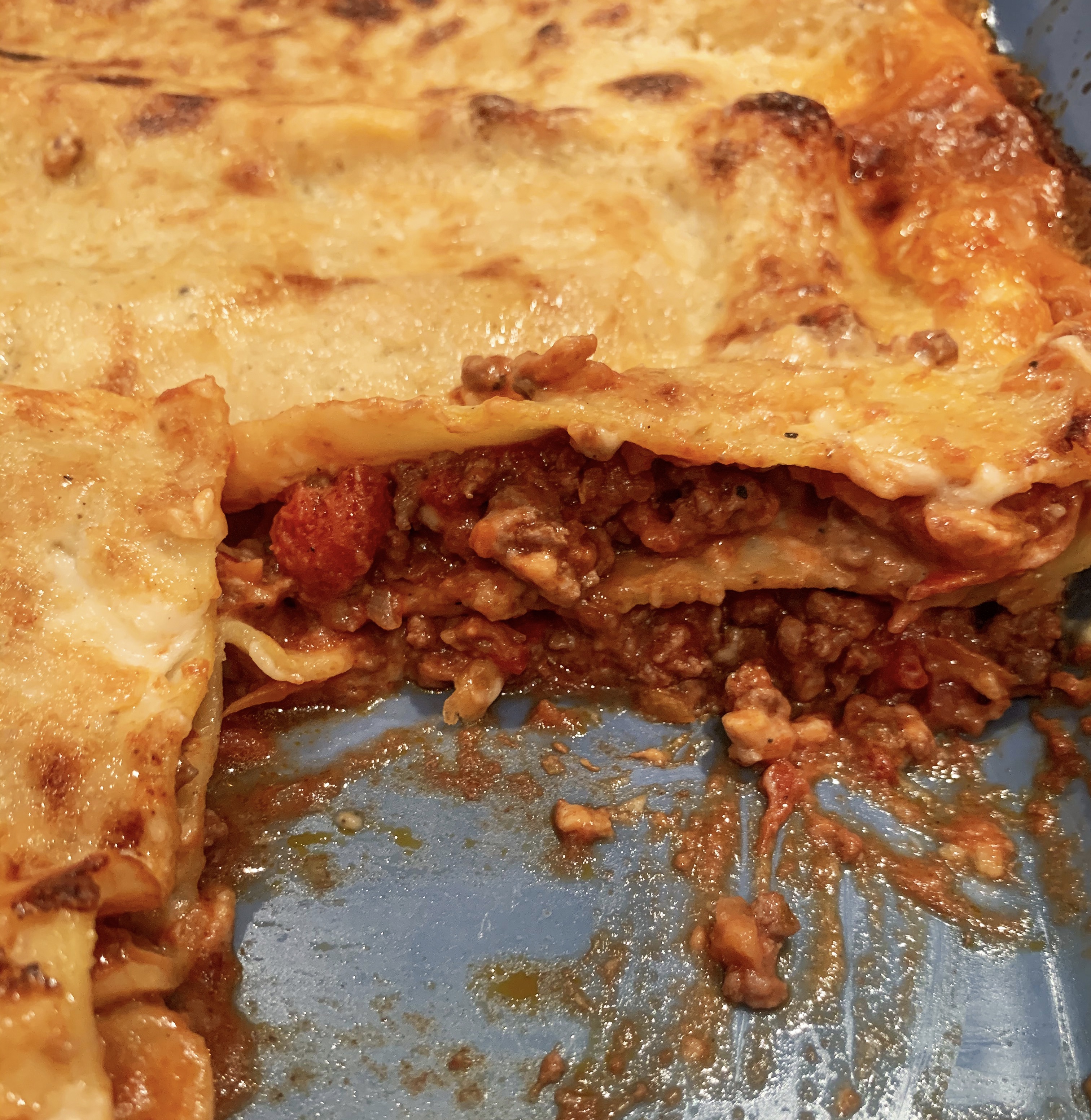
  8. Bake in a preheated oven, 200’c fan, for about 25 minutes, until the top is crusty and golden.

Menu Two

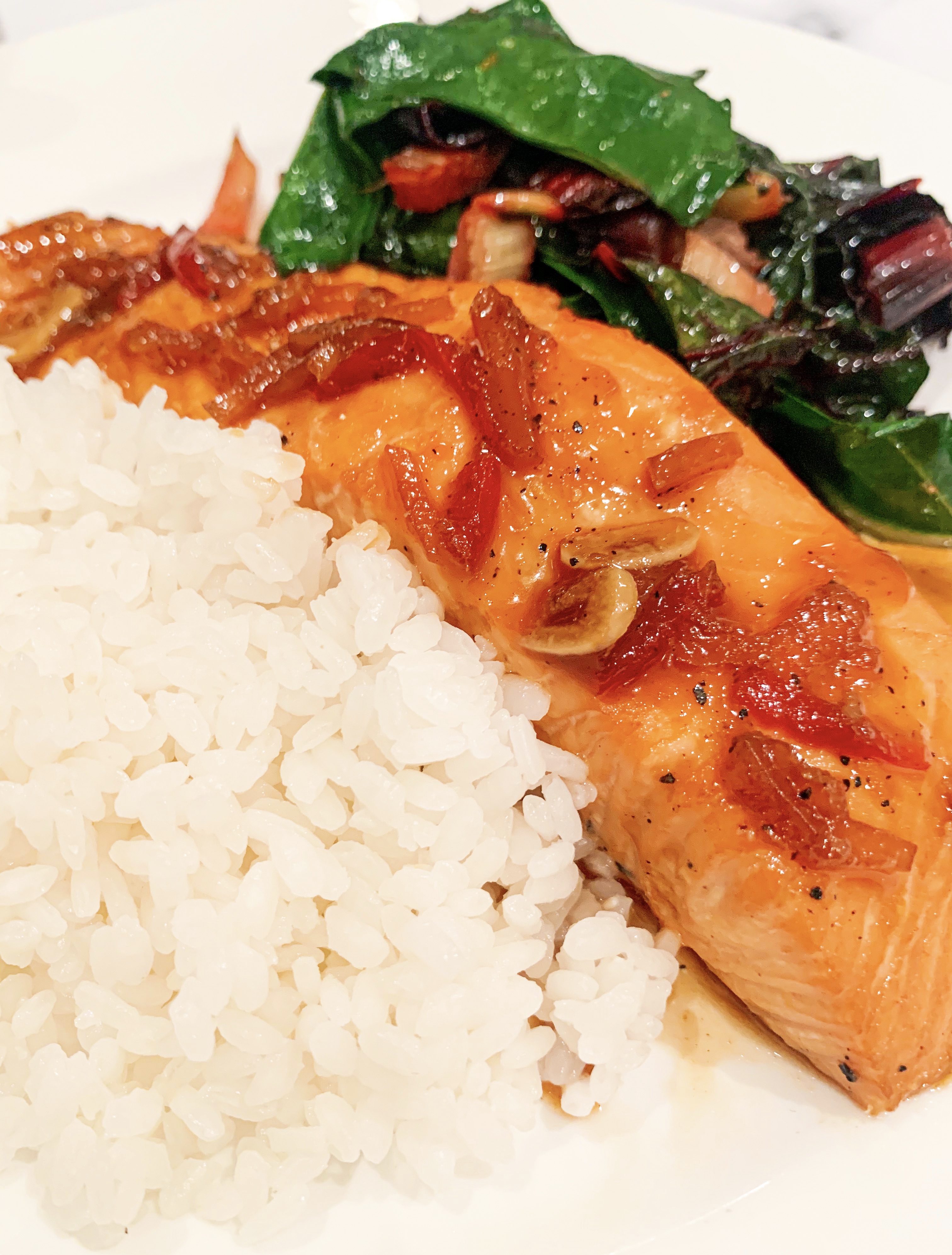
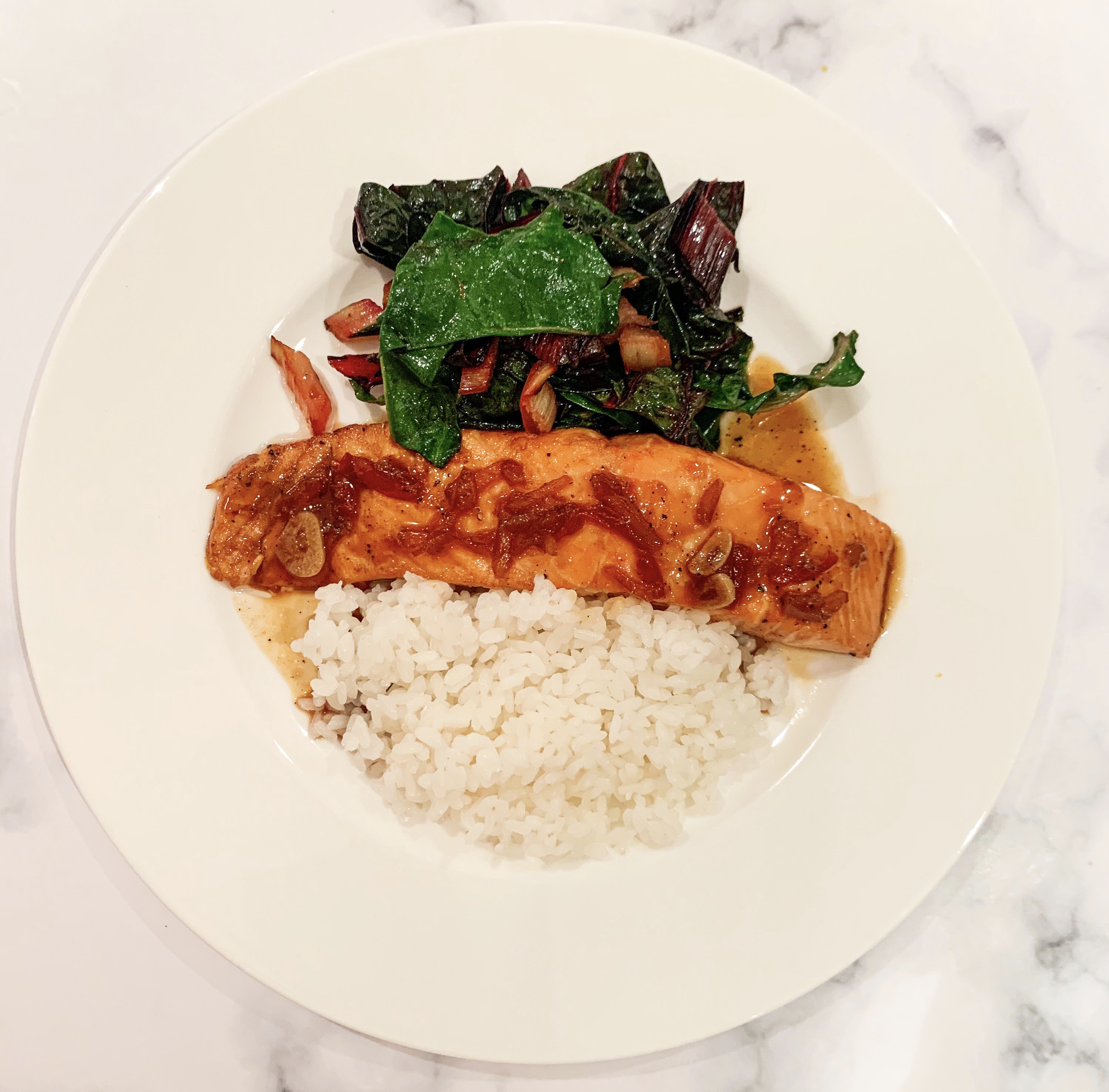
Salmon with Chilli Ginger Sauce & Fried Swiss Chard (Serves 4)

This recipe is one which my sister recommended to me, she found it in a ‘Hairy Bikers’ cookbook some years ago. I must say that it is a fantastic recipe and it makes a great midweek treat as it is super easy; just remember to marinate the salmon for 30 minutes before cooking it. I like to serve it with Japanese Sticky Rice and Stir Fried Swiss (or Rainbow) Chard (recipe below).

4 salmon fillets, skin on (about120-150g each)

2 balls of stem ginger in syrup (and 2 tablespoons of the syrup)

3 garlic cloves, peeled and thinly slices

3 tbsp dark soy sauce

1 orange, juiced (and the grated zest of ½ an orange)

½ large red chilli, thinly sliced

Black pepper

  1. Slice the ginger balls thinly, then slice these into matchsticks.
  2. Place the ginger ‘matchsticks’ in a bowl, with 2 tablespoons of the stem ginger syrup, garlic, chilli, soy sauce, orange zest and juice; mix well. Add the salmon fillets to the bowl and cover with marinade, seasoning with lots of black pepper. Cover and chill for 30 minutes.
  3. Line a small baking tray with baking parchment. Remove the salmon from the marinade, wiping off any excess bits of marinade. Place them on the baking tray, skin side down. Season with more black pepper.
  4. Bake in a preheated oven, 200’c fan, for 12- 15 minutes depending on the thickness of your fillets.
  5. While the salmon is cooking prepare the sauce. Place the marinade ingredients in a small pan and bring to the boil, simmer for about 6 minutes until it has reduced and the garlic has softened – you want enough sauce to pour over the salmon but not swamp it!
  6. Remove the salmon from the oven, carefully lift them on to plates, lifting off the skin as you do so. Spoon over the hot sauce and serve with sticky Japanese rice and stir fried swiss (or rainbow) chard (recipe below).

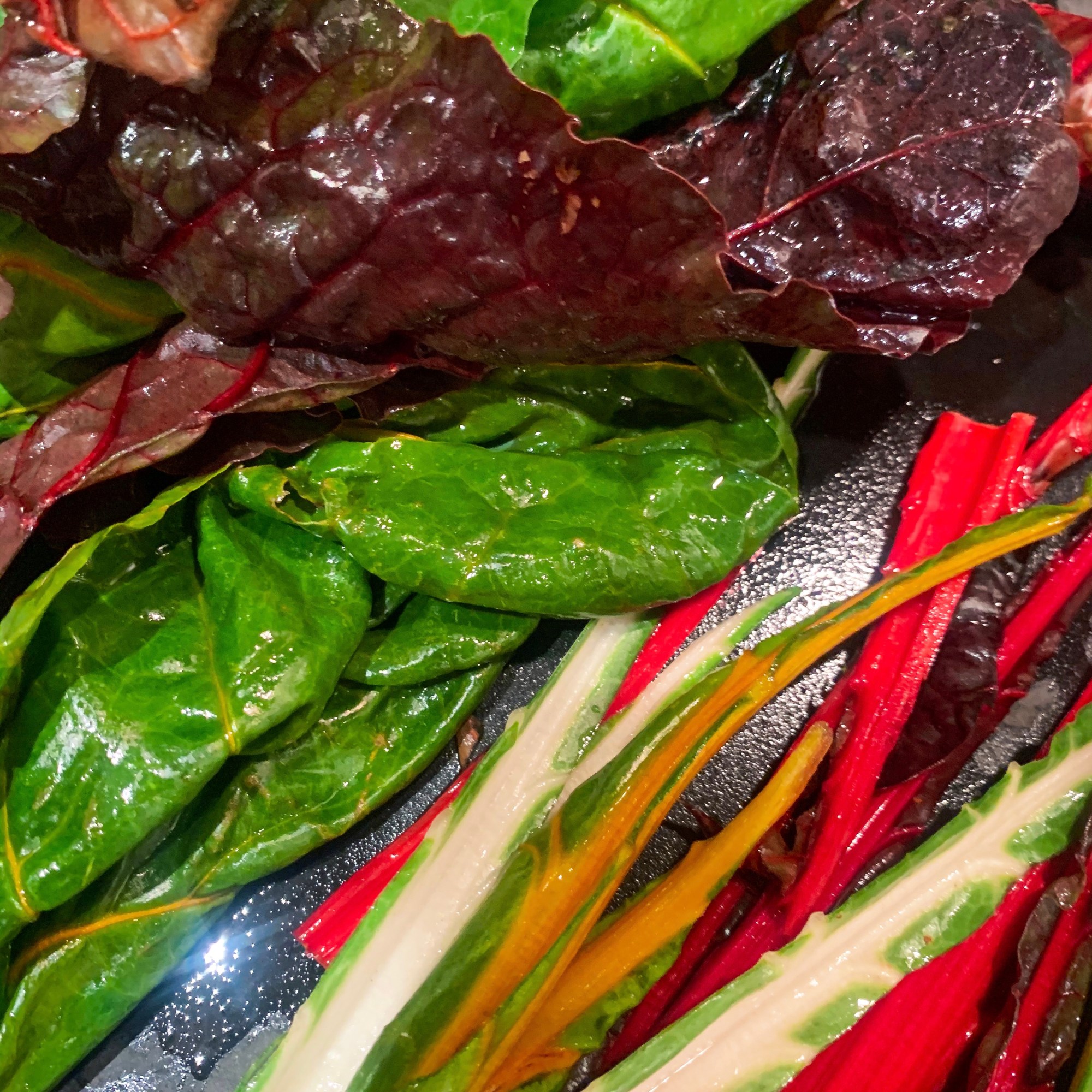
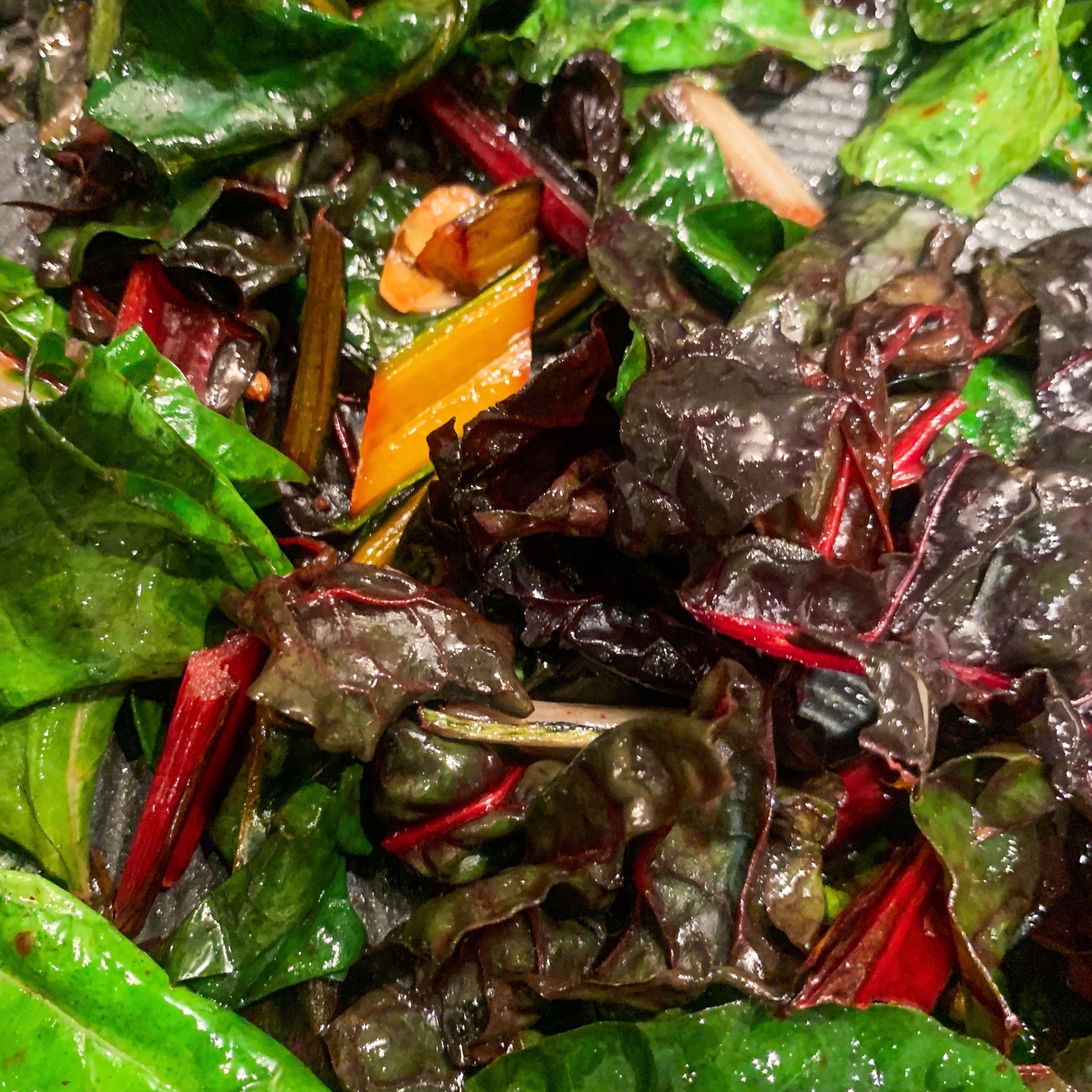
Stir Fried Swiss (or Rainbow) Chard (Serves 4)

I must admit that I only started cooking this vegetable at home more recently; having enjoyed it in numerous restaurants over the years, I finally realised how very easy it is to cook!… I urge you try it!

1 bunch of fresh Swiss Chard

2 tablespoons extra virgin olive oil

1 clove garlic, sliced

Pinch chilli flakes

¼ teaspoon whole coriander seeds

  1. First rinse out the leaves of the chard, cut away the stalks and cut these into 1inch pieces. Chop the leaves inch wide strips.
  2. Sauté the garlic, chilli and the coriander seeds in the olive oil for about 30 seconds, then add the swiss chard stalks, lower the heat and cover, cook for a bout 3-4 minutes.
  3. Add the chopped leaves and turn over in the hot oil, cover once again and cook for a further 3-4 minutes.
  4. Taste to check it is cooked – it should be al dente (still have some bite), cook for a little longer if needed. Check the seasoning and serve straightaway.

Menu Three

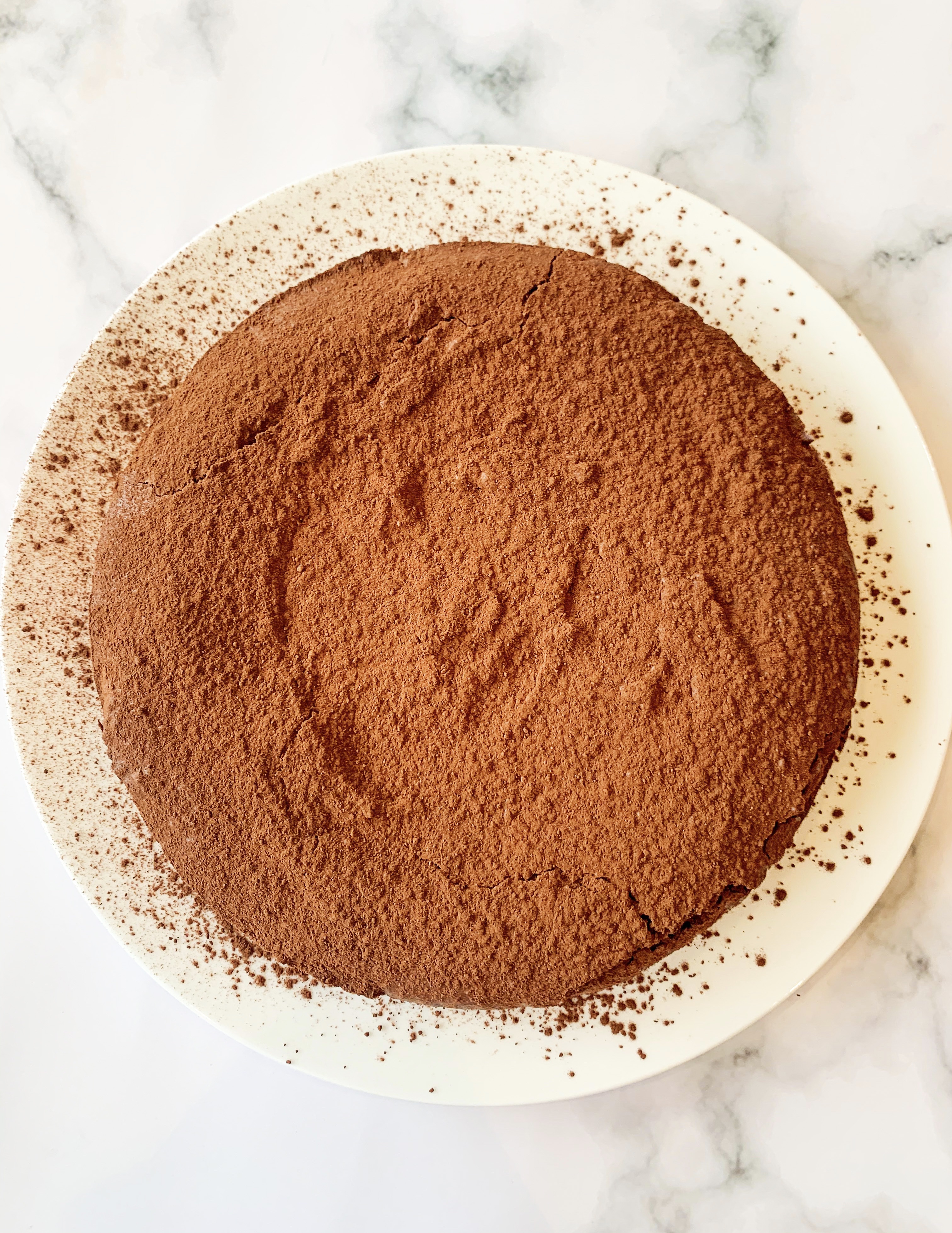
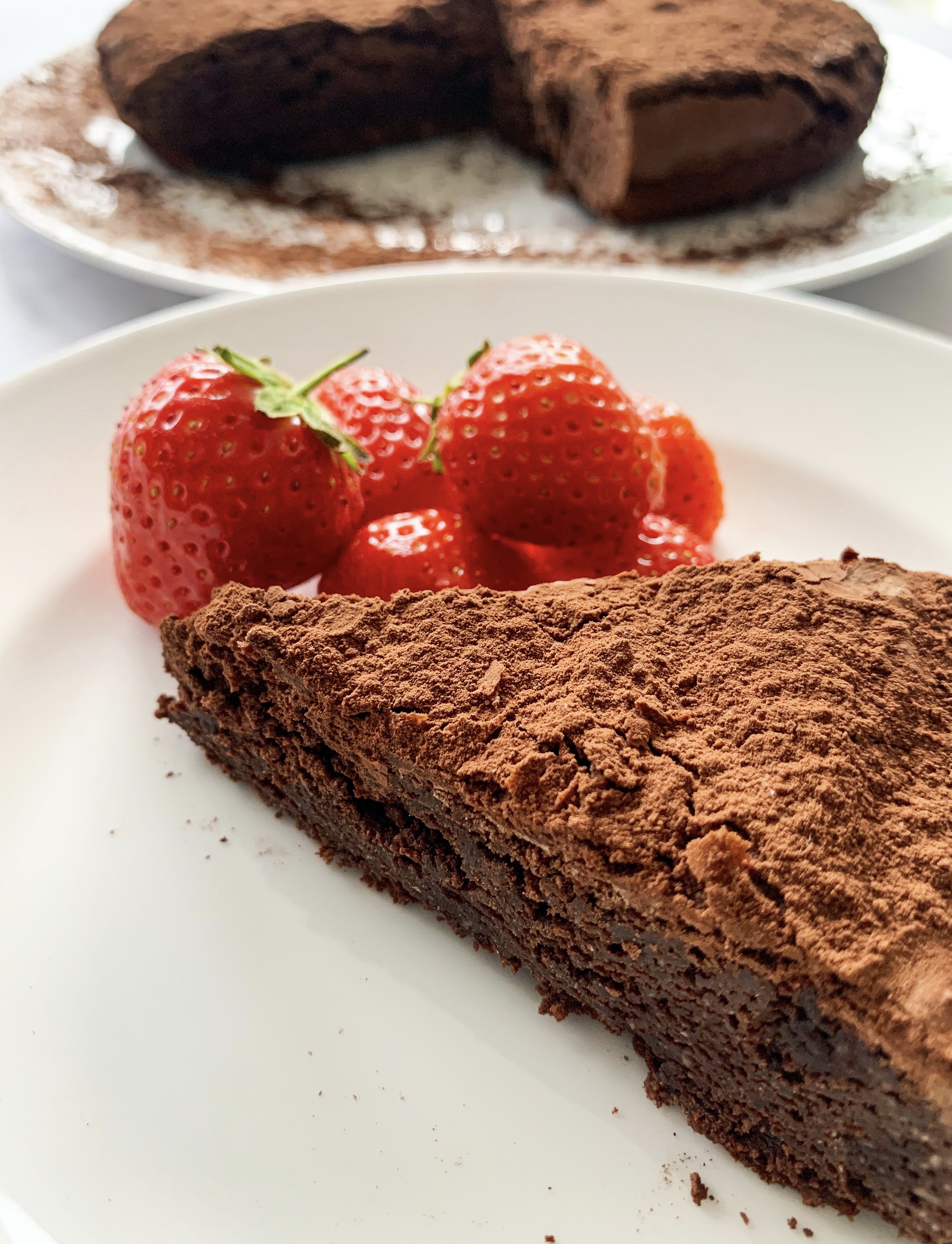
Chocolate Almond Torte

This is a delicious chocolate cake and the best news is, is that it’s completely gluten free! It has a slightly chewy texture if served straight from the fridge, which I rather like, whilst at room temperature it has a more fudgy consistency – either way it is divine! You could omit the brandy, but I recommend you use it, as it does intensify the chocolate flavour.

200g dark chocolate (I use Lindt 70% cocoa plain chocolate)

200g unsalted butter, chilled and chopped

4 large eggs, separated

1½ tablespoons brandy (optional)

200g caster sugar

100g ground almonds

¼ teaspoon salt

Cocoa powder for dusting

Clotted cream or Crème Fraïche to serve (optional)

Strawberries or raspberries to serve (optional)

(You will need an 8 or 9 inch springform cake tin, buttered and the outside bottom and sides wrapped with foil to prevent leaking)

  1. Place the chocolate and butter in a medium heat proof bowl over a saucepan of bowling water (baine marie), making sure that the bottom does not have contact with the water, stir until melted. Set aside.
  2. Place the egg yolks and 100g of the sugar in a large bowl and whisk until pale and thick (about 1 minute), stir in the chocolate mixture, brandy, almonds and salt.
  3. Use an electric hand whisk to whisk the egg whites with the remaining 100g sugar until they form thick, shiny soft peaks.
  4. Using a spatula fold in one-third of the egg white mixture into the chocolate mixture, mix gently until well combined, then fold in the remaining egg whites in a further two additions.
  5. Pour the mixture into the prepared tin, smoothing over the top. Bake in a preheated oven, 180’c fan, for 30-35minutes until an inserted skewer comes out with moist crumbs – the edges will be set but the middle will still be wobbly. Allow to cool on a wire rack and then refrigerate for at least 4 hours until completely set.
  6. Before serving sift over cocoa powder, serve chilled or at room temperature, with clotted cream or crème fraiche (it is also good with strawberries or raspberries).
  7. It will keep well in the refrigerator for up to 4 days and also freezes well!!

Amaretto Sour (Serves 1)

An Amaretto Sour

I discovered this cocktail recently. Amaretto is one of my sister’s favourite liqueurs, so for our recent ‘Zoom’ meet up during lockdown, I thought it would be fun to ‘share’ an amaretto cocktail. I researched a few cocktails(!) and this Amaretto Sour was the winner! So here’s to you ‘Auntie Amaretto’!

(The egg white is optional it just gives the cocktail the extra ‘frothy top’ and will make it a little extra creamy – I must admit that I am quite happy to have it without but a true bartender would probably disagree!…

3 tablespoons Amaretto

1 tablespoon bourbon whisky

2 tablespoons lemon juice

2 dashes angostura bitters

1 egg white (optional)

  1. Add the amaretto, bourbon, lemon juice, bitters and egg white (if using) to a cocktail shaker without ice. Shake for 15 seconds.
  2. Add the ice to the cocktail shaker. Shake again for 30 seconds.
  3. Serve in a chilled glass and enjoy!

Week Twenty Two

This week we were supposed to be going away to Yorkshire for a short break, but unfortunately due to the new lockdown it was cancelled. We had been planning on having a socially distanced reunion(!) with Felix in York, then we were going to stay in Wensleydale for four nights. I must admit I am rather gutted as I had been looking forward to discovering Wensleydale (and of course seeing Felix!), I had planned some walks, including one around the Aysgarth Falls, which are supposed to be beautiful, plus a visit to Harrogate. As always, when planning a visit, the first thing I research is places to eat, so it is no surprise that we had chosen to stay in a hotel renowned locally for its restaurant, in addition I had a ‘Wensleydale restaurant list’, which needed to be tried, tested and ‘tasted’!…I had been really excited about trying these Yorkshire restaurants with their local food menus (and sharing them with you!). Never mind, these Covid times will eventually pass and we will, I am sure, have the opportunity to visit Wensleydale in the future, and be able to try my restaurant list!
In the meantime, this week I thought I would share recipes which use some of the beautiful ingredients which I had hoped to see on the restaurant menus on my visit to the Yorkshire Dales…

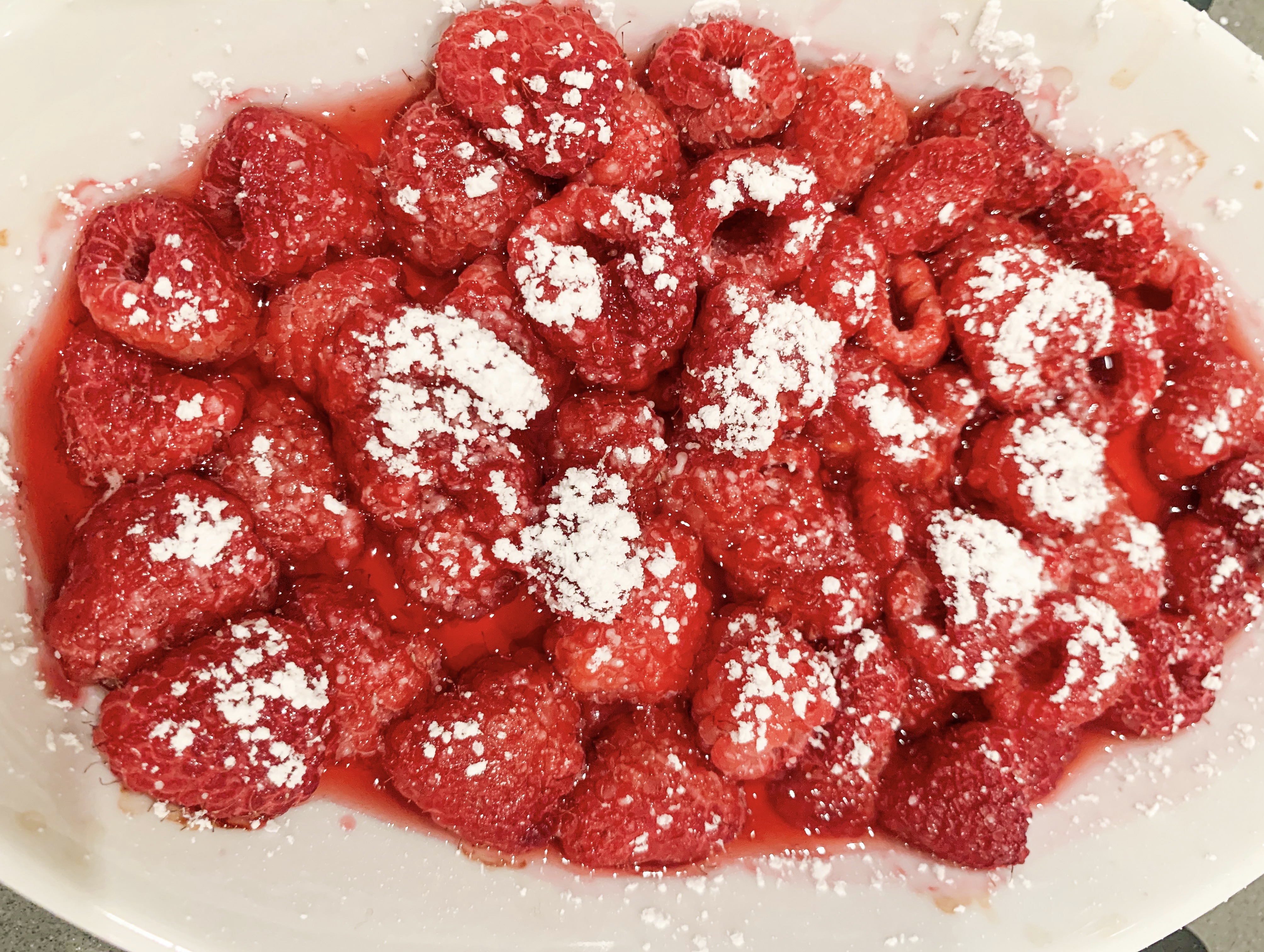
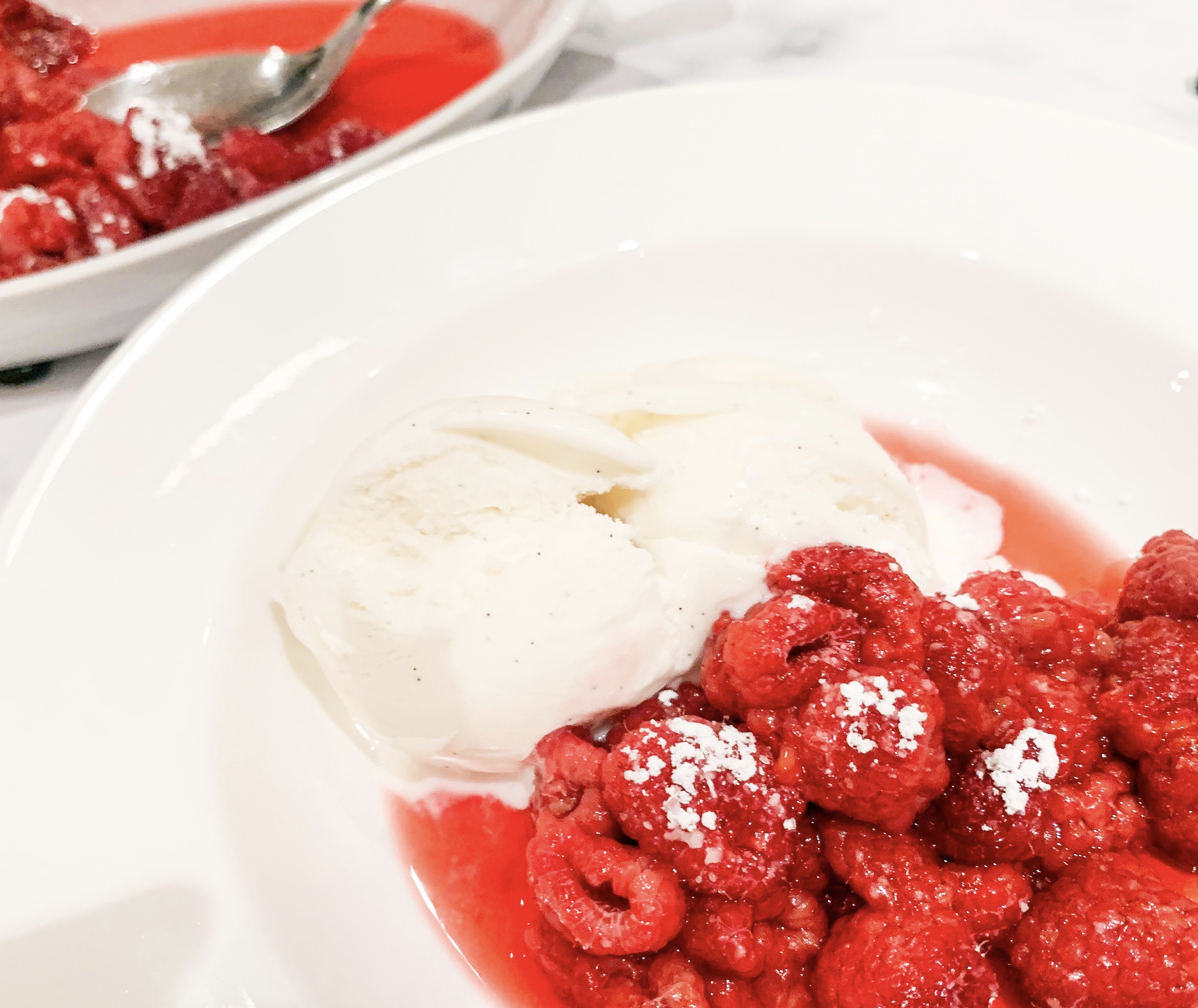
Sheep farming has shaped the Dales for centuries, indeed one of the foods I was most looking forward to tasting was the Yorkshire lamb, so for Menu One, I am sharing a recipe  which celebrates the deliciousness of lamb. ‘Provençal Rack of Lamb with Crushed Peas’, is a dish that despite looking very elegant and sophisticated (it’s definitely suitable for a dinner party), is quick to cook, so is great for a midweek treat. Menu Two takes inspiration from the current gaming season; without doubt, we would have seen evidence of this, both driving around the Yorkshire Dales and on the restaurant menus, so I thought that I would share one of my favourite recipes for pheasant, ‘Roast Pheasant Breast with Whisky and Peppercorn Sauce’. If you have never cooked pheasant before, this is the perfect recipe to experiment with; often pheasant can be dry as it is easy to overcook, but I find that this recipe is foolproof, as by roasting the bird whole and then removing the breasts they don’t dry out. Finally, Menu Three, Roasted Raspberries – a dessert which admittedly has very little to do with Yorkshire, but is the perfect complement to the previous two menus, with its pure simplicity and deliciousness!

All of this week’s recipes, in my opinion, are perfect not only for family dinners but also to serve to guests, and for this reason…dare I mention the word Christmas (?!), they are perfect to cook during the festive season, so make a note of them!

Have a great week and most of all enjoy cooking!

Menu One

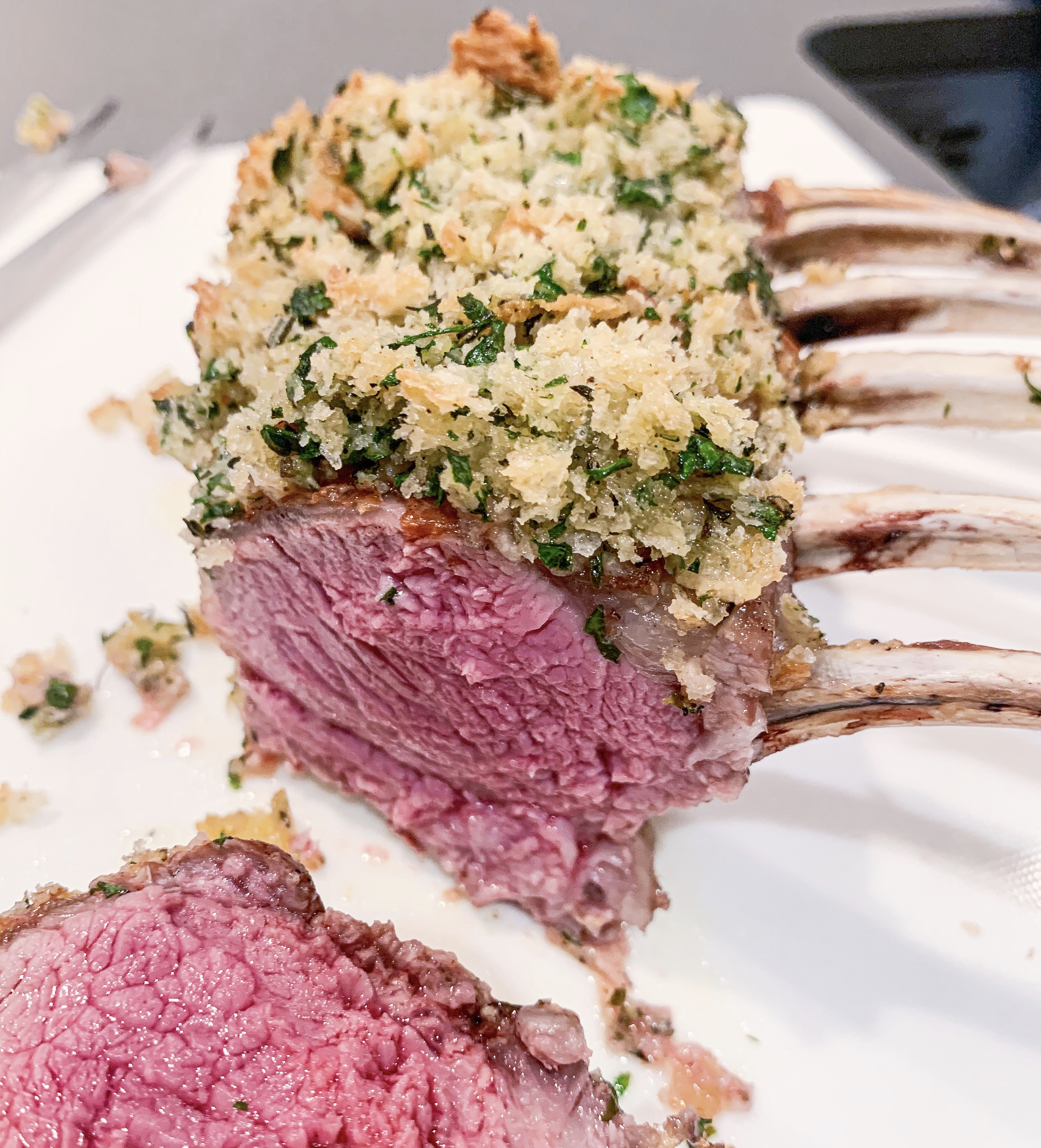
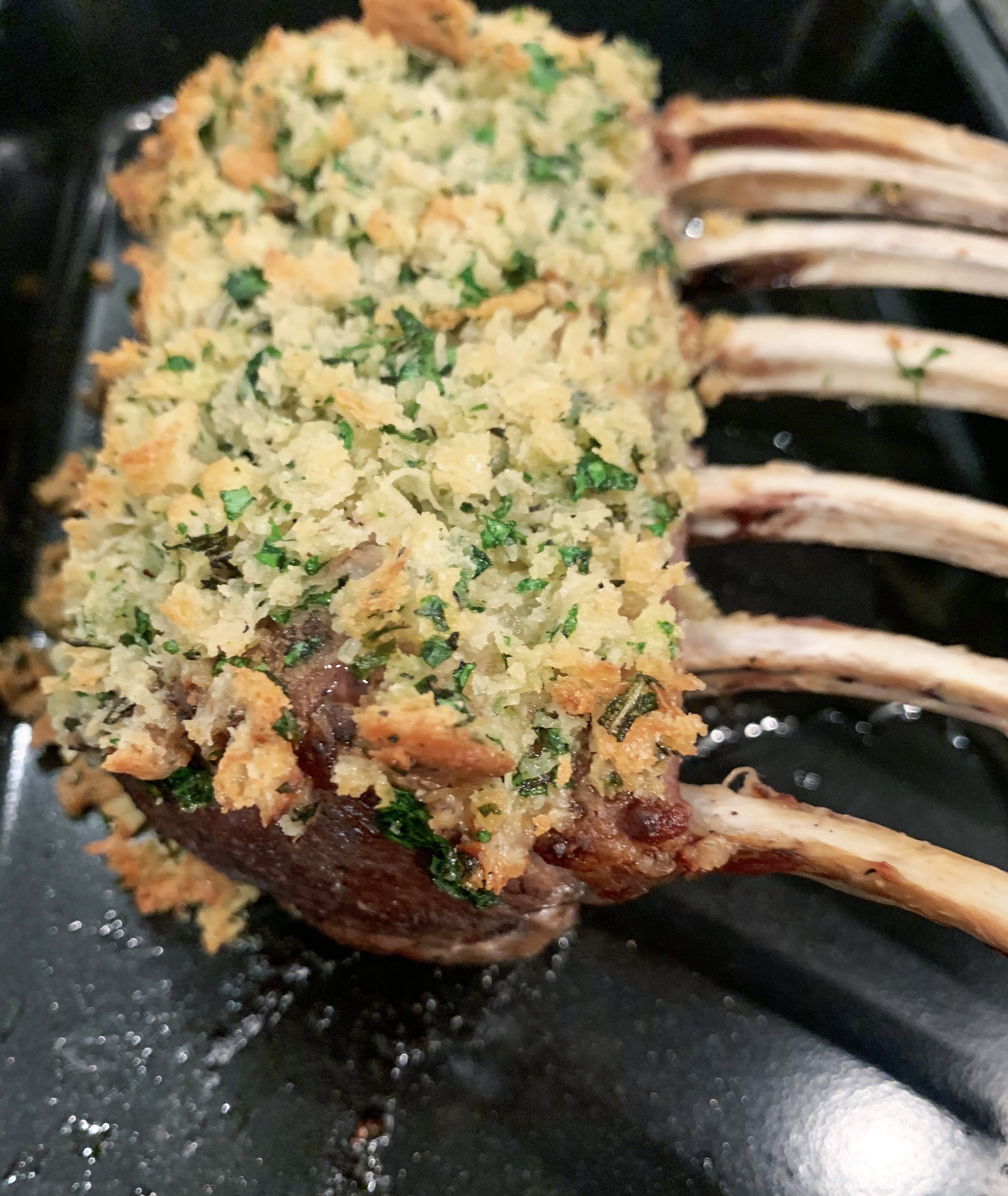
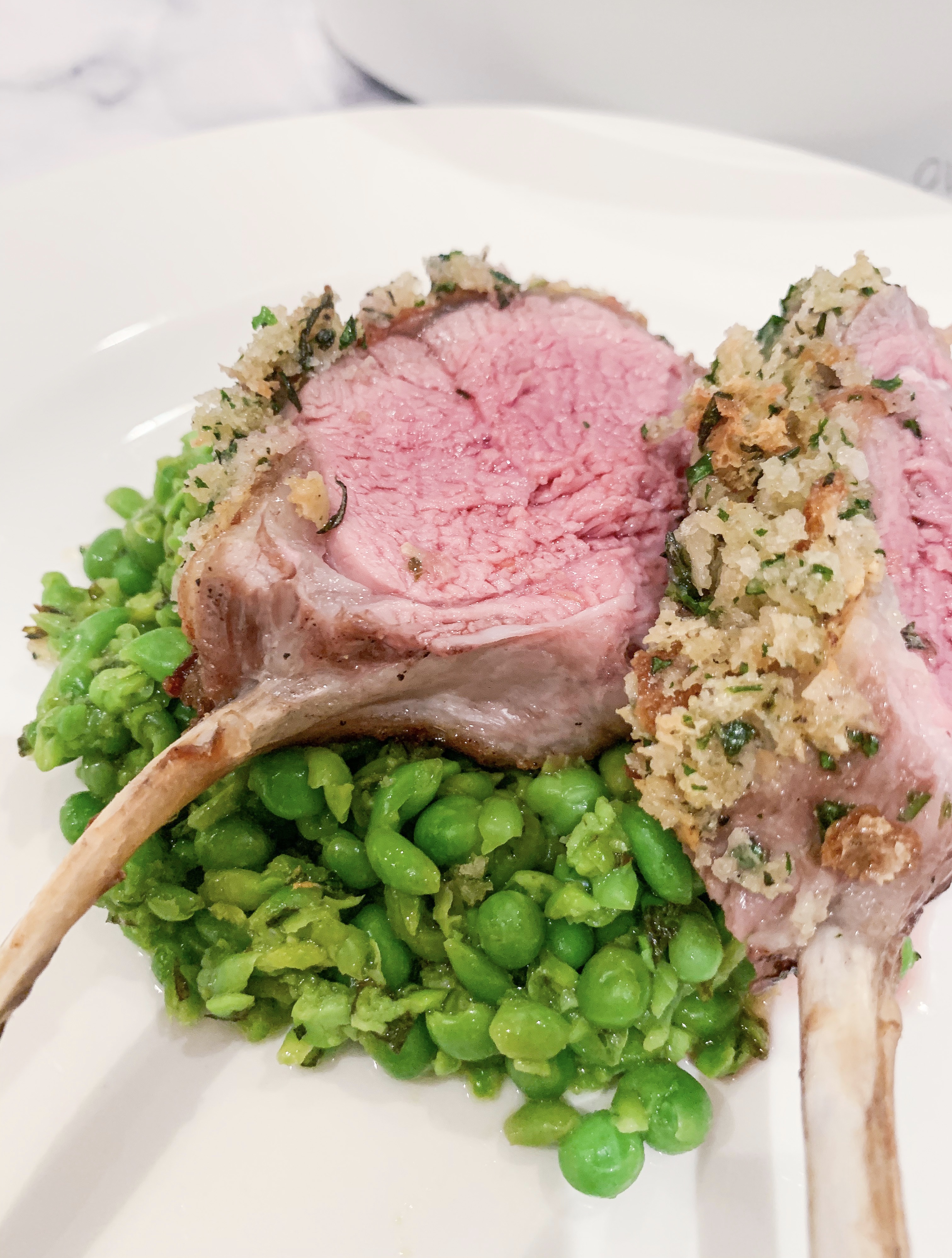
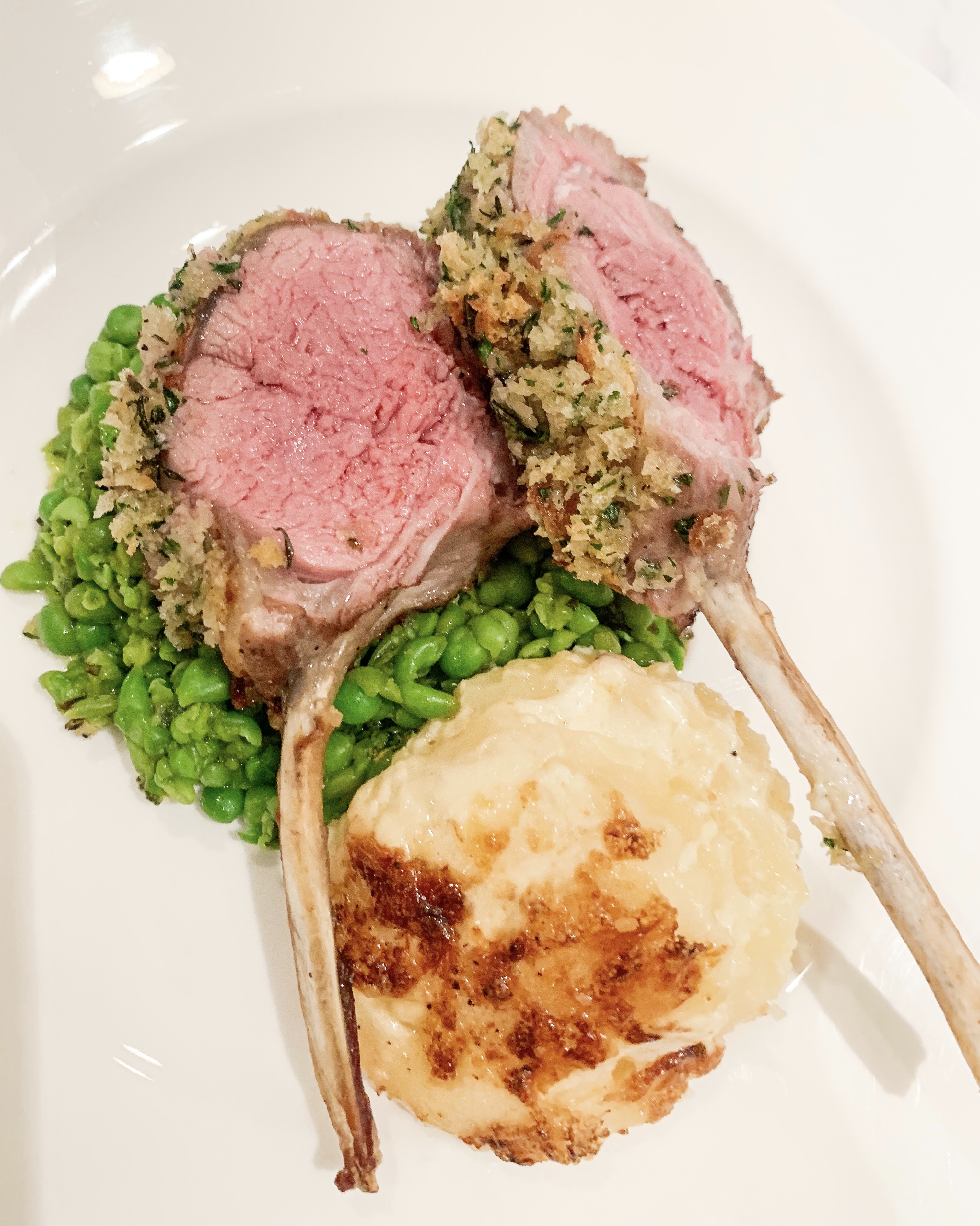
Provençal Rack of Lamb with Crushed Peas & Dauphinoise Potatoes (Serves 4)

This is really one of the best rack of lamb recipes I have come across. It is simple yet elegant and is quick to cook, so you could easily serve it as a mid-week treat. It is definitely special enough to serve to guests, in fact it has been a favourite dinner party dish of mine over the years. It’s ideal for dinner parties as you can prepare the majority of the recipe beforehand – the lamb once bread-crumbed will happily wait to be cooked until your guests arrive – it just needs about 15-20 minutes in the oven. For a quick option, this recipe is great with steamed new potatoes, but to make it extra special serve with Dauphinoise potatoes with Gruyére cheese, recipe below. I make Dauphinoise potatoes both with and without the Gruyére, I think this lamb dish suits the latter but if you prefer it without use my other recipe.

This recipe is from Raymond Blanc’s cookbook ‘Foolproof French Cookery’, a title which contains all my favourite words, particularly ‘foolproof’! I like to serve lamb on the pinker side, so if you prefer it more well done, cook it for a little longer. The recipe calls for fresh marjoram but this can be difficult to get so I often replace it with fresh sage, and because sage is slightly stronger in flavour I reduce it to one tablespoon instead of two (see recipe).

Ask your butcher to not only French trim the rack of lamb but also to remove the fat covering the meat, this may seem usual as the fat is normally kept to keep the lamb moist and for flavour, but in this recipe the breadcrumbs will protect the meat and give it flavour.

Gluten Free Note: Almost, all of my recipes on Menu Mistress are gluten free, or suggest substitute gluten free ingredients. Unfortunately this recipe uses breadcrumbs which cannot be substituted. If you avoid gluten but don’t have an allergy, thus can eat ‘gluten contaminated’ food, then you could eat this recipe – just scrape off the breadcrumb crust when serving the lamb, believe me it is still delicious with the crushed peas! However, if you do have an allergy to gluten unfortunately this recipe is not for you!

A Tip:  Breadcrumbs – If you don’t have stale bread at hand for the bread crumbs use a fresh ciabatta loaf , it’s texture is naturally drier so it actually will make great breadcrumbs even if it is fresh – just slice off the crusts.

For the Crushed Peas:

600g peas, thawed if frozen

85ml extra virgin olive oil

2 tablespoons finely chopped marjoram, or 1 tablespoon chopped sage (see note above)

2 tablespoons finely chopped fresh mint

Juice ½ lemon

Sea salt and freshly ground black pepper

For the Provençal Breadcrumbs:

75g thickly cut stale white bread (or fresh ciabatta – see ‘tip’ above)

2 handfuls fresh flat leaf parsley, finely chopped

1 teaspoon thyme, finely chopped

1 teaspoon rosemary, finely chopped

4 tablespoons extra virgin olive oil

Sea salt and black pepper

For the Lamb:

2 x  racks of lamb, French trimmed and trimmed of fat (see note above)

2 tablespoons olive oil

20g unsalted butter

1 tablespoon Dijon mustard

Sea salt and black pepper

  1. First prepare the peas. Put them in a food processor and gently pulse to just crush them – you want them to retain a lot of texture, so be careful not to purée them! Transfer to a small saucepan, stir in the olive oil, chopped herbs and season with salt and pepper. Set aside.
  2. To make the breadcrumbs place the bread in the clean food processor and pulse to make coarse breadcrumbs. Transfer to a bowl, stir in the herbs, olive oil and season with salt and pepper.
  3. Season the racks of lamb with salt and pepper. Melt the butter with the oil in  frying pan and brown the meat for 3-4 minutes on each side. Transfer to a preheated oven, 190’c fan, for 10 minutes.
  4. Remove the lamb from the oven, brush over with the mustard – avoiding the bones and ends of the meat. Press in the Provençal breadcrumbs so that the meat is coated, apart from the two ends, (you can do this a few hours in advance).
  5. Return the lamb to the oven and cook for a further 15 – 20 minutes (if you have a meat thermometer it should register 65-70’c). Rest for 5 minutes before carving.
  6. Meanwhile finish cooking the peas. Cook the crushed peas over a medium heat with the lid on for 4 minutes. Stir in the lemon juice and check the seasoning.
  7. Serve the hot crushed peas on plates and top with the carved lamb cutlets.

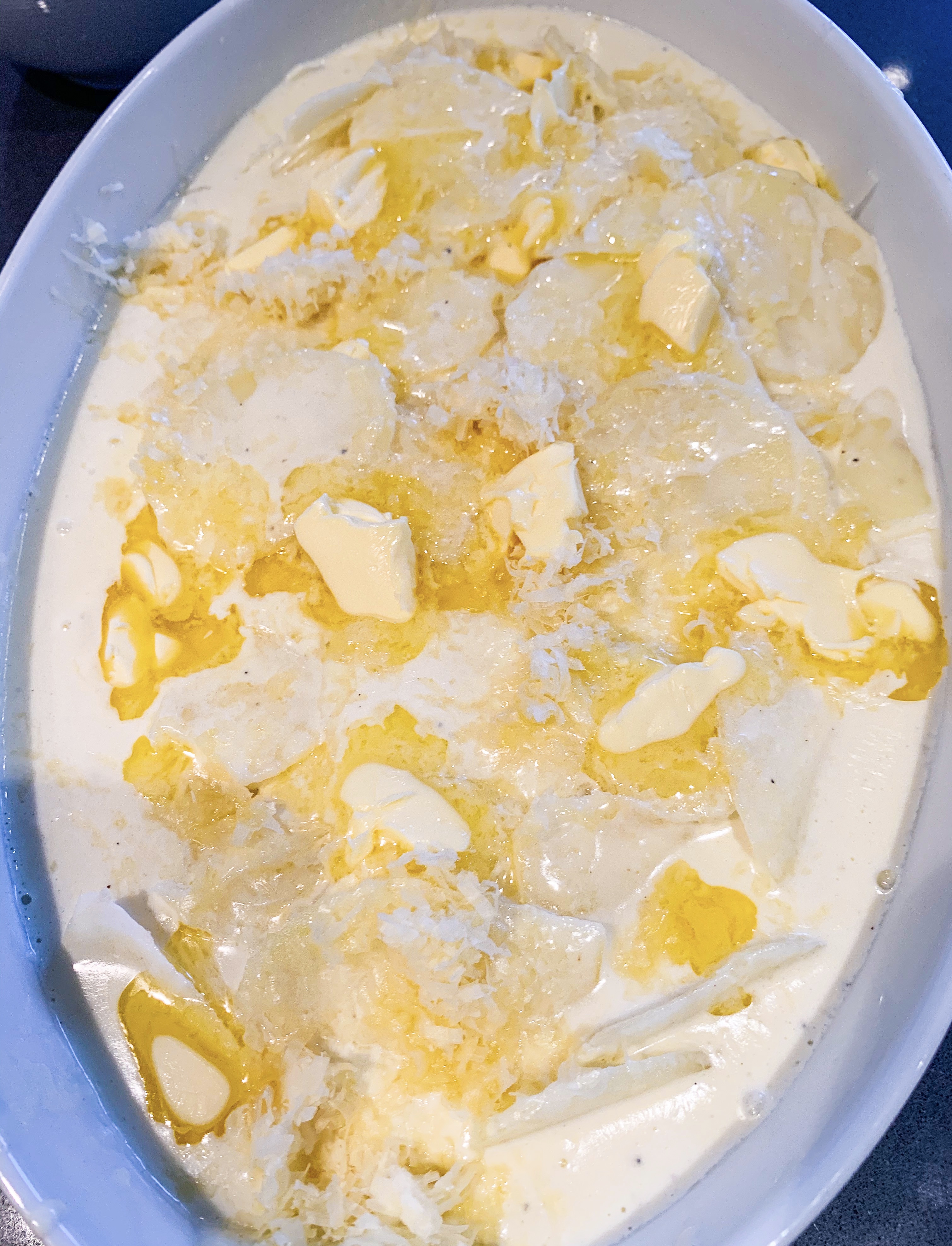
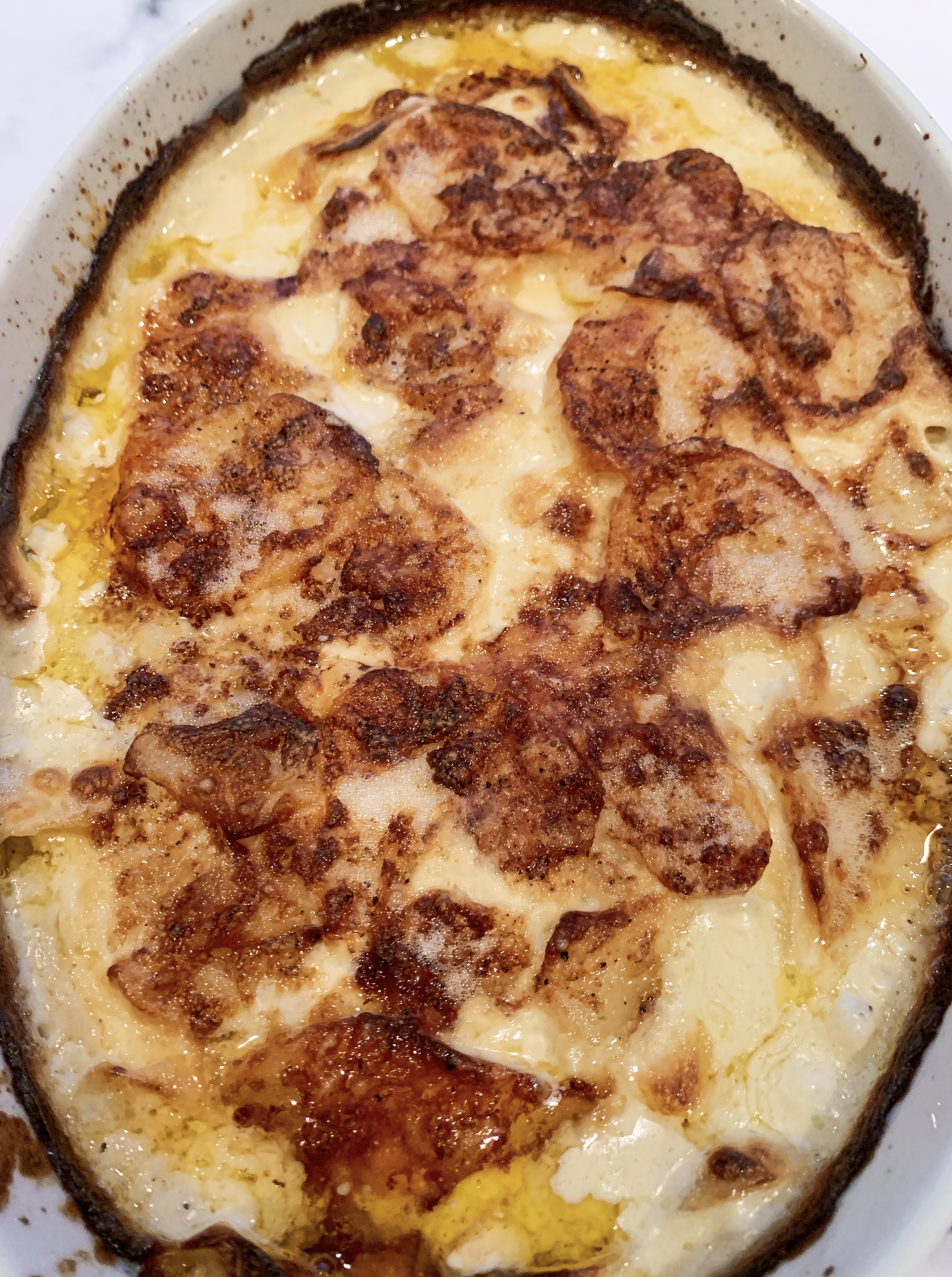
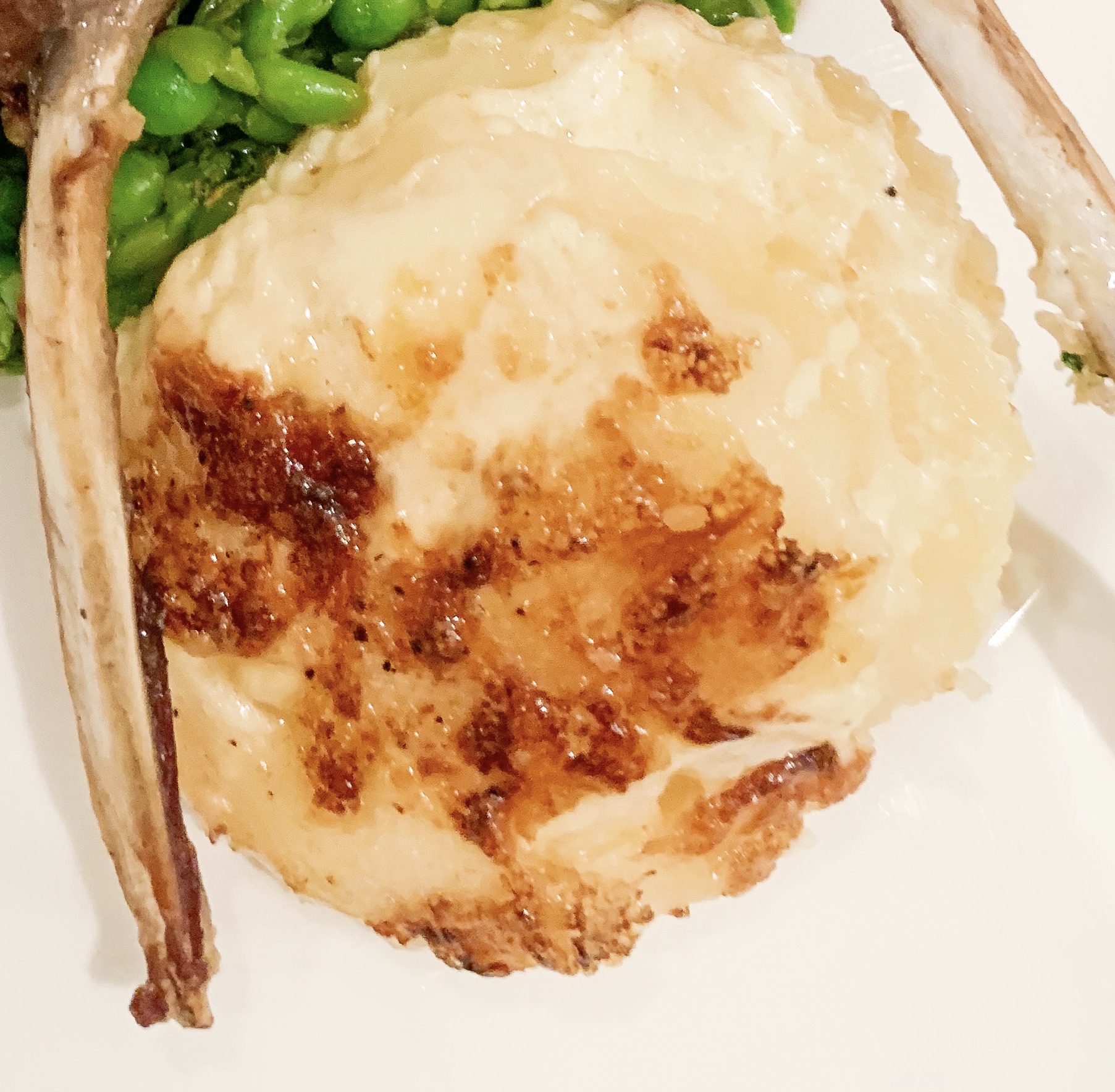
Dauphinoise Potatoes with Gruyére Cheese (Serves 4 -6)

You may remember that I posted another recipe for Dauphinoise Potatoes a few weeks ago – that recipe was slightly simpler to make and not quite as rich as this one (that’s if it can be ‘less rich’!). This Dauphinoise Potatoes recipe is more unctuous with the cheese, it goes very well with the recipe, ‘Provençal Rack of Lamb with Crushed Peas’. I think you should try both recipes as there is a time and a place for either, depending on your mood!

I found this recipe in ‘At Home in the Provence’ by Patricia Wells, who in turn took if from renowned French chef Joël Roubuchon – so it comes well endorsed!

500ml whole milk

250ml double cream

125g grated Gruyere cheese

1 kg potatoes (such as Maris Piper), peeled and sliced very thinly

1 plump clove garlic, peeled and halved

45g unsalted butter, diced

Freshly grated nutmeg

Sea salt and black pepper

  1. In a large saucepan bring the milk to boiling point. Add the cream and three-quarters of the cheese. Stir to blend and melt the cheese. Season which salt, pepper and a grating of nutmeg. Add the potatoes and mix well with a wooden spoon. Cook over a low heat for about 20 minutes until the potatoes are soft.
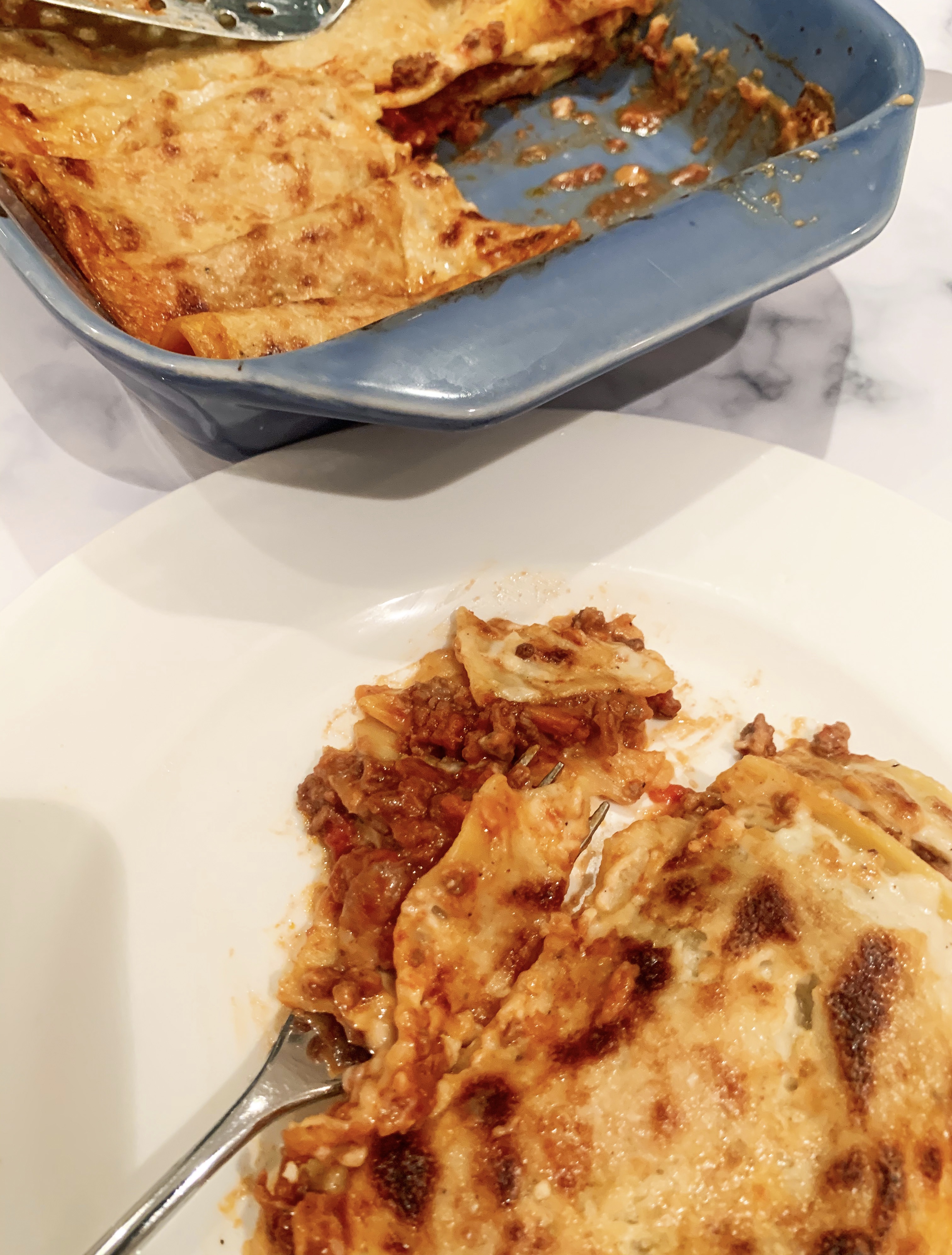
  2. Rub a baking dish with the garlic. Transfer the potatoes and their liquid to the baking dish and sprinkle with the remaining cheese and the butter.
  3. Place in a preheated oven, 190’c fan, for about 1¼ hours.
  4. Serve immediately.

Menu Two

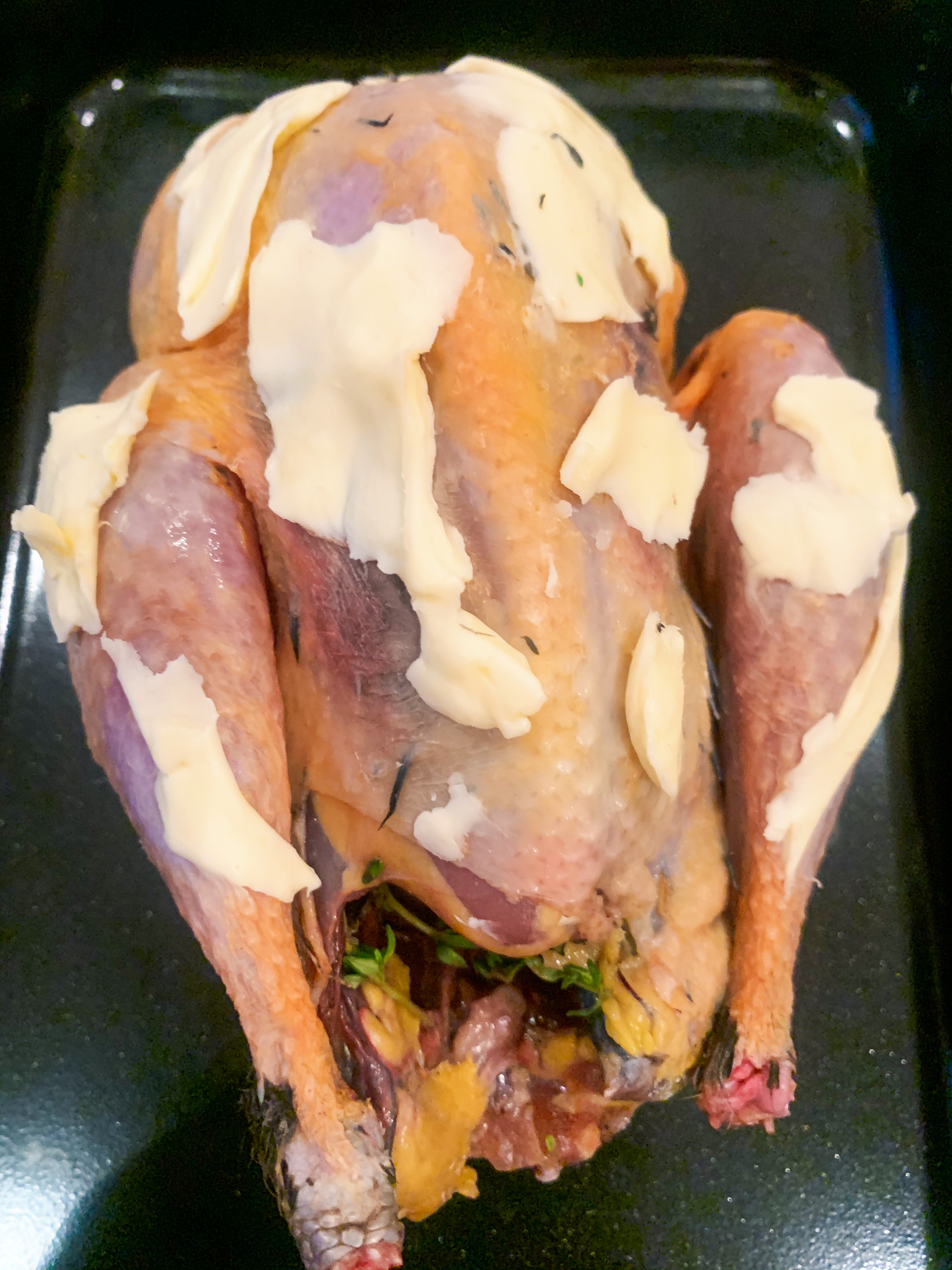
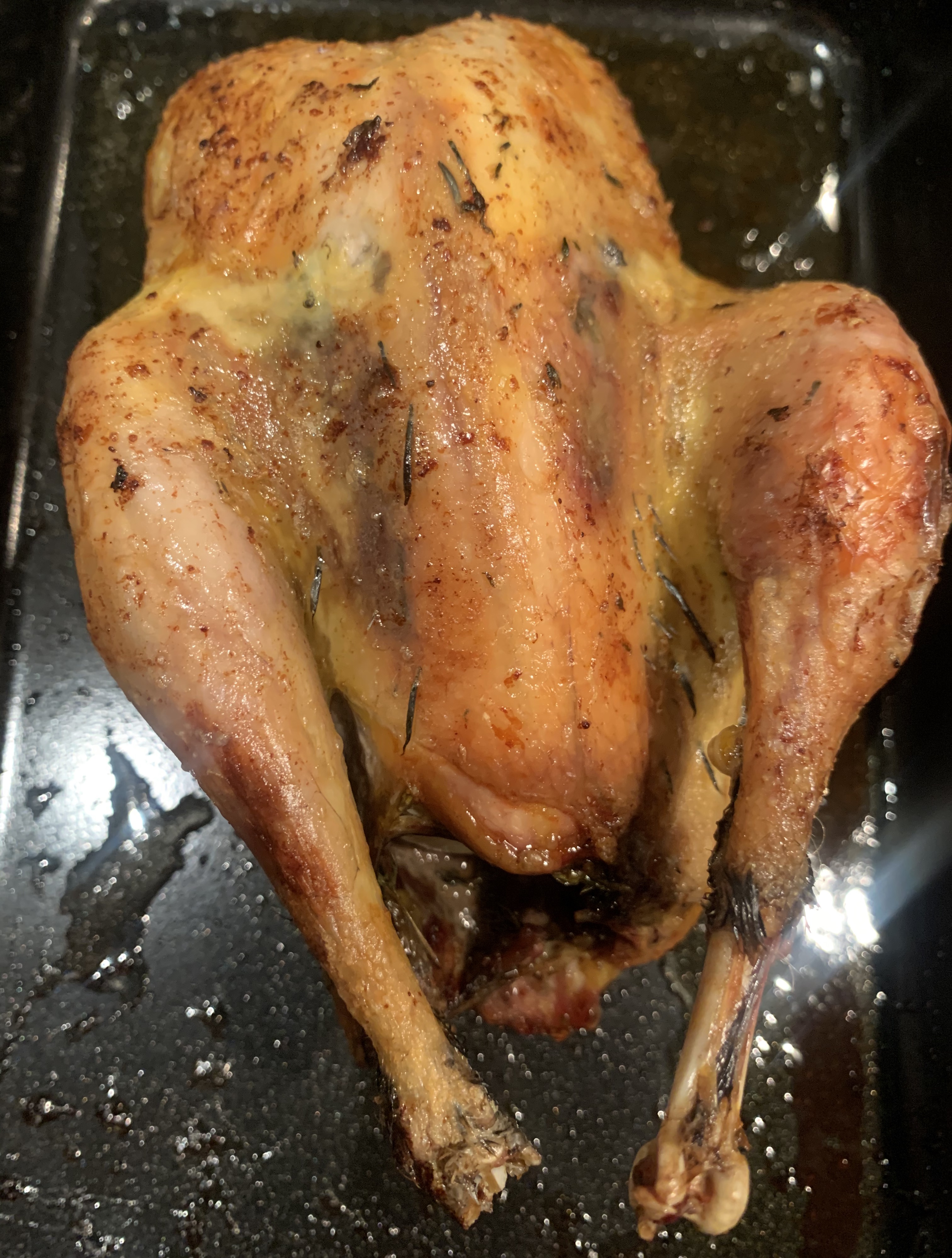
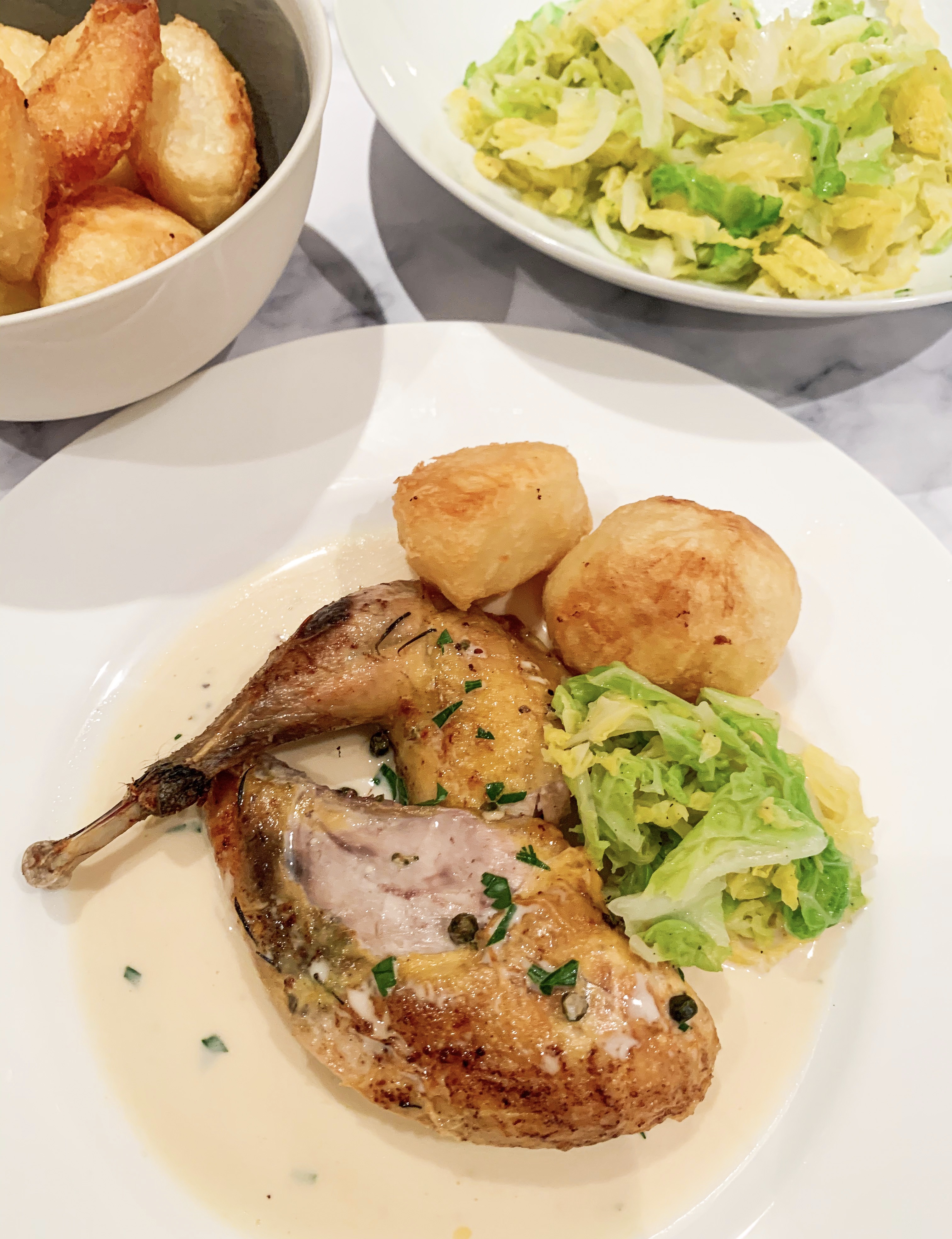
Roast Pheasant Breast with Whisky and Peppercorn Sauce, Roast Potatoes & Savoy Cabbage (Serves 4)

If you have never cooked pheasant before, I urge you to cook this recipe, it is super easy. Pheasant meat can easily dry out during cooking, but by cooking bird whole and then removing the breasts, the meat remains juicy. I like to serve this with buttered savoy cabbage and roast potatoes (recipes below)

2 pheasants

1 onion cut into 4 wedges

Small bunch of thyme

40g butter, softened

800ml chicken stock

150ml whisky

300ml whipping cream

3 teaspoons finely chopped green peppercorns

1 tablespoon finely chopped flat leaf parsley

  1. Place the pheasants in a roasting tin large enough to have at least 4 cm between them. Stuff each cavity with a wedge of onion and a few sprigs of thyme. Smear the butter over the breasts and legs and season with salt and pepper.
  2. Roast in a preheated oven, 190’c fan, for 45 minutes, basting twice during cooking.
  3. While the pheasants are roasting,  pour the stock into a large saucepan and bring to the boil. Reduce by a third – you need about 500ml.
  4. Pour the whisky into a large frying pan, warm through and then carefully light with a match – flambé to allow the alcohol to burn off. Pour in the reduced stock, followed by the cream and leave the sauce to simmer gently until it is reduced and just thick enough to coat the back of a spoon. Finally stir in the chopped peppercorns and check the seasoning.
  5. Meanwhile when the pheasants are cooked, cover with foil and leave to rest for 10-15minutes.
  6. To remove the breasts from the bone, carefully run a sharp knife down one side of the breastbone and ease off the whole breast.
  7. Place each breast on a plate, sprinkle with the chopped parsley and pour over the whiskey and peppercorn sauce, and serve with buttered cabbage and roast potatoes. (as you will notice from the photo, I often place the legs on the plates too, more for decoration than for taste as there isn’t much meat on them).

Buttered Savoy Cabbage (Serves 4)

Such an easy and useful recipe to have…

1 Savoy cabbage, trimmed and finely sliced

25g unsalted butter

Sea salt and black pepper

  1. Place the finely sliced cabbage in a saucepan of boiling water for 2 minutes to blanch it. If you are not using straightaway, immediately refresh with cold water and drain well.
  2. When you are ready to serve the cabbage, melt the butter in a large frying pan, add the drained cabbage and season well with salt and pepper. Toss over a medium heat for 1-2 minutes until the cabbage is just tender. Serve at once.

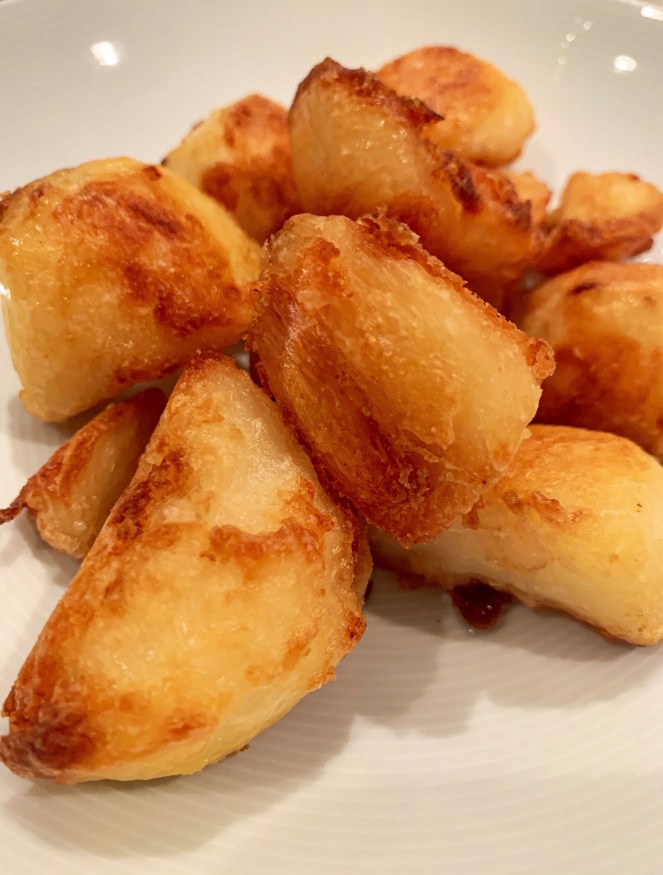
A Staple Side Dish – Perfect Roast Potatoes (Serves 4)

Perfect Roast Potatoes

Everybody has their favourite roast potato recipe. I must admit that having tried various recipes, I have always returned to the one I found years ago in Delia Smith’s ‘Winter Collection Cookbook’ – you can’t beat it in my opinion. I use either olive oil or goose fat (I buy it in jars), depending on my mood. The olive oil gives a lighter, cleaner taste, whereas the goose fat has a richer flavour – both crisp up the potatoes equally well.

1.8kg Maris Piper or other floury, roasting potatoes

110g olive oil or goose fat (see note above)

Sea salt

  1. Place the fat in the roasting tin and place in the oven, 190’c fan, on the highest shelf so that the oil preheats whilst you prepare the potatoes.
  2. Peel the potatoes and cut into evenly sized pieces.
  3. Place the potatoes in a saucepan, cover with boiling water and add the salt. Simmer for 10 minutes until the outer edge of the potatoes is fluffy – test with the points of a fork.
  4. Drain the potatoes well and return to the saucepan. Place a lid over the pan and shake it vigorously. By shaking the potatoes in the saucepan in this way the cooked edges will become floury and fluffy – perfect for crisping up in the oven.
  5. Remove the roasting tin from the oven and place the potatoes in the hot fat – careful as the oil may spit! Baste them well and return to the oven for about 40 minutes until they are golden brown and crisped.
  6. Sprinkle with salt and serve straightaway – do not allow them to sit around otherwise they will loose their crunch (if they are cooked before you are ready, turn off the oven and leave them inside – but with caution, they don’t like to wait!)

Menu Three

Roasted Raspberries with Vanilla Ice Cream (Serves 4)

You will thank me for this simple recipe!! It’s such an obvious idea, I wonder why I never thought of it until I saw the recipe in a magazine some years ago. Winter raspberries often lack flavour, but by roasting them you can intensify the flavour and produce a lovely warming treat at the same time!

400g raspberries

2 tablespoons caster sugar

A dusting of icing sugar (2-3 teaspoons)

4 scoops of vanilla ice-cream

  1. Put the raspberries in an ovenproof dish. Sprinkle over the caster sugar. Cook in a preheated oven, 200’c fan, for about 15 minutes until the juices have come out of the raspberries but they are still keeping their shape.
  2. Remove from the oven, either serve at the table in the oven proof dish or transfer to individual bowls – either way sprinkle with icing sugar before serving.
  3. Serve with vanilla ice-cream.

Week Twenty One

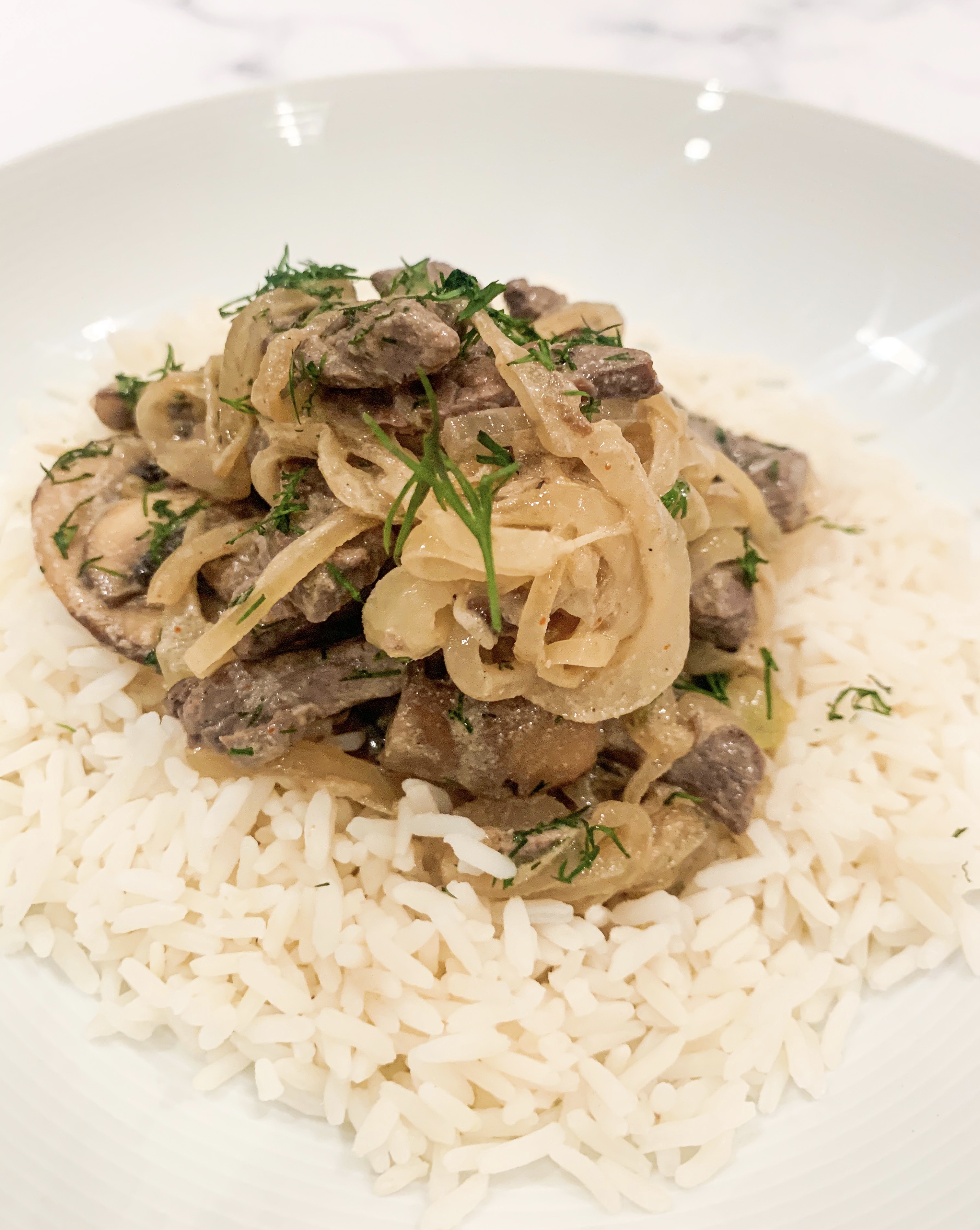
You may have noticed from reading my recent blogs, with their memories of my childhood Halloween and Guy Fawkes Nights, that I have been feeling rather nostalgic lately! Perhaps it’s a Covid thing – seeing students such as my own son, Felix, makes me appreciate how fortunate I was to be a student in a world free from Coronavirus. My teenage years unfolded in the 80’s, and so recently, to feed my nostalgia I’ve been listening to some old 80’s soundtracks! During the last lockdown we, like a lot of people, entertained ourselves with quizzes, and I must admit one of my favourites was a light hearted one we did with my sister in which we had to guess the names of songs and artists, those from the 80’s drew on some very strong memories…for instance the opening of Wham’s ‘Club Tropicana’….the sound of a car arriving, the doors opening and the heeled footsteps walking into the party!!! Anyway, I’m digressing!!!…Food??!!…The fact is, along with my memories of the 80’s, I started thinking about my food experiences during this time, unfortunately the UK during this decade was still a little flavourless. However, it was around this time that I had my first proper cookbook, The Dairy Book of Family Cookery, I remember ordering this book from our milkman, at that time I was taking my O’level in Home Economics. I was thrilled with it, and I planned to make all the recipes(!), even at 15, although not a big eater, I loved the idea of cooking. Of course, I still have this book, and a few weeks ago I decided to look through it again to see if there was anything that I could cook today which would still be relevant. Unfortunately most of the recipes were rather dated, even though there were some traditional dishes which are still popular, the recipes which we use these days are far superior as there is a wider variety of ingredients available, for instance there is a recipe for ‘Beef Stroganoff’, but it omits the fresh dill, lemon juice and paprika(!), which are so important to the overall flavour of the dish. Anyway, I thought this week I would revisit some of the old 80’s favourites but using, of course, modern recipes. Menu One revisits the aforementioned ‘Beef Stroganoff’, but the recipe I’m sharing calls for the best ingredients (including dill, lemon and paprika!) to be quickly cooked to create a fast, flavoursome midweek treat. Menu Two is a ‘Lasagne,’ a real classic 80’s pasta dish, but this one is a far cry from the one in my old cookbook, instead it is a recipe from Michelin starred chef, Gordon Ramsay, and I must say it really is a winner.  Menu Three is Nigella Lawson’s take on the classic ‘Crumble’ recipe, ‘Crumbles in a Cup’, they are a fantastic innovation offering instant dessert kick; by keeping crumble topping in the freezer along with some quality frozen fruit, you can make up individual cups, or mugs  of crumble, as and when you need them!…It’s a great recipe for students, hence I’m also sharing it on my MenuMistress @Uni page!

Finally, a little extra treat to cheer you up over this new lockdown, the recipe for Hot Whiskey! With Lockdown we all need a little TLC, and this old Irish remedy for a cough and cold is the perfect winter warmer to snuggle down with, and it is a great way to lift ones spirits – even if you don’t have a cough or cold!…

Plus, of course I couldn’t serve up these 80’s themed menus without sharing a MenuMusic playlist of some of my favourite 80’s hits!….Perhaps you could use it to have your own 80’s music quiz during this new lockdown!…Click here to listen!

…Plus, there’s a new review on my Eating Out page – We enjoyed our ‘last supper out’ before lockdown at our new local restaurant, Yummy Cow, London SE24.

Menu One

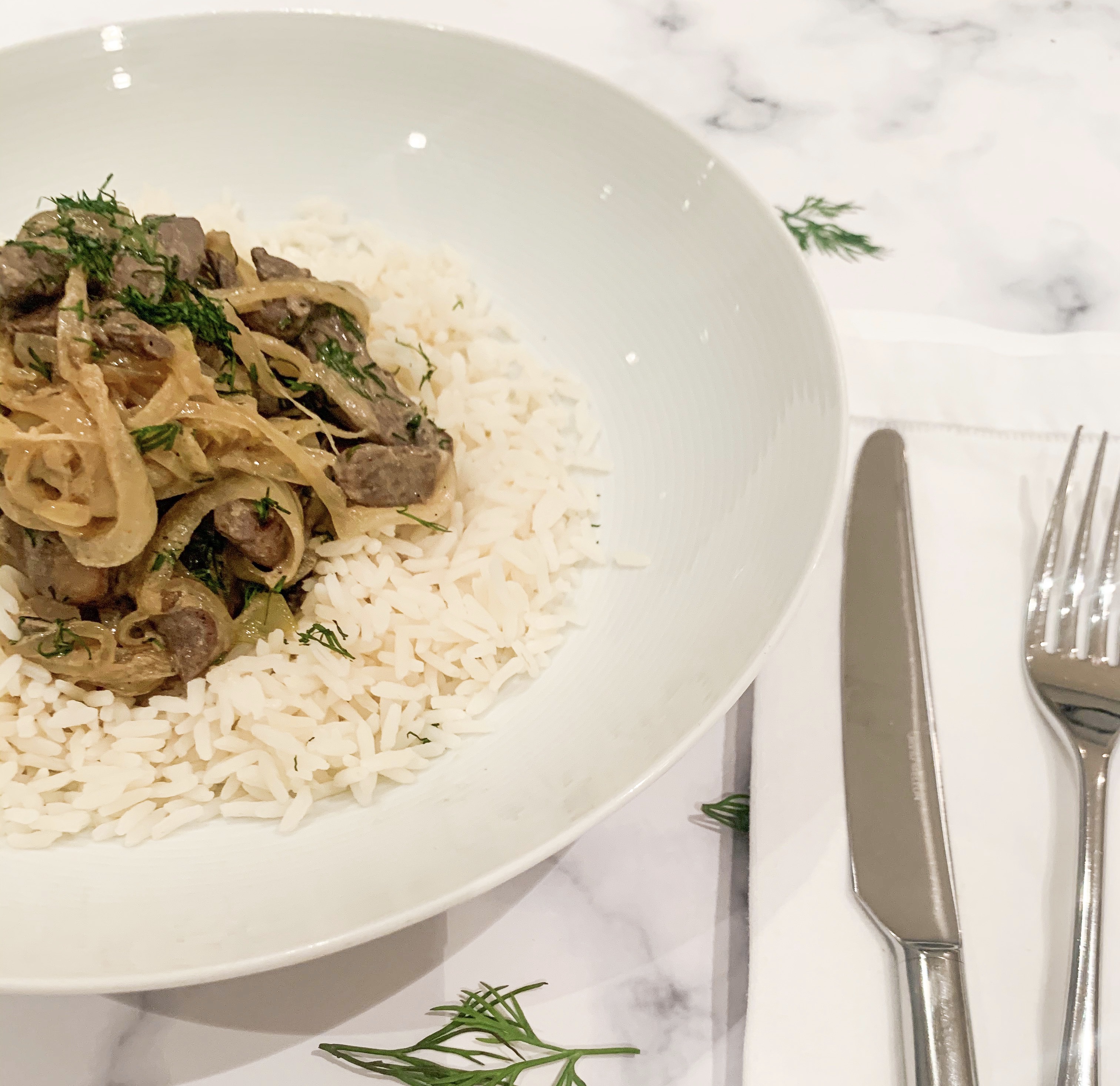
Beef Stroganoff (Serves 4-6)

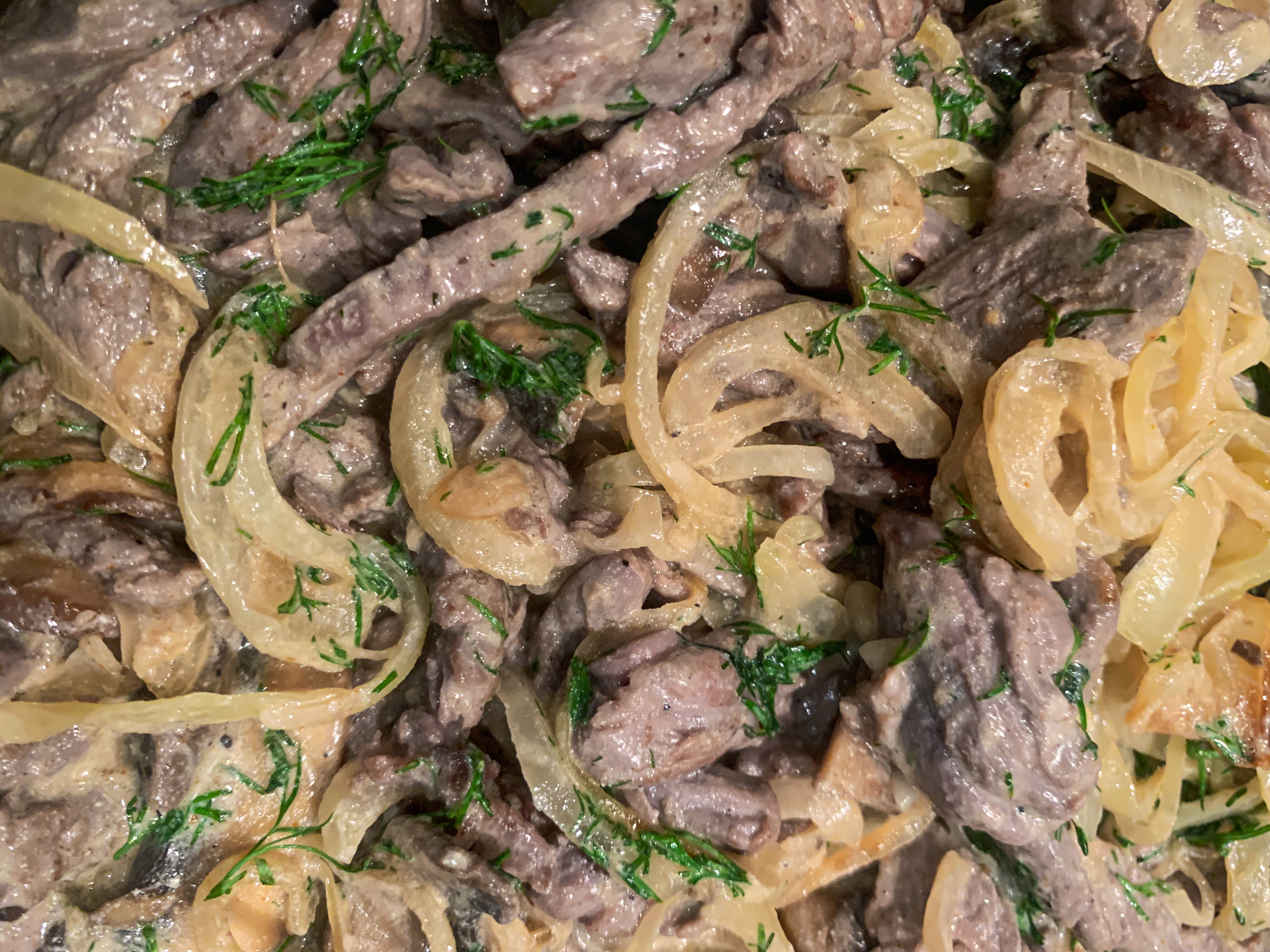
This recipe for Beef Stroganoff is very quick, it just requires the beef to be flash fried, therefore it is important to use good fillet steak. With the addition of soured cream, dill and lemon juice this simple recipe is extremely special! I like to serve it with white long grain rice and a green salad (recipe for classic vinaigrette below).

4 medium onions, 400g

6 tablespoons groundnut oil

700g fillet steak, cut into thin strips, about 1cm thick

80g butter

500g button or small mushrooms, thinly sliced

2 teaspoons paprika

300ml soured cream

1 lemon

Large bunch of dill, finely chopped

Sea salt and black pepper

  1. Peel, half and thinly slice the onions.
  2. Heat 3 tablespoons of the groundnut oil in a frying pan. Pat the meat dry, season generously with salt and pepper. Add half the meat to the pan and stir-fry briskly for 30 seconds to brown and remove to one side. Repeat with the remaining oil and meat.
  3. Add half the butter to the pan and stir in the onions. Cook slowly until golden, sticky and softened. Tip on to a plate.
  4. Add the remaining butter to the pan and stir-fry the mushrooms with the paprika for about 4 minutes until dark and soft.
  5. Return the onions to the pan and add the soured cream. Warm through.
  6. Add the meat, return to simmer, season with salt and pepper and a good squeeze of lemon juice.
  7. Finely stir through the chopped dill.
  8. Serve with rice and a green salad.

Menu Two

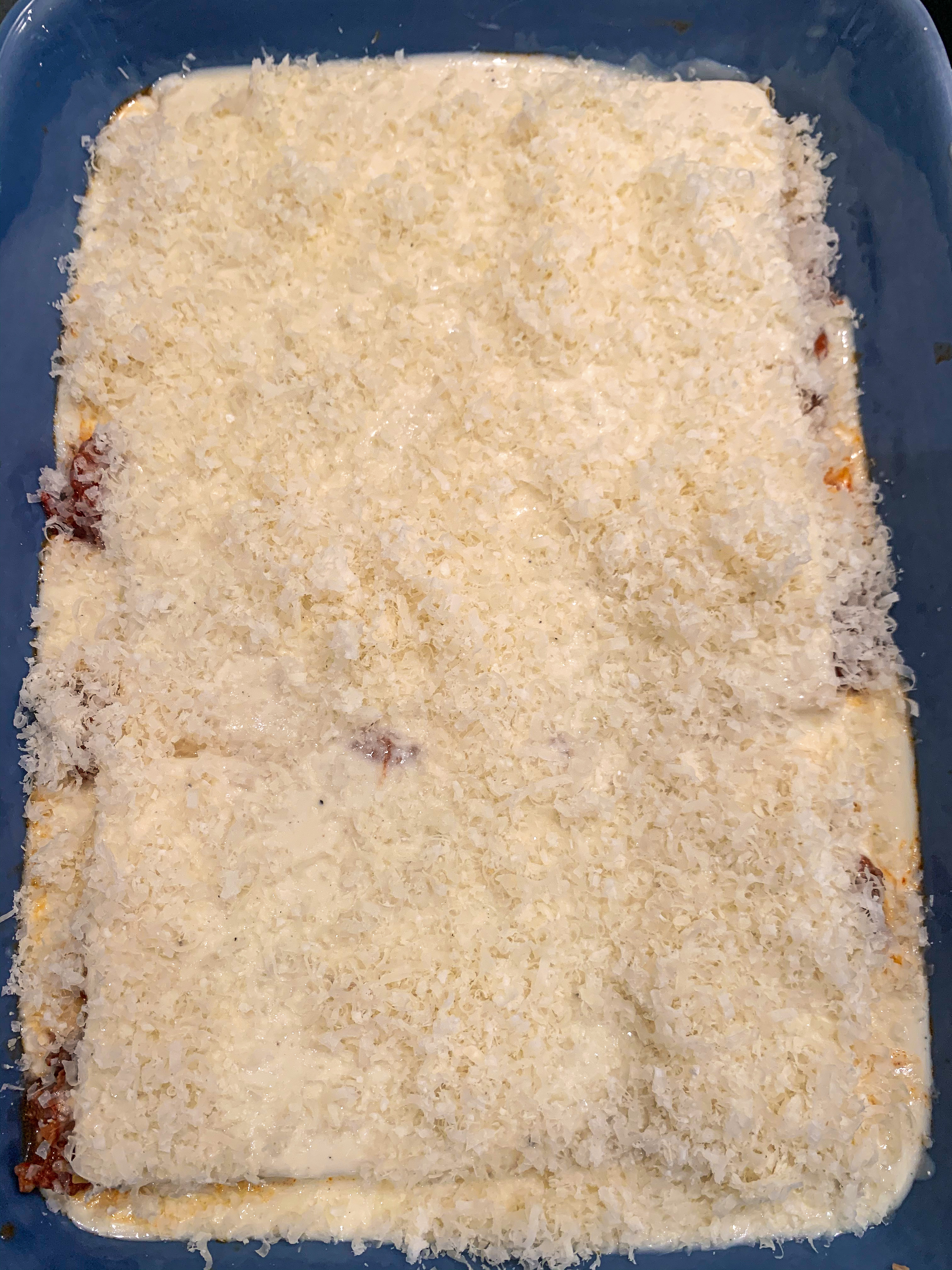
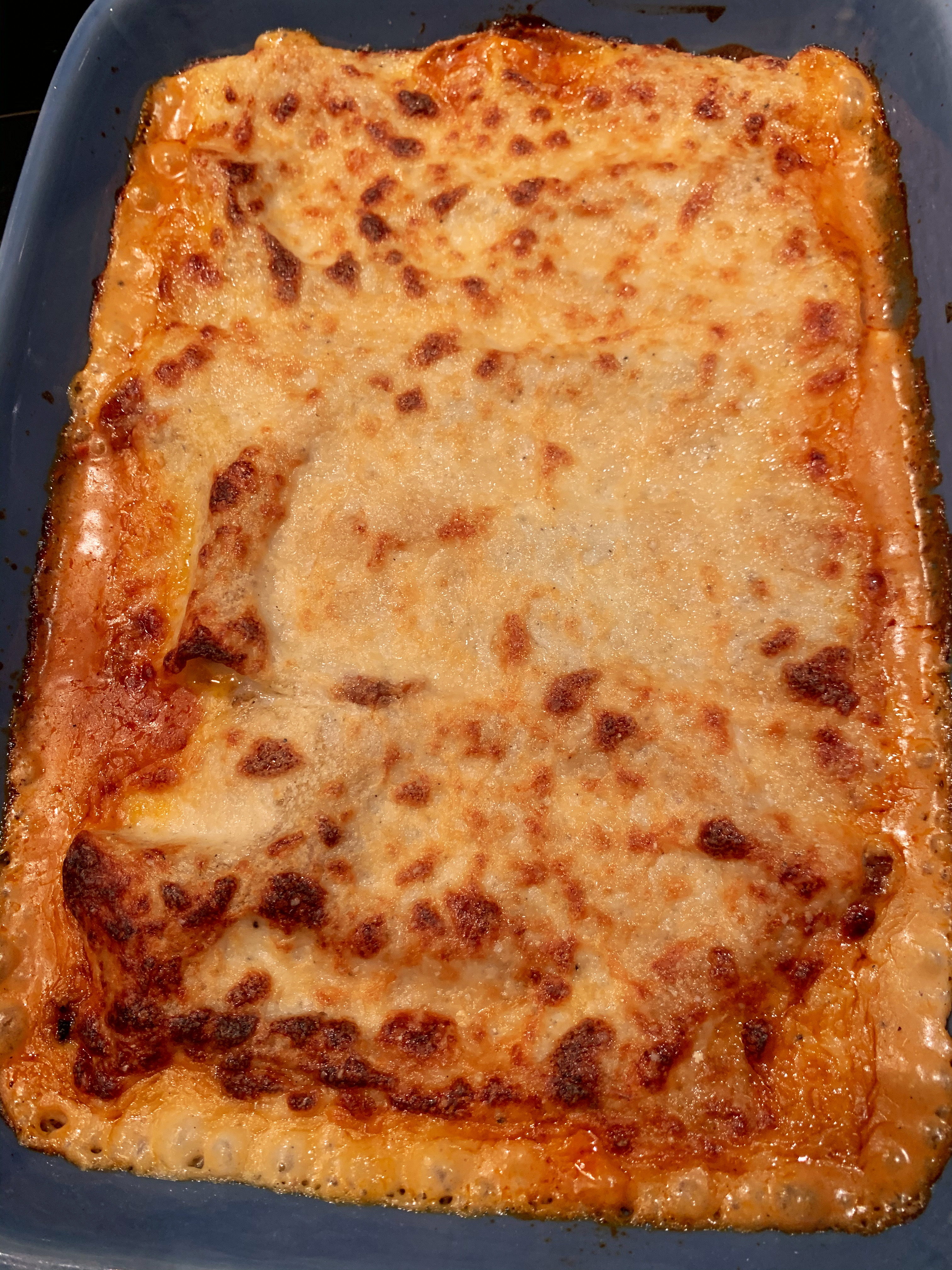
Lasagne (Serves 4)

This, in my opinion, is the best recipe for lasagne, it has exactly the right balance of flavours and sauce – all too often lasagne can be too cheesy. It is a recipe by Gordon Ramsay which I found online many years ago. As I am gluten free I make it with gluten free lasagne sheets, my gluten loving husband, Nick, doesn’t even notice! This is great served with a simple green salad dressed with a classic vinaigrette (recipe below).

2 tablespoons olive oil

1 large carrot

1 half of a large onion

2 garlic cloves

1 bay leaf

2 pinches dried oregano

1 tablespoon Worcestershire sauce

300g minced beef

1 tablespoon tomato purée

2 tablespoons red wine

1 x 400g tin chopped tomatoes

50ml milk

6 ‘ready to bake’ lasagne sheets (gluten free if required)

Sea salt and black pepper

For the sauce:

25g unsalted butter

25g plain flour

300ml milk

Pinch ground nutmeg

60g cheddar cheese, grated

30g parmesan cheese, grated

A rectangular baking dish approx. 30cm x 20cm

  1. Peel and grate the carrot and onion. Crush the garlic cloves.
  2. Heat the olive oil in a frying pan, gently fry the carrot, onion and garlic adding the bay leaf, pinches of oregano, Worcestershire sauce, and salt and pepper.
  3. When the onion has softened make a well in the middle of the mixture and add the mince. Stir well to break up the meat.
  4. Add the tomato purée. Continue to cook until the meat is browned.
  5. Add the wine, cook off the alcohol before adding the tomatoes, simmer for 2-3 minutes
  6. Add the milk and remove from the heat – leave to one side whilst you make the sauce.
  7. To make the sauce, melt the butter in saucepan, add the flour, stirring with a wooden spoon to make a paste. Over a gentle heat gradually add a third of the milk, whisking to prevent lumps. Then whisk in the remaining milk, season with the pinch of nutmeg, salt and pepper, then cook for a further minute or so before adding the cheddar cheese, stir until smooth.
  8. Spoon half the meat into the baking dish place three of the pasta sheets on top – do not overlap them, then pour over half the cheese sauce. Repeat with another layer of meat, then pasta sheets and finally the remaining cheese sauce. Sprinkle over the parmesan cheese and a light seasoning of salt and pepper.
  9. Bake in a preheated oven, 200’c fan, for 20-25 minutes.
  10. Serve with a green salad dressed with a classic vinaigrette (recipe below)

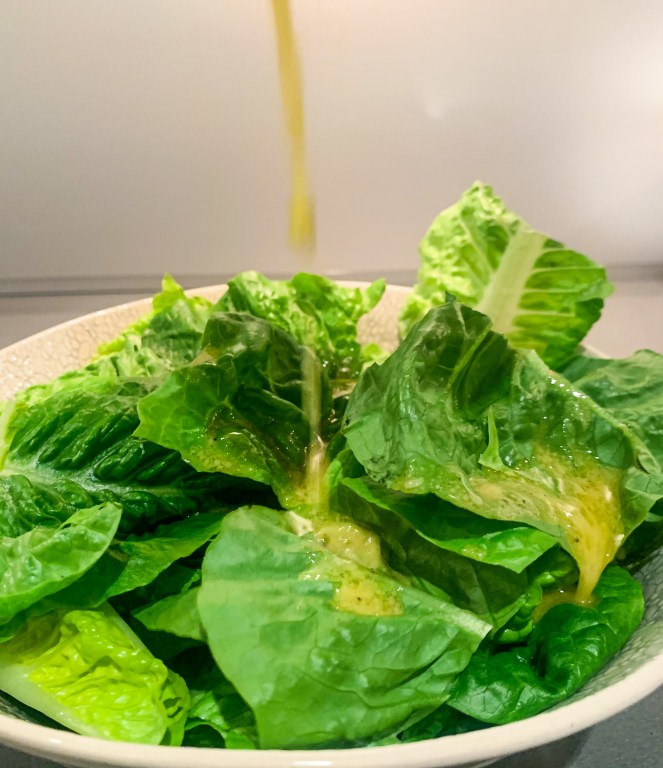
Green Salad with a Classic Vinaigrette

Classic Vinaigrette

1 teaspoon Dijon mustard

1 tablespoon white wine vinegar

3 tablespoons olive oil

Sea salt and pepper

A salad of your choice

  1. Simply put all the ingredients in a bowl and whisk together (or place in a jar with a lid and shake vigorously)

Menu Three

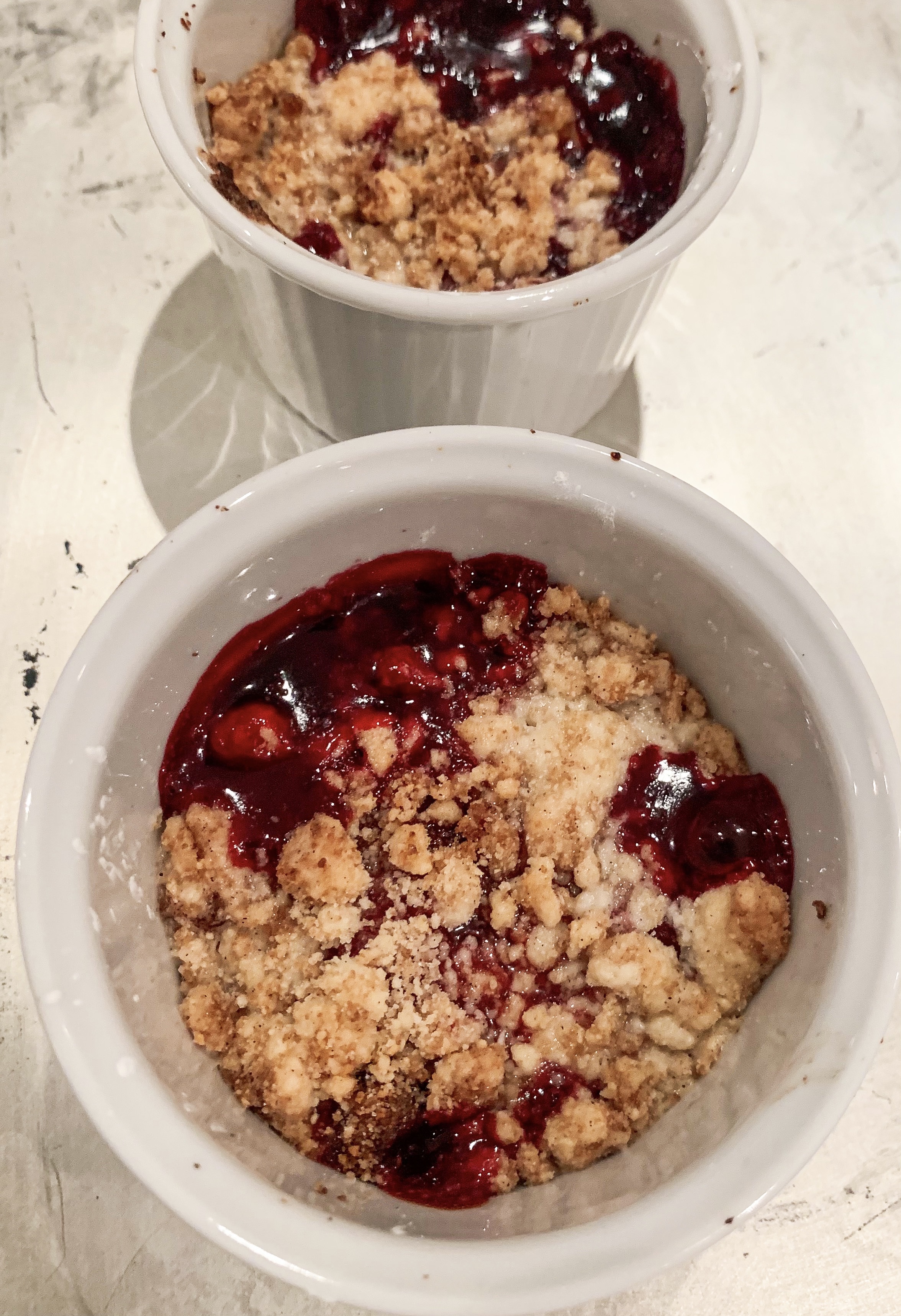
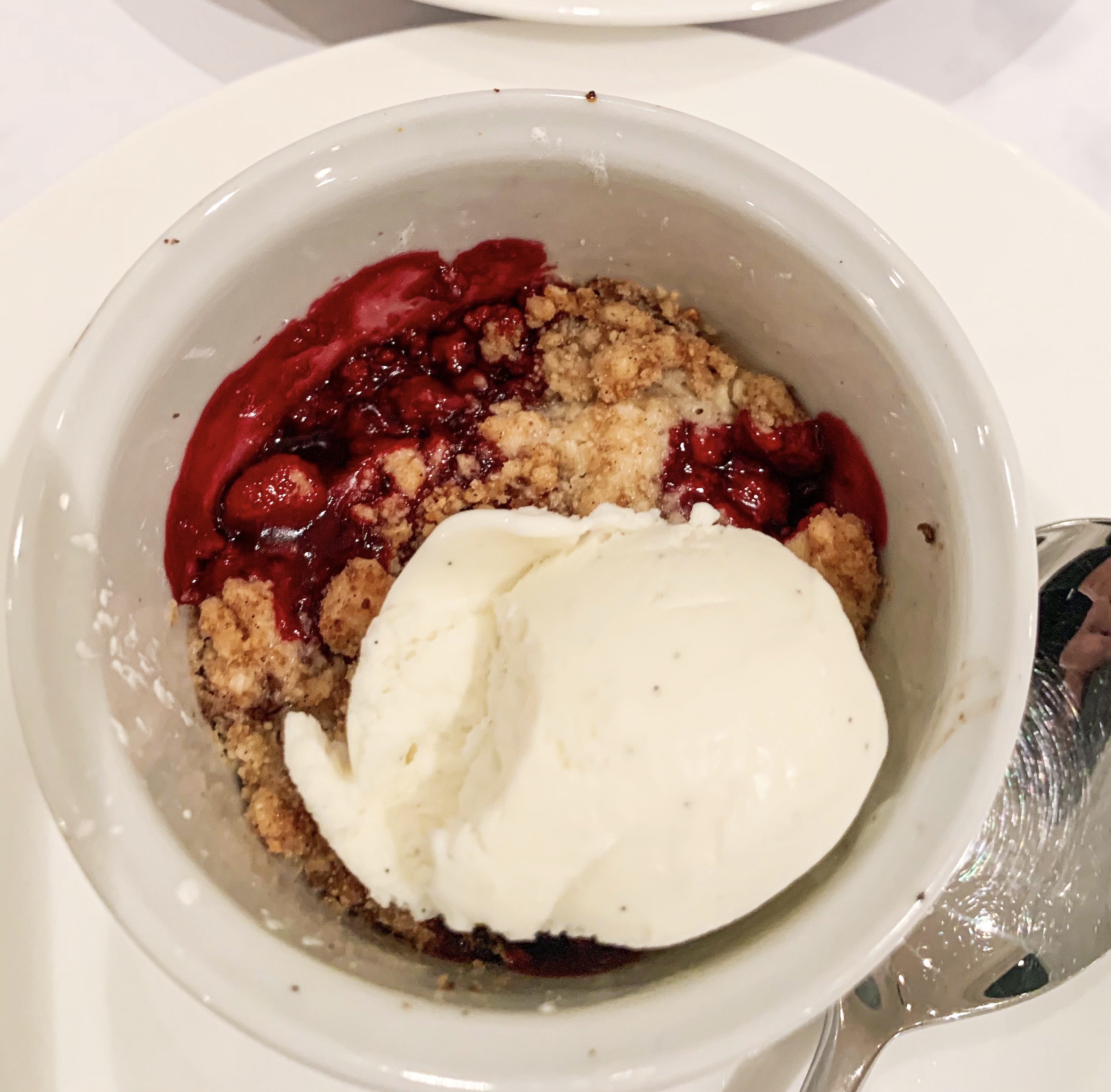
‘Crumbles in a Cup’

This is a great idea that I have taken from Nigella Lawson’s cookbook, ‘Nigella Express’. The idea is to freeze the crumble topping and some summer berries, then at any given time you can quickly make up a ‘Berry Crumble in a Cup’! You just need to cook them from frozen for 15 minutes! I have changed the recipe slightly; I make my crumble topping with the addition of ground almonds as I think it improves the flavour. You can either make the crumbles in a cup/small mug or in a ramekin, the measurements of the ingredients will differ slightly depending on which you choose – see below

For the Crumble Topping

200g plain flour (gluten free if required)

125g butter, cold and cubed

50g caster sugar

50g ground almonds

50g soft brown sugar

1 teaspoon ground cinnamon

  1. Place the flour and butter in a large mixing bowl and rub together with your fingers until the mixture resembles breadcrumbs.
  2. Add the caster sugar, ground almonds, soft brown sugar and ground cinnamon – stir to combine.
  3. Place in a freezer bag and freeze until needed for a ‘Crumble in a Cup’ – see below.

‘For a Crumble in a Cup’ (approx. 300ml capacity)

100g summer fruits (see note above)

1 teaspoon corn flour

2 teaspoons vanilla sugar (or regular sugar and a drop of vanilla essence)

75g frozen crumble topping

‘For a Crumble in a Ramekin’ (approx. 125ml capacity)

50g frozen summer fruits

½ teaspoon cornflour

1½ teaspoons of vanilla sugar (or regular sugar and a drop of vanilla essence)

30g frozen crumble topping

(To serve – ice cream or thick cream)

  1. Put the summer fruits in either the cup or ramekin, sprinkle with the cornflour and sugar – stir gently.
  2. Sprinkle the frozen crumble topping over the fruit (if desired you can add a little more topping)
  3. Bake in a preheated oven, 220’c fan; for the cups 20 minutes, and for the ramekins 15 minutes.
  4. Serve with a scoop of ice-cream or a dollop of thick cream.

A Lockdown Treat

Hot Whiskey (Serves 1)

With Lockdown we all need a little TLC, and this old Irish remedy for a cough and cold is the perfect winter warmer to snuggle down with, and it is a great way to lift ones spirits – even if you don’t have a cold!…

50ml Irish Whiskey

1 generous teaspoon of brown sugar

5 cloves

1 slice lemon

150ml boiling water

  1. Simply put the whiskey and sugar into a heatproof glass, add the lemon slice studded with the cloves. Pour over the boiling water, stirring to dissolve the sugar. Serve!

Week Twenty

‘Remember, Remember the 5th of November’… Yes, it’s that time of year! Once again, like Halloween, I’m not sure how many celebrations will be going ahead this year with Covid, but I do hope that I get to see some fireworks, as although these days I don’t necessarily go to fireworks displays, I must admit that I do love watching them from our upstairs windows – our local park always has a fantastic display!

When I was a child, Guy Fawkes Night used to be one of my favourite events of the year. In those days Halloween wasn’t such a celebrated occasion as it is these days, so the autumn event was definitely ‘Firework Night’. We lived in the countryside, and I remember that the week before November 5th we would search our local newspaper (there was no internet then!), for the announcements of local firework displays. On the evening of the 5th, before we went off to the chosen venue, my mum would put jacket potatoes in the oven, so that when we returned we could have jacket potatoes with sausages and baked beans – a real ‘bonfire night treat”! These memories have, naturally, got me thinking about food and the menus for this week…Menu One is ‘Chicken, Sausage and Apple Cider Stew’ a one pot recipe, a great combination of ingredients, perfect for a cold (and wet?) Bonfire Night. To be honest, I don’t think it really needs any accompaniment but you could have some greens on the side if you want to be virtuous and, if you’re really hungry, a jacket potato! Continuing with the ‘Bonfire Night’ theme, Menu Two is a sausage tray bake, ‘Super Simple Sausages with Roasted Potato and Onion Wedges’, this is a great midweek ‘lazy dish’ as it is seriously easy. The key to this dish is to get really tasty sausages from your butcher. I normally serve it with some greens – usually tenderstem broccoli, but you could indulge yourself here and serve it with some baked beans – Heinz, of course! Finally, a little treat, something that we all need as the November evenings close in, ‘Proper Hot Chocolate,’ this really is the real deal, forget those mixes you get in a tin – even the ‘quality’ ones –  this recipe is one you will return to again and again!…

Enjoy!

…Plus, there’s a new review on my Eating Out page – last week we ate out, at our local restaurant, Franklins, London SE22. We have been eating at this restaurant since it first opened, around 20 years ago, so it must be doing something right!

Menu One

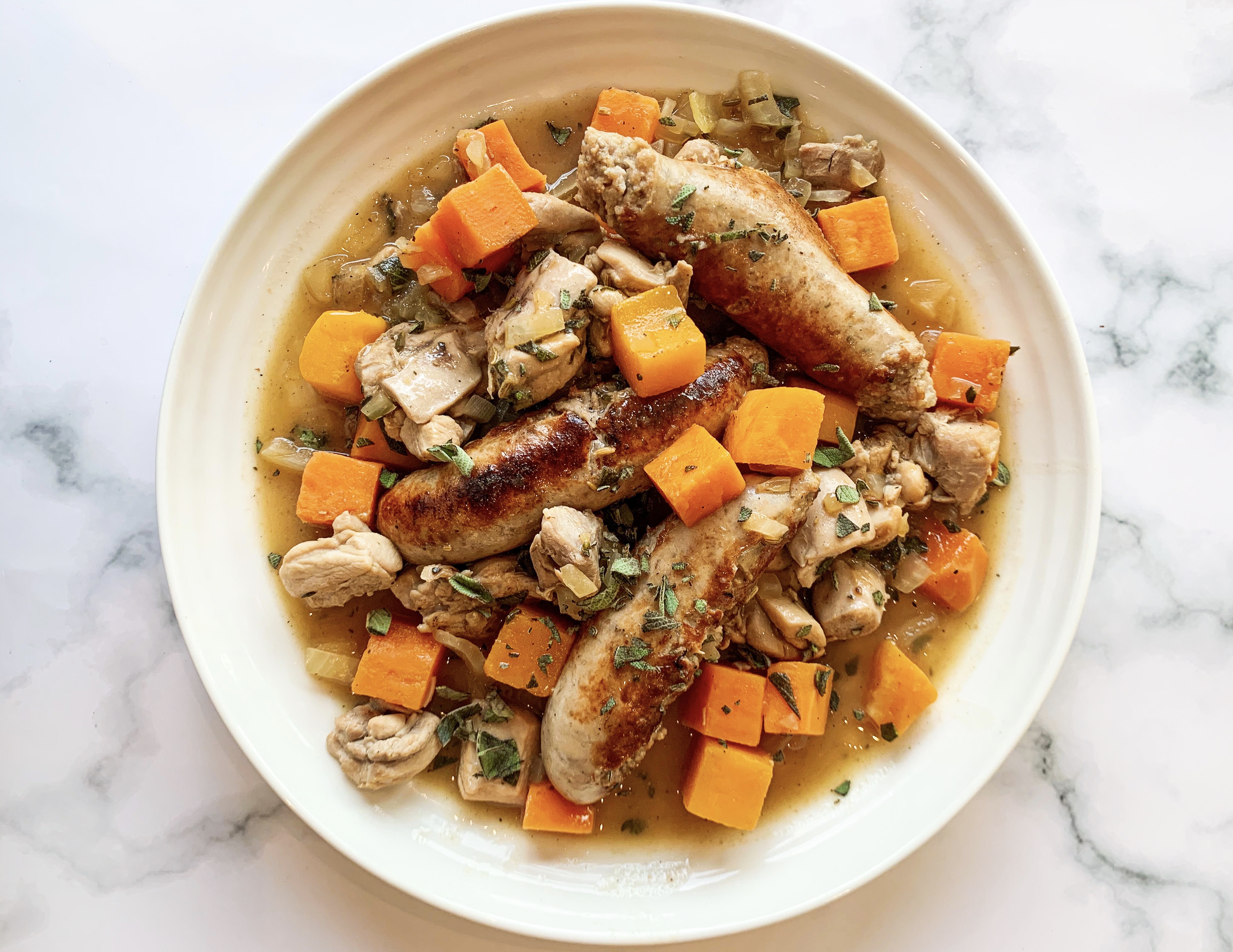
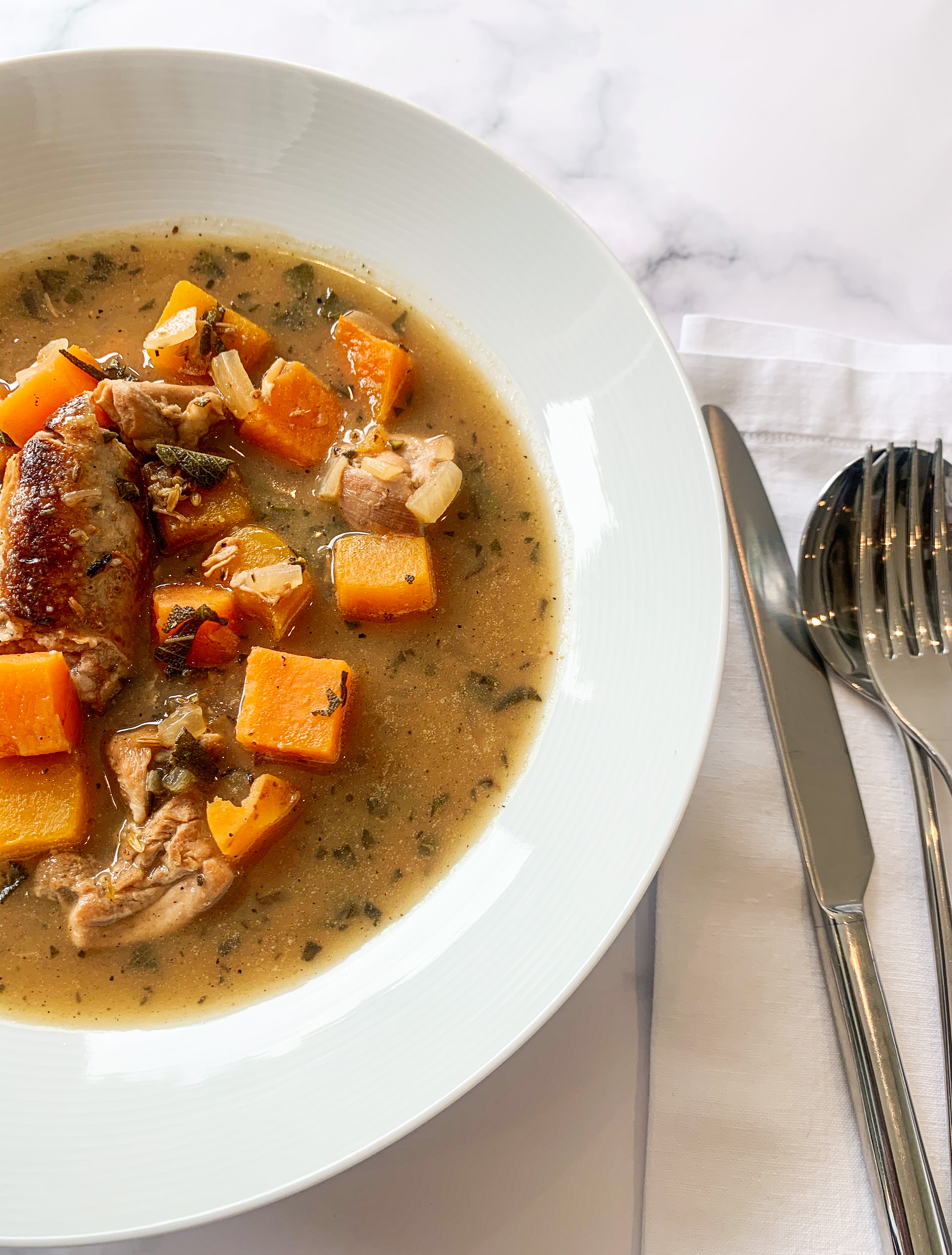
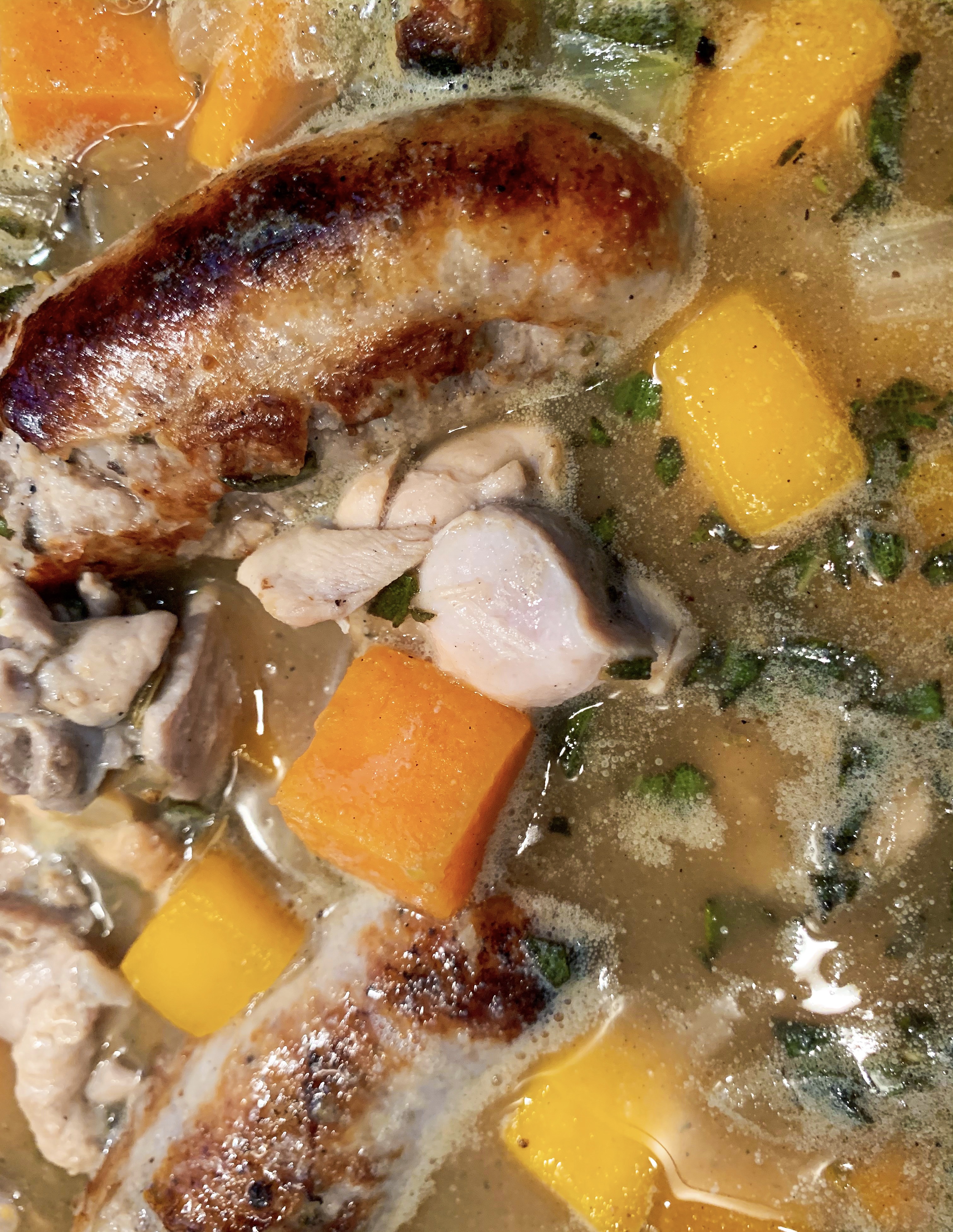
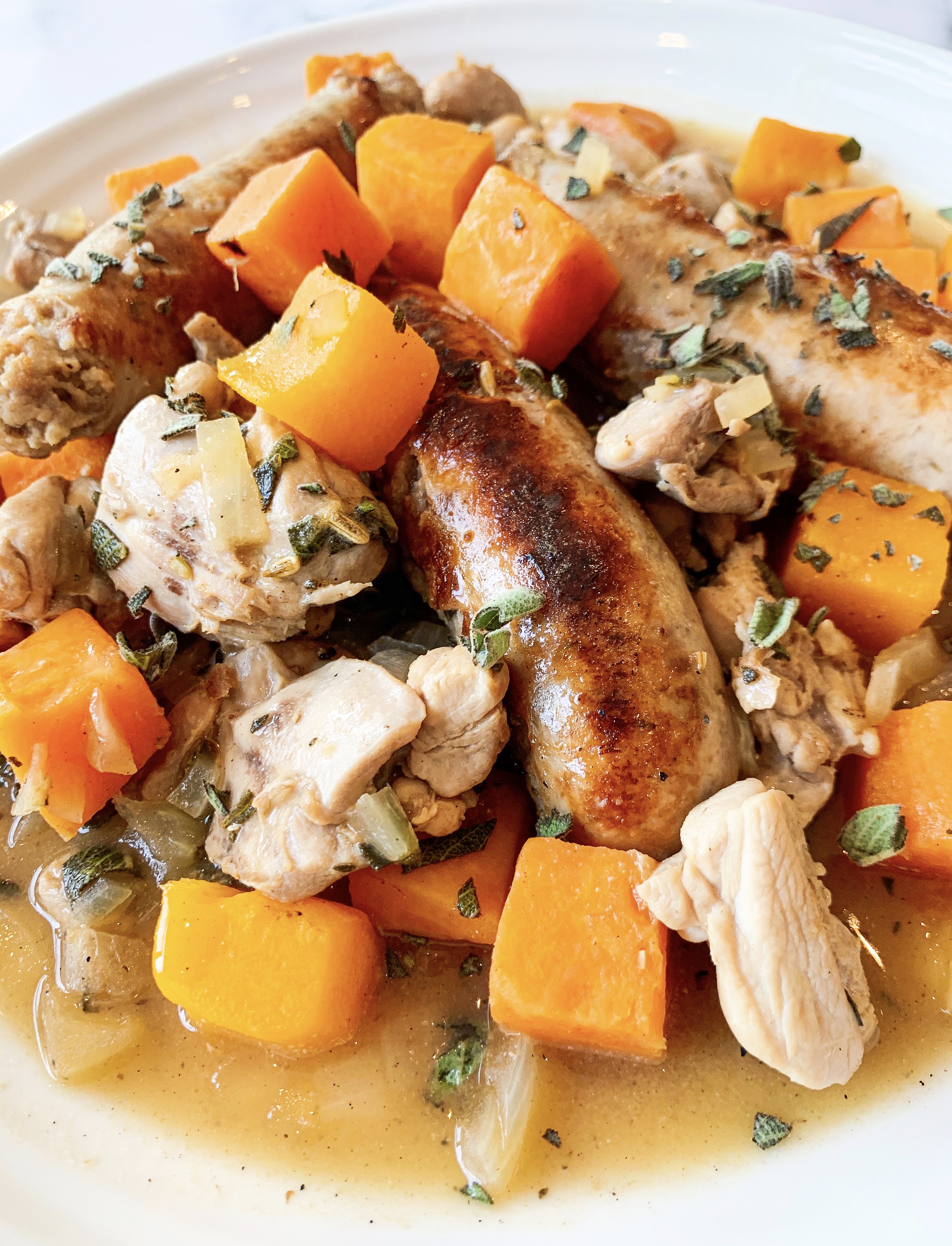
Chicken, Sausage and Apple Cider Stew (Serves 6)

This is a lovely, warming winter meal. It is also great reheated the next day for a quick lunch! You could serve this with potatoes, mashed or jackets, and some green beans (side dish recipes here).

8 chicken thighs, skinless & boneless, cut into large chunks

8 pork sausages (gluten free if required)

Olive oil

1 medium butternut squash, peeled and cut into chunks (about 700g)

1 large onion, chopped

20g sage leaves, chopped

2 teaspoons fennel seeds, lightly crushed

1 tablespoon plain flour (gluten free is required)

500ml dry cider

200ml chicken stock

Sea salt and black pepper

  1. Heat the oil in a large saucepan/ casserole and brown the chicken pieces in batches, adding more oil if required.
  2. Set the chicken aside and brown the sausages in the same pan, and place aside with the chicken.
  3. If there is a lot of oil left in the pan, discard it, leaving about a tablespoon. Brown the butternut squash for about 2 minutes and set aside.
  4. Add a little more oil to the pan, add the onions and cook gently for about 5 minutes.
  5.  Add half the sage and all of the fennel seeds, cook for a further 2 minutes and then add the flour stirring, cook for a further minute or so then add the cider and stock, whisking to prevent lumps. Bring to the boil.
  6. Return the chicken, sausages and butternut squash to the pan and simmer for 15 minutes until everything is cooked through.
  7. Finally stir in the remaining sage, and check the seasoning. This stew is a meal in itself, however if you’re really hungry it would be good served with potatoes, mashed or jackets and some green beans.

Menu Two

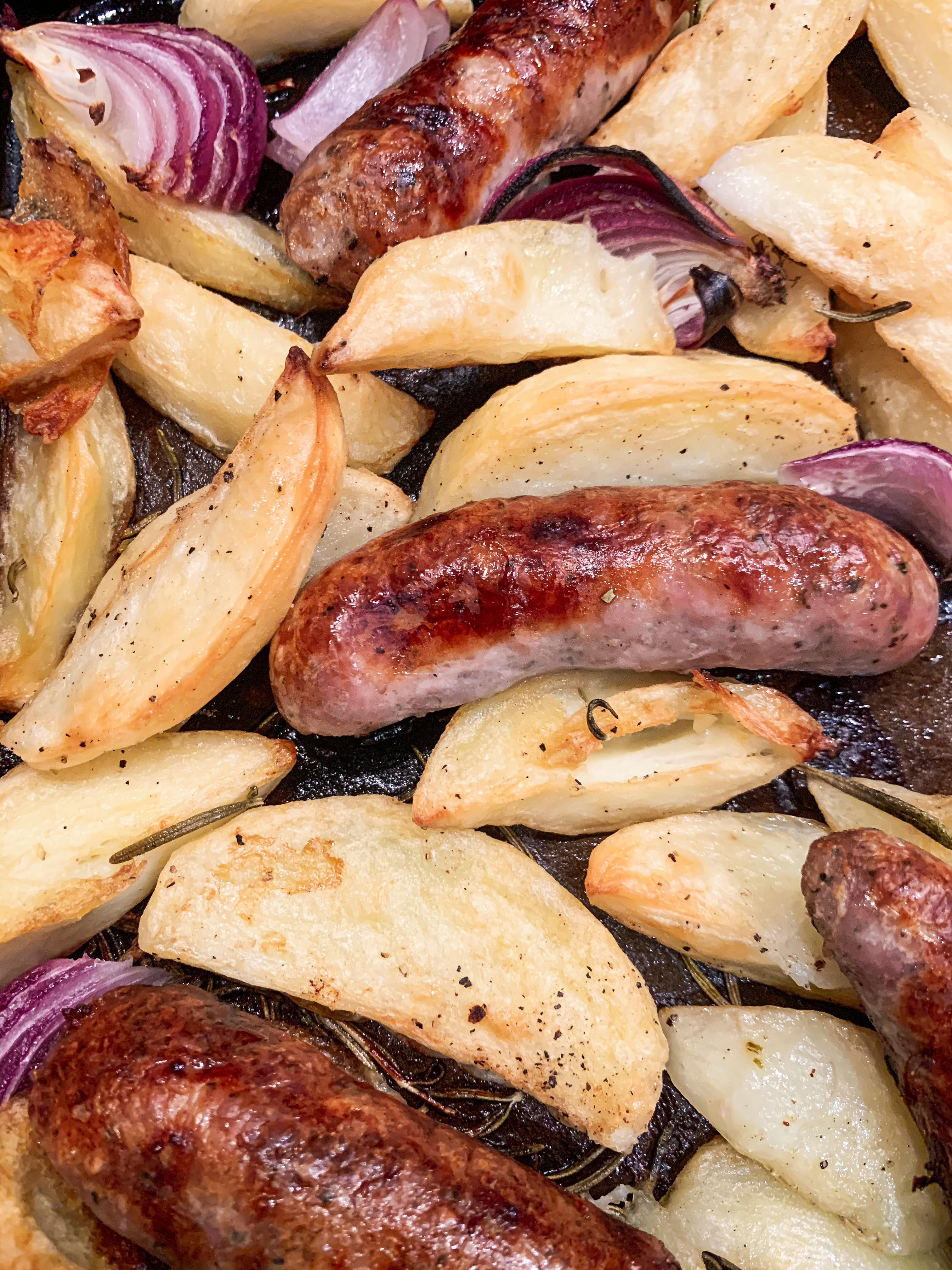
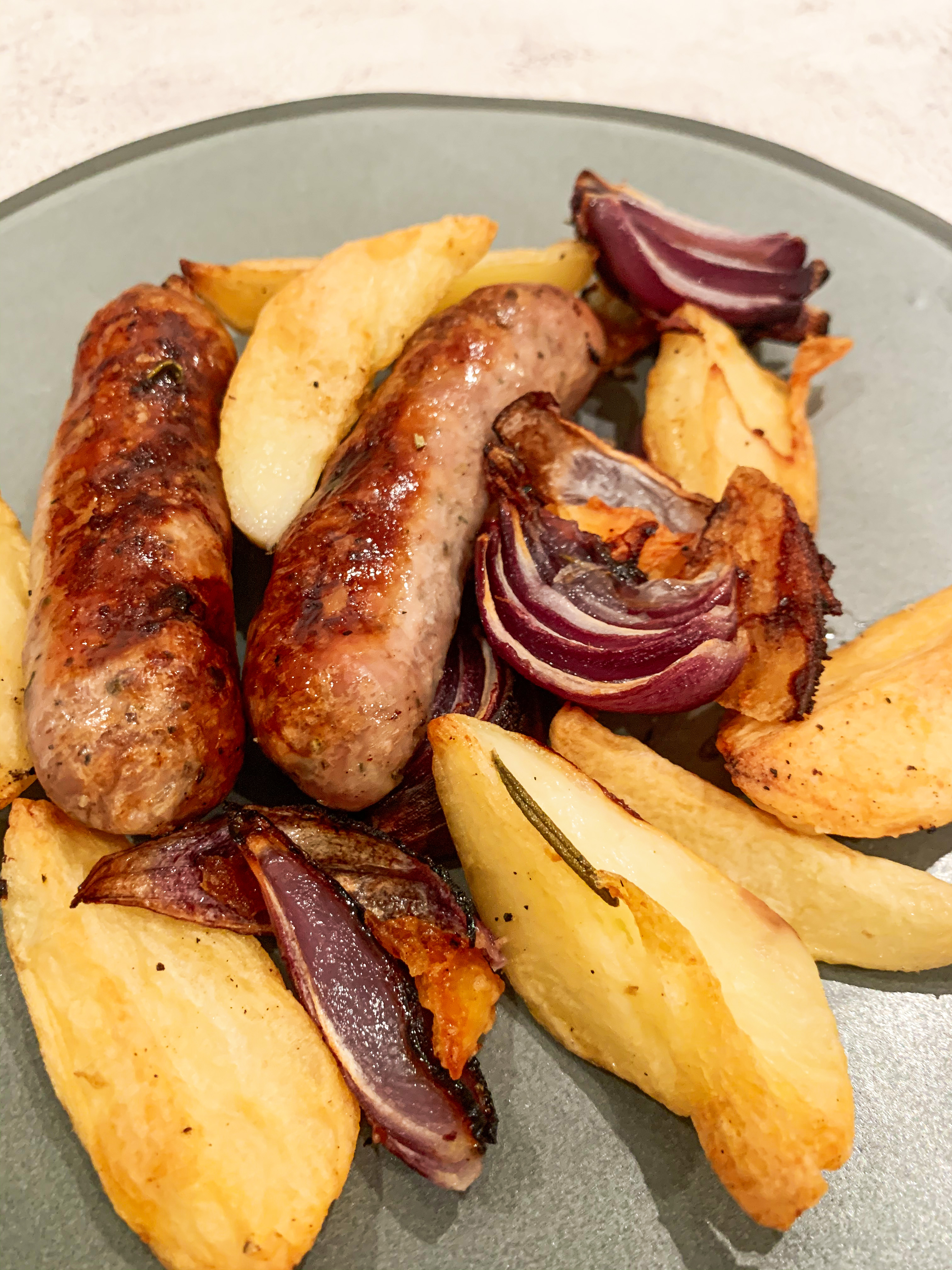
Super Simple Sausages with Roasted Potato & Onion Wedges (Serves 4)

This is a great midweek supper, it’s more or less a matter of putting the ingredients in a roasting pan and leaving the oven to do its work!

900g large potatoes, peeled and cut into wedges

4 tablespoons olive oil

3 – 4 fresh rosemary sprigs

2 red onions, peeled and each cut into eight wedges

8 sausages

Sea salt and black pepper

  1. Put the potatoes in a roasting tin drizzle over the olive oil and turn to coat, seasoning with salt and pepper. Place the rosemary on top. Place in a preheated oven, 200’c fan, for 20 minutes.
  2. Remove the roasting pan from the oven and add the onion wedges, toss with the potatoes so that they get a good coating of olive oil. Then put the sausages in between the potatoes and onions. Return to the oven for about 50 minutes to 1 hour.
  3. Serve with tenderstem broccoli or baked beans (Heinz!), and a dollop of tomato ketchup and mustard!

Menu Three

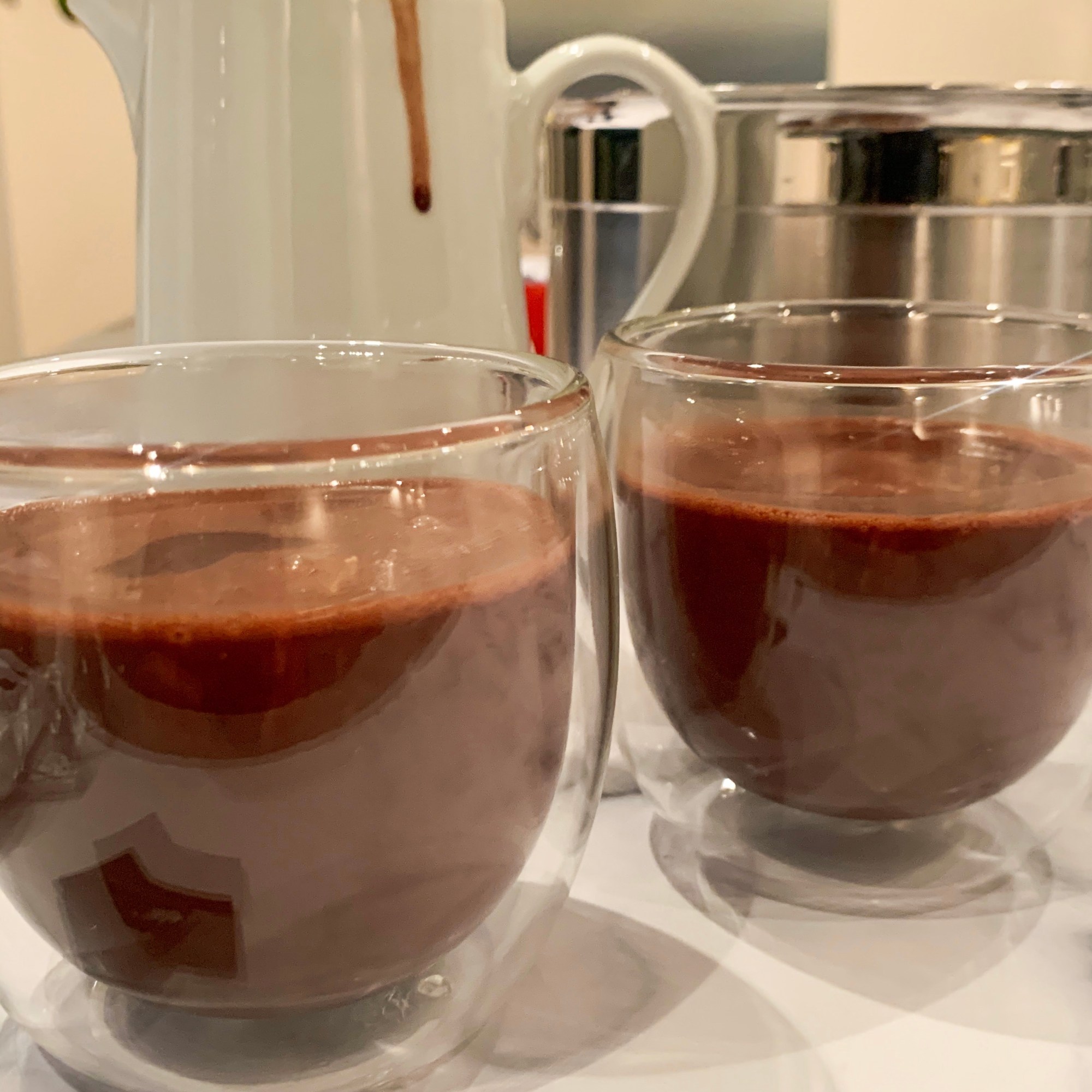
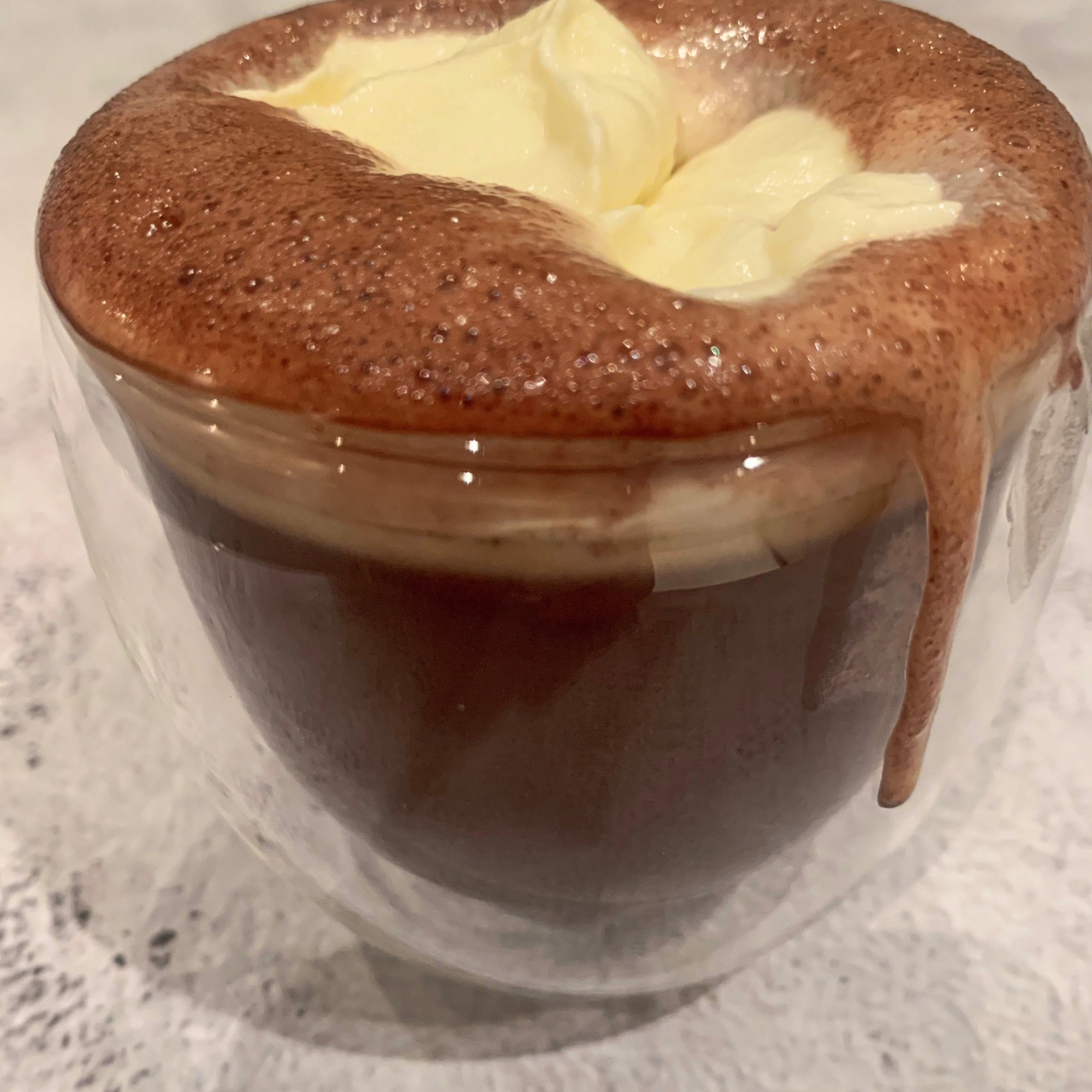
‘Proper’ Homemade Hot Chocolate (Serves 2)

This is seriously the best hot chocolate you will ever have – it is a ‘hug in a mug’!!…I warn you it is rich and indulgent, but hey, we all deserve a treat now and again. I would definitely serve it with a little whipped cream if you have some!

See the video of this Hot Chocolate being made here!

300ml full fat milk

125g dark chocolate (I use Lindt 70% cocoa dark chocolate), roughly chopped

3 teaspoons good quality cocoa (I use Green & Blacks)

Pinch of salt

2 – 3 drops vanilla extract

Whipped cream to serve (optional)

  • Put the milk in a saucepan and bring just to boiling point.
  • Remove from the heat and stir in all the ingredients until melted.
  • Return to the heat, whisk vigorously until it returns to a gentle simmer.
  • Pour into mugs and if using add a dollop of whipped cream!